
94%
OFF
OFF
Understanding and Navigating Organizational Politics
- Lifetime Access
- All Levels
- PDF Certificate
£296
£19
14-Day Money-Back Guarantee
Learn With Confidence







Understanding and Navigating Organizational Politics
Every workplace has its own relationships, informal networks, competing priorities, personalities, and sources of influence. While organizational politics can sometimes feel difficult to understand, recognising how workplace dynamics operate can help professionals communicate more effectively, manage relationships, make informed decisions, and work towards their goals without compromising their values.
Understanding and Navigating Organizational Politics is a practical, outcome-focused course designed to help professionals develop greater awareness of workplace politics and learn how to navigate complex organisational environments with confidence, professionalism, and integrity.
Organizational politics is not necessarily about manipulation or negative behaviour. In many workplaces, it simply reflects the way people influence decisions, build alliances, compete for resources, advocate for priorities, and respond to change. Learning to recognise these dynamics can help employees and leaders make better decisions about how they communicate and collaborate.
This course explores the key elements of organizational politics, including influential stakeholders, communication, competing interests, power dynamics, and ethical decision-making. You will learn practical strategies for understanding workplace relationships while maintaining professionalism and avoiding behaviours that can damage trust.
Whether you are a new employee learning how your organisation operates, an experienced professional seeking greater influence, a manager dealing with competing priorities, or an aspiring leader preparing for more complex responsibilities, Understanding and Navigating Organizational Politics can provide valuable tools for managing workplace dynamics.
Why Understanding Organizational Politics Matters
Organisations are made up of people with different goals, responsibilities, personalities, priorities, and perspectives.
Even when everyone is working towards the same broad organisational mission, disagreements can arise over:
-
Budgets.
-
Resources.
-
Responsibilities.
-
Deadlines.
-
Projects.
-
Recognition.
-
Promotions.
-
Decision-making authority.
-
Strategic priorities.
-
Organisational change.
Understanding these dynamics can help you respond thoughtfully rather than reacting to workplace situations without sufficient information.
Through Understanding and Navigating Organizational Politics, you can learn how to:
-
Recognise informal workplace dynamics.
-
Identify key stakeholders and influencers.
-
Understand different sources of influence.
-
Build productive professional relationships.
-
Communicate effectively in politically sensitive situations.
-
Manage competing priorities.
-
Navigate disagreements.
-
Understand power dynamics.
-
Protect your professional reputation.
-
Make ethical decisions.
-
Maintain integrity while building influence.
The goal is not to manipulate workplace relationships. Instead, it is to develop the awareness and interpersonal skills needed to operate effectively in complex organisational environments.
What You Will Learn
Module 1 – Introduction to Organizational Politics
Lesson 1 – Introduction to Organizational Politics
The course begins by defining organizational politics and explaining why it exists in professional environments.
You will explore:
-
The meaning of organizational politics.
-
Formal versus informal organisational structures.
-
Workplace influence.
-
Competing interests.
-
Informal networks.
-
Decision-making dynamics.
-
Resource competition.
-
Alliances and relationships.
-
Positive and negative political behaviours.
-
The impact of workplace politics on employees.
You will discover that organizational politics is not always negative.
For example, professionals may build relationships to gain support for an important project, communicate with stakeholders to influence a decision, or collaborate with colleagues to secure resources for a team.
These activities can be legitimate parts of organisational life.
The challenge occurs when political behaviour becomes manipulative, deceptive, unfair, or harmful to individuals or the organisation.
Outcome: You will understand the fundamentals of organizational politics and recognise how formal structures, informal relationships, influence, and competing interests shape workplace environments.
Module 2 – Key Players in Organizational Politics
Understanding workplace dynamics requires knowing who influences decisions and why.
This module focuses on identifying the key players involved in organisational politics.
You will explore:
-
Formal leaders.
-
Informal leaders.
-
Managers.
-
Senior executives.
-
Team members.
-
Influential colleagues.
-
Subject-matter experts.
-
Decision-makers.
-
Gatekeepers.
-
Stakeholders.
-
Internal networks.
-
External stakeholders.
You will learn why job titles do not always tell the complete story about influence.
Someone without formal authority may have considerable influence because of their expertise, relationships, experience, credibility, access to information, or connections with decision-makers.
You will also explore how different stakeholders may have different interests in the same project or decision.
For example, a finance team may focus on cost, an operations team may prioritise efficiency, and a customer-facing team may focus on service quality.
Recognising these differences can help you communicate more effectively.
Outcome: You will be able to identify key stakeholders, understand different sources of workplace influence, and develop greater awareness of who may affect important organisational decisions.
Module 3 – Strategies for Navigating Organizational Politics
Once you understand workplace dynamics, you can begin developing practical strategies for navigating them.
This module focuses on constructive approaches to managing organisational politics.
You will learn about:
-
Building professional relationships.
-
Developing credibility.
-
Understanding stakeholder interests.
-
Building supportive networks.
-
Increasing visibility appropriately.
-
Managing professional reputation.
-
Finding common ground.
-
Influencing without manipulation.
-
Choosing when to speak up.
-
Building trust.
-
Avoiding unnecessary political conflicts.
You will explore why relationships matter in organisational environments.
Professionals who communicate consistently, follow through on commitments, understand other people’s priorities, and contribute constructively are often better positioned to build credibility.
You will also learn the importance of avoiding workplace gossip, unnecessary alliances, personal attacks, and behaviours that can damage trust.
Effective political awareness is not about trying to control everyone around you. It is about understanding the environment and making thoughtful decisions about how you participate.
Outcome: You will develop practical strategies for navigating workplace politics while strengthening professional relationships, credibility, and trust.
Module 4 – Communication in Political Environments
Communication becomes particularly important when workplace relationships are complex or sensitive.
A poorly worded message can create confusion, while a thoughtful conversation can help resolve disagreements and build support.
This module develops communication strategies for politically sensitive environments.
You will learn about:
-
Active listening.
-
Clear communication.
-
Diplomatic language.
-
Stakeholder communication.
-
Managing sensitive conversations.
-
Asking thoughtful questions.
-
Communicating disagreement professionally.
-
Persuasion and influence.
-
Reading workplace signals.
-
Managing difficult conversations.
-
Avoiding misunderstandings.
-
Choosing the right communication channel.
You will explore how the same message can be interpreted differently depending on timing, context, tone, audience, and organisational relationships.
You will also learn how to communicate your ideas while considering the interests and concerns of others.
Instead of immediately opposing a colleague’s position, you can learn to understand the reasons behind it and identify areas where agreement may be possible.
Outcome: You will develop stronger communication skills for handling sensitive workplace situations, influencing constructively, and reducing unnecessary misunderstandings.
Module 5 – Managing Conflicting Priorities and Interests
Organisations often contain multiple departments, teams, and individuals with competing priorities.
Conflict does not necessarily mean that someone is acting in bad faith. Different roles naturally create different perspectives.
This module explores how to manage conflicting priorities and interests.
You will learn about:
-
Identifying competing interests.
-
Understanding stakeholder priorities.
-
Managing disagreements.
-
Finding common ground.
-
Negotiating priorities.
-
Resolving workplace conflict.
-
Balancing short-term and long-term objectives.
-
Managing resource disagreements.
-
Building consensus.
-
Escalating issues appropriately.
You will learn how to distinguish between personal conflict and legitimate differences in professional priorities.
For example, two teams may disagree about how resources should be allocated because each team has different operational responsibilities.
Understanding the underlying interests can make it easier to identify potential solutions.
You will also explore the importance of keeping discussions focused on organisational objectives rather than personal criticism.
Outcome: You will develop strategies for managing competing interests, resolving disagreements constructively, and working towards practical solutions in complex workplace situations.
Module 6 – Dealing with Power Dynamics
Power exists in every organisation, but it does not always come from job titles.
This module explores formal and informal sources of power and how they influence workplace relationships and decisions.
You will learn about:
-
Formal authority.
-
Informal influence.
-
Expertise.
-
Information power.
-
Relationship-based influence.
-
Reputation and credibility.
-
Organisational hierarchy.
-
Power imbalances.
-
Influence strategies.
-
Managing relationships with senior stakeholders.
-
Building professional confidence.
You will explore how understanding power dynamics can help you communicate more effectively.
For example, communicating with a senior executive may require a different approach from collaborating with a peer, while influencing a technical expert may depend heavily on demonstrating an understanding of their priorities.
You will also learn how to recognise situations where power dynamics may create challenges and how to respond professionally.
The objective is not to dominate workplace relationships but to understand how influence operates and use that awareness responsibly.
Outcome: You will understand different forms of workplace power and develop practical strategies for communicating and working effectively within organisational power structures.
Module 7 – Ethics and Integrity in Political Environments
Navigating organizational politics effectively does not require compromising your values.
In fact, maintaining integrity can be one of the strongest ways to build long-term professional credibility.
This module focuses on ethical behaviour in politically complex environments.
You will explore:
-
Professional integrity.
-
Ethical decision-making.
-
Transparency.
-
Fairness.
-
Trust.
-
Confidentiality.
-
Avoiding manipulation.
-
Managing conflicts of interest.
-
Professional boundaries.
-
Responsible influence.
-
Workplace reputation.
-
Speaking up about concerns.
You will learn how to distinguish between legitimate organisational influence and unethical political behaviour.
For example, building support for a project by clearly explaining its benefits is very different from spreading misleading information about a colleague to gain an advantage.
The course encourages learners to develop influence while maintaining professional standards.
Outcome: You will understand how to navigate organizational politics ethically while protecting your integrity, credibility, professional relationships, and reputation.
Practical Skills You Can Develop
Understanding and Navigating Organizational Politics is designed to produce practical workplace outcomes.
After completing the course, you can develop the ability to:
Recognise Workplace Dynamics
Identify formal and informal relationships, networks, interests, and sources of influence.
Identify Key Stakeholders
Understand who has an interest in important decisions and who may influence their outcomes.
Build Professional Relationships
Develop constructive relationships based on trust, credibility, communication, and mutual respect.
Communicate Strategically
Adapt your communication style to different audiences and politically sensitive situations.
Manage Conflicting Interests
Recognise competing priorities and work towards practical solutions.
Understand Power Dynamics
Identify different forms of influence and communicate more effectively within organisational structures.
Protect Your Reputation
Avoid unnecessary political conflicts and develop a reputation for reliability, professionalism, and integrity.
Influence Ethically
Build support for ideas and initiatives without resorting to manipulation, deception, or inappropriate behaviour.
Who Is This Course For?
Understanding and Navigating Organizational Politics is suitable for professionals at different stages of their careers.
It can benefit:
-
Employees.
-
Managers.
-
Team leaders.
-
Supervisors.
-
Department heads.
-
Business professionals.
-
Project managers.
-
Human resources professionals.
-
Entrepreneurs.
-
Consultants.
-
New employees.
-
Aspiring leaders.
-
Professionals preparing for management roles.
It is particularly useful for people working in organisations where decisions involve multiple stakeholders, departments, reporting structures, or competing priorities.
Build Influence Without Compromising Integrity
Professional influence is not the same as manipulation.
Influence can involve clearly communicating your ideas, understanding stakeholder needs, building credibility, presenting evidence, finding common ground, and creating support for worthwhile initiatives.
Understanding and Navigating Organizational Politics helps learners distinguish constructive influence from unethical political behaviour.
You can develop stronger workplace influence by becoming known as someone who:
-
Listens carefully.
-
Communicates clearly.
-
Keeps commitments.
-
Understands different perspectives.
-
Provides useful information.
-
Treats colleagues fairly.
-
Handles disagreement professionally.
-
Supports team objectives.
-
Acts consistently with professional values.
These behaviours can contribute to long-term credibility.
Navigate Workplace Relationships More Effectively
Workplace relationships can become complicated when people have different objectives.
A colleague may want greater resources. A manager may be focused on deadlines. Another department may prioritise quality. Senior leadership may be focused on strategic objectives.
Rather than assuming that one person is simply being difficult, political awareness encourages you to ask:
-
What does this person need?
-
What are their priorities?
-
What pressures are they facing?
-
Who else is involved?
-
What information might influence their position?
-
Where do our interests overlap?
-
What solution could benefit the wider organisation?
This perspective can help transform workplace disagreements into opportunities for problem-solving.
Improve Your Professional Communication
In politically sensitive situations, communication should be deliberate.
Before responding to an important message or disagreement, consider:
-
Who is the audience?
-
What outcome do I want?
-
What information does the other person need?
-
What concerns might they have?
-
What assumptions could create confusion?
-
Would a private conversation be more appropriate?
-
What tone will help maintain the relationship?
These considerations can help professionals avoid unnecessary escalation and communicate more effectively.
Develop Greater Organisational Awareness
Organisational awareness involves understanding not only what is happening but also why it may be happening.
A decision may be influenced by:
-
Strategic objectives.
-
Budget limitations.
-
Organisational policies.
-
Stakeholder relationships.
-
Previous decisions.
-
Resource constraints.
-
Leadership priorities.
-
Departmental responsibilities.
Developing this awareness can help you interpret workplace situations more accurately and make more informed professional decisions.
Why Choose Understanding and Navigating Organizational Politics?
This course provides a comprehensive pathway for understanding and managing workplace political dynamics.
The curriculum covers:
-
Introduction to organizational politics.
-
Key players in organizational politics.
-
Strategies for navigating organizational politics.
-
Communication in political environments.
-
Managing conflicting priorities and interests.
-
Dealing with power dynamics.
-
Ethics and integrity in political environments.
The progression takes learners from foundational awareness to practical strategies and ethical decision-making.
You will learn not only how organizational politics works but also how to communicate, build relationships, manage competing interests, understand influence, and maintain integrity.
Turn Political Awareness into a Professional Advantage
Organizational politics will exist in many workplaces, regardless of industry or organisational size.
Trying to ignore workplace dynamics completely can sometimes leave professionals unprepared for important decisions and relationships.
However, understanding organizational politics does not mean becoming political in a negative sense.
It means developing the awareness to understand:
-
How decisions are influenced.
-
Who the key stakeholders are.
-
Why priorities differ.
-
How relationships affect communication.
-
How power operates.
-
How to build support.
-
How to manage disagreement.
-
How to maintain professional integrity.
This awareness can become a valuable professional skill.
Start Learning Today
The ability to navigate complex workplace environments is increasingly important for professionals who want to communicate effectively, build influence, manage relationships, and advance their careers.
Understanding and Navigating Organizational Politics provides a practical foundation for developing these capabilities.
From understanding key players and workplace influence to communicating in political environments, managing conflicting interests, navigating power dynamics, and maintaining ethics and integrity, the course gives learners a structured approach to handling organisational complexity.
Whether you are a new employee trying to understand workplace dynamics, an experienced professional seeking greater influence, a manager balancing competing priorities, or an aspiring leader preparing for greater responsibility, this course can help you approach organizational politics with greater awareness and confidence.
Enrol in Understanding and Navigating Organizational Politics today and learn how to recognise workplace dynamics, build strategic professional relationships, communicate effectively, manage competing interests, understand power structures, influence constructively, and protect your integrity in complex organisational environments.
Course Modules
Course Content
Module 1_ Introduction to Organizational Politics
-
Lesson 1_ Introduction to Organizational Politics
Module 2_ Key Players in Organizational Politics
Module 3_ Strategies for Navigating Organizational Politics
Module 4_ Communication in Political Environments
Module 5_ Managing Conflicting Priorities and Interests
Module 6_ Dealing with Power Dynamics
Module 7_ Ethics and Integrity in Political Environments
What our students say
Excellent
4.9 average
158 Reviews

Earn an Accredited Certificate
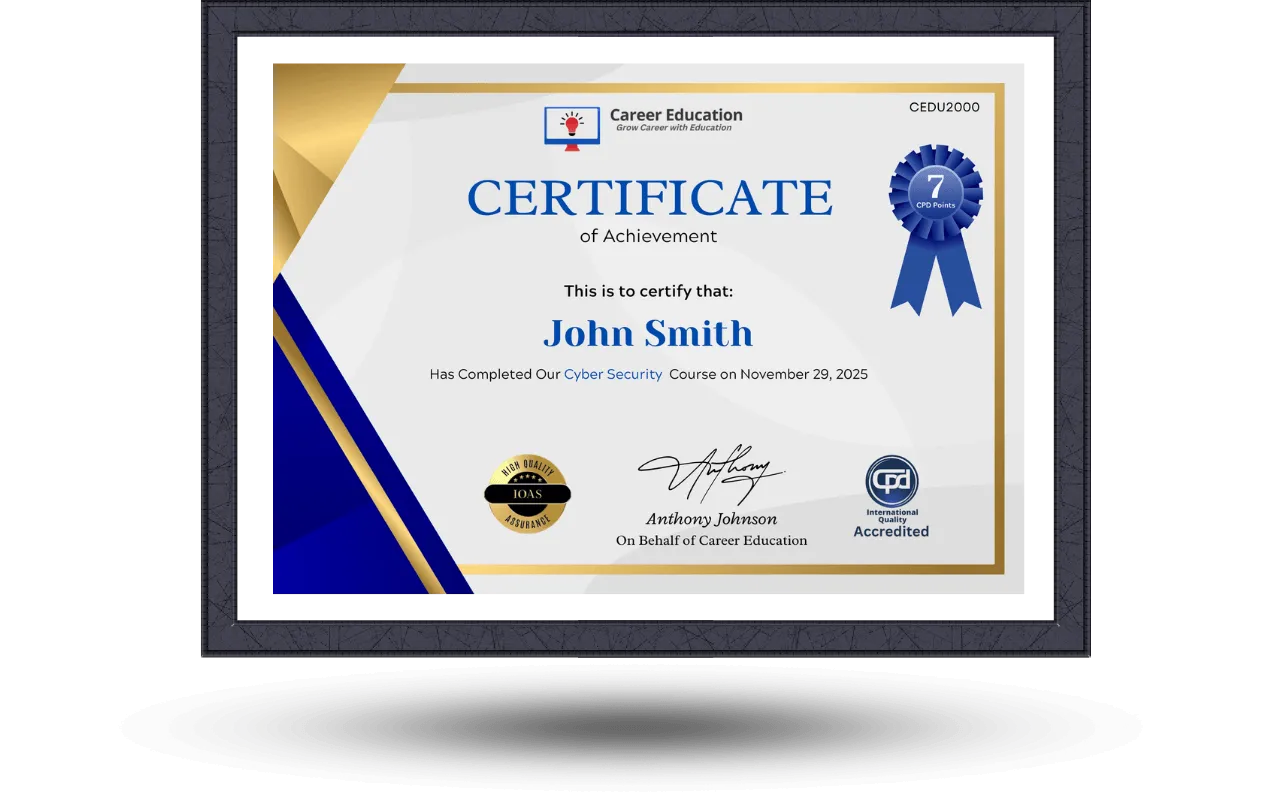
Upon completion of any course, all students are entitled to a CPD IQ Accredited e-certificate that will be issued by Career Education signifying the completion of your course.
After you complete the course and assignment, you will be eligible to order a free certificate accredited by CPD International Quality by completing the form below.
Hardcopy certificates and transcripts are also available for a small additional fee. More information is disclosed upon course completion.
Similar Courses


Frequently Asked Questions
The lifetime membership includes unlimited access to all courses, resources, and updates for a one-time fee.
You can purchase the membership directly from our website using a secure checkout process.
Yes, selected courses can be downloaded for offline access through our mobile app.
Yes, all future updates and new courses are included at no extra cost.
Yes, we offer a 30-day money-back guarantee if you are not satisfied with the membership.