
94%
OFF
OFF
Understanding Bipolar Disorder
- Lifetime Access
- All Levels
- PDF Certificate
£296
£19
14-Day Money-Back Guarantee
Learn With Confidence








Understanding Bipolar Disorder
Understanding Bipolar Disorder is an informative course designed to develop a clear, practical understanding of bipolar disorder, its symptoms, contributing factors, diagnosis, treatment approaches, and the support available to individuals and their families. Whether you are interested in mental health awareness, work in a caring or support environment, or simply want to develop your knowledge, this course provides a structured introduction to an important area of mental health.
Bipolar disorder is a complex mental health condition that can affect mood, energy, behaviour, thinking, relationships, and everyday functioning. Developing accurate knowledge can help reduce misconceptions, encourage compassionate support, and promote informed conversations about mental health. This course focuses on education and awareness, helping learners understand the condition without relying on stereotypes or assumptions.
What Is Understanding Bipolar Disorder?
Understanding Bipolar Disorder involves learning about the patterns of mood changes associated with bipolar disorder and recognising that the condition can affect people in different ways. The course explores key concepts surrounding bipolar disorder, including possible causes and risk factors, common symptoms, diagnostic considerations, treatment options, everyday management, professional support, legal and ethical issues, and ways to support someone living with the condition.
Rather than focusing only on theoretical information, the course connects knowledge to practical situations. Learners can develop greater confidence when discussing bipolar disorder, recognising when professional support may be appropriate, and understanding how different services can contribute to a person’s wellbeing.
Why Study Understanding Bipolar Disorder?
Mental health awareness is increasingly important across healthcare, education, workplaces, families, and communities. Bipolar disorder can sometimes be misunderstood because mood changes may be interpreted incorrectly or reduced to simple descriptions of being “up” or “down.”
Understanding the condition more accurately can help learners recognise that bipolar disorder is more complex than ordinary changes in mood. Knowledge can also encourage respectful communication and help individuals understand why professional assessment and appropriate support matter.
By completing Understanding Bipolar Disorder, learners can build a stronger foundation of knowledge and develop a more informed perspective on the experiences of people affected by the condition.
What Will You Learn?
Module 1 – Introduction to Bipolar Disorder
The course begins by establishing the fundamentals of bipolar disorder. Learners explore what bipolar disorder means, how it can affect mood and functioning, and why understanding the condition requires awareness of individual differences.
This module provides the foundation needed to approach later topics with greater clarity. You will develop an understanding of key terminology and concepts while beginning to distinguish bipolar disorder from everyday emotional fluctuations.
Module 2 – Causes and Risk Factors of Bipolar Disorder
Bipolar disorder can involve a combination of biological, psychological, genetic, and environmental influences. This module explores the different factors that may contribute to vulnerability and examines why there is no single explanation that applies to every individual.
You will gain a broader understanding of risk factors and learn why responsible mental health education should avoid simplistic explanations. This knowledge can help you approach bipolar disorder with greater awareness and sensitivity.
Module 3 – Recognising Symptoms and Diagnosis
Recognising possible symptoms is an important part of mental health awareness. This module examines features associated with different mood episodes and explores how bipolar disorder may present in different individuals.
You will also learn about the general principles involved in assessment and diagnosis. The emphasis is on understanding why diagnosis should be carried out by appropriately qualified professionals rather than based on assumptions or self-diagnosis.
By completing this module, learners can develop a more informed understanding of symptoms and appreciate the importance of professional assessment.
Module 4 – Bipolar Disorder Across the Lifespan
Mental health conditions can look different at different stages of life. This module explores bipolar disorder across the lifespan and considers how age, circumstances, development, relationships, and changing responsibilities may influence a person’s experience.
You will gain insight into why support should be individualised rather than based on a one-size-fits-all approach. This can be particularly valuable for learners who may encounter people with different backgrounds and support needs.
Module 5 – Treatment Approaches
Effective management of bipolar disorder may involve different forms of professional support. This module introduces learners to treatment approaches and explores the importance of personalised care.
You will develop awareness of commonly used approaches, the role of healthcare professionals, and the importance of ongoing monitoring and communication. The module also reinforces the principle that treatment decisions should be made with appropriate healthcare professionals.
This knowledge can help learners understand the wider treatment journey and communicate more appropriately with individuals receiving support.
Module 6 – Managing Bipolar Disorder in Daily Life
Living with bipolar disorder can involve challenges related to routines, relationships, work, education, communication, and general wellbeing. This module explores the importance of everyday management and supportive strategies.
Learners develop an understanding of how structured routines, awareness, communication, professional support, and personalised coping approaches can contribute to wellbeing. The focus is on practical awareness rather than prescribing individual treatment plans.
By the end of this module, you will have a clearer understanding of the everyday considerations that can form part of living with and managing bipolar disorder.
Module 7 – The Role of Professionals and Services
People affected by bipolar disorder may interact with different professionals and services. This module examines the roles that healthcare and support professionals can play and explains the importance of coordinated care.
You will learn about the value of appropriate professional involvement, communication, referrals, and support networks. This can help you better understand how different services may contribute to a person’s overall care and wellbeing.
Module 8 – Legal and Ethical Considerations
Mental health support involves important legal and ethical responsibilities. This module introduces key considerations surrounding areas such as confidentiality, dignity, autonomy, consent, safeguarding, professional boundaries, and respectful practice.
Learners will gain greater awareness of why ethical decision-making and appropriate professional conduct matter when supporting people affected by mental health conditions.
This knowledge can be particularly useful for anyone interested in care, support, education, or other environments where mental health awareness is relevant.
Module 9 – Supporting Someone with Bipolar Disorder
Support from family members, friends, colleagues, carers, and professionals can be valuable. This module explores how to provide appropriate, respectful support while recognising the importance of boundaries and professional help.
You will learn how informed communication and empathy can help create a more supportive environment. The module also highlights the importance of avoiding judgement, stereotypes, or assumptions about someone’s experiences.
The outcome is a more confident and compassionate approach to supporting someone affected by bipolar disorder.
Module 10 – Future Directions and Research
The final module looks toward the continuing development of knowledge surrounding bipolar disorder. Mental health research continues to investigate causes, diagnosis, treatment, prevention, and approaches to improving quality of life.
You will explore why ongoing research matters and how developments in mental health knowledge may influence future understanding and support. This module encourages learners to recognise that mental health education is continually evolving.
Course Outcomes
By completing Understanding Bipolar Disorder, you can expect to:
-
Develop a clear foundation in bipolar disorder and related terminology.
-
Understand potential causes and risk factors associated with bipolar disorder.
-
Recognise commonly discussed symptoms and understand the principles of professional diagnosis.
-
Explore how bipolar disorder may affect people at different stages of life.
-
Gain awareness of established treatment and support approaches.
-
Understand practical considerations surrounding daily life and wellbeing.
-
Identify the roles of different professionals and support services.
-
Develop awareness of legal and ethical considerations in mental health support.
-
Understand appropriate ways to support someone affected by bipolar disorder.
-
Appreciate the importance of continuing research and developments in mental health.
-
Communicate about bipolar disorder with greater knowledge, sensitivity, and confidence.
Who Can Benefit from This Course?
Understanding Bipolar Disorder can be suitable for learners who want to strengthen their general mental health knowledge or develop greater awareness of bipolar disorder.
It may be particularly relevant to:
-
Individuals interested in mental health awareness.
-
Aspiring healthcare and care-sector professionals.
-
Support workers and people working in community environments.
-
Students exploring health, care, psychology, or wellbeing-related subjects.
-
Family members or carers seeking general educational knowledge.
-
People interested in developing compassionate communication skills.
-
Professionals who want to broaden their general awareness of bipolar disorder.
The course is educational in nature and is not intended to replace professional medical, psychological, or psychiatric assessment, diagnosis, or treatment.
Build More Informed Mental Health Awareness
Knowledge can make a meaningful difference in the way mental health conditions are understood. Learning about bipolar disorder can help challenge common misconceptions and encourage more respectful conversations about mental health.
Understanding Bipolar Disorder provides a structured pathway through the subject, from foundational concepts and risk factors to symptoms, diagnosis, treatment, daily management, professional services, ethical considerations, and future research.
Instead of viewing bipolar disorder through assumptions or stereotypes, learners can develop a more balanced understanding of the condition and the different experiences individuals may have. This knowledge can support more thoughtful communication and help learners recognise the importance of appropriate professional support.
Take the Next Step with Understanding Bipolar Disorder
If you want to develop your knowledge of bipolar disorder and gain a stronger understanding of how it can affect individuals, families, and communities, Understanding Bipolar Disorder offers a comprehensive learning journey.
From recognising symptoms and understanding diagnosis to exploring treatment approaches, professional services, ethical considerations, and supportive relationships, the course covers the key areas needed to build a well-rounded foundation in the subject.
Start learning today and develop the knowledge, awareness, and confidence to approach bipolar disorder with greater understanding, compassion, and informed perspective.
Course Modules
Course Content
Module 1 – Introduction to Bipolar Disorder
-
Lesson 1 – Introduction to Bipolar Disorder
Module 2 – Causes and Risk Factors of Bipolar Disorder
Module 3 – Recognising Symptoms and Diagnosis
Module 4 – Bipolar Disorder Across the Lifespan
Module 5 – Treatment Approaches
Module 6 – Managing Bipolar Disorder in Daily Life
Module 7 – The Role of Professionals and Services
Module 8 – Legal and Ethical Considerations
Module 9 – Supporting Someone with Bipolar Disorder
Module 10 – Future Directions and Research
What our students say
Excellent
4.9 average
158 Reviews

Earn an Accredited Certificate
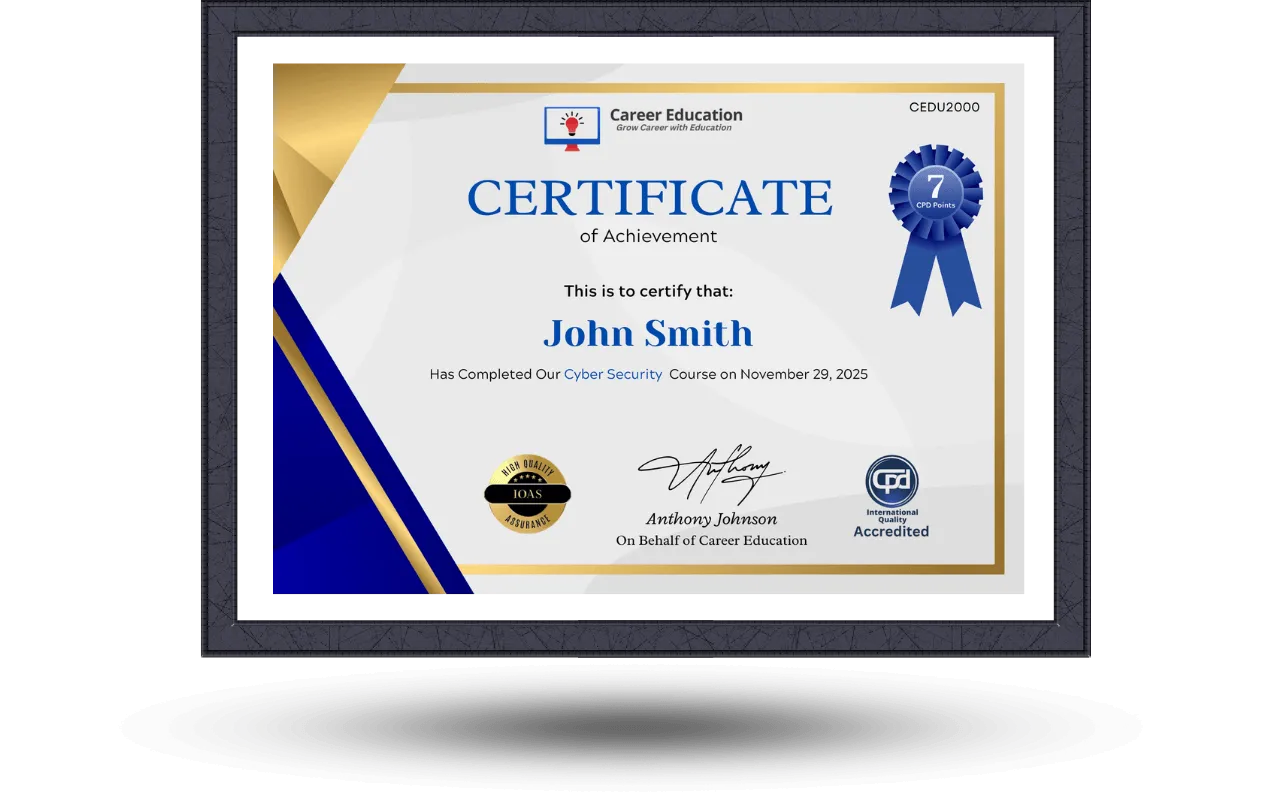
Upon completion of any course, all students are entitled to a CPD IQ Accredited e-certificate that will be issued by Career Education signifying the completion of your course.
After you complete the course and assignment, you will be eligible to order a free certificate accredited by CPD International Quality by completing the form below.
Hardcopy certificates and transcripts are also available for a small additional fee. More information is disclosed upon course completion.
Similar Courses




Frequently Asked Questions
The lifetime membership includes unlimited access to all courses, resources, and updates for a one-time fee.
You can purchase the membership directly from our website using a secure checkout process.
Yes, selected courses can be downloaded for offline access through our mobile app.
Yes, all future updates and new courses are included at no extra cost.
Yes, we offer a 30-day money-back guarantee if you are not satisfied with the membership.