
94%
OFF
OFF
Building a Strong Organizational Culture
- Lifetime Access
- All Levels
- PDF Certificate
£296
£19
14-Day Money-Back Guarantee
Learn With Confidence









# Building a Strong Organizational Culture
## Create a Positive, Purpose-Driven Workplace Where People Can Thrive
A strong organisational culture does more than define how people behave at work. It shapes how employees communicate, collaborate, make decisions, respond to challenges and contribute to organisational goals. When culture is intentional, consistent and aligned with organisational values, it can create a workplace where employees understand expectations, feel connected to a shared purpose and are motivated to contribute.
**Building a Strong Organizational Culture** is designed to help professionals, managers, team leaders and business owners understand the essential principles of creating and strengthening workplace culture. The course takes a practical, outcome-focused approach to help you assess your current culture, define meaningful values, establish positive behaviours, strengthen leadership practices, encourage collaboration and improve employee engagement.
Whether you are developing a culture within a growing business, helping an established organisation adapt to change or looking for ways to improve the employee experience, this course provides practical knowledge you can apply in real workplace situations.
## Why Building a Strong Organizational Culture Matters
Every organisation has a culture, whether it has been deliberately developed or has evolved naturally over time. Culture influences how people interact with colleagues, how leaders communicate expectations, how teams handle disagreements and how employees respond to organisational priorities.
A weak or inconsistent culture can lead to confusion, poor communication, disengagement and a lack of alignment. In contrast, a strong culture can provide employees with a clearer sense of purpose and create a more consistent working environment.
**Building a Strong Organizational Culture** helps you understand the factors that shape culture and how you can contribute to creating a healthier, more collaborative and purpose-driven workplace.
You will learn how to look beyond written policies and consider the everyday behaviours, expectations and interactions that define the employee experience. You will also explore the important role leaders play in reinforcing cultural standards and supporting meaningful cultural transformation.
## What You Will Learn
The course is structured into seven practical modules, taking you from the fundamentals of organisational culture through to employee engagement and recognition.
### Module 1 – Introduction to Organizational Culture
The course begins with the foundations of organisational culture.
In **Introduction to Organizational Culture**, you will explore what organisational culture means and why it matters to workplace performance, relationships and employee experiences. You will examine the different elements that contribute to culture, including shared values, beliefs, behaviours, communication patterns and workplace expectations.
Understanding culture requires looking beyond formal organisational structures. The way people communicate, collaborate and respond to everyday situations can reveal important aspects of an organisation’s culture.
This module will help you recognise the connection between culture and organisational effectiveness. You will develop a foundation for understanding how culture can influence employee behaviour, teamwork, leadership and overall workplace experience.
By completing this module, you will have a clearer understanding of why culture should be treated as an important organisational priority rather than an afterthought.
### Module 2 – Assessing Current Organizational Culture
Before improving organisational culture, it is important to understand where you are starting.
**Assessing Current Organizational Culture** focuses on evaluating existing cultural strengths, weaknesses, behaviours and workplace practices. You will explore ways to identify what is working effectively and where improvements may be needed.
You will learn to consider how employees experience the organisation and how everyday behaviours align with stated organisational values. This can help reveal gaps between what an organisation says it values and what employees actually experience.
The ability to assess culture objectively can support better decision making. Rather than making assumptions about workplace culture, leaders and professionals can examine patterns, behaviours and employee experiences to identify meaningful areas for improvement.
By the end of this module, you will be better prepared to identify cultural strengths and recognise opportunities for positive change.
### Module 3 – Articulating Vision and Values
A strong culture needs a clear sense of direction.
In **Articulating Vision and Values**, you will explore how an organisation’s vision and values can provide a foundation for workplace culture. You will examine how meaningful values can influence employee behaviour and help create greater alignment across teams.
You will learn why organisational values need to be more than statements displayed on a website or office wall. For values to have a genuine cultural impact, they need to be understood, communicated and reflected in everyday decisions and behaviours.
You will also explore how a clear organisational vision can help employees understand the wider purpose behind their work. When people understand what an organisation is trying to achieve and why its work matters, they can be better positioned to connect their individual contributions with broader objectives.
The outcome is a stronger understanding of how vision and values can become practical foundations for organisational culture.
### Module 4 – Creating Cultural Norms and Behaviors
Culture becomes visible through behaviour.
**Creating Cultural Norms and Behaviors** examines how organisations can establish expectations that encourage positive workplace conduct. You will explore how cultural norms develop and how leaders and teams can intentionally reinforce behaviours that support organisational values.
You will consider important areas such as communication, accountability, respect, teamwork, professionalism and collaboration. Establishing clear expectations can help employees understand what constructive workplace behaviour looks like in practice.
This module also highlights the importance of consistency. If organisational values promote collaboration but workplace behaviours reward individual competition, cultural confusion can develop. Strong cultures are supported when expectations, leadership actions and organisational practices reinforce one another.
By completing this module, you will gain practical insight into how everyday behaviours can strengthen or weaken organisational culture and how positive norms can be encouraged.
### Module 5 – Leadership and Cultural Transformation
Leaders play a central role in shaping organisational culture.
In **Leadership and Cultural Transformation**, you will explore how leadership behaviours influence workplace expectations and employee experiences. You will examine the responsibility leaders have to model the values and behaviours they expect from others.
Cultural transformation requires more than introducing new policies or making announcements. It requires consistent leadership, communication and reinforcement. Employees are more likely to embrace cultural change when they can see leaders demonstrating the desired behaviours themselves.
You will explore how leaders can support cultural transformation by communicating clearly, building trust, addressing inconsistencies and creating an environment where positive change can take place.
This module will help you understand how leadership can act as a catalyst for cultural improvement and how consistent leadership behaviour can contribute to lasting organisational change.
### Module 6 – Building a Collaborative Environment
Healthy organisational cultures encourage people to work together effectively.
**Building a Collaborative Environment** focuses on creating workplace conditions that support communication, cooperation, knowledge sharing and teamwork. You will explore the factors that can encourage employees to collaborate and contribute to shared goals.
Effective collaboration requires more than placing people in teams. Employees need clear expectations, effective communication and an environment where they can share ideas and perspectives constructively.
You will consider how leaders and organisations can reduce barriers to collaboration and encourage stronger relationships across teams. You will also explore the importance of trust and mutual respect in creating a workplace where employees feel comfortable contributing.
By the end of this module, you will have a better understanding of how collaborative practices can strengthen organisational culture and support improved teamwork.
### Module 7 – Employee Engagement and Recognition
A strong organisational culture depends on people who feel connected to their work and valued for their contributions.
**Employee Engagement and Recognition** explores how organisations can create conditions that encourage employees to remain involved, motivated and committed to organisational objectives.
You will examine the importance of recognising employee contributions and creating meaningful opportunities for people to feel valued. Recognition does not always need to be formal or financial. Genuine appreciation, constructive feedback, opportunities to contribute and acknowledgement of achievements can all support a positive workplace experience.
You will also explore the relationship between engagement and culture. When employees understand organisational goals, feel respected and believe their contributions matter, they can be more likely to participate actively in the organisation’s success.
The outcome is a stronger understanding of how engagement and recognition can become important components of a healthy and sustainable organisational culture.
## Practical Outcomes of the Course
The primary goal of **Building a Strong Organizational Culture** is to help you develop knowledge that can be translated into practical workplace improvements.
After completing the course, you will be better prepared to:
* Explain the meaning and importance of organisational culture.
* Identify the key factors that influence workplace culture.
* Assess existing cultural strengths and areas requiring improvement.
* Recognise gaps between stated values and actual workplace behaviours.
* Develop a clearer understanding of organisational vision and values.
* Translate organisational values into practical workplace expectations.
* Encourage positive cultural norms and behaviours.
* Understand the influence of leadership on organisational culture.
* Support cultural transformation through consistent leadership practices.
* Create an environment that encourages collaboration and communication.
* Strengthen employee participation and engagement.
* Recognise and appreciate employee contributions more effectively.
* Promote greater alignment between people, values and organisational objectives.
* Contribute to a more positive, inclusive and productive workplace environment.
## Who Is This Course For?
**Building a Strong Organizational Culture** is suitable for professionals who want to understand how workplace culture can be developed, strengthened and maintained.
It can be particularly useful for:
* Business owners and entrepreneurs.
* Managers and department heads.
* Team leaders and supervisors.
* HR and people-management professionals.
* Organisational development professionals.
* Project and operations managers.
* Professionals involved in workplace transformation.
* Newly appointed managers who want to establish positive team cultures.
* Employees interested in contributing to a healthier workplace.
* Anyone seeking practical knowledge of organisational culture.
You do not need to be responsible for an entire organisation to benefit from this course. Culture exists at organisational, departmental and team levels, meaning professionals in a wide range of roles can apply the principles covered.
## Turn Organisational Values into Everyday Actions
One of the most important lessons of **Building a Strong Organizational Culture** is that culture is demonstrated through actions.
An organisation may have impressive values, but those values only become meaningful when they influence everyday behaviour. For example, an organisation that values respect needs leaders and employees to demonstrate respectful communication. An organisation that values collaboration needs to create opportunities for people to share ideas and work across boundaries.
This course helps you understand that cultural development is an ongoing process. It involves identifying desired behaviours, communicating expectations, modelling those behaviours and recognising people who contribute positively to the culture.
## Strengthen Leadership Through Cultural Awareness
Leaders who understand organisational culture are better equipped to influence workplace behaviour and support meaningful change.
Throughout **Building a Strong Organizational Culture**, you will explore how leadership actions can reinforce or undermine cultural expectations. You will gain a greater appreciation of the importance of consistency, accountability and role modelling.
This understanding can help you become more intentional in the way you lead teams, communicate expectations and respond to workplace challenges.
## Create a More Engaged and Collaborative Workplace
Employee engagement is closely connected to the workplace environment. People want to understand how their work contributes to organisational goals, feel respected by colleagues and leaders, and know that their efforts are recognised.
The course provides insight into how organisations can create a culture where employees are encouraged to collaborate, contribute ideas and take ownership of their responsibilities.
By strengthening communication, recognition and shared purpose, organisations can create an environment where employees are better positioned to contribute to collective success.
## Take the Next Step Towards a Stronger Workplace Culture
A strong organisational culture does not happen by accident. It is shaped by leadership, communication, values, behaviours, relationships and everyday workplace experiences.
**Building a Strong Organizational Culture** gives you a practical foundation for understanding these elements and using them to support positive organisational development.
From assessing your current culture and defining meaningful values to creating positive behavioural norms, supporting cultural transformation, strengthening collaboration and improving employee engagement, the course provides a structured approach to building a workplace culture that supports both people and organisational objectives.
If you want to contribute to a workplace where employees understand the organisation’s purpose, collaborate effectively, feel valued and work towards shared goals, **Building a Strong Organizational Culture** can help you develop the knowledge and perspective needed to take meaningful action.
**Start Building a Strong Organizational Culture today and take a practical step towards creating a more positive, collaborative, engaged and purpose-driven workplace.**
Course Modules
Course Content
Module 1_ Introduction to Organizational Culture
-
Lesson 1_ Introduction to Organizational Culture
Module 2_ Assessing Current Organizational Culture
Module 3_ Articulating Vision and Values
Module 4_ Creating Cultural Norms and Behaviors
Module 5_ Leadership and Cultural Transformation
Module 6_ Building a Collaborative Environment
Module 7_ Employee Engagement and Recognition
What our students say
Excellent
4.9 average
158 Reviews

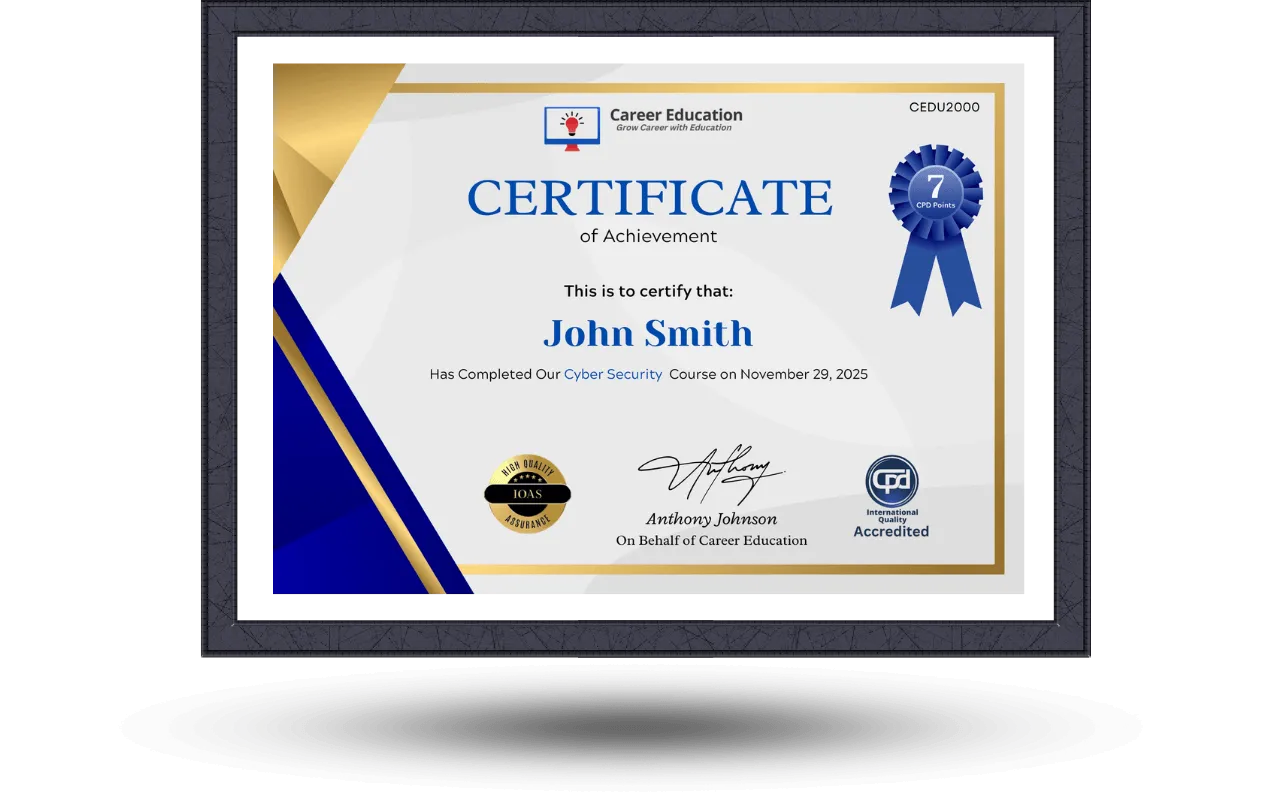
Earn an Accredited Certificate
Upon completion of any course, all students are entitled to a CPD IQ Accredited e-certificate that will be issued by Career Education signifying the completion of your course.
After you complete the course and assignment, you will be eligible to order a free certificate accredited by CPD International Quality by completing the form below.
Hardcopy certificates and transcripts are also available for a small additional fee. More information is disclosed upon course completion.
Similar Courses



Frequently Asked Questions
The lifetime membership includes unlimited access to all courses, resources, and updates for a one-time fee.
You can purchase the membership directly from our website using a secure checkout process.
Yes, selected courses can be downloaded for offline access through our mobile app.
Yes, all future updates and new courses are included at no extra cost.
Yes, we offer a 30-day money-back guarantee if you are not satisfied with the membership.