
94%
OFF
OFF
Supporting Palliative Care as a Support Worker
- Lifetime Access
- All Levels
- PDF Certificate
£296
£19
14-Day Money-Back Guarantee
Learn With Confidence









# Supporting Palliative Care as a Support Worker
Supporting people during palliative and end-of-life care requires compassion, patience, professionalism, and a strong understanding of individual needs. The **Supporting Palliative Care as a Support Worker** course is designed to help learners develop the practical knowledge and professional awareness needed to provide respectful, person-centred support to individuals living with life-limiting conditions and to those approaching the end of life.
Palliative care is about much more than managing physical needs. It considers the whole person, including their comfort, emotional wellbeing, communication preferences, cultural values, spiritual needs, dignity, and relationships with family and carers. Support workers can play an important role within this approach by providing appropriate day-to-day assistance, observing changes, communicating concerns, and helping individuals feel respected and supported.
This comprehensive course provides a structured introduction to the key principles of palliative care while exploring the responsibilities and boundaries of a support worker. Through ten focused modules, learners can build confidence in communicating sensitively, supporting comfort, working with multidisciplinary professionals, understanding ethical considerations, assisting families, and maintaining their own professional wellbeing.
## What Is Supporting Palliative Care as a Support Worker?
**Supporting Palliative Care as a Support Worker** focuses on the role support workers can play when caring for individuals with serious or life-limiting illnesses. Palliative care aims to improve quality of life and provide holistic support for individuals and their families.
Support workers may contribute to care in a range of settings, including residential care, community environments, supported living services, and other health and social care settings. Their responsibilities vary according to their role, training, workplace policies, and scope of practice.
The course helps learners understand how their contribution fits within a wider care team. It also emphasises the importance of dignity, respect, individual choice, confidentiality, effective communication, and appropriate professional boundaries.
Rather than focusing solely on tasks, the course encourages learners to consider the person behind the care plan and recognise that every individual’s experience, preferences, circumstances, and priorities can be different.
## Why Study Supporting Palliative Care as a Support Worker?
Palliative care can involve complex physical, emotional, social, cultural, and ethical considerations. Support workers need to approach their responsibilities with sensitivity and professionalism.
This course can help learners:
* Understand the principles and purpose of palliative care.
* Develop more confident and sensitive communication skills.
* Recognise ways to support physical comfort within their role.
* Understand the importance of psychological and emotional support.
* Develop awareness of spiritual and cultural considerations.
* Work effectively with multidisciplinary care teams.
* Explore ethical and legal responsibilities in care settings.
* Provide appropriate support to families and carers.
* Understand important considerations during end-of-life care.
* Develop strategies for personal wellbeing and professional development.
By completing the course, learners can strengthen their understanding of person-centred palliative support and become better prepared to contribute appropriately within their professional responsibilities.
## What Will You Learn?
### Module 1: Introduction to Palliative Care
The course begins by establishing a clear foundation in palliative care. Learners explore what palliative care means, its purpose, and the principles that underpin high-quality support.
This module introduces concepts such as quality of life, person-centred care, dignity, comfort, choice, and holistic support. Learners also consider the role of support workers and how their responsibilities fit within broader health and social care services.
By the end of this module, learners can develop a stronger understanding of why palliative care requires an individualised and compassionate approach.
### Module 2: Communication Skills in Palliative Care
Communication is particularly important when supporting individuals with serious or life-limiting conditions. People may experience uncertainty, difficult emotions, changing needs, or concerns about the future.
This module explores effective communication approaches that can help support workers listen attentively, communicate respectfully, and respond appropriately. Learners consider verbal and non-verbal communication, active listening, empathy, appropriate questioning, and the importance of adapting communication to individual preferences.
The module also highlights the importance of professional boundaries and recognising when a concern should be referred to an appropriate healthcare professional.
The outcome is greater confidence in communicating with individuals and families in sensitive care situations.
### Module 3: Physical Care and Comfort Measures
Physical comfort is an important aspect of palliative care. Individuals may have changing care needs, and support workers may contribute to their comfort through appropriate support within their role.
This module explores general principles of physical care and comfort measures. Learners develop awareness of monitoring wellbeing, supporting personal care, maintaining dignity, recognising changes, and reporting concerns through appropriate channels.
The focus is on understanding the support worker’s responsibilities rather than working beyond professional competence. Learners can therefore develop a clearer understanding of how to provide safe, respectful, person-centred assistance.
### Module 4: Psychological and Emotional Support
Living with a serious illness can affect a person’s emotional and psychological wellbeing. Individuals may experience a range of emotions, and families may also need support as they adjust to changing circumstances.
This module examines how support workers can provide compassionate emotional support while maintaining appropriate professional boundaries. Learners explore active listening, reassurance, empathy, respectful presence, and recognising when additional professional support may be appropriate.
The module encourages learners to understand that emotional support does not always involve finding solutions. Sometimes, listening respectfully and acknowledging an individual’s feelings can be an important part of person-centred care.
### Module 5: Spiritual and Cultural Sensitivity
Every individual has their own beliefs, values, traditions, cultural background, and preferences. These factors may influence how a person understands illness, receives care, communicates their wishes, and approaches end-of-life experiences.
This module develops awareness of spiritual and cultural sensitivity in palliative care. Learners explore the importance of respecting individual beliefs without making assumptions or imposing personal views.
The course encourages inclusive practice, respectful communication, and recognition of individual preferences. Learners can develop greater confidence in supporting people in ways that respect their identity, values, dignity, and choices.
### Module 6: Working as Part of the Multidisciplinary Team
Palliative care commonly involves collaboration between different professionals and care workers. Effective teamwork helps ensure that relevant information is communicated appropriately and that individuals receive coordinated support.
This module explores the role of the multidisciplinary team and the importance of collaboration. Learners consider communication, information sharing, professional responsibilities, confidentiality, documentation, and appropriate escalation of concerns.
Understanding team roles can help support workers recognise where their responsibilities begin and end while ensuring important observations are communicated to the appropriate professionals.
### Module 7: Ethical and Legal Considerations
Palliative care can involve important ethical and legal considerations. Support workers need to understand the principles that guide safe and respectful practice.
This module explores topics such as dignity, autonomy, consent, confidentiality, safeguarding, professional boundaries, and working within organisational policies and relevant legal frameworks.
Learners gain greater awareness of why decisions in care should be approached carefully and why individuals should be treated with respect throughout their care journey.
The module also reinforces the importance of seeking guidance when situations fall outside a support worker’s competence or authority.
### Module 8: Supporting Families and Carers
Palliative care affects more than the individual receiving care. Families and informal carers may also experience significant emotional, practical, and social pressures.
This module explores how support workers can interact respectfully with families and carers while maintaining confidentiality and professional boundaries. Learners consider communication, empathy, appropriate signposting, and the importance of recognising that families may have different needs and perspectives.
The goal is to help learners contribute to a supportive care environment while ensuring that professional responsibilities remain clear.
### Module 9: End-of-Life Care and Final Stages
The final stages of life require sensitive, respectful, and person-centred care. Support workers may have an important role in maintaining dignity, comfort, communication, and appropriate support according to the individual’s care plan and professional responsibilities.
This module introduces key considerations associated with end-of-life care. Learners explore the importance of respecting individual wishes, communicating appropriately, supporting families, recognising changes, and working closely with relevant professionals.
The module helps learners approach end-of-life care with greater understanding, professionalism, and sensitivity.
### Module 10: Self-Care and Professional Development
Supporting people through serious illness and end-of-life care can be emotionally demanding. Professional wellbeing is therefore an important part of sustainable care practice.
This module focuses on self-care, reflective practice, professional boundaries, learning, and continuing development. Learners explore ways to recognise the importance of their own wellbeing while maintaining appropriate professional standards.
The module encourages a culture of reflection and continuous improvement, helping learners identify opportunities to strengthen their knowledge and skills over time.
## Practical Outcomes of the Course
After completing **Supporting Palliative Care as a Support Worker**, learners can expect to have a broader understanding of the principles and practices involved in palliative support.
Key outcomes include the ability to:
* Explain the purpose and principles of palliative care.
* Communicate with individuals and families sensitively and respectfully.
* Understand general approaches to physical comfort and support.
* Recognise the importance of emotional and psychological wellbeing.
* Demonstrate awareness of cultural and spiritual sensitivity.
* Understand how multidisciplinary teams contribute to palliative care.
* Recognise ethical, legal, and professional responsibilities.
* Understand appropriate approaches to supporting families and carers.
* Develop awareness of important considerations during end-of-life care.
* Recognise the importance of self-care and continuing professional development.
## Who Can Benefit From This Course?
The **Supporting Palliative Care as a Support Worker** course can be useful for individuals who work in or are interested in health and social care environments where palliative support may be required.
It may be particularly relevant to:
* Support workers.
* Care assistants.
* Healthcare support staff.
* Residential care workers.
* Community care workers.
* Social care professionals seeking additional knowledge.
* Individuals preparing for responsibilities involving palliative care.
* Learners interested in developing their health and social care knowledge.
The course can also provide useful professional development for learners who want to improve their understanding of compassionate, person-centred care.
## Build Confidence in Compassionate Care
High-quality palliative care requires more than knowledge of care tasks. It requires an understanding of people, communication, dignity, choice, cultural awareness, teamwork, and professional responsibility.
The **Supporting Palliative Care as a Support Worker** course brings these areas together in one structured learning programme. From understanding the foundations of palliative care to supporting families, working within multidisciplinary teams, and maintaining professional wellbeing, learners gain knowledge that can support thoughtful and responsible practice.
Whether you are developing your existing care skills or preparing for greater responsibilities within health and social care, this course can help you build a stronger foundation for supporting individuals with compassion, respect, and professionalism.
Enrol in **Supporting Palliative Care as a Support Worker** today and develop the knowledge and confidence to contribute more effectively to person-centred palliative care while understanding your professional role, responsibilities, and boundaries.
Course Modules
Course Content
Module 1_ Introduction to Palliative Care
-
Lesson 1_ Introduction to Palliative Care
Module 2_ Communication Skills in Palliative Care
Module 3_ Physical Care and Comfort Measures
Module 4_ Psychological and Emotional Support
Module 5_ Spiritual and Cultural Sensitivity
Module 6_ Working as Part of the Multidisciplinary Team
Module 7_ Ethical and Legal Considerations
Module 8_ Supporting Families and Carers
Module 9_ End-of-Life Care and Final Stages
Module 10_ Self-Care and Professional Development
What our students say
Excellent
4.9 average
158 Reviews

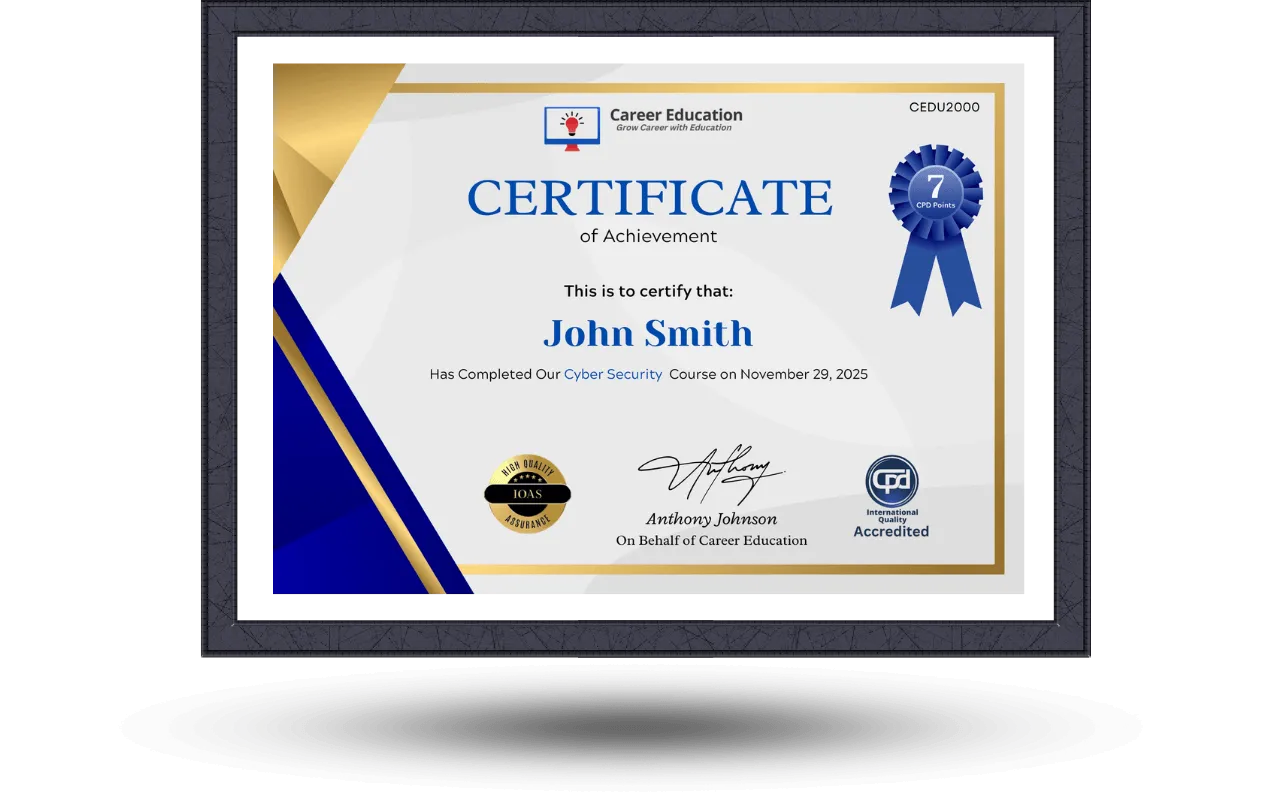
Earn an Accredited Certificate
Upon completion of any course, all students are entitled to a CPD IQ Accredited e-certificate that will be issued by Career Education signifying the completion of your course.
After you complete the course and assignment, you will be eligible to order a free certificate accredited by CPD International Quality by completing the form below.
Hardcopy certificates and transcripts are also available for a small additional fee. More information is disclosed upon course completion.
Similar Courses



Frequently Asked Questions
The lifetime membership includes unlimited access to all courses, resources, and updates for a one-time fee.
You can purchase the membership directly from our website using a secure checkout process.
Yes, selected courses can be downloaded for offline access through our mobile app.
Yes, all future updates and new courses are included at no extra cost.
Yes, we offer a 30-day money-back guarantee if you are not satisfied with the membership.