OFF
Entrepreneurial Mindset Essentials
- Lifetime Access
- All Levels
- PDF Certificate
Learn With Confidence









Overview
# Entrepreneurial Mindset Essentials
Entrepreneurship begins with more than a business idea. It starts with the way you think about opportunities, challenges, uncertainty, creativity, decision-making, and growth. A strong entrepreneurial mindset can help individuals recognise possibilities, take calculated risks, learn from setbacks, and turn ideas into purposeful action.
**Entrepreneurial Mindset Essentials** is an outcome-focused course designed to help aspiring entrepreneurs, business owners, professionals, freelancers, and emerging leaders develop the thinking patterns and practical capabilities associated with entrepreneurial success.
The course explores opportunity recognition, idea generation, vision and goal setting, risk management, resilience, innovation, strategic planning, execution, networking, and relationship building. Rather than focusing only on starting a business, the course develops a broader entrepreneurial approach that can be applied to business creation, career development, leadership, and professional growth.
Whether you are considering launching your first business, developing a new product or service, exploring a business opportunity, or looking for ways to become more proactive and innovative in your professional life, **Entrepreneurial Mindset Essentials** provides a structured foundation for developing entrepreneurial thinking.
—
## Why an Entrepreneurial Mindset Matters
Successful entrepreneurs do not simply wait for opportunities to appear. They learn to identify problems, observe changing needs, explore possibilities, and take purposeful action.
An entrepreneurial mindset can help individuals:
* Recognise opportunities.
* Think creatively.
* Set meaningful goals.
* Make informed decisions.
* Manage uncertainty.
* Learn from setbacks.
* Adapt to change.
* Develop practical strategies.
* Build professional relationships.
* Turn ideas into action.
Entrepreneurial thinking is valuable even for people who do not plan to start a company. Employees can use entrepreneurial skills to improve processes, introduce new ideas, solve workplace problems, and identify opportunities for innovation.
**Entrepreneurial Mindset Essentials** helps learners develop these capabilities through a structured seven-module curriculum.
—
# What You Will Learn
By completing **Entrepreneurial Mindset Essentials**, learners will be able to:
* Explain the fundamental principles of an entrepreneurial mindset.
* Identify potential business and professional opportunities.
* Generate and evaluate ideas.
* Develop a clear vision and meaningful goals.
* Understand risk and uncertainty.
* Build resilience when facing setbacks.
* Apply creativity and innovation to problem-solving.
* Develop practical strategies for achieving objectives.
* Understand the importance of execution and accountability.
* Build valuable professional networks.
* Strengthen business relationships.
* Approach challenges with greater initiative and adaptability.
—
# Course Curriculum
## Module 1: Introduction to the Entrepreneurial Mindset
### Lesson 1: Introduction to the Entrepreneurial Mindset
The course begins by exploring what an entrepreneurial mindset means and why it can be valuable in business and professional environments.
Learners will examine characteristics commonly associated with entrepreneurial thinking, including:
* Initiative.
* Curiosity.
* Adaptability.
* Creativity.
* Opportunity awareness.
* Problem-solving.
* Persistence.
* Responsibility.
* Calculated risk-taking.
* Continuous learning.
Participants will explore the difference between simply having an idea and developing the mindset required to act on that idea.
Entrepreneurial thinking involves being willing to explore uncertainty while remaining realistic about potential challenges and consequences.
The module also introduces the concept of learning from experience.
Entrepreneurs will inevitably encounter mistakes, unexpected results, changing markets, and unsuccessful approaches. An entrepreneurial mindset encourages individuals to evaluate these experiences, learn from them, and use the lessons to improve future decisions.
By completing this module, learners will understand the core characteristics of an entrepreneurial mindset and how these characteristics can support personal and business growth.
—
# Module 2: Opportunity Recognition and Ideation
Opportunities can emerge from problems, changing customer needs, technological developments, market gaps, and everyday frustrations.
This module focuses on recognising opportunities and generating ideas.
Learners will explore:
* Opportunity identification.
* Problem-solving.
* Customer needs.
* Market gaps.
* Idea generation.
* Observation.
* Trend awareness.
* Creative thinking.
* Idea evaluation.
Participants will learn how to look beyond obvious business opportunities and examine the problems people experience.
A strong business idea often begins with a simple question: What problem needs solving?
Learners will explore techniques for generating multiple ideas rather than becoming attached to the first concept that comes to mind.
The module also introduces ways to evaluate ideas more critically.
Not every interesting idea represents a viable opportunity. Entrepreneurs need to consider factors such as customer demand, available resources, competition, potential value, practical feasibility, and possible challenges.
By completing this module, learners will be better prepared to identify opportunities and generate ideas with greater purpose.
—
# Module 3: Vision and Goal Setting
Ideas become more useful when they are connected to a clear direction.
This module focuses on developing an entrepreneurial vision and setting meaningful goals.
Learners will explore:
* Vision development.
* Purpose.
* Goal setting.
* Short-term objectives.
* Long-term objectives.
* Prioritisation.
* Action planning.
* Progress measurement.
Participants will examine the difference between having a general ambition and establishing clearly defined objectives.
A vision can provide direction, while goals can translate that direction into measurable steps.
Learners will consider how to break larger ambitions into smaller objectives that can be monitored and reviewed.
The module also explores the importance of flexibility.
Entrepreneurial goals may need to change when market conditions, resources, customer needs, or other circumstances change.
By completing this module, learners will have a stronger framework for translating entrepreneurial ideas into purposeful goals and actionable plans.
—
# Module 4: Risk Management and Resilience
Entrepreneurship involves uncertainty.
New businesses and innovative projects can encounter financial pressures, changing customer demand, competition, operational problems, unexpected costs, and other challenges.
This module focuses on risk management and resilience.
Learners will explore:
* Risk identification.
* Risk assessment.
* Risk mitigation.
* Decision-making under uncertainty.
* Contingency planning.
* Resilience.
* Adaptability.
* Learning from setbacks.
Participants will examine the difference between taking reckless risks and taking calculated risks.
Entrepreneurial risk management involves identifying potential problems, evaluating their possible impact, and considering ways to reduce or manage those risks.
The module also explores resilience.
Setbacks do not necessarily mean that an entrepreneurial idea has failed permanently. They can provide information that helps entrepreneurs revise strategies, improve products, reconsider assumptions, or identify better approaches.
Learners will develop a more balanced perspective on failure, uncertainty, and entrepreneurial challenges.
By completing this module, participants will be better prepared to approach uncertainty with greater awareness and resilience.
—
# Module 5: Innovation and Creativity
Innovation can help businesses differentiate themselves, solve customer problems, improve processes, and respond to changing markets.
This module explores the relationship between creativity and entrepreneurial thinking.
Learners will examine:
* Creative problem-solving.
* Innovation.
* Idea development.
* Experimentation.
* Adaptability.
* Continuous improvement.
* Customer-focused innovation.
* Challenging assumptions.
Participants will explore ways to encourage creativity rather than automatically relying on familiar solutions.
Innovation does not always require inventing something completely new.
It can involve improving an existing product, simplifying a process, changing how a service is delivered, identifying a new customer group, or finding a more effective way to solve an existing problem.
The module encourages learners to experiment with ideas while remaining focused on practical value.
By completing this module, learners will have greater awareness of how creativity and innovation can support entrepreneurial opportunities and business development.
—
# Module 6: Strategic Planning and Execution
A good idea requires effective execution.
This module focuses on turning entrepreneurial goals into practical strategies and actions.
Learners will explore:
* Strategic planning.
* Priorities.
* Resource allocation.
* Action plans.
* Implementation.
* Performance monitoring.
* Adaptation.
* Accountability.
* Continuous improvement.
Participants will consider why entrepreneurs need to move beyond planning and take consistent action.
Strategic planning can provide direction, but execution determines whether plans produce results.
Learners will examine how to prioritise activities, allocate available resources, monitor progress, and make adjustments when circumstances change.
The module also highlights the importance of avoiding excessive planning without action.
Entrepreneurial success often requires testing assumptions, gathering feedback, learning from results, and improving the approach over time.
By completing this module, learners will develop a stronger understanding of how to connect strategy with practical execution.
—
# Module 7: Networking and Building Relationships
Entrepreneurship rarely happens in isolation.
Customers, suppliers, mentors, partners, investors, colleagues, industry professionals, and other contacts can all contribute to business opportunities and professional development.
This module focuses on networking and relationship building.
Learners will explore:
* Professional networking.
* Relationship development.
* Communication.
* Trust.
* Collaboration.
* Mentoring.
* Partnerships.
* Personal credibility.
* Long-term relationship management.
Participants will learn why effective networking is about more than collecting contact information.
Strong professional relationships are built through genuine communication, reliability, mutual value, and consistent engagement.
The module also explores how entrepreneurs can communicate their ideas clearly and professionally when meeting potential customers, partners, or collaborators.
By completing this module, learners will understand how strategic relationships can support entrepreneurial growth and create new opportunities.
—
# Who Is This Course For?
**Entrepreneurial Mindset Essentials** is suitable for anyone who wants to develop entrepreneurial thinking and practical business-oriented skills.
It can benefit:
* Aspiring entrepreneurs.
* Startup founders.
* Small business owners.
* Freelancers.
* Self-employed professionals.
* Business professionals.
* Managers.
* Team leaders.
* Career changers.
* Innovators.
* Consultants.
* Students and graduates.
* Professionals considering entrepreneurship.
The course is also useful for employees who want to become more proactive, innovative, and opportunity-focused within their organisations.
—
# Practical Learning Outcomes
The course focuses on outcomes that learners can apply in real-world situations.
After completing **Entrepreneurial Mindset Essentials**, learners will be better prepared to:
### Think Entrepreneurially
Develop a proactive approach to opportunities, challenges, problem-solving, and professional growth.
### Identify Opportunities
Recognise problems, market needs, and potential opportunities that could lead to new ideas or initiatives.
### Generate Ideas
Use creative approaches to develop and evaluate potential business and professional ideas.
### Set Clear Goals
Translate a broader vision into realistic objectives and practical action steps.
### Manage Risk
Recognise potential risks and consider appropriate strategies for managing uncertainty.
### Build Resilience
Respond to setbacks with greater adaptability and use experience to improve future decisions.
### Encourage Innovation
Apply creativity and continuous improvement to business and workplace challenges.
### Execute Strategies
Move from ideas and plans toward practical implementation and measurable progress.
### Build Relationships
Develop professional networks and relationships that can support collaboration, learning, and opportunity development.
—
# Turn Ideas Into Action
One of the most important aspects of entrepreneurial thinking is action.
It is easy to have an idea. It is more difficult to evaluate it, develop a strategy, take the first step, learn from feedback, and continue improving.
**Entrepreneurial Mindset Essentials** encourages learners to approach entrepreneurship as an ongoing process of observation, experimentation, learning, and execution.
This approach can help individuals become more comfortable with uncertainty while remaining focused on practical outcomes.
—
# Develop Confidence in Decision-Making
Entrepreneurs regularly make decisions without having perfect information.
They may need to decide whether to pursue an opportunity, invest resources, change direction, test an idea, approach a new customer group, or collaborate with another organisation.
An entrepreneurial mindset does not eliminate uncertainty. Instead, it helps individuals become more comfortable analysing available information and making informed decisions.
Through the course, learners will explore risk awareness, strategic thinking, resilience, and adaptability as important elements of entrepreneurial decision-making.
—
# Build a Growth-Oriented Approach
Entrepreneurial thinking involves continuous development.
Markets change. Customer expectations evolve. Technology develops. Competitors introduce new approaches. Strategies that work today may require adjustment tomorrow.
A growth-oriented entrepreneur remains willing to learn, experiment, listen to feedback, and improve.
The principles explored in **Entrepreneurial Mindset Essentials** can therefore support long-term professional development as well as business creation.
—
# Strengthen Your Professional Network
Relationships can create opportunities that are difficult to find independently.
A professional contact may introduce you to a potential customer. A mentor may provide valuable insight. A business partner may contribute complementary skills. A peer may identify an opportunity you had not considered.
Effective networking is therefore an important entrepreneurial capability.
The course helps learners understand how to build relationships based on trust, communication, collaboration, and mutual value.
—
# Enrol in Entrepreneurial Mindset Essentials Today
An entrepreneurial mindset can help you see possibilities where others see problems, approach uncertainty with greater confidence, and turn ideas into purposeful action.
**Entrepreneurial Mindset Essentials** provides a structured seven-module learning experience covering entrepreneurial thinking, opportunity recognition, vision and goal setting, risk management, resilience, innovation, strategic planning, execution, networking, and relationship building.
The course is intended for general educational and professional development purposes. It does not guarantee business success, profitability, investment outcomes, or entrepreneurial results. Business decisions should be based on appropriate research, professional advice where necessary, and the specific circumstances of each venture.
Whether you are preparing to launch a business, exploring a new opportunity, developing an innovative project, or simply looking to become more proactive and commercially aware, **Entrepreneurial Mindset Essentials** can provide a valuable foundation.
**Enrol today and develop the mindset to recognise opportunities, generate ideas, set meaningful goals, manage risk, build resilience, innovate with purpose, execute strategies, and create relationships that support your entrepreneurial journey.**
Course Modules
Course Content
Module 1_ Introduction to the Entrepreneurial Mindset
-
Lesson 1_ Introduction to the Entrepreneurial Mindset
Module 2_ Opportunity Recognition and Ideation
Module 3_ Vision and Goal Setting
Module 4_ Risk Management and Resilience
Module 5_ Innovation and Creativity
Module 6_ Strategic Planning and Execution
Module 7_ Networking and Building Relationships
What our students say

Earn an Accredited Certificate
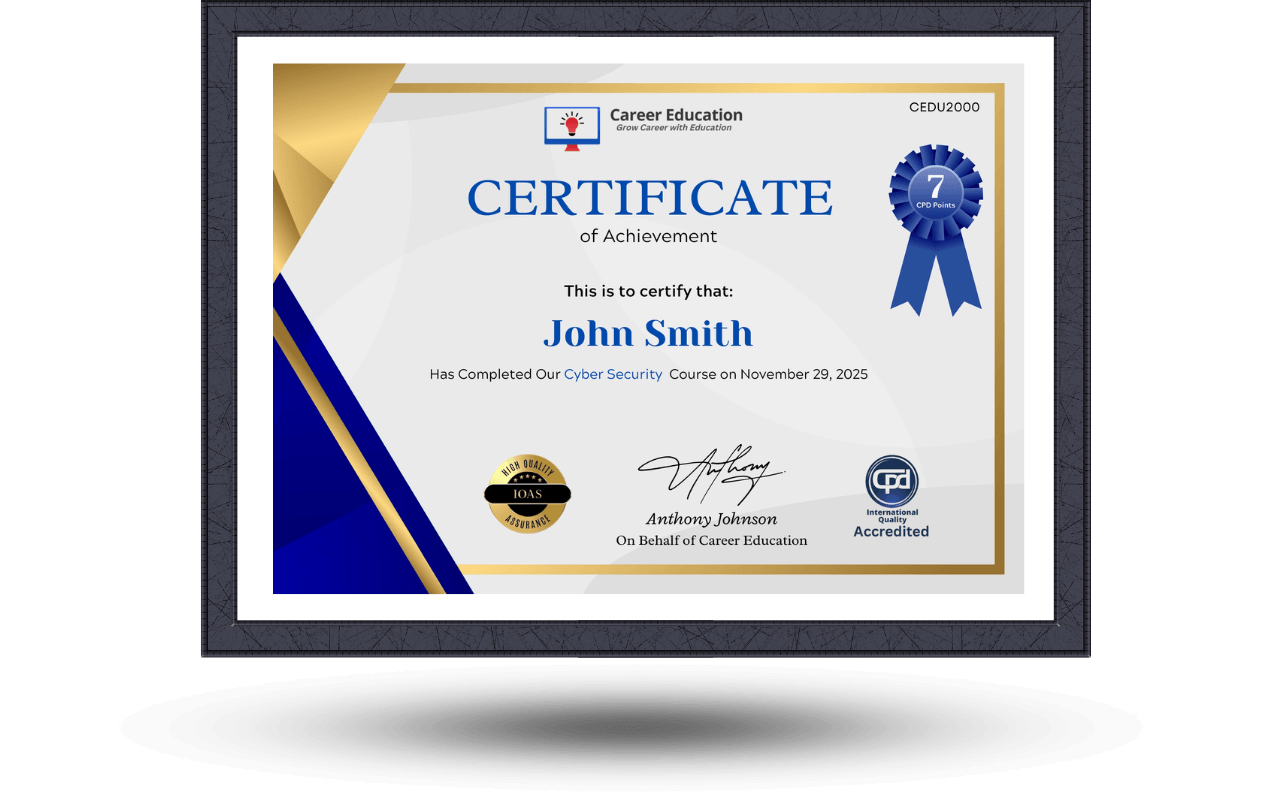
Upon completion of the course, an e-certificate will be downloadable from Khan Education signifying the completion of your course. But, the course is CPD Accredited and after you complete the assignment, you will be eligible to order a certificate accredited by CPD International Quality for £5.99 only. If you want a hardcopy certificate accredited by CPD IQ, you can get it for only £15.99.
Get your CertificateSimilar Courses