
94%
OFF
OFF
Scrum Master Training and Certification
- Lifetime Access
- All Levels
- PDF Certificate
£296
£19
14-Day Money-Back Guarantee
Learn With Confidence



Scrum Master Training and Certification
Agile organisations need professionals who can help teams collaborate effectively, remove obstacles, manage priorities, and continuously improve the way they deliver value. The Scrum Master plays an important role in supporting these objectives by helping Scrum teams understand and apply Scrum principles, practices, and responsibilities.
Scrum Master Training and Certification is designed to provide learners with a practical foundation in Scrum and Agile while developing the skills needed to support Scrum teams throughout their delivery cycle. Whether you are preparing for a Scrum Master role, working within an Agile environment, managing projects, or looking to strengthen your professional development, this course provides a structured introduction to the essential responsibilities and practices associated with Scrum.
Across seven modules, you will explore Scrum and Agile fundamentals, the Scrum Master’s role, Scrum events, Scrum artifacts, Product Backlog management, Sprint planning and management, and progress monitoring and reporting.
The course focuses on practical outcomes, helping you understand not only what Scrum is, but also how Scrum practices can be applied in real-world team and project environments.
Why Learn Scrum?
Organisations increasingly need flexible approaches to managing complex work and delivering products or services efficiently. Traditional project approaches can sometimes struggle when requirements change frequently or when teams need to respond quickly to customer feedback.
Agile approaches provide a framework for working incrementally, collaborating closely, responding to change, and continuously improving.
Scrum is one of the most widely recognised Agile frameworks. It provides defined accountabilities, events, and artifacts that help teams organise their work and create value through iterative development.
A skilled Scrum Master can help facilitate this process by supporting the Scrum Team, helping remove impediments, encouraging effective Scrum practices, and promoting continuous improvement.
The Scrum Master Training and Certification course helps you build a strong foundation in these concepts.
What Will You Learn?
By completing this course, you will develop knowledge and practical skills to help you:
-
Understand the fundamentals of Scrum and Agile.
-
Explain the purpose and principles of Scrum.
-
Understand the responsibilities of a Scrum Master.
-
Support effective collaboration within Scrum Teams.
-
Facilitate Scrum events and meetings.
-
Understand the purpose of Scrum artifacts.
-
Support Product Backlog management.
-
Understand Sprint planning and execution.
-
Help teams manage Sprint activities effectively.
-
Monitor progress throughout the development cycle.
-
Communicate progress clearly to relevant stakeholders.
-
Identify and address potential impediments.
-
Encourage continuous improvement.
-
Prepare for further Scrum Master professional development or certification pathways.
Course Curriculum
Module 1: Introduction to Scrum and Agile
The course begins with the foundations of Agile and Scrum.
In Lesson 1: Introduction to Scrum and Agile, you will explore the origins and key concepts of Agile ways of working and understand how Scrum fits within the broader Agile environment.
You will learn why organisations use Agile approaches and how iterative development can help teams respond to changing requirements and feedback.
The module introduces fundamental Scrum concepts and terminology, helping you become familiar with the framework before progressing to more advanced topics.
You will explore ideas such as:
-
Agile principles.
-
Iterative and incremental development.
-
Collaboration.
-
Adaptability.
-
Continuous improvement.
-
Value delivery.
-
Scrum Teams.
-
Sprints.
-
Product Backlogs.
-
Scrum events and artifacts.
You will also develop an understanding of why Scrum emphasises transparency, inspection, and adaptation.
By the end of this module, you will have a strong foundation in Scrum and Agile concepts that will support your learning throughout the rest of the course.
Module 2: Scrum Master Role and Responsibilities
The Scrum Master has a distinct role within a Scrum environment.
This module focuses on understanding what a Scrum Master does and how the role supports the effectiveness of the Scrum Team.
You will explore how Scrum Masters help teams understand Scrum, facilitate collaboration, identify obstacles, and encourage continuous improvement.
Rather than acting as a traditional project manager who simply assigns tasks and controls activities, the Scrum Master supports the Scrum framework and helps the team work effectively within it.
You will explore responsibilities such as:
-
Supporting Scrum practices.
-
Facilitating collaboration.
-
Helping remove impediments.
-
Supporting Scrum events.
-
Encouraging self-management.
-
Promoting continuous improvement.
-
Helping stakeholders understand Scrum.
-
Supporting the Scrum Team’s effectiveness.
You will also consider common challenges Scrum Masters may encounter and how they can respond constructively.
By completing this module, you will have a clearer understanding of the Scrum Master’s purpose and how the role contributes to team performance.
Module 3: Scrum Events (Meetings)
Scrum events provide structured opportunities for teams to inspect progress, plan work, collaborate, and adapt.
This module examines the key Scrum events and explains their purpose within the Sprint cycle.
You will explore the role of the Scrum Master in supporting effective events and helping participants understand why each event exists.
Topics include:
-
Sprint Planning.
-
Daily Scrum.
-
Sprint Review.
-
Sprint Retrospective.
-
The Sprint itself.
You will learn how each event contributes to transparency, collaboration, inspection, and adaptation.
You will also explore how effective facilitation can help meetings remain focused and useful rather than becoming unnecessary status-reporting sessions.
The Scrum Master can play an important role in creating an environment where team members communicate openly, identify obstacles, review progress, and contribute to continuous improvement.
By the end of this module, you will understand how Scrum events fit together and how to support productive team interactions.
Module 4: Scrum Artifacts
Scrum artifacts provide important information about the work being performed and the value being delivered.
This module introduces the key Scrum artifacts and their purposes.
You will explore:
-
The Product Backlog.
-
The Sprint Backlog.
-
The Increment.
You will learn how these artifacts support transparency and provide visibility into product work and progress.
Understanding Scrum artifacts is important because they help Scrum Teams and stakeholders establish a shared understanding of what needs to be done, what is currently being worked on, and what has been produced.
You will also explore the importance of keeping relevant information visible and understandable so that teams can make better decisions.
The module will help you understand how artifacts connect with Scrum events and how they contribute to effective inspection and adaptation.
Module 5: Managing the Product Backlog
The Product Backlog is central to Scrum product development.
This module explores the purpose of the Product Backlog and how teams can work with backlog items throughout product development.
You will learn about organising, refining, prioritising, and communicating backlog information.
The module helps you understand how Product Backlog management supports the delivery of valuable work and enables teams to respond to changing requirements.
You will explore concepts such as:
-
Backlog items.
-
Prioritisation.
-
Refinement.
-
Product goals.
-
Stakeholder needs.
-
Changing requirements.
-
Clear and understandable backlog information.
You will also consider the relationship between the Product Owner, Scrum Team, and Scrum Master in supporting effective backlog management.
The Scrum Master does not simply take ownership of the Product Backlog. Instead, the Scrum Master helps create an environment where the appropriate people can effectively perform their responsibilities.
By the end of this module, you will understand how effective backlog management supports Sprint planning and product delivery.
Module 6: Planning and Managing Sprints
Sprints provide the framework for delivering usable increments of product value through focused, iterative work.
This module focuses on planning and managing Sprint activities.
You will explore how teams determine what work they can realistically undertake during a Sprint and how they maintain focus while responding appropriately to emerging information.
You will learn about:
-
Sprint goals.
-
Sprint planning.
-
Selecting work.
-
Sprint Backlogs.
-
Daily coordination.
-
Managing impediments.
-
Maintaining Sprint focus.
-
Reviewing completed work.
-
Supporting continuous improvement.
The module also considers how Scrum Masters can help teams avoid common problems such as excessive interruption, unclear goals, poor communication, or unrealistic expectations.
You will develop a better understanding of how the Scrum Master supports the team without taking control of the team’s responsibilities.
The outcome is greater confidence in understanding the Sprint lifecycle and supporting teams throughout iterative delivery.
Module 7: Monitoring and Reporting Progress
The final module focuses on monitoring and communicating progress.
Scrum encourages transparency, but effective progress communication should provide meaningful information rather than simply generating reports for the sake of reporting.
You will explore ways to understand Sprint progress, identify potential obstacles, and communicate relevant information to stakeholders.
The module introduces concepts related to:
-
Progress tracking.
-
Sprint outcomes.
-
Team performance.
-
Product progress.
-
Impediments.
-
Transparency.
-
Stakeholder communication.
-
Continuous improvement.
You will learn why progress should be evaluated in the context of product goals and value rather than focusing exclusively on completed tasks.
The module also explores how Scrum Masters can help teams and stakeholders develop a realistic understanding of progress while encouraging transparency and constructive communication.
By completing this module, you will have a stronger foundation for supporting progress visibility and informed decision-making within Scrum environments.
Develop Practical Scrum Master Skills
The Scrum Master Training and Certification course is designed to give you more than a collection of Scrum definitions. It helps you understand how the framework operates as a connected system.
You will see how Scrum and Agile principles provide the foundation, how the Scrum Master supports the team, how Scrum events create opportunities for collaboration and inspection, how artifacts provide transparency, and how backlog and Sprint management support iterative product delivery.
This holistic understanding can help you approach Scrum more confidently.
Build Confidence in Agile Team Environments
Working as a Scrum Master requires more than knowing Scrum terminology. Effective Scrum Masters need to understand people, communication, facilitation, collaboration, problem-solving, and continuous improvement.
Throughout the course, you will develop an appreciation of how these skills interact with Scrum practices.
You will learn how to support teams without unnecessarily controlling them, encourage productive communication, help identify impediments, and create opportunities for reflection and improvement.
These capabilities can be valuable whether you work in software development, technology, digital services, product development, business transformation, or another environment using Agile practices.
Who Is This Course For?
Scrum Master Training and Certification is suitable for:
-
Aspiring Scrum Masters.
-
Existing Scrum Team members.
-
Project managers transitioning to Agile environments.
-
Agile team leaders.
-
Product and project professionals.
-
Business analysts.
-
Product Owners seeking broader Scrum knowledge.
-
Software and technology professionals.
-
Managers working with Agile teams.
-
Entrepreneurs and business professionals.
-
Anyone interested in Scrum and Agile career development.
The course is particularly useful for learners who want a structured introduction to Scrum Master responsibilities before pursuing additional professional experience or an external certification assessment.
Support Continuous Improvement
One of the most valuable aspects of Scrum is its emphasis on continuous improvement.
Successful teams do not simply complete work and move on. They regularly reflect on their processes, identify opportunities for improvement, and adapt their approach.
The Scrum Master plays an important role in supporting this mindset.
Through effective facilitation, communication, coaching, and collaboration, Scrum Masters can help teams create an environment where problems are identified rather than hidden and where improvement becomes part of everyday work.
The Scrum Master Training and Certification course introduces you to these principles so that you can better understand how continuous improvement fits into the Scrum framework.
Prepare for Your Scrum Master Journey
Whether you are starting your Agile career, moving into a Scrum-related role, or looking to strengthen your existing knowledge, this course provides a practical foundation.
You will explore the key concepts, responsibilities, events, artifacts, and processes associated with Scrum while developing an understanding of how they work together.
The course can also serve as a useful learning foundation for individuals who intend to pursue a recognised Scrum certification separately. Certification requirements and assessments vary by certification provider, so learners should verify the current requirements of the specific organisation offering the certification.
Take the Next Step Towards Agile Leadership
Scrum is more than a collection of meetings and project-management techniques. It is a framework built around collaboration, transparency, inspection, adaptation, and delivering value.
A capable Scrum Master helps create the conditions in which Scrum Teams can work effectively and continuously improve.
Scrum Master Training and Certification gives you a structured introduction to these concepts and provides practical knowledge you can apply to Agile team environments.
By completing the course, you can strengthen your understanding of Scrum, develop greater confidence in Scrum Master responsibilities, and build a foundation for continued Agile professional development.
Enrol in Scrum Master Training and Certification today and develop the knowledge, practical understanding, and confidence needed to support Scrum Teams, facilitate Agile practices, manage Sprint activities, and contribute to continuous improvement.
Course Modules
Course Content
Module 1_ Introduction to Scrum and Agile
-
Lesson 1_ Introduction to Scrum and Agile
Module 2_ Scrum Master Role and Responsibilities
Module 3_ Scrum Events (Meetings)
Module 4_ Scrum Artifacts
Module 5_ Managing the Product Backlog
Module 6_ Planning and Managing Sprints
Module 7_ Monitoring and Reporting Progress
What our students say
Excellent
4.9 average
158 Reviews

Earn an Accredited Certificate
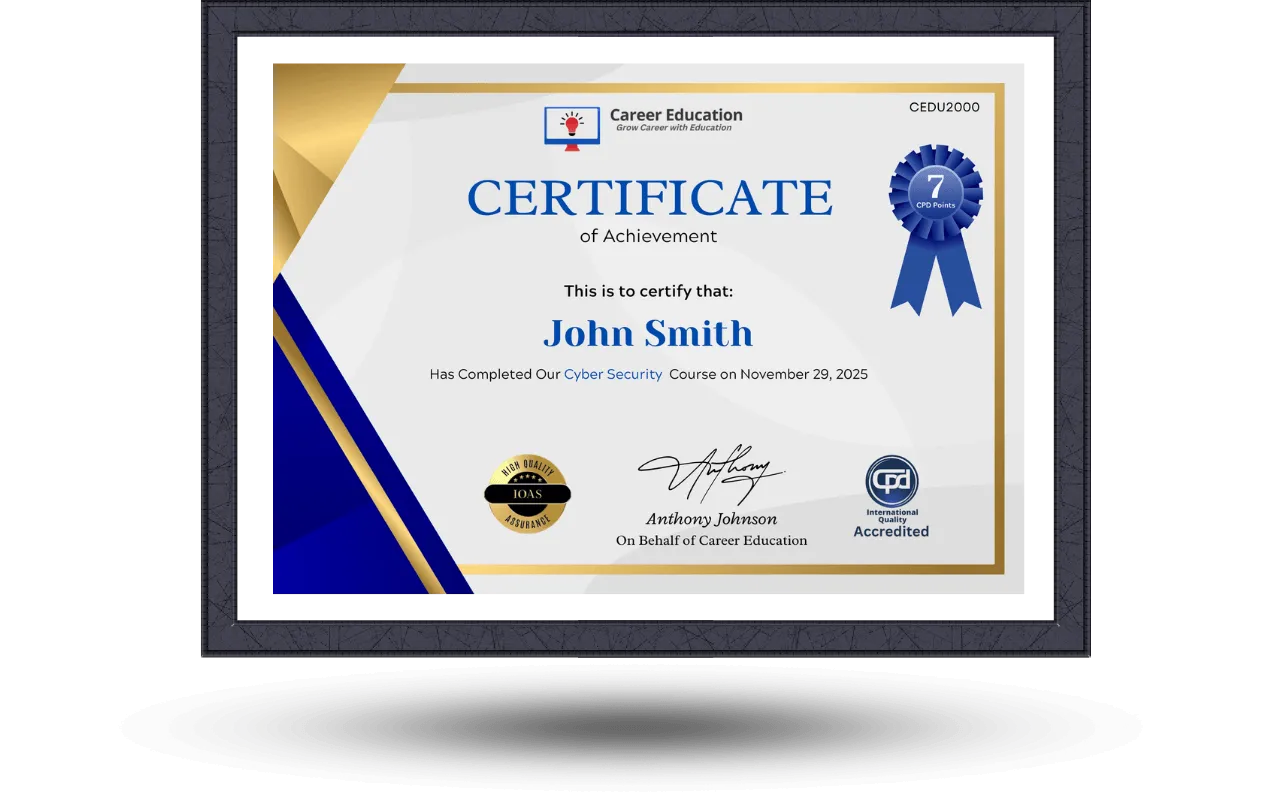
Upon completion of any course, all students are entitled to a CPD IQ Accredited e-certificate that will be issued by Career Education signifying the completion of your course.
After you complete the course and assignment, you will be eligible to order a free certificate accredited by CPD International Quality by completing the form below.
Hardcopy certificates and transcripts are also available for a small additional fee. More information is disclosed upon course completion.
Similar Courses




Frequently Asked Questions
The lifetime membership includes unlimited access to all courses, resources, and updates for a one-time fee.
You can purchase the membership directly from our website using a secure checkout process.
Yes, selected courses can be downloaded for offline access through our mobile app.
Yes, all future updates and new courses are included at no extra cost.
Yes, we offer a 30-day money-back guarantee if you are not satisfied with the membership.