
94%
OFF
OFF
Retail Management Course
- Lifetime Access
- All Levels
- PDF Certificate
£296
£19
14-Day Money-Back Guarantee
Learn With Confidence








Retail Management Course
Develop the Knowledge and Skills to Manage Retail Operations, Customers, People, Products and Profitable Growth
Retail is one of the most dynamic areas of modern business. Customer expectations change quickly, competition is intense, digital shopping continues to evolve and retailers must constantly balance customer experience, operational efficiency and profitability.
Successful retail management requires much more than selling products. Retail professionals need to understand strategy, operations, merchandising, buying, customer relationships, e-commerce, finance, people management and marketing.
The Retail Management Course is designed to provide learners with a broad foundation in the principles and practices of modern retail management. It covers the key areas involved in running and developing a retail business, from strategic planning and day-to-day operations to customer relationship management, merchandising, digital retailing, financial management, human resources and promotional activity.
Whether you are preparing for a career in retail, currently working in a retail environment, managing a store or retail team, developing a retail business or simply looking to expand your business knowledge, this course can help you build a stronger understanding of how successful retail organisations operate.
The curriculum is structured to take you from the fundamentals of retail management through to specialist areas that influence customer engagement, sales, operational performance and business growth.
Why Learn Retail Management?
Retail businesses operate at the intersection of products, people and customers.
A retailer may have excellent products, but without effective merchandising and buying, the right products may not reach the right customers. A retailer may attract customers through strong marketing, but poor customer service can damage loyalty. Similarly, strong sales do not necessarily guarantee profitability if financial management and operational controls are weak.
Retail management brings all these elements together.
The Retail Management Course helps learners understand the different functions that contribute to retail success and how they work together.
You will explore:
-
Retail management fundamentals
-
Retail strategy and planning
-
Retail operations
-
Customer relationship management
-
Retail merchandising and buying
-
E-commerce and digital retailing
-
Financial management
-
Human resource management
-
Retail marketing and promotion
By developing knowledge across these areas, you can gain a broader perspective on retail businesses and the decisions that influence their performance.
What You Will Learn
The course consists of nine structured modules:
-
Introduction to Retail Management
-
Retail Strategy and Planning
-
Retail Operations Management
-
Customer Relationship Management (CRM)
-
Retail Merchandising and Buying
-
E-commerce and Digital Retailing
-
Financial Management in Retail
-
Human Resource Management in Retail
-
Retail Marketing and Promotion
Each module explores an important area of retail management and contributes to your overall understanding of the industry.
Module 1 – Introduction to Retail Management
The first module provides an Introduction to Retail Management, establishing the foundation for the rest of the course.
The introductory lesson introduces the role of retail management and explores the key responsibilities involved in managing a retail organisation.
Retail management can involve overseeing people, products, customers, operations and financial performance.
You will begin to understand how retailers create value for customers and how different business functions contribute to that process.
This module provides the foundation needed to understand the strategic, operational and customer-focused topics covered throughout the rest of the course.
By completing this module, you should have a clearer understanding of what retail management involves and why effective management is important to retail success.
Module 2 – Retail Strategy and Planning
Successful retailers need a clear direction.
Module 2 focuses on Retail Strategy and Planning, introducing learners to the importance of strategic thinking within retail businesses.
Retail strategy involves making decisions about target customers, products, positioning, operations and growth.
Planning helps retailers translate broader objectives into practical activities.
Through this module, you will develop an understanding of why retailers need to consider their competitive environment, customer expectations and business objectives when developing strategies.
You will also appreciate the importance of planning ahead rather than responding only to immediate challenges.
By studying retail strategy and planning, you can develop a more structured approach to understanding how retail businesses establish objectives and work towards them.
Module 3 – Retail Operations Management
Day-to-day operations determine how effectively a retail business serves its customers.
Module 3 explores Retail Operations Management, helping learners understand the activities involved in running retail operations.
Retail operations can involve store processes, stock management, customer service, staff coordination and other activities that support the customer experience.
Efficient operations can help retailers provide consistent service while using resources effectively.
This module helps you understand why operational organisation is important and how effective management can contribute to smoother retail performance.
You will develop awareness of the relationship between operational efficiency and customer satisfaction.
Module 4 – Customer Relationship Management (CRM)
Customers are central to every retail business.
Module 4 focuses on Customer Relationship Management (CRM) and explores how retailers can develop stronger relationships with customers.
Customer relationship management involves understanding customer needs, interactions and expectations and using this knowledge to support customer engagement.
Building relationships can be particularly important in competitive markets where customers have many choices.
You will explore the importance of customer-focused thinking and develop awareness of how CRM can contribute to customer retention and long-term business relationships.
The module helps you understand why customer service should not be treated as a single interaction but as part of the wider customer journey.
Module 5 – Retail Merchandising and Buying
Having the right products available at the right time is a fundamental part of retail success.
Module 5 explores Retail Merchandising and Buying, introducing learners to the role these functions play in retail businesses.
Merchandising involves presenting products in ways that support customer engagement and sales, while buying involves decisions about which products a retailer should source.
Effective merchandising and buying require an understanding of customer preferences, product selection and retail objectives.
This module helps learners understand the connection between products, customers and sales.
You will develop awareness of why product decisions can influence both customer experience and commercial performance.
Module 6 – E-commerce and Digital Retailing
Retail has changed significantly with the growth of digital commerce.
Module 6 focuses on E-commerce and Digital Retailing, introducing learners to the principles of selling and engaging with customers through digital channels.
Online retail allows customers to discover, compare and purchase products through websites, apps and other digital platforms.
This creates opportunities for retailers but also introduces new operational and customer-experience considerations.
Through this module, you will develop awareness of the role of e-commerce in modern retail and understand why retailers need to consider digital channels as part of their overall strategy.
You will explore the broader concept of digital retailing and its relationship with traditional retail activities.
Module 7 – Financial Management in Retail
Retail businesses need to generate revenue, manage costs and maintain financial sustainability.
Module 7 explores Financial Management in Retail, helping learners understand the importance of financial awareness within retail management.
Retail managers may need to consider sales performance, costs, margins, budgets and other financial factors when making operational decisions.
Financial management provides a framework for understanding how business activities influence profitability and sustainability.
This module helps you appreciate why retail managers need to understand the financial consequences of their decisions.
You will develop greater awareness of the relationship between sales, costs and overall retail performance.
Module 8 – Human Resource Management in Retail
People play a critical role in retail.
Employees interact with customers, manage products, operate systems and contribute to the overall shopping experience.
Module 8 focuses on Human Resource Management in Retail, introducing learners to the importance of effectively managing people within retail organisations.
Retail environments can involve diverse teams, changing customer demand and varying workloads.
Effective people management can help organisations develop capable teams and create a positive working environment.
You will explore the role of human resource management within retail and develop awareness of how employees contribute to customer service and business performance.
Module 9 – Retail Marketing and Promotion
The final module focuses on Retail Marketing and Promotion.
Even excellent products need effective communication to reach potential customers.
Retail marketing involves promoting products, communicating value and encouraging customers to engage with a retailer.
Promotional activities can support awareness, customer acquisition, sales and brand development.
This module helps learners understand the role of marketing and promotion within retail management.
You will develop awareness of how marketing connects with merchandising, customer relationships, digital retailing and overall retail strategy.
By completing this final module, you will have explored the major functions that contribute to modern retail management.
Practical Learning Outcomes
By completing the Retail Management Course, you can develop a broad foundation in modern retail management.
You will be able to:
-
Explain the fundamental principles of retail management.
-
Understand the key responsibilities of retail managers.
-
Recognise the importance of strategic planning in retail.
-
Understand the principles of retail operations management.
-
Develop awareness of customer relationship management.
-
Understand the role of customer experience in retail.
-
Recognise the importance of merchandising and buying.
-
Understand how product selection can influence retail performance.
-
Develop awareness of e-commerce and digital retailing.
-
Understand the importance of financial management in retail.
-
Recognise the role of employees in retail success.
-
Understand the fundamentals of human resource management in retail.
-
Recognise the role of marketing and promotional activities.
-
Understand how different retail functions work together.
-
Develop a foundation for further retail and business study.
-
Apply retail management concepts to professional development and workplace learning.
Develop a Customer-Focused Approach
Retail is fundamentally customer-driven.
Customers have choices, and their expectations can change quickly.
They may expect convenient shopping, competitive pricing, personalised experiences, responsive service and easy access to products through multiple channels.
The Retail Management Course helps learners understand why customer-focused thinking is essential.
Through the CRM, merchandising, e-commerce and marketing modules, you will explore different aspects of the customer journey.
This can help you understand that customer experience is influenced by much more than interactions with sales staff.
Product availability, website experience, promotions, store operations and after-sales service can all influence how customers perceive a retailer.
Understand Retail Strategy
Retail businesses need to make strategic decisions about where they compete, who they serve and how they create value.
Retail strategy provides a framework for making these decisions.
The strategy and planning module helps you develop awareness of the importance of clear objectives and structured planning.
This can help you understand how retailers can approach changing markets and customer expectations in a more deliberate way.
Improve Your Understanding of Retail Operations
Retail operations are where strategy becomes practical.
Employees need to perform their responsibilities, products need to be available, customers need to be served and processes need to operate effectively.
The Retail Operations Management module helps you understand these activities and their importance.
Developing operational awareness can help you recognise how small inefficiencies can affect the customer experience and overall business performance.
Understand Merchandising and Buying
Product decisions are central to retail.
Retailers need to understand what their customers want and make appropriate decisions about product selection and presentation.
The merchandising and buying module introduces these concepts and helps learners understand the connection between products and customer demand.
This knowledge can be valuable for individuals interested in buying, merchandising, retail management, category management and store operations.
Develop Digital Retail Awareness
The growth of e-commerce has transformed how customers interact with retailers.
Customers can now discover products through search engines, social platforms, websites and mobile devices before purchasing online or in physical stores.
The E-commerce and Digital Retailing module provides an introduction to this environment.
You will develop awareness of why digital channels are an increasingly important part of modern retail strategy and customer engagement.
Understand Retail Financial Performance
Retail management requires commercial awareness.
Managers need to understand that decisions about staffing, inventory, pricing, promotions and operations can have financial consequences.
The financial management module helps you develop awareness of these relationships.
You will gain a stronger understanding of why financial considerations are important when evaluating retail performance and making business decisions.
Develop People Management Awareness
Retail businesses depend heavily on their employees.
From customer-facing sales staff to supervisors, managers and operational teams, people contribute directly to the customer experience.
The human resource management module helps you understand the role of people within retail organisations.
You will develop awareness of why recruitment, development, performance and employee engagement can influence retail outcomes.
Understand Retail Marketing and Promotion
Marketing helps retailers communicate with customers.
Promotional campaigns, product messaging and other marketing activities can influence awareness, engagement and purchasing behaviour.
The final module helps you understand the role marketing plays within the wider retail management process.
You will see how marketing connects with customer relationships, merchandising, digital retailing and strategy.
Who Is This Course For?
The Retail Management Course is suitable for a broad range of learners.
Aspiring Retail Managers
If you are interested in progressing into retail management, this course can provide foundational knowledge across the key functions of retail.
Retail Employees
Employees working in stores, customer service, sales or operations can use the course to broaden their understanding of the wider retail business.
Store Supervisors and Team Leaders
Those responsible for managing retail teams can benefit from understanding operations, people management, customer relationships and commercial performance.
Retail Entrepreneurs
Business owners and entrepreneurs can develop a broader understanding of the functions involved in managing and growing a retail business.
E-commerce Professionals
Those working in online retail can benefit from understanding how digital retailing connects with traditional retail strategy and customer management.
Marketing Professionals
Retail marketing professionals can gain additional context by understanding how marketing interacts with operations, merchandising, customer relationships and finance.
Students and Career Changers
The course can also provide an accessible introduction for learners considering careers in retail, business, sales, marketing or management.
Support Your Career Development
Retail knowledge can be valuable across a wide range of commercial roles.
Retailers employ people across store management, sales, customer service, merchandising, buying, marketing, e-commerce, operations, finance and human resources.
Understanding how these functions work together can help you develop a broader commercial perspective.
The Retail Management Course can therefore complement existing workplace experience and support further learning.
The course is educational and foundational in nature and should not be considered a substitute for specialist professional qualifications or practical workplace experience where these are required.
Learn at Your Own Pace
Online learning provides flexibility for busy professionals, students and career changers.
You can work through the Retail Management Course around your existing commitments and build your knowledge progressively.
Whether you are new to retail or already have experience in the industry, the structured curriculum can help you explore areas outside your current responsibilities.
This makes the course useful for professional development as well as career exploration.
Build a Complete Understanding of Retail Management
Retail management brings together many different business functions.
Strategy provides direction. Operations ensure that activities run effectively. Merchandising and buying determine what products are available. CRM focuses on customers. E-commerce provides digital opportunities. Finance supports commercial decision-making. Human resources manages people. Marketing and promotion connect retailers with customers.
The Retail Management Course brings these subjects together in one structured programme.
By exploring each area, you can develop a broader understanding of what it takes to manage a modern retail business.
Take the Next Step Towards Your Retail Goals
Retail continues to evolve.
Digital commerce is changing customer behaviour. Competition is increasing. Technology is transforming operations. Customer expectations continue to develop.
Retail professionals therefore need more than product knowledge. They need an understanding of customers, operations, strategy, people, finance, digital channels and marketing.
The Retail Management Course gives you the opportunity to build that broader foundation.
Whether your goal is to develop your current retail career, prepare for a management role, explore entrepreneurship, move into e-commerce or simply understand how retail businesses operate, this course can help you take the next step.
Enrol in the Retail Management Course today and develop the knowledge you need to understand retail strategy, manage operations, engage customers, support teams and contribute to successful retail performance.
Course Modules
Course Content
Module 1_ Introduction to Retail Management
-
Lesson 1_ Introduction to Retail Management
Module 2_ Retail Strategy and Planning
Module 3_ Retail Operations Management
Module 4_ Customer Relationship Management (CRM)
Module 5_ Retail Merchandising and Buying
Module 6_ E-commerce and Digital Retailing
Module 7_ Financial Management in Retail
Module 8_ Human Resource Management in Retail
Module 9_ Retail Marketing and Promotion
What our students say
Excellent
4.9 average
158 Reviews

Earn an Accredited Certificate
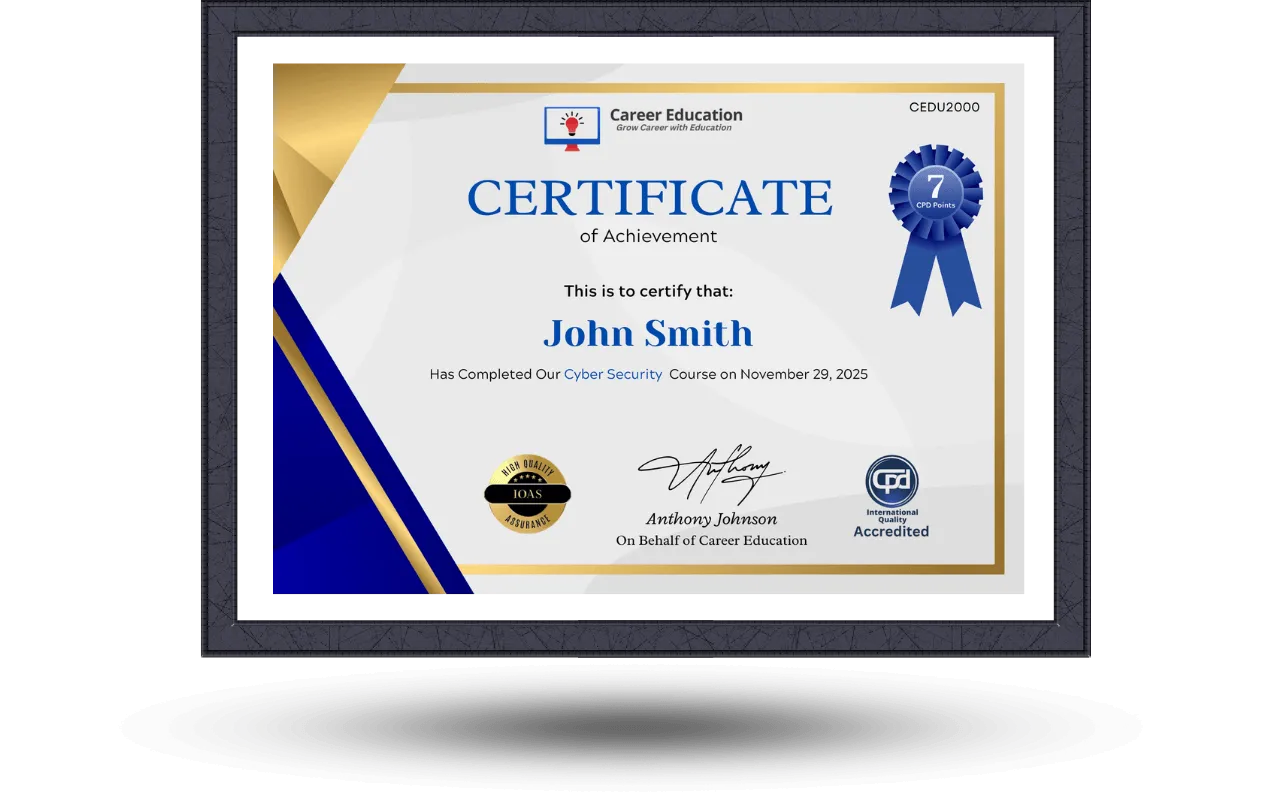
Upon completion of any course, all students are entitled to a CPD IQ Accredited e-certificate that will be issued by Career Education signifying the completion of your course.
After you complete the course and assignment, you will be eligible to order a free certificate accredited by CPD International Quality by completing the form below.
Hardcopy certificates and transcripts are also available for a small additional fee. More information is disclosed upon course completion.
Similar Courses


Frequently Asked Questions
The lifetime membership includes unlimited access to all courses, resources, and updates for a one-time fee.
You can purchase the membership directly from our website using a secure checkout process.
Yes, selected courses can be downloaded for offline access through our mobile app.
Yes, all future updates and new courses are included at no extra cost.
Yes, we offer a 30-day money-back guarantee if you are not satisfied with the membership.