OFF
Business Management During Economic Recession
- Lifetime Access
- All Levels
- PDF Certificate
Learn With Confidence









Overview
Business Management During Economic Recession
Economic recessions can create significant challenges for businesses of every size. Changing customer behaviour, tighter budgets, increased competition, supply chain pressures, and uncertainty can make it harder to maintain sales and protect profitability. However, challenging economic conditions can also create opportunities for businesses that know how to adapt, understand their markets, control costs, and make informed commercial decisions.
The Business Management During Economic Recession course is designed to help learners develop practical knowledge and skills for managing business activities when economic conditions become difficult. Rather than focusing only on theory, the course explores how marketing, market research, product positioning, pricing, promotion, distribution, branding, and sales management can contribute to business resilience and sustainable performance.
Whether you are preparing to manage a business during economic uncertainty, developing your management skills, working in marketing or sales, or looking to understand how businesses can respond to changing markets, this course can provide a structured foundation for making better-informed decisions.
Why Study Business Management During Economic Recession?
During a recession, businesses cannot always rely on the strategies that worked during periods of economic growth. Customers may become more selective, spending patterns can change, and competitors may adjust their offers and pricing. Businesses therefore need to understand what their customers value and how to communicate that value effectively.
The Business Management During Economic Recession course helps you explore these challenges through key areas of business and marketing management. You will learn how market research can support decision-making, how products can be developed and positioned effectively, how pricing strategies can respond to changing market conditions, and how promotional activity can be planned with greater purpose.
You will also explore distribution, logistics, branding, sales, and sales management. Together, these areas can help you build a broader understanding of how businesses can remain responsive and customer-focused during periods of economic pressure.
What Will You Learn?
This course covers eight focused modules, giving you an opportunity to develop knowledge across important business management and marketing functions.
Module 1: Introduction to Business Marketing
The course begins with an introduction to business marketing and its role in supporting organisational performance. You will explore the fundamental principles of marketing and consider how businesses can use marketing activities to understand customers, communicate value, and support commercial objectives.
Understanding the relationship between marketing and business management is particularly valuable during a recession. When resources are limited, businesses need to think carefully about where marketing efforts are directed and how effectively they contribute to wider objectives.
By completing this module, you can develop a stronger foundation in marketing concepts and understand why effective marketing can remain important even when economic conditions are challenging.
Module 2: Market Research and Analysis
Good business decisions depend on reliable information. During an economic recession, understanding customers and market conditions can become even more important as needs, preferences, purchasing behaviour, and competitive conditions may change.
This module explores market research and analysis, helping you understand how businesses gather and evaluate information about their markets. You will examine how research can contribute to better decision-making and help businesses identify changing customer expectations and market opportunities.
You will gain a better understanding of how market analysis can help businesses avoid relying solely on assumptions. Instead, managers can use relevant information to identify priorities, recognise potential risks, and respond more effectively to changing conditions.
Module 3: Product Development and Positioning
A product or service needs to provide meaningful value to customers, particularly when consumers are carefully considering their spending. This module examines product development and positioning and explores how businesses can make their offerings relevant to their target markets.
You will learn about the importance of understanding customer needs when developing or adapting products. You will also explore positioning and how businesses can establish a clear place for their products or services in the minds of customers.
The knowledge gained in this module can help you think strategically about product decisions, customer value, differentiation, and market relevance.
Module 4: Pricing Strategies
Pricing can become one of the most important business decisions during a recession. Customers may become more price-conscious, while businesses still need to consider costs, value, competition, and commercial objectives.
This module introduces different pricing considerations and strategies. You will explore how pricing decisions can influence customer perceptions and business performance while considering the broader market environment.
Rather than viewing price simply as a number, you will develop an understanding of how pricing interacts with customer value, positioning, competition, and business objectives. This can help you approach pricing decisions more strategically.
Module 5: Promotion and Advertising
Effective promotion can help businesses communicate their value proposition and remain visible to their target audiences. However, during difficult economic conditions, businesses may need to be particularly thoughtful about how promotional budgets are allocated.
This module examines promotion and advertising and explores how businesses communicate with customers through marketing activities. You will consider the role of promotional strategies in attracting attention, communicating benefits, and supporting business objectives.
The module can help you develop a clearer understanding of promotional planning and how businesses can make communication more focused and relevant to their target customers.
Module 6: Distribution and Logistics
Getting the right product or service to the customer is another important part of business performance. Economic uncertainty can affect suppliers, transportation, inventory, delivery processes, and operational planning.
This module explores distribution and logistics and helps you understand their role within the wider business and marketing process. You will consider how products move through distribution channels and why effective logistical planning matters.
Developing knowledge in this area can help you recognise the importance of reliable distribution, efficient processes, and coordination between different parts of a business.
Module 7: Branding and Brand Management
A strong brand can help a business establish recognition and communicate a clear identity to its target market. During challenging economic periods, maintaining customer trust and communicating value can be especially important.
This module focuses on branding and brand management. You will explore how businesses develop and manage their brands and consider the relationship between branding, customer perception, and business positioning.
You will gain useful insights into how consistent brand management can support customer relationships and help businesses communicate what makes their products or services valuable.
Module 8: Sales and Sales Management
The final module focuses on sales and sales management, an essential area for businesses seeking to maintain commercial performance during difficult economic conditions.
You will explore the role of sales within an organisation and consider how sales activities can be managed effectively. Understanding sales management can help you recognise how businesses organise their sales efforts, engage customers, and work towards commercial objectives.
By completing this module, you can develop a broader understanding of the connection between sales, customer relationships, marketing, and overall business performance.
Develop Practical Business Management Knowledge
The Business Management During Economic Recession course provides an opportunity to look at business performance from multiple perspectives. Instead of focusing on a single function, the curriculum connects marketing, research, product development, pricing, promotion, distribution, branding, and sales.
This broader perspective can be valuable because business decisions rarely operate in isolation. A pricing change can affect positioning. Product positioning can influence promotional messaging. Distribution decisions can affect customer experience. Branding can influence customer perceptions, while sales performance can provide valuable insight into changing market demand.
By studying these interconnected areas, you can build a more rounded understanding of business management in challenging economic environments.
Build Confidence in Decision-Making
Economic uncertainty can make business decisions more complex. Managers and professionals may need to evaluate changing circumstances, reconsider priorities, understand customers, and adapt strategies.
This course can help you develop the knowledge needed to approach these areas with greater confidence. You will explore the principles behind key business functions and gain insights that can support more structured thinking.
The goal is not simply to understand what businesses do, but to understand why these activities matter and how they can contribute to business resilience and performance.
Who Is This Course For?
The Business Management During Economic Recession course may be suitable for:
-
Business owners and aspiring entrepreneurs
-
Managers and team leaders
-
Marketing professionals
-
Sales professionals
-
Business development professionals
-
Individuals interested in strategic business management
-
Professionals seeking to strengthen their commercial knowledge
-
Learners preparing for business-related roles
-
Anyone interested in how businesses respond to challenging economic conditions
No matter your professional background, the course can provide useful knowledge for understanding how businesses can adapt their marketing and commercial activities when markets become more challenging.
What Outcomes Can You Expect?
By completing the Business Management During Economic Recession course, you can work towards developing:
-
A stronger understanding of business marketing principles
-
Knowledge of market research and analysis
-
Greater awareness of product development and positioning
-
Understanding of pricing strategy considerations
-
Knowledge of promotion and advertising principles
-
Awareness of distribution and logistics
-
Understanding of branding and brand management
-
Greater knowledge of sales and sales management
-
A broader perspective on business decision-making
-
Increased confidence in analysing business and marketing challenges
These outcomes can support your professional development and help you understand how different business functions contribute to organisational objectives.
Prepare for Changing Business Conditions
Recession does not affect every industry, business, or customer in the same way. This makes adaptability and informed decision-making particularly valuable. Businesses need to understand their customers, evaluate market conditions, communicate effectively, and consider how their products, prices, distribution methods, brands, and sales activities fit changing circumstances.
The Business Management During Economic Recession course gives you the opportunity to explore these areas through a structured eight-module curriculum. You can develop knowledge that applies across a range of industries and business environments while building a stronger understanding of how marketing and commercial activities work together.
Invest in Your Business Knowledge
Professional development can be particularly valuable when the business environment is changing. Developing your knowledge of marketing, market research, pricing, branding, sales, and related business functions can help you become better prepared to understand commercial challenges and opportunities.
The Business Management During Economic Recession course is an opportunity to strengthen your business knowledge and explore practical concepts that can support more informed thinking in uncertain economic conditions.
Whether you want to improve your current management capabilities, broaden your understanding of business strategy, support your career development, or gain insight into managing marketing and sales activities during economic challenges, this course provides a comprehensive starting point.
Enrol in the Business Management During Economic Recession course today and develop the knowledge to better understand markets, customers, marketing decisions, branding, pricing, distribution, and sales in a changing economic environment.
Course Modules
Course Content
Module 1_ Introduction to Business Marketing.
-
Lesson 1_ Introduction to Business Marketing.
Module 2_ Market Research and Analysis.
Module 3_ Product Development and Positioning.
Module 4_ Pricing Strategies.
Module 5_ Promotion and Advertising.
Module 6_ Distribution and Logistics.
Module 7_ Branding and Brand Management.
Module 8_ Sales and Sales Management.
What our students say

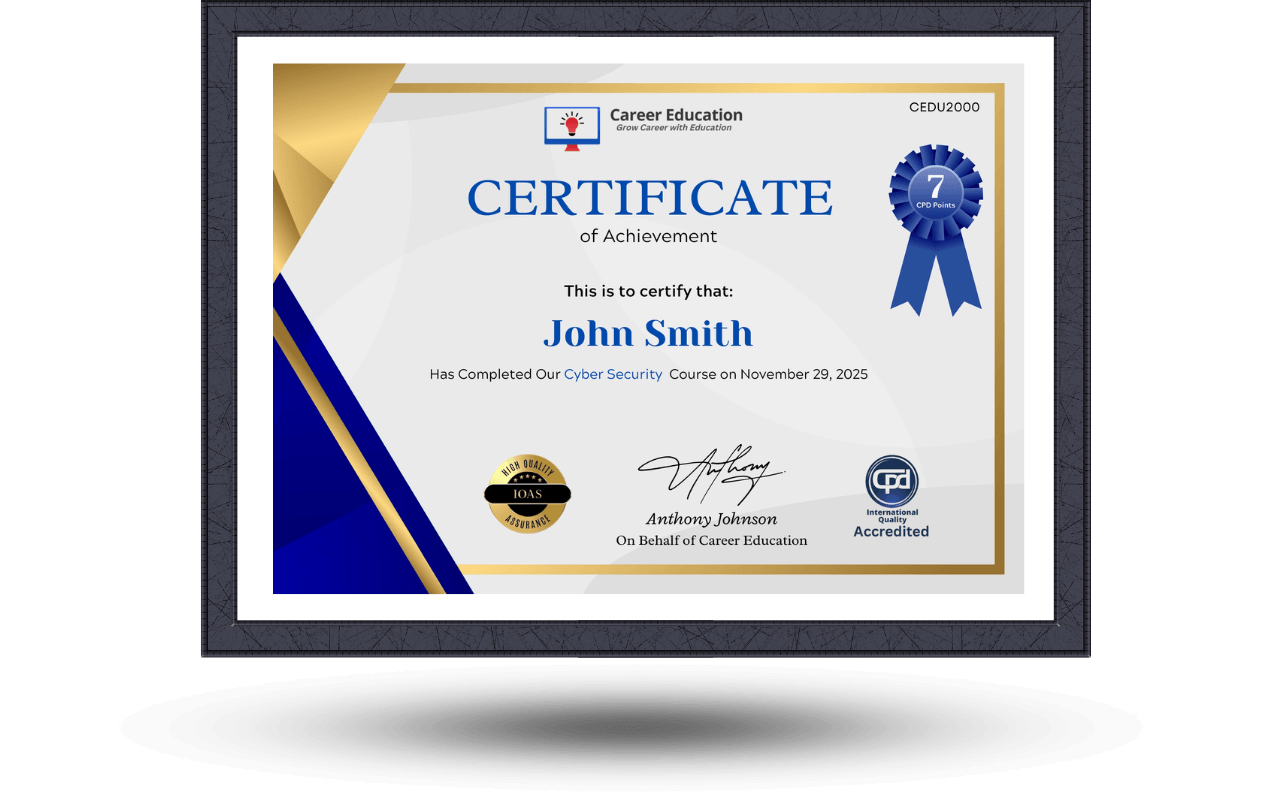
Earn an Accredited Certificate
Upon completion of the course, an e-certificate will be downloadable from Khan Education signifying the completion of your course. But, the course is CPD Accredited and after you complete the assignment, you will be eligible to order a certificate accredited by CPD International Quality for £5.99 only. If you want a hardcopy certificate accredited by CPD IQ, you can get it for only £15.99.
Get your CertificateSimilar Courses