94%
OFF
OFF
Respiratory Safety and Protection Training
- Lifetime Access
- All Levels
- PDF Certificate
£296
£19
14-Day Money-Back Guarantee
Learn With Confidence






Respiratory Safety and Protection Training
Respiratory hazards can pose serious risks in workplaces where employees may be exposed to dust, fumes, gases, vapours, aerosols, smoke, or other airborne contaminants. Without appropriate controls, repeated or prolonged exposure can affect respiratory health and create significant workplace safety concerns. Respiratory Safety and Protection Training is designed to help learners understand respiratory hazards, assess risks, use respiratory protective equipment correctly, and contribute to safer working environments.
This comprehensive Respiratory Safety and Protection Training course takes a practical, outcome-focused approach to respiratory protection. It covers the principles of respiratory safety, the functions of the respiratory system, workplace hazards, risk assessment, respiratory protective equipment (RPE), fit testing, maintenance, health surveillance, emergency procedures, compliance, and emerging developments in respiratory protection.
Whether respiratory protection is relevant to your current workplace responsibilities or you want to strengthen your occupational health and safety knowledge, this course can help you develop a clearer understanding of how respiratory risks should be identified, controlled, monitored, and managed.
What Is Respiratory Safety and Protection Training?
Respiratory Safety and Protection Training focuses on protecting workers from airborne hazards that could potentially cause harm. Respiratory protection is an important part of workplace health and safety, particularly in industries where hazardous substances or contaminated air may be present.
Effective respiratory protection involves much more than simply providing employees with a respirator. Workers need to understand the hazards they may encounter, how risk controls work, when RPE may be required, how equipment should fit, and how respiratory protection should be cleaned, maintained, stored, and monitored.
This course provides learners with structured knowledge covering the complete respiratory protection process. By progressing through 15 modules, learners can develop an understanding of both the principles and practical considerations involved in respiratory safety.
Why Is Respiratory Protection Important?
Airborne contaminants can be difficult to identify because they may not always be visible or immediately noticeable. Workplace activities such as cutting, grinding, spraying, welding, handling chemicals, processing materials, construction work, manufacturing, and certain healthcare or emergency activities can create respiratory hazards.
A strong respiratory protection approach helps organisations:
-
Identify potential respiratory hazards
-
Understand how airborne contaminants can affect workers
-
Assess respiratory risks
-
Select appropriate protective measures
-
Understand the role of RPE
-
Promote correct respirator use
-
Recognise the importance of fit testing
-
Maintain respiratory protective equipment
-
Support appropriate training and competency
-
Monitor respiratory health where required
-
Prepare for respiratory protection during emergencies
-
Conduct audits and compliance checks
-
Learn from incidents and case studies
-
Keep up with developments in respiratory protection technology
The goal is not simply to know about respiratory equipment, but to understand how respiratory protection fits into a wider workplace safety strategy.
What Will You Learn?
By completing Respiratory Safety and Protection Training, learners can develop knowledge and practical awareness across several important areas of respiratory safety.
Understand the Fundamentals of Respiratory Protection
The course begins by introducing the principles of respiratory protection. You will explore why respiratory safety matters, how respiratory hazards can arise, and the role of protective measures in reducing occupational exposure.
This foundation can help you understand why respiratory protection should be approached systematically rather than treated as an isolated safety requirement.
Understand the Respiratory System
You will explore the respiratory system and its functions, helping you understand how the body takes in oxygen and interacts with the surrounding environment.
Understanding basic respiratory function provides useful context for recognising why airborne contaminants can be hazardous and why appropriate protective measures are important.
Identify Respiratory Hazards
A key outcome of the course is developing greater awareness of common respiratory hazards. You will examine different types of airborne contaminants and consider how they can occur in workplace environments.
You will also explore respiratory risk assessment, helping you understand how potential hazards can be identified and evaluated as part of a structured approach to workplace safety.
Understand Respiratory Protective Equipment
The course introduces respiratory protective equipment and explains its role in controlling exposure to hazardous airborne substances.
You will develop an understanding of different types of RPE and the factors that should be considered when respiratory protection is required. This knowledge can help learners recognise why selecting appropriate equipment is essential.
Improve Awareness of Respirator Fit and Use
A respirator is only useful when it is used correctly and provides appropriate protection. The course therefore places significant emphasis on proper use and fit.
You will learn about the importance of fit, face seal integrity, and fit testing. This can help you understand why a respirator that does not fit correctly may not provide the intended level of protection.
Understand Fit Testing
Fit testing is an important component of effective respiratory protection where tight-fitting respirators are used. The course explores fit testing and face seal integrity so that learners can understand their importance within a respiratory protection programme.
You will also learn why factors that affect the face seal need to be considered when using tight-fitting respiratory protection.
Learn Correct Wearing Procedures
The course covers RPE use and wearing instructions, helping learners understand the importance of following appropriate procedures when putting on and using respiratory protective equipment.
This knowledge can support safer workplace practices and encourage greater consistency in the use of respiratory protection.
Understand Cleaning and Maintenance
Respiratory protective equipment needs appropriate care to remain suitable for use. You will explore cleaning, maintenance, and storage considerations, helping you understand how equipment should be managed as part of an effective respiratory protection system.
Proper equipment care can also help organisations maintain standards of hygiene, functionality, and readiness.
Recognise Training and Competency Requirements
Providing RPE alone does not guarantee effective protection. Workers need suitable information, instruction, and training.
This module explores training and competency requirements, helping learners understand why people who use respiratory protective equipment should know how to use and care for it appropriately.
Understand Health Surveillance
The course introduces health surveillance and monitoring in the context of respiratory protection. You will explore why monitoring may be relevant in workplaces where employees are exposed to certain occupational hazards.
This can help learners appreciate the importance of taking a proactive approach to occupational health rather than relying solely on protective equipment.
Respiratory Protection in High-Risk Industries
Different industries can present different respiratory hazards. Construction, manufacturing, engineering, chemical processing, healthcare, agriculture, mining, emergency services, and other high-risk environments may involve airborne substances that require careful assessment and control.
Respiratory Safety and Protection Training explores respiratory protection in high-risk industries, helping learners recognise how respiratory safety principles can be applied across different workplace settings.
Rather than focusing on one particular occupation, the course provides transferable knowledge that can be relevant to a range of workplace environments.
Preparing for Emergency Situations
Respiratory hazards can also arise during unexpected incidents. Emergencies may involve the release of hazardous substances, fires, spills, equipment failures, or other situations where airborne contaminants become a concern.
The course covers emergency situations and RPE use, helping learners understand the importance of preparation and appropriate respiratory protection during emergency scenarios.
Developing this awareness can contribute to better preparedness and reinforce the importance of having appropriate procedures in place before an incident occurs.
Auditing and Compliance Checks
An effective respiratory protection programme should be reviewed regularly. Auditing and compliance checks can help organisations identify gaps, confirm that procedures are being followed, and identify opportunities for improvement.
Through this course, learners will explore auditing and compliance checks as part of ongoing respiratory protection management.
This knowledge can be particularly useful for individuals involved in workplace safety, supervision, compliance, training, or operational management.
Learn Through Case Studies and Incident Analysis
Real-world incidents can provide valuable lessons about what happens when safety controls fail or are not properly implemented.
The course includes case studies and incident analysis to help learners consider respiratory protection issues from a practical perspective. This can encourage critical thinking and help connect theoretical principles with workplace situations.
Learning from incidents can also support a stronger safety culture by encouraging organisations and workers to identify lessons and consider how similar problems could be prevented.
Explore Future Trends and Innovations
Respiratory protection continues to develop alongside changes in workplace practices, technology, and occupational health and safety approaches.
The final module explores future trends and innovations in respiratory protection, giving learners an introduction to how the field may continue to evolve.
Understanding emerging developments can help professionals remain aware of changing approaches and consider how new technologies and practices may influence respiratory safety in the future.
Course Curriculum
The Respiratory Safety and Protection Training course includes:
Module 1: Introduction to Respiratory Protection
Build a foundation in respiratory protection principles and understand its importance within workplace health and safety.
Module 2: Respiratory System and Its Functions
Explore the respiratory system and develop an understanding of its key functions.
Module 3: Respiratory Hazards and Risk Assessment
Learn how respiratory hazards can arise and understand the principles of respiratory risk assessment.
Module 4: Respiratory Protective Equipment (RPE) Overview
Develop awareness of respiratory protective equipment and its role in controlling exposure.
Module 5: Proper Use and Fit of Respirators
Understand the importance of appropriate respirator use and suitable fit.
Module 6: Fit Testing and Face Seal Integrity
Explore fit testing and the importance of maintaining an effective face seal.
Module 7: RPE Use and Wearing Instructions
Learn about appropriate procedures for using and wearing respiratory protective equipment.
Module 8: Cleaning, Maintenance, and Storage
Understand how RPE should be cared for, maintained, and stored.
Module 9: Training and Competency Requirements
Explore the role of training, instruction, and competency in respiratory protection.
Module 10: Health Surveillance and Monitoring
Develop awareness of health surveillance and monitoring considerations.
Module 11: Respiratory Protection in High-Risk Industries
Explore how respiratory protection principles apply across high-risk workplace environments.
Module 12: Emergency Situations and RPE Use
Understand considerations surrounding respiratory protection during emergency situations.
Module 13: Auditing and Compliance Checks
Learn about reviewing respiratory protection practices and identifying compliance considerations.
Module 14: Case Studies and Incident Analysis
Examine workplace scenarios and incident analysis to strengthen practical understanding.
Module 15: Future Trends and Innovations in Respiratory Protection
Explore emerging trends, technologies, and developments in respiratory protection.
Who Can Benefit from This Course?
Respiratory Safety and Protection Training can be useful for a wide range of learners who want to improve their understanding of occupational respiratory safety.
It may be particularly relevant to:
-
Health and safety professionals
-
Workplace safety representatives
-
Supervisors and team leaders
-
Managers responsible for workplace safety
-
Employees who work around airborne hazards
-
Occupational health and safety personnel
-
Training and compliance professionals
-
Construction and engineering workers
-
Manufacturing personnel
-
Industrial workers
-
Environmental health and safety teams
-
Individuals interested in occupational safety
The course can also provide useful background knowledge for anyone seeking to develop their professional understanding of workplace respiratory protection.
What Are the Benefits of Respiratory Safety and Protection Training?
Completing Respiratory Safety and Protection Training can help you develop a stronger understanding of respiratory safety and how protective measures can be incorporated into workplace practices.
Key benefits include:
-
Build knowledge of respiratory protection principles
-
Understand the respiratory system and its functions
-
Recognise common workplace respiratory hazards
-
Develop awareness of respiratory risk assessment
-
Understand the role of respiratory protective equipment
-
Learn about respirator fit and face seal integrity
-
Understand the purpose of fit testing
-
Develop awareness of correct RPE use
-
Understand equipment cleaning and maintenance
-
Recognise the importance of appropriate storage
-
Explore training and competency requirements
-
Understand health surveillance considerations
-
Develop awareness of emergency RPE use
-
Learn about auditing and compliance checks
-
Apply learning through case studies and incident analysis
-
Explore future developments in respiratory protection
Develop Practical Workplace Safety Knowledge
Respiratory protection is most effective when it forms part of a broader workplace safety approach. Employees need to understand the hazards they face, while organisations need suitable systems for assessment, control, training, equipment management, and monitoring.
This course brings these elements together in one structured learning programme.
Instead of focusing only on the equipment itself, Respiratory Safety and Protection Training helps learners understand the wider considerations involved in managing respiratory risks. This outcome-focused approach can support better awareness, more informed decision-making, and stronger workplace safety practices.
Take the Next Step in Your Professional Development
Workplace safety responsibilities require ongoing learning as hazards, working practices, regulations, equipment, and technologies continue to evolve. Building your knowledge of respiratory protection can help you become better prepared to recognise potential risks and understand the measures used to protect workers.
Respiratory Safety and Protection Training provides a comprehensive introduction to respiratory protection, from fundamental concepts and respiratory hazards through to RPE use, fit testing, maintenance, health surveillance, emergency situations, compliance, incident analysis, and future innovations.
If you want to strengthen your occupational safety knowledge and develop a clearer understanding of how respiratory risks can be managed, this course offers a structured way to build those skills.
Enrol in Respiratory Safety and Protection Training today and develop the knowledge needed to support safer, more informed approaches to workplace respiratory protection.
Course Modules
Course Content
Module 1_ Introduction to Respiratory Protection
-
Lesson 1_ Introduction to Respiratory Protection
Module 2_ Respiratory System and Its Functions
Module 3_ Respiratory Hazards and Risk Assessment
Module 4_ Respiratory Protective Equipment (RPE) Overview
Module 5_ Proper Use and Fit of Respirators
Module 6_ Fit Testing and Face Seal Integrity
Module 7_ RPE Use and Wearing Instructions
Module 8_ Cleaning, Maintenance, and Storage
Module 9_ Training and Competency Requirements
Module 10_ Health Surveillance and Monitoring
Module 11_ Respiratory Protection in High-Risk Industries
Module 12_ Emergency Situations and RPE Use
Module 13_ Auditing and Compliance Checks
Module 14_ Case Studies and Incident Analysis
Module 15_ Future Trends and Innovations in Respiratory Protection
What our students say
Excellent
4.9 average
158 Reviews

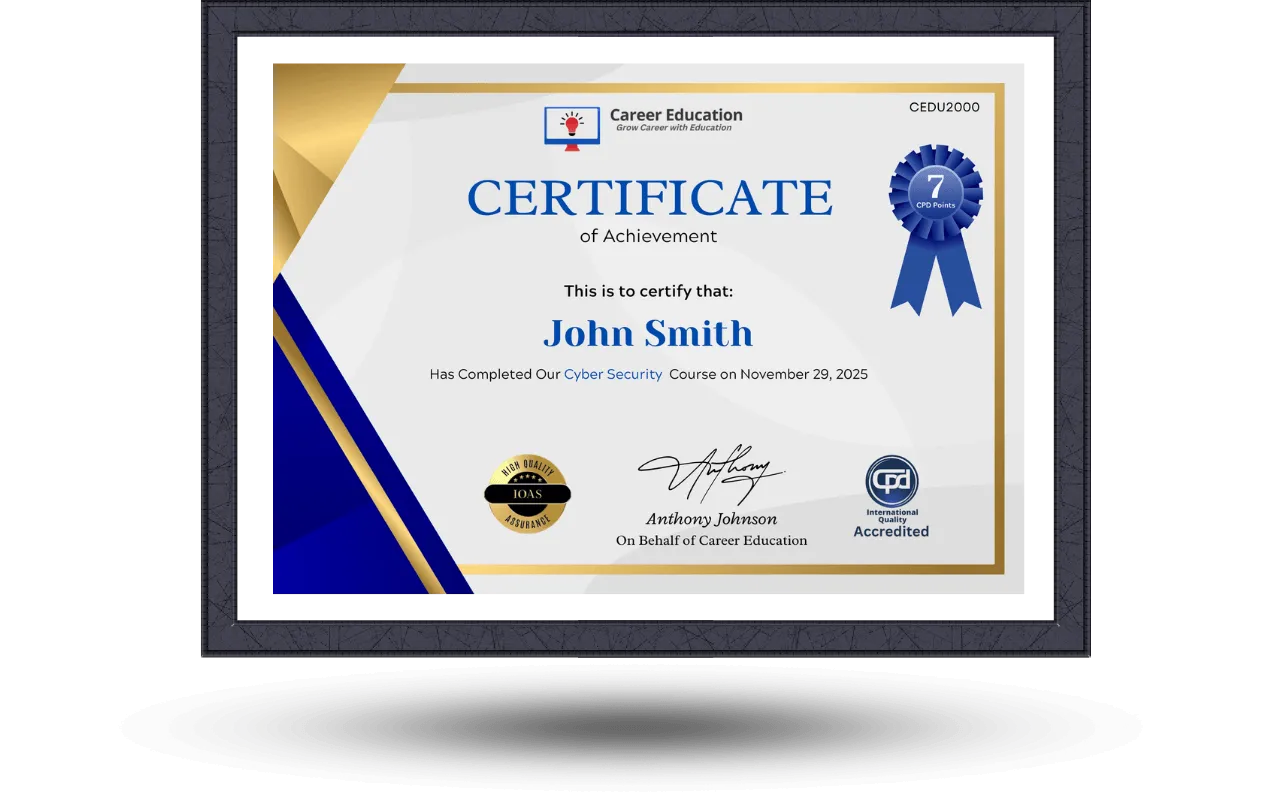
Earn an Accredited Certificate
Upon completion of any course, all students are entitled to a CPD IQ Accredited e-certificate that will be issued by Career Education signifying the completion of your course.
After you complete the course and assignment, you will be eligible to order a free certificate accredited by CPD International Quality by completing the form below.
Hardcopy certificates and transcripts are also available for a small additional fee. More information is disclosed upon course completion.
Similar Courses


Frequently Asked Questions
The lifetime membership includes unlimited access to all courses, resources, and updates for a one-time fee.
You can purchase the membership directly from our website using a secure checkout process.
Yes, selected courses can be downloaded for offline access through our mobile app.
Yes, all future updates and new courses are included at no extra cost.
Yes, we offer a 30-day money-back guarantee if you are not satisfied with the membership.