
94%
OFF
OFF
Workplace First Aid Training and Emergency Response
- Lifetime Access
- All Levels
- PDF Certificate
£296
£19
14-Day Money-Back Guarantee
Learn With Confidence







Workplace First Aid Training and Emergency Response
In any workplace, unexpected incidents can happen without warning. A colleague may suffer an injury, become seriously unwell, experience a burn, choke, or require urgent assistance while waiting for professional medical help. Knowing how to respond calmly and appropriately can make a significant difference during those crucial first moments.
Workplace First Aid Training and Emergency Response is designed to help learners develop essential knowledge and practical awareness for responding to common workplace injuries, illnesses, and emergencies. The course focuses on recognising situations that may require first aid, taking an appropriate initial response, understanding fundamental emergency procedures, and developing confidence in practical first-aid skills.
Rather than focusing only on theory, the course takes an outcome-focused approach to workplace emergency response. Learners explore how to assess an incident, understand when immediate action may be required, and apply appropriate first-aid principles across a range of situations.
Why Workplace First Aid Training and Emergency Response Matters
Workplace first aid is an important part of creating a safer working environment. Employers and employees can encounter many different hazards depending on the nature of their work, from minor cuts and burns to more serious medical emergencies.
Having people who understand basic first-aid principles can support an organised response when an incident occurs. Appropriate first aid does not replace professional medical treatment, but it can provide valuable immediate support while emergency assistance is being arranged.
Workplace First Aid Training and Emergency Response helps learners build an understanding of what to look for, how to respond appropriately, and how to remain composed during stressful situations.
The course covers essential areas including CPR, choking, bleeding, burns, musculoskeletal injuries, medical conditions, and environmental emergencies. By completing the training, learners can develop a broader understanding of workplace first aid and emergency response procedures.
What You Will Learn
The course is structured into ten modules, taking learners through the fundamentals of workplace first aid before progressing into specific emergencies and practical assessment.
Module 1: Introduction to First Aid at Work
The course begins by introducing the fundamental principles of first aid in a workplace environment.
Learners explore the purpose of first aid and the importance of responding appropriately when an incident occurs. This module provides the foundation needed to understand the role of a first aider and the importance of following appropriate workplace procedures.
By completing this module, learners can develop a clearer understanding of:
-
The purpose and importance of workplace first aid
-
The role of first aid within an emergency response
-
Basic first-aid principles
-
The importance of personal safety when responding to incidents
-
The need to seek appropriate professional medical assistance when required
This foundation helps learners approach subsequent modules with a clear understanding of the responsibilities involved in workplace emergency situations.
Module 2: Assessing an Incident and Initial Response
The first moments following an incident can be critical. Before providing assistance, it is important to understand what has happened and consider whether the situation is safe to approach.
This module focuses on incident assessment and the initial response. Learners explore how to assess the situation, identify potential hazards, and determine an appropriate course of action.
The module supports learners in developing the ability to:
-
Approach incidents with greater awareness
-
Consider potential hazards and risks
-
Assess the situation before providing assistance
-
Prioritise appropriate actions
-
Recognise when emergency medical assistance may be necessary
-
Communicate effectively during an emergency
These skills can help learners respond in a more structured and confident way rather than reacting impulsively during stressful situations.
Module 3: Cardiopulmonary Resuscitation (CPR)
CPR is an important emergency response skill that can be required when a person is unresponsive and not breathing normally.
This module introduces learners to the principles of cardiopulmonary resuscitation and the importance of acting promptly while following recognised emergency procedures.
Learners develop an understanding of:
-
The purpose of CPR
-
Recognising situations where CPR may be required
-
The importance of contacting emergency services
-
Basic CPR principles
-
The role of emergency response procedures
-
How CPR fits into a wider emergency response
The module is intended to help learners understand the importance of responding appropriately in serious medical emergencies while recognising the need for professional medical support.
Module 4: Managing Choking
Choking can occur unexpectedly in almost any workplace. Understanding how to recognise a choking emergency and respond appropriately is therefore an important part of first-aid awareness.
This module explores the principles of managing choking incidents. Learners examine how to recognise signs of choking and understand the appropriate response according to established first-aid guidance.
By completing this module, learners can improve their understanding of:
-
Recognising choking
-
Assessing the seriousness of a choking incident
-
Appropriate first-aid responses
-
The importance of obtaining emergency assistance
-
Responding calmly and effectively
This knowledge can contribute to a more prepared workplace environment where employees understand what action may be appropriate during a choking emergency.
Module 5: Managing Bleeding and Wounds
Cuts, wounds, and bleeding can result from workplace accidents and may range from minor injuries to situations requiring urgent medical attention.
This module focuses on the principles of managing bleeding and wounds. Learners explore how to assess wounds, provide appropriate first-aid support, and recognise circumstances in which further medical assistance may be required.
Topics include understanding:
-
Different types of wounds
-
The importance of assessing bleeding
-
Basic approaches to managing wounds
-
The importance of hygiene and infection awareness
-
When professional medical assistance may be necessary
-
Appropriate workplace incident response
The goal is to help learners develop practical awareness that can support an appropriate response to common workplace injuries.
Module 6: Burns and Scalds
Burns and scalds can occur in workplaces involving heat, hot liquids, chemicals, equipment, or other potential sources of injury.
This module introduces learners to common causes of burns and scalds and explores appropriate first-aid principles.
Learners develop an understanding of:
-
Common workplace causes of burns and scalds
-
How burns may be assessed
-
Appropriate initial first-aid responses
-
Circumstances that may require medical attention
-
The importance of responding safely
-
Preventive awareness around workplace burn hazards
Understanding how to respond appropriately can help learners feel more prepared when confronted with a burn or scald incident.
Module 7: Bone, Muscle, and Joint Injuries
Workplace incidents can result in injuries involving bones, muscles, joints, and surrounding tissues. Falls, impacts, lifting incidents, and other accidents may cause injuries that require careful assessment.
This module explores common bone, muscle, and joint injuries and the principles of first aid associated with them.
Learners explore:
-
Common types of musculoskeletal injuries
-
Signs that may indicate an injury
-
Appropriate first-aid considerations
-
The importance of avoiding unnecessary movement
-
Situations where professional medical assessment may be required
-
How to respond safely following an injury
This knowledge can help learners recognise potential musculoskeletal injuries and understand why appropriate handling and professional assessment may be important.
Module 8: Medical Conditions in the Workplace
Not every workplace emergency results from an accident. Employees may also experience medical conditions that require immediate attention.
This module introduces learners to a range of medical emergencies and conditions that may arise in workplace settings. The focus is on recognising potential emergencies and understanding appropriate first-aid responses.
Learners develop awareness of:
-
Common medical emergencies
-
Recognising concerning symptoms
-
Appropriate initial responses
-
The importance of obtaining emergency medical assistance
-
Supporting an affected person safely
-
The importance of remaining calm and following established procedures
This module helps broaden learners’ understanding of workplace emergencies beyond physical injuries.
Module 9: Environmental Injuries and Conditions
Environmental factors can also affect employee health and safety. Exposure to heat, cold, or other environmental conditions may result in illness or injury.
This module explores environmental injuries and conditions and considers appropriate first-aid principles.
Learners examine:
-
Common environmental risks
-
Potential effects of environmental exposure
-
Recognising signs of environmental illness or injury
-
Appropriate initial responses
-
The importance of removing or reducing exposure where appropriate
-
When professional medical support may be required
Understanding environmental risks can help learners become more aware of how workplace surroundings may contribute to emergencies.
Module 10: Practical Skills, Assessment, and Review
The final module brings together the knowledge covered throughout the course.
Learners have the opportunity to review key concepts and develop a clearer understanding of how different first-aid situations may require different responses.
The module focuses on:
-
Reviewing essential first-aid knowledge
-
Reinforcing emergency response principles
-
Assessing understanding of course content
-
Reflecting on practical skills
-
Identifying areas for further development
-
Consolidating learning from the previous modules
This final stage supports learners in bringing their knowledge together and considering how workplace first-aid principles apply to real-world emergency situations.
Course Outcomes
By completing Workplace First Aid Training and Emergency Response, learners can develop a stronger foundation in workplace first aid and emergency response.
Depending on their role and workplace requirements, learners can gain the knowledge and awareness to:
-
Understand the importance of workplace first aid
-
Recognise common workplace emergencies
-
Assess an incident before responding
-
Understand fundamental emergency response principles
-
Develop awareness of CPR procedures
-
Recognise and respond appropriately to choking situations
-
Understand basic approaches to bleeding and wounds
-
Recognise common burns and scalds
-
Develop awareness of bone, muscle, and joint injuries
-
Recognise potential medical emergencies
-
Understand environmental injuries and conditions
-
Appreciate the importance of professional medical assistance
-
Respond to incidents in a calmer and more structured manner
-
Review and consolidate essential first-aid knowledge
Build Confidence for Workplace Emergencies
An emergency can be stressful, particularly when someone nearby needs immediate assistance. Preparation can make it easier to think clearly and follow appropriate procedures.
Workplace First Aid Training and Emergency Response gives learners an opportunity to develop knowledge across a broad range of common first-aid scenarios. From assessing an incident and understanding CPR to managing burns, wounds, choking, and medical conditions, the course covers essential areas of workplace emergency awareness.
The outcome is not simply a collection of theoretical concepts. Learners gain a structured understanding of how first-aid knowledge can contribute to an organised workplace response.
Who Can Benefit from This Course?
This course can be useful for anyone who wants to develop their understanding of workplace first aid and emergency response.
It may be particularly relevant to:
-
Employees who want to improve their workplace safety awareness
-
Individuals with workplace health and safety responsibilities
-
Supervisors and team leaders
-
Managers seeking broader emergency-response awareness
-
Individuals interested in first-aid knowledge
-
People preparing for roles where workplace safety is important
-
Organisations seeking to support employee learning and awareness
Learners should always consider their employer’s specific first-aid arrangements, relevant workplace requirements, and recognised practical training requirements. Where formal certification or competency is required for a particular role, appropriate regulated or recognised training and practical assessment should be obtained.
Why Choose Workplace First Aid Training and Emergency Response?
The strength of this course lies in its broad coverage of essential workplace emergency scenarios. Instead of concentrating on one type of incident, learners explore a range of situations that can occur in different working environments.
The structured ten-module format makes it easier to progress from fundamental first-aid concepts to specific emergencies and finally to assessment and review.
Learners can benefit from:
Comprehensive Learning: Explore key areas of workplace first aid, from initial incident assessment to common injuries and medical emergencies.
Outcome-Focused Training: Develop practical awareness and knowledge that can be relevant to real workplace emergency situations.
Broad Emergency Coverage: Learn about CPR, choking, bleeding, burns, musculoskeletal injuries, medical conditions, and environmental emergencies.
Structured Progression: Move through clearly organised modules that build knowledge progressively.
Practical Awareness: Understand how first-aid principles can be applied when responding to workplace incidents.
Confidence Through Preparation: Build greater awareness of what may be involved when an emergency occurs.
Take the Next Step in Your Workplace Safety Learning
Being prepared for a workplace emergency starts with understanding what an appropriate response may involve. Workplace First Aid Training and Emergency Response provides a comprehensive learning journey covering essential first-aid principles, emergency situations, common workplace injuries, medical conditions, and practical skills.
Whether you want to strengthen your workplace safety knowledge, prepare for greater responsibilities, or simply become more informed about first-aid response, this course can help you build a valuable foundation.
Start your Workplace First Aid Training and Emergency Response learning journey today and develop the knowledge needed to respond more confidently and appropriately when workplace emergencies occur.
Course Modules
Course Content
Module 1_ Introduction to First Aid at Work
-
Lesson 1_ Introduction to First Aid at Work
Module 2_ Assessing an Incident and Initial Response
Module 3_ Cardiopulmonary Resuscitation (CPR)
Module 4_ Managing Choking
Module 5_ Managing Bleeding and Wounds
Module 6_ Burns and Scalds
Module 7_ Bone, Muscle, and Joint Injuries
Module 8_ Medical Conditions in the Workplace
Module 9_ Environmental Injuries and Conditions
Module 10_ Practical Skills, Assessment, and Review
What our students say
Excellent
4.9 average
158 Reviews

Earn an Accredited Certificate
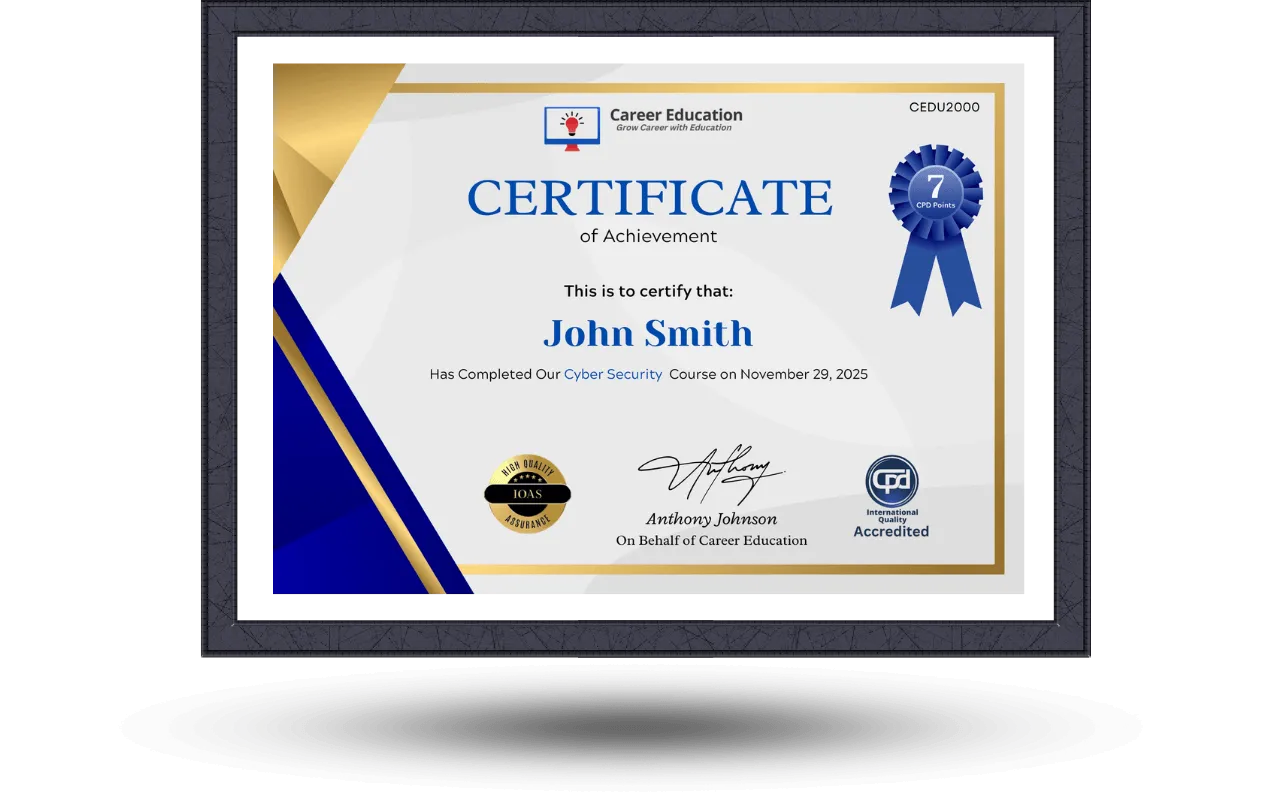
Upon completion of any course, all students are entitled to a CPD IQ Accredited e-certificate that will be issued by Career Education signifying the completion of your course.
After you complete the course and assignment, you will be eligible to order a free certificate accredited by CPD International Quality by completing the form below.
Hardcopy certificates and transcripts are also available for a small additional fee. More information is disclosed upon course completion.
Similar Courses




Frequently Asked Questions
The lifetime membership includes unlimited access to all courses, resources, and updates for a one-time fee.
You can purchase the membership directly from our website using a secure checkout process.
Yes, selected courses can be downloaded for offline access through our mobile app.
Yes, all future updates and new courses are included at no extra cost.
Yes, we offer a 30-day money-back guarantee if you are not satisfied with the membership.