
94%
OFF
OFF
Professional Welding Skills Training
- Lifetime Access
- All Levels
- PDF Certificate
£296
£19
14-Day Money-Back Guarantee
Learn With Confidence






# Professional Welding Skills Training
**Professional Welding Skills Training** is a practical, skills-focused course designed to introduce learners to the essential principles, processes, safety considerations and technical knowledge required in modern welding environments. Welding is a highly valuable technical skill used across construction, engineering, manufacturing, fabrication, automotive, maintenance and many other industries.
Successful welding requires more than simply joining two pieces of metal. A competent welder needs to understand materials, equipment, welding procedures, workplace hazards, process variables, standards and quality expectations. Developing this knowledge can help learners approach welding tasks with greater confidence and a stronger understanding of safe working practices.
**Professional Welding Skills Training** provides a structured learning pathway covering the fundamentals of welding, welding hazards and safety materials, metals and alloys, welding procedures, advanced MIG welding concepts, and welding standards and specifications.
The course is designed for beginners, aspiring welders, technical learners and professionals who want to strengthen their understanding of welding principles.
> **Important:** Welding is a practical, high-risk activity involving heat, electricity, fumes, radiation, pressurised gases and potentially hazardous materials. This course provides educational knowledge and does not replace supervised practical training, employer-specific procedures, competent-person instruction, certification or applicable health and safety requirements. Practical welding should only be undertaken using appropriate equipment, controls and supervision.
## Build a Strong Foundation in Welding
Understanding the fundamentals is essential before progressing to more specialised welding techniques.
Module 1, **Introduction to Welding**, provides learners with a foundation in welding principles and introduces the purpose of welding across different industries.
You will explore how welding is used to join materials and why different welding processes are selected for different applications.
The module can help you develop awareness of:
* What welding is and how it works.
* Common welding applications.
* Different welding processes.
* Basic welding terminology.
* Welding equipment.
* Welding consumables.
* Factors that influence welding quality.
* The importance of preparation and technique.
This foundation provides a starting point for understanding the more technical topics covered later in the course.
## Understand Welding Hazards and Safety
Safety is one of the most important aspects of welding. Welders can be exposed to intense heat, sparks, fumes, ultraviolet radiation, electrical hazards, compressed gases and other workplace risks.
Module 2, **Hazards and Safety Materials for Welding**, focuses on recognising and controlling these hazards.
You will develop awareness of:
* Welding-related hazards.
* Fire and explosion risks.
* Electrical hazards.
* Welding fumes.
* Ultraviolet and infrared radiation.
* Hot metal and sparks.
* Compressed gas hazards.
* Personal protective equipment.
* Ventilation and extraction.
* Safe workplace practices.
The module also highlights the importance of appropriate safety materials and protective equipment.
These can include welding helmets, gloves, protective clothing, suitable footwear, eye protection, hearing protection and respiratory protection where required.
Understanding hazards before beginning practical work can help learners develop a stronger safety-first mindset.
## Develop Knowledge of Welding Metals and Alloys
Different metals behave differently during welding. Understanding material characteristics is therefore important when selecting suitable welding procedures and controlling the quality of a weld.
Module 3, **Metal and Alloys for Welding**, introduces the properties and characteristics of materials commonly encountered in welding.
You can develop awareness of:
* Common welding metals.
* Ferrous and non-ferrous materials.
* Steel and stainless steel.
* Aluminium and aluminium alloys.
* Material properties.
* Melting characteristics.
* Heat behaviour.
* Material compatibility.
* The importance of correct material identification.
Understanding materials can help welders make better-informed decisions about process selection, preparation and welding parameters.
For professional applications, material specifications and welding procedures should always be checked against the relevant technical documentation.
## Understand Welding Procedures
A quality weld depends on appropriate preparation, equipment settings, technique and process control.
Module 4, **Welding Procedures**, explores the fundamental steps involved in carrying out welding work safely and consistently.
You will develop awareness of:
* Preparing materials before welding.
* Cleaning and joint preparation.
* Welding positions.
* Welding parameters.
* Equipment preparation.
* Welding techniques.
* Heat control.
* Weld appearance.
* Common welding defects.
* Inspection considerations.
The module can help learners understand why preparation is an essential part of the welding process.
Poor preparation can contribute to contamination, weak joints, defects and inconsistent results. Developing a methodical approach can therefore improve the quality and reliability of practical welding work.
## Develop Advanced MIG Welding Awareness
MIG welding is widely used across fabrication, manufacturing, automotive work and other industrial environments.
Module 5, **MIG Welding Advanced**, builds on the fundamental welding knowledge introduced earlier in the course and explores more advanced concepts associated with MIG welding.
You can develop awareness of:
* MIG welding principles.
* Equipment and components.
* Welding wire selection.
* Shielding gases.
* Welding parameters.
* Arc characteristics.
* Welding positions.
* Heat input.
* Travel speed.
* Common MIG welding problems.
* Weld quality considerations.
Understanding how welding parameters influence the finished weld is an important part of developing technical welding knowledge.
Factors such as voltage, wire feed speed, gas flow, material thickness, torch angle and travel speed can influence welding performance. Appropriate settings should always be established according to the equipment, material, welding procedure and manufacturer guidance.
## Understand Welding Standards and Specifications
Professional welding work often needs to meet defined standards, specifications and quality requirements.
Module 6, **Welding Standards and Specifications**, introduces learners to the importance of technical standards in welding.
You will explore why welding standards are used and how they can contribute to consistent and reliable work.
The module can help you understand:
* The purpose of welding standards.
* Welding specifications.
* Quality requirements.
* Welding procedures.
* Inspection and testing concepts.
* Welder qualifications.
* Documentation.
* Compliance considerations.
Different industries and jurisdictions use different standards, so learners should always refer to the specific standards and specifications applicable to their work.
## Develop a Quality-Focused Welding Mindset
Professional welding is not simply about creating a visible weld. The finished joint needs to meet the requirements of the application.
Quality can be influenced by:
* Material preparation.
* Correct process selection.
* Equipment condition.
* Welding parameters.
* Welder technique.
* Environmental conditions.
* Joint design.
* Heat control.
* Inspection.
* Compliance with specifications.
**Professional Welding Skills Training** helps learners understand these factors so they can approach welding as a controlled technical process rather than simply a manual activity.
## Understand the Importance of Preparation
Preparation is one of the most important stages of welding.
Before welding begins, materials may need to be cleaned, positioned, aligned and prepared according to the relevant procedure.
Good preparation can help:
* Reduce contamination.
* Improve weld consistency.
* Support proper fusion.
* Reduce defects.
* Improve joint alignment.
* Support repeatable results.
* Improve overall welding quality.
A professional approach means considering the entire welding process—from preparation through to inspection.
## Recognise Common Welding Problems
Welding defects can occur for many reasons. Recognising potential problems is an important part of quality control.
The course introduces awareness of issues that may affect welding performance, such as:
* Porosity.
* Lack of fusion.
* Incomplete penetration.
* Undercutting.
* Cracking.
* Excessive spatter.
* Distortion.
* Inconsistent weld profiles.
Understanding the possible causes of defects can help learners develop better troubleshooting habits.
However, the appropriate corrective action depends on the material, welding process, procedure and applicable specification.
## Develop Technical Problem-Solving Skills
Welding often requires practical problem-solving. If a weld is producing excessive spatter, poor penetration or an inconsistent bead, the welder needs to consider what factors could be contributing to the issue.
A structured troubleshooting approach can involve examining:
1. Material preparation.
2. Equipment condition.
3. Consumable selection.
4. Welding parameters.
5. Shielding gas.
6. Torch position.
7. Travel speed.
8. Environmental conditions.
9. Welding technique.
10. Applicable procedure or specification.
Developing this mindset can help learners become more analytical when approaching welding tasks.
## Understand Professional Welding Practices
Professional welding requires consistency and attention to detail. Welders may work from drawings, specifications, procedures and job instructions rather than simply deciding how a joint should be produced.
This means developing awareness of:
* Technical documentation.
* Welding symbols.
* Procedures.
* Material specifications.
* Quality requirements.
* Inspection processes.
* Workplace communication.
* Equipment checks.
These skills can help learners understand the professional environment in which welding takes place.
## Who Is This Course For?
**Professional Welding Skills Training** is suitable for learners who want to develop foundational and intermediate knowledge of welding.
It may be particularly useful for:
* Aspiring welders.
* Welding apprentices.
* Fabrication students.
* Engineering students.
* Construction workers.
* Metal fabrication workers.
* Maintenance personnel.
* Manufacturing workers.
* Workshop employees.
* Automotive technicians.
* Technical professionals.
* Career changers interested in welding.
It can also provide useful theoretical knowledge for learners who are preparing for supervised practical welding training.
## Develop Transferable Technical Skills
Welding knowledge can contribute to a broader range of technical and professional skills.
Throughout **Professional Welding Skills Training**, learners can develop:
* Technical awareness.
* Safety awareness.
* Attention to detail.
* Material knowledge.
* Equipment awareness.
* Quality control thinking.
* Problem-solving.
* Process awareness.
* Technical communication.
* Specification awareness.
These skills can complement practical experience and support continued professional development.
## Course Curriculum at a Glance
**Module 1 – Introduction to Welding**
Develop a foundation in welding principles, applications, terminology and equipment.
**Module 2 – Hazards and Safety Materials for Welding**
Recognise common welding hazards and understand the importance of appropriate protective equipment and safe working practices.
**Module 3 – Metal and Alloys for Welding**
Explore common welding metals, alloys and material characteristics.
**Module 4 – Welding Procedures**
Understand material preparation, welding processes, techniques, parameters and quality considerations.
**Module 5 – MIG Welding Advanced**
Develop deeper awareness of MIG welding equipment, consumables, parameters, techniques and troubleshooting.
**Module 6 – Welding Standards and Specifications**
Understand the role of standards, specifications, procedures, inspection and quality requirements in professional welding.
## What You Can Gain from Professional Welding Skills Training
By completing **Professional Welding Skills Training**, you can work towards developing a stronger understanding of welding processes and professional practices.
You can develop the ability to:
* Explain fundamental welding principles.
* Identify common welding processes.
* Recognise key welding hazards.
* Understand appropriate welding safety practices.
* Identify common welding materials and alloys.
* Understand the importance of material preparation.
* Explain fundamental welding procedure considerations.
* Develop awareness of MIG welding techniques.
* Understand factors that influence weld quality.
* Recognise common welding defects.
* Develop basic troubleshooting awareness.
* Understand the role of welding standards.
* Appreciate the importance of specifications and quality control.
* Build a foundation for further practical welding training.
## Why Choose Professional Welding Skills Training?
Welding remains an important technical skill across numerous industries. From structural fabrication and construction to manufacturing, automotive repair and engineering, skilled welding knowledge can support a wide range of career pathways.
**Professional Welding Skills Training** brings together essential welding concepts in one structured learning programme.
Instead of focusing solely on one welding process, the course begins with fundamentals before progressing through safety, materials, procedures, advanced MIG welding and professional standards.
This broad approach can help learners understand not only **how** welding works but also **why** different materials, processes, parameters and safety measures matter.
The course can also provide a useful foundation for learners who intend to pursue further hands-on training, workplace development or formal welding qualifications.
## Build Your Welding Knowledge Today
Welding combines technical knowledge, practical skill, precision and safety awareness. Developing a strong theoretical foundation can help learners make better use of practical training and understand the reasoning behind professional welding procedures.
**Professional Welding Skills Training** provides a structured introduction to the essential knowledge needed to progress in welding and fabrication.
Whether you are starting your technical career, developing existing workshop skills or preparing for further practical instruction, this course can help you build a stronger foundation in welding.
**Enrol in Professional Welding Skills Training today and develop your knowledge of welding processes, safety, metals and alloys, welding procedures, MIG welding and professional welding standards while building a foundation for continued technical development.**
Course Modules
Course Content
Module 1 Introduction to Welding
-
Lesson 1 Introduction to Welding
Module 2 Hazards and Safety Materials for Welding
Module 3 Metal and Alloys for welding
Module 4 Welding Procedures
Module 5 MIG welding advanced
Module 6 Welding standards and specifications
What our students say
Excellent
4.9 average
158 Reviews

Earn an Accredited Certificate
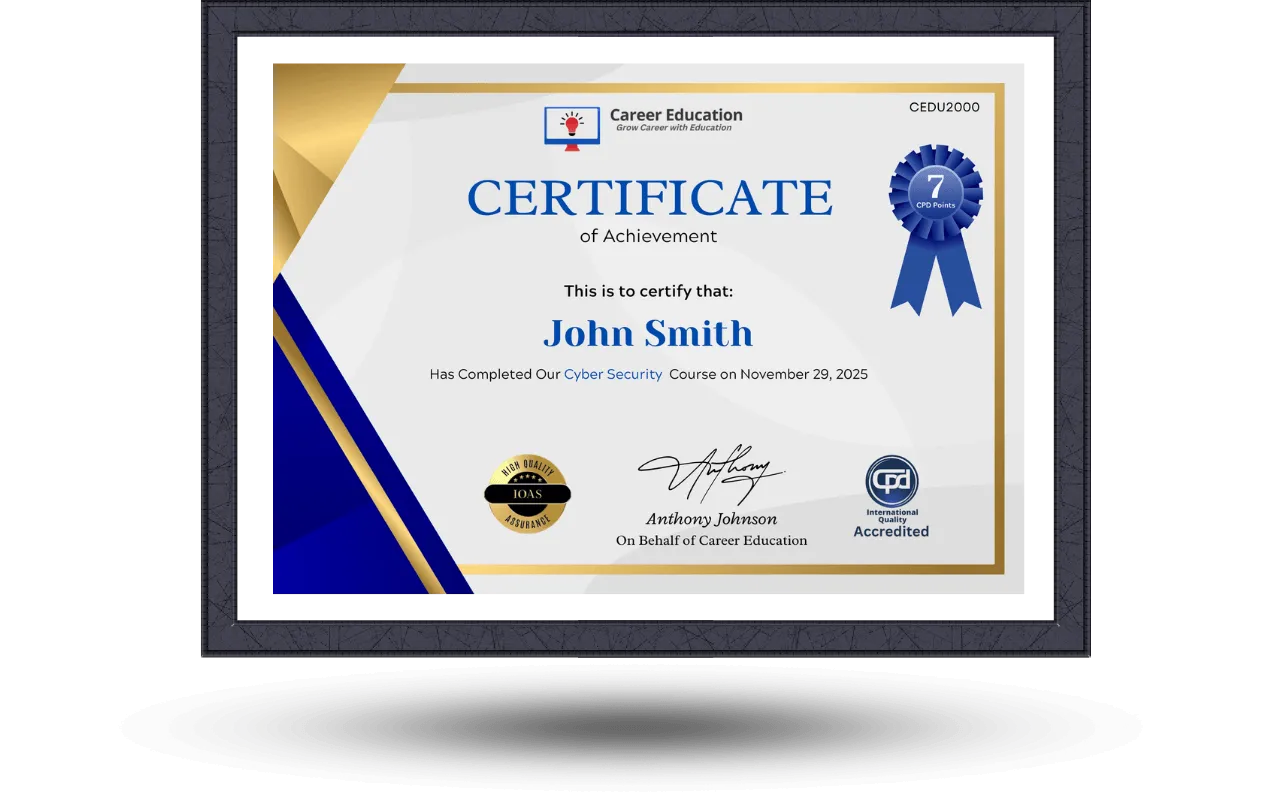
Upon completion of any course, all students are entitled to a CPD IQ Accredited e-certificate that will be issued by Career Education signifying the completion of your course.
After you complete the course and assignment, you will be eligible to order a free certificate accredited by CPD International Quality by completing the form below.
Hardcopy certificates and transcripts are also available for a small additional fee. More information is disclosed upon course completion.
Similar Courses




Frequently Asked Questions
The lifetime membership includes unlimited access to all courses, resources, and updates for a one-time fee.
You can purchase the membership directly from our website using a secure checkout process.
Yes, selected courses can be downloaded for offline access through our mobile app.
Yes, all future updates and new courses are included at no extra cost.
Yes, we offer a 30-day money-back guarantee if you are not satisfied with the membership.