
94%
OFF
OFF
Operations Management Fundamentals
- Lifetime Access
- All Levels
- PDF Certificate
£296
£19
14-Day Money-Back Guarantee
Learn With Confidence






Operations Management Fundamentals
In today’s competitive business environment, organisations need more than good products and services to succeed. They need efficient processes, effective planning, reliable supply chains, strong performance management, and clear strategies that turn business objectives into measurable results. Operations Management Fundamentals is designed to help learners develop a practical understanding of how organisations manage their day-to-day operations while working towards long-term growth and success.
Whether you are looking to build your business knowledge, strengthen your management capabilities, move into an operations-focused role, or improve your understanding of how businesses function, this course provides a structured foundation in the essential principles of operations management.
Why Study Operations Management Fundamentals?
Operations management plays a central role in almost every organisation. From planning resources and designing processes to managing suppliers, monitoring performance, and supporting business development, effective operations influence productivity, customer satisfaction, costs, and overall business performance.
Studying Operations Management Fundamentals can help you understand how different parts of an organisation work together. Instead of looking at individual business activities in isolation, you will explore how operational decisions can support wider organisational objectives.
The course focuses on practical outcomes, helping you develop knowledge that can be applied to real-world business situations. By completing the course, you can build greater confidence when discussing operations, evaluating processes, contributing to strategic decisions, and identifying opportunities for improvement.
What Will You Learn?
The Operations Management Fundamentals course covers eight key modules, providing a broad introduction to operations, strategy, process design, supply chains, planning, performance, analysis, and business development.
Module 1 – Introduction to Operations Management
The course begins with the fundamentals of operations management. You will explore what operations management means and why it is important to the successful running of an organisation.
This foundation can help you understand how businesses transform resources into products and services while balancing factors such as quality, efficiency, cost, and customer expectations.
By developing this core knowledge, you can better understand the responsibilities involved in managing operational activities and how effective operations contribute to organisational objectives.
Outcome: Build a clear foundation in operations management and understand its role within modern organisations.
Module 2 – Operations Strategy
Effective operations do not happen by accident. Organisations need strategies that connect operational activities with wider business goals.
In this module, you will explore the importance of operations strategy and how operational decisions can support organisational performance. You will develop an understanding of how businesses can consider their resources, capabilities, priorities, and competitive environment when developing operational approaches.
This knowledge can help you recognise the connection between strategic objectives and everyday operational decisions.
Outcome: Understand how operations strategy can support business goals and contribute to long-term organisational success.
Module 3 – Operations Process Design
Well-designed processes can help organisations work more efficiently, consistently, and effectively. Poorly designed processes, on the other hand, can create unnecessary delays, increased costs, resource problems, and inconsistent outcomes.
This module introduces operations process design and helps you understand how processes can be structured to support organisational requirements. You will explore the importance of designing operations around business needs and consider how process decisions can affect productivity and performance.
The knowledge gained can help you identify areas where operational processes may be improved and understand why process design is an important part of operations management.
Outcome: Develop a practical understanding of operations process design and its contribution to efficiency and business performance.
Module 4 – Supply Chain Management
A successful operation often depends on more than what happens within a single organisation. Suppliers, logistics, inventory, distribution, and other external activities can all influence business performance.
The supply chain management module introduces the importance of coordinating these activities. You will develop an understanding of how supply chain decisions can affect the availability of resources, operational continuity, costs, and customer service.
This knowledge can help you appreciate the importance of effective supply chain relationships and coordinated operational planning.
Outcome: Understand fundamental supply chain principles and recognise how supply chain activities influence operational performance.
Module 5 – Business Planning
Planning gives organisations a framework for turning objectives into practical actions. Effective business planning can help organisations establish priorities, allocate resources, anticipate challenges, and work towards measurable outcomes.
In this module, you will explore the role of business planning within an operational environment. You will develop a broader understanding of how planning can connect business objectives with the activities and resources required to achieve them.
This can be particularly valuable for learners interested in management, business development, entrepreneurship, or operational leadership.
Outcome: Strengthen your understanding of business planning and how it can support structured decision-making and organisational objectives.
Module 6 – Performance Management
Organisations need to know whether their operations are achieving the expected results. Performance management provides a framework for monitoring outcomes, identifying areas for improvement, and supporting continuous development.
This module introduces key principles of performance management and helps you understand why measuring and reviewing performance is important. You will consider how organisations can use performance information to understand operational effectiveness and identify opportunities to improve results.
The knowledge gained can help you approach operational challenges more systematically and contribute more effectively to performance improvement.
Outcome: Understand the role of performance management in evaluating operational results and supporting continuous improvement.
Module 7 – Strategic Analysis and Product Scope
Successful organisations need to understand both their internal capabilities and the wider environment in which they operate. Strategic analysis can help businesses make informed decisions, identify opportunities, recognise challenges, and establish appropriate priorities.
This module explores strategic analysis and product scope, helping you understand how businesses can evaluate their position and consider the scope of their products or services.
By developing these skills, you can gain greater confidence in thinking strategically rather than focusing only on immediate operational concerns.
Outcome: Develop an understanding of strategic analysis and product scope to support more informed business decisions.
Module 8 – Business Development and Succession
Long-term organisational success depends on the ability to develop, adapt, and prepare for the future. Business development involves identifying opportunities for growth and improvement, while succession planning can help organisations prepare for changes in leadership and responsibilities.
The final module brings together important themes from the course and introduces the role of business development and succession within organisational planning.
You will gain insight into how organisations can think beyond their current operations and prepare for future opportunities and challenges.
Outcome: Understand fundamental principles of business development and succession planning and their relevance to long-term organisational sustainability.
Practical Skills and Knowledge You Can Develop
The Operations Management Fundamentals course is designed around knowledge and outcomes that can support your wider professional development. Throughout the course, you can develop an understanding of:
-
Core operations management principles
-
The relationship between operations and business strategy
-
Operations process design
-
Supply chain management fundamentals
-
Business planning principles
-
Performance management approaches
-
Strategic analysis
-
Product scope considerations
-
Business development concepts
-
Succession planning fundamentals
-
Operational efficiency and organisational performance
-
Strategic and operational decision-making
These areas can provide a useful foundation for understanding how businesses plan, operate, evaluate performance, and prepare for future growth.
Who Can Benefit From This Course?
Operations Management Fundamentals can be suitable for learners who want to develop their understanding of business operations without necessarily having extensive previous knowledge of the subject.
It may be useful for:
-
Aspiring operations professionals
-
Business and management learners
-
Entrepreneurs and business owners
-
Supervisors and team leaders
-
Professionals looking to broaden their business knowledge
-
Individuals interested in supply chain and operational roles
-
People preparing for increased management responsibilities
-
Learners seeking to strengthen their professional development
-
Anyone interested in understanding how organisations manage their operations
You do not need to limit the value of this course to a single job title. Operations knowledge can be relevant across a wide range of industries because almost every organisation needs effective processes, planning, resources, performance monitoring, and strategic direction.
Apply Your Knowledge to Business Situations
One of the key benefits of studying Operations Management Fundamentals is developing a broader view of how organisations function.
For example, improving an operational process may affect costs and productivity. Supply chain decisions may influence customer service and business continuity. Performance management may identify opportunities for improvement. Strategic analysis may influence future business decisions. Business planning can help bring these different considerations together.
Understanding these relationships can help you approach workplace challenges with a more structured and informed mindset.
Support Your Career Development
Employers across different sectors need people who understand how organisations operate and how business objectives can be translated into effective action. Developing operations knowledge can therefore complement existing experience and qualifications.
If you are considering a move into operations, management, business administration, supply chain activities, or other business-related roles, this course can provide valuable foundational knowledge to support your professional development.
For existing professionals, it can also help broaden your perspective beyond your current responsibilities. Understanding the wider operational environment can make it easier to communicate with different teams and appreciate how individual decisions can affect overall business performance.
Build Confidence in Operational Decision-Making
Good operational management requires people to consider multiple factors rather than focusing on one immediate problem. Cost, resources, processes, suppliers, performance, strategy, and future development can all be connected.
The Operations Management Fundamentals course gives you the opportunity to explore these areas systematically. As you work through the modules, you can develop a stronger understanding of how operational and strategic considerations interact.
This broader knowledge can support more confident participation in workplace discussions, planning activities, process improvement initiatives, and business decisions.
Prepare for Future Opportunities
Business environments continue to change, creating new challenges and opportunities for organisations. Businesses need to improve their processes, respond to changing customer expectations, manage resources effectively, and plan for sustainable development.
Developing a foundation in operations management can help you become better prepared to understand these challenges.
Rather than focusing on one narrow operational function, Operations Management Fundamentals covers a range of interconnected topics. This makes it a useful learning opportunity for anyone who wants to develop a broader understanding of business operations and management.
Take the Next Step
Developing professional knowledge is an ongoing process. Whether you are beginning your career, considering a new direction, building your business knowledge, or preparing for greater responsibility, learning about operations management can give you a stronger foundation for understanding how organisations achieve their objectives.
Operations Management Fundamentals takes you through the essential areas of operations, from introductory principles and strategy to process design, supply chain management, business planning, performance management, strategic analysis, and future business development.
By completing the course, you can gain a broader understanding of how operational activities contribute to business success and develop knowledge that can support your continued professional growth.
Enrol in Operations Management Fundamentals today and start building the knowledge needed to understand, evaluate, and contribute to effective business operations.
Course Modules
Course Content
Module 1-Introduction to Operations Management
-
Lesson 1-Introduction to Operations Management
Module 2-Operations Strategy
Module 3-Operations Process Design
Module 4- Supply Chain Management
Module 5– Business Planning
Module 6-Performance Management
Module 7-Strategic Analysis and Product Scope
Module 8 – Business Development and Succession
What our students say
Excellent
4.9 average
158 Reviews

Earn an Accredited Certificate
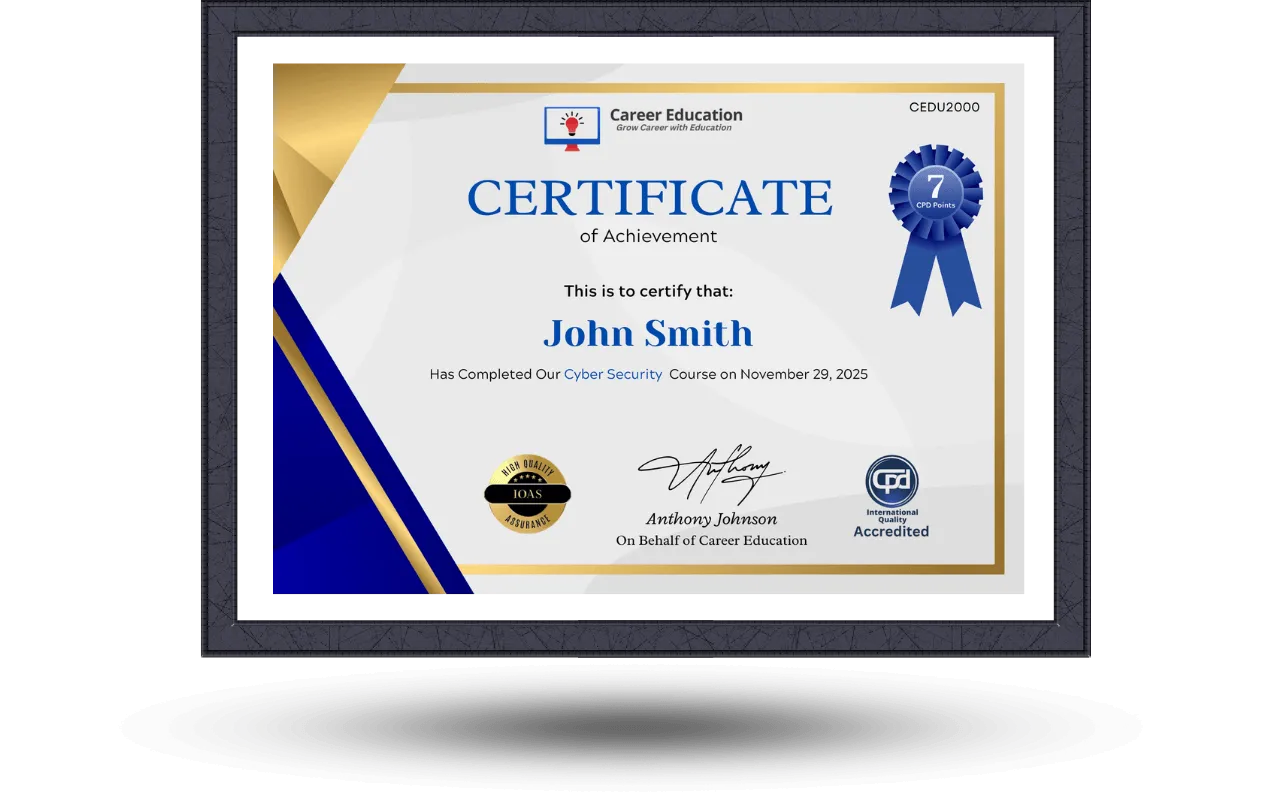
Upon completion of any course, all students are entitled to a CPD IQ Accredited e-certificate that will be issued by Career Education signifying the completion of your course.
After you complete the course and assignment, you will be eligible to order a free certificate accredited by CPD International Quality by completing the form below.
Hardcopy certificates and transcripts are also available for a small additional fee. More information is disclosed upon course completion.
Similar Courses



Frequently Asked Questions
The lifetime membership includes unlimited access to all courses, resources, and updates for a one-time fee.
You can purchase the membership directly from our website using a secure checkout process.
Yes, selected courses can be downloaded for offline access through our mobile app.
Yes, all future updates and new courses are included at no extra cost.
Yes, we offer a 30-day money-back guarantee if you are not satisfied with the membership.