
94%
OFF
OFF
Content Management Planning and Strategy
- Lifetime Access
- All Levels
- PDF Certificate
£296
£19
14-Day Money-Back Guarantee
Learn With Confidence





Content Management Planning and Strategy
1. Overview
Content has become one of the most important assets for modern organisations. Whether a business is building brand awareness, educating customers, improving online visibility, or supporting internal communication, effective content management is essential for long-term success. However, many organisations struggle with creating consistent content, managing large volumes of information, maintaining quality standards, and ensuring content continues to deliver value.
The Content Management Planning and Strategy course provides learners with the knowledge and practical skills needed to develop, organise, manage, and improve content effectively. It explores the complete content lifecycle, from planning and creation to publishing, performance analysis, maintenance, and innovation.
As organisations increasingly rely on digital platforms, websites, social media channels, knowledge bases, and online resources, professionals who understand content strategy and management are becoming highly valuable. Businesses need skilled individuals who can create structured content plans, improve user experiences, maintain accurate information, and align content activities with organisational goals.
This course helps learners understand how successful content strategies are developed and implemented. It covers important areas such as content auditing, governance, content optimisation, content management systems, analytics, legal considerations, and future trends.
Learners will gain confidence in managing content projects, improving workflows, making data-driven decisions, and creating strategies that support business objectives. Whether you are looking to develop professional skills, improve your organisation’s content processes, or explore career opportunities in digital communication, this course provides practical knowledge that can be applied across multiple industries.
By completing the Content Management Planning and Strategy course, learners will develop a strong understanding of how effective content management supports communication, marketing, customer engagement, and organisational growth.
2. Course Description
The Content Management Planning and Strategy course is designed to help learners understand how professional content strategies are planned, developed, managed, and improved. In today’s digital environment, organisations produce and manage vast amounts of content across websites, applications, social platforms, customer resources, and internal systems. Without effective planning and governance, content can become inconsistent, outdated, difficult to manage, or disconnected from business goals.
This course introduces learners to the principles of content management strategy and explains how organisations create structured approaches for handling information throughout its lifecycle. Learners will explore how to identify content needs, organise resources, establish workflows, and create strategies that improve efficiency and user experience.
A major focus of the course is helping learners understand the relationship between content planning and organisational success. Effective content management involves more than publishing information; it requires research, audience understanding, clear objectives, quality control, performance measurement, and continuous improvement.
Throughout the course, learners will develop practical skills in content auditing, planning, governance, optimisation, and performance analysis. They will discover how to evaluate existing content, identify improvement opportunities, create structured content calendars, and establish processes that support consistent publishing.
The course also introduces Content Management Systems (CMS) and explains how organisations use digital platforms to create, organise, publish, and maintain content efficiently. Learners will understand the importance of selecting suitable systems, managing workflows, and maintaining content quality across different channels.
In addition, the course explores content distribution strategies and the role of analytics in measuring success. Learners will discover how performance data can be used to improve content effectiveness, understand audience behaviour, and support better decision-making.
Legal, regulatory, and ethical considerations are also covered, helping learners understand the importance of responsible content management. Topics include accuracy, accessibility, privacy, copyright, and maintaining professional standards.
By the end of the Content Management Planning and Strategy course, learners will have developed a practical understanding of how to manage content effectively in professional environments. The skills gained can support careers in digital marketing, communications, content management, project coordination, business development, and many other fields where organised information management is essential.
3. What You Will Learn in Content Management Planning and Strategy
Module 1: Introduction to Content Management Strategy
This module introduces the core principles of content management and explains why strategic planning is essential for organisations. Learners explore how content supports communication, customer engagement, branding, and business objectives.
The module covers the fundamentals of developing a content strategy, understanding audiences, setting goals, and creating structured approaches for managing information effectively.
After completing this module you will be able to:
-
Understand the purpose of content management strategy
-
Identify the role of content in organisational success
-
Recognise key elements of a successful content strategy
-
Understand audience-focused content planning
-
Develop clear content objectives
-
Explain the importance of structured content processes
Module 2: Content Auditing and Analysis
This module focuses on evaluating existing content and identifying opportunities for improvement. Learners discover how content audits help organisations understand what content they have, how it performs, and where changes are needed.
The module introduces methods for analysing content quality, relevance, consistency, and effectiveness.
After completing this module you will be able to:
-
Conduct basic content audits
-
Evaluate content performance and quality
-
Identify outdated or ineffective content
-
Analyse content gaps and opportunities
-
Improve content organisation
-
Support evidence-based content decisions
Module 3: Content Planning and Governance
This module explores how organisations create structured content plans and establish governance frameworks. Learners understand how policies, workflows, roles, and approval processes help maintain consistency and quality.
The module highlights the importance of managing content responsibilities across teams.
After completing this module you will be able to:
-
Create organised content plans
-
Understand content governance principles
-
Develop efficient workflows
-
Assign content responsibilities effectively
-
Maintain consistency across platforms
-
Support collaborative content management
Module 4: Content Creation and Optimization
This module examines the process of creating valuable, engaging, and effective content. Learners explore content formats, optimisation techniques, audience needs, and methods for improving content quality.
The focus is on creating content that is useful, accessible, and aligned with organisational goals.
After completing this module you will be able to:
-
Understand professional content creation processes
-
Improve content quality and relevance
-
Optimise content for different audiences
-
Apply effective writing and editing practices
-
Create content aligned with business objectives
-
Improve user engagement
Module 5: Content Management Systems (CMS)
This module introduces Content Management Systems and their role in organising digital information. Learners explore how CMS platforms support content creation, storage, publishing, and maintenance.
The module covers important considerations when managing content through digital systems.
After completing this module you will be able to:
-
Understand the purpose of CMS platforms
-
Identify key CMS features
-
Manage digital content effectively
-
Understand CMS workflows
-
Support website and platform management
-
Improve content organisation
Module 6: Content Distribution and Publishing
This module focuses on delivering content through appropriate channels. Learners explore publishing processes, distribution methods, audience targeting, and maintaining consistency across platforms.
After completing this module you will be able to:
-
Understand content distribution strategies
-
Select suitable publishing channels
-
Plan effective content delivery
-
Improve audience reach
-
Manage publishing schedules
-
Support multi-channel communication
Module 7: Content Performance and Analytics
This module explains how organisations measure content effectiveness using analytics and performance data. Learners explore key measurements, reporting methods, and improvement strategies.
After completing this module you will be able to:
-
Understand content performance measurement
-
Analyse audience engagement data
-
Identify successful content approaches
-
Use insights to improve strategies
-
Create meaningful performance reports
-
Support data-driven decisions
Module 8: Legal, Regulatory, and Ethical Considerations
This module explores the responsibilities involved in managing professional content. Learners examine important areas such as copyright, privacy, accessibility, accuracy, and ethical communication.
After completing this module you will be able to:
-
Understand legal responsibilities in content management
-
Recognise ethical content practices
-
Protect intellectual property
-
Support responsible publishing
-
Improve content compliance
-
Maintain professional standards
Module 9: Content Maintenance and Archiving
This module focuses on managing content throughout its lifecycle. Learners explore updating, reviewing, removing, and archiving content to ensure information remains accurate and valuable.
After completing this module you will be able to:
-
Manage ongoing content maintenance
-
Identify outdated information
-
Develop content review processes
-
Understand archiving practices
-
Improve content accuracy
-
Maintain organised information systems
Module 10: Advanced Content Strategy and Innovation
This module explores future-focused approaches to content management. Learners examine innovation, emerging practices, strategic improvements, and ways organisations can develop stronger content capabilities.
After completing this module you will be able to:
-
Develop advanced content strategies
-
Identify opportunities for innovation
-
Improve long-term content planning
-
Adapt to changing digital environments
-
Support organisational growth through content
-
Apply strategic thinking to content management
4. Who Is This Course For?
The Content Management Planning and Strategy course is suitable for anyone interested in developing professional content management skills.
Beginners can build a strong foundation in content planning, organisation, and digital communication.
Students can gain practical knowledge that supports future careers in marketing, communications, business, and technology-related fields.
Marketing professionals can improve their ability to plan, manage, and evaluate content campaigns.
Business owners and entrepreneurs can learn how to create structured content strategies that improve brand communication and customer engagement.
Managers and supervisors can understand how to organise content processes and support effective team collaboration.
Freelancers and consultants can develop valuable skills for offering content management services to clients.
Career changers can gain transferable digital skills suitable for many modern industries.
Educators and professionals who manage information resources can learn how to improve content organisation and accessibility.
5. Requirements
Learners do not need previous experience in content management to complete this course.
You only need:
-
An interest in content strategy and digital communication
-
A computer, tablet, or smartphone
-
Internet access
-
Basic digital skills
-
A willingness to learn and apply new concepts
The course is designed to support beginners while also providing valuable knowledge for professionals looking to improve their existing skills.
6. Career Path
Completing the Content Management Planning and Strategy course can support opportunities in various digital and communication-focused roles.
Content Manager
Content Managers oversee the planning, creation, organisation, and improvement of content across digital platforms. They manage content schedules, coordinate teams, maintain quality standards, and ensure content supports organisational goals.
Skills developed include content planning, governance, publishing management, and performance analysis.
Digital Marketing Specialist
Digital Marketing Specialists use content strategies to attract audiences, improve engagement, and support marketing objectives. They apply content knowledge across websites, campaigns, and digital channels.
Content Strategist
Content Strategists develop long-term approaches for creating and managing valuable content. They research audiences, establish strategies, and improve content effectiveness.
Communications Coordinator
Communications professionals manage organisational messaging and ensure information is delivered clearly across internal and external channels.
Website Content Administrator
Website Content Administrators manage online information, update pages, maintain accuracy, and support website performance.
Freelance Content Consultant
Freelancers can provide content planning, auditing, optimisation, and management services to businesses seeking professional support.
Entrepreneurship Opportunities
Business owners can use content management skills to strengthen branding, improve customer communication, and build effective digital strategies.
Continuous professional development in content management can lead to advanced roles in digital strategy, marketing leadership, communications management, and business transformation.
7. Frequently Asked Questions
1. What is Content Management Planning and Strategy?
Content Management Planning and Strategy is the process of creating structured approaches for managing content from planning and creation to publishing, measurement, and improvement. This course teaches learners how organisations develop effective content systems that support communication, marketing, and business goals.
Learners explore important areas such as content auditing, governance, content optimisation, CMS platforms, analytics, legal considerations, and future content strategies.
2. Who should take this course?
This course is suitable for beginners, professionals, business owners, marketers, students, freelancers, and anyone interested in managing digital content effectively. It is valuable for individuals who want to improve their understanding of content planning, organisation, and strategy.
3. Is previous experience required?
No previous experience is required. The course introduces key concepts step by step, making it suitable for beginners. Learners only need basic digital skills and an interest in improving their knowledge of content management.
4. What will I learn?
You will learn how to plan, create, organise, publish, analyse, and maintain content effectively. The course covers content strategy development, auditing, governance, CMS management, analytics, compliance, and innovation.
5. How long does the course take?
The completion time depends on your learning pace and study schedule. Since the course is online, learners can progress through the modules at a comfortable pace.
6. Can beginners complete this course?
Yes. The course is designed for learners at different experience levels. Beginners can develop foundational knowledge, while professionals can improve their existing content management skills.
7. How does this course help my career?
Content management skills are valuable across many industries because organisations rely on effective communication and digital information management. This course can support career development in marketing, communications, content management, and digital strategy roles.
8. Will I receive a certificate?
Certificate availability depends on the training provider and course completion requirements. Learners should check the specific course provider information for certification details.
9. Can I study at my own pace?
Yes. Online learning allows learners to study flexibly and complete course materials according to their own schedule.
10. Why should I choose this course?
The Content Management Planning and Strategy course provides practical knowledge for managing one of the most important assets in modern organisations: content. It combines strategic thinking with practical skills, helping learners understand how effective content management supports business communication, digital growth, and professional success.
Start Your Content Management Journey Today
The ability to plan, manage, and improve content is becoming increasingly valuable across modern workplaces. By completing the Content Management Planning and Strategy course, you can develop practical skills that help organisations communicate more effectively, manage information efficiently, and achieve stronger digital outcomes.
Whether you want to enhance your current role, explore new career opportunities, or develop professional digital skills, this course provides a valuable foundation for success.
Enrol today and begin building the knowledge and confidence needed to manage content strategically in the modern digital environment.
Course Modules
Course Content
Module 1_ Introduction to Content Management Strategy
-
Lesson 1_ Introduction to Content Management Strategy
Module 2_ Content Auditing and Analysis
Module 3_ Content Planning and Governance
Module 4_ Content Creation and Optimization
Module 5_ Content Management Systems (CMS)
Module 6_ Content Distribution and Publishing
Module 7_ Content Performance and Analytics
Module 8_ Legal, Regulatory, and Ethical Considerations
Module 9_ Content Maintenance and Archiving
Module 10_ Advanced Content Strategy and Innovation
What our students say
Excellent
4.9 average
158 Reviews

Earn an Accredited Certificate
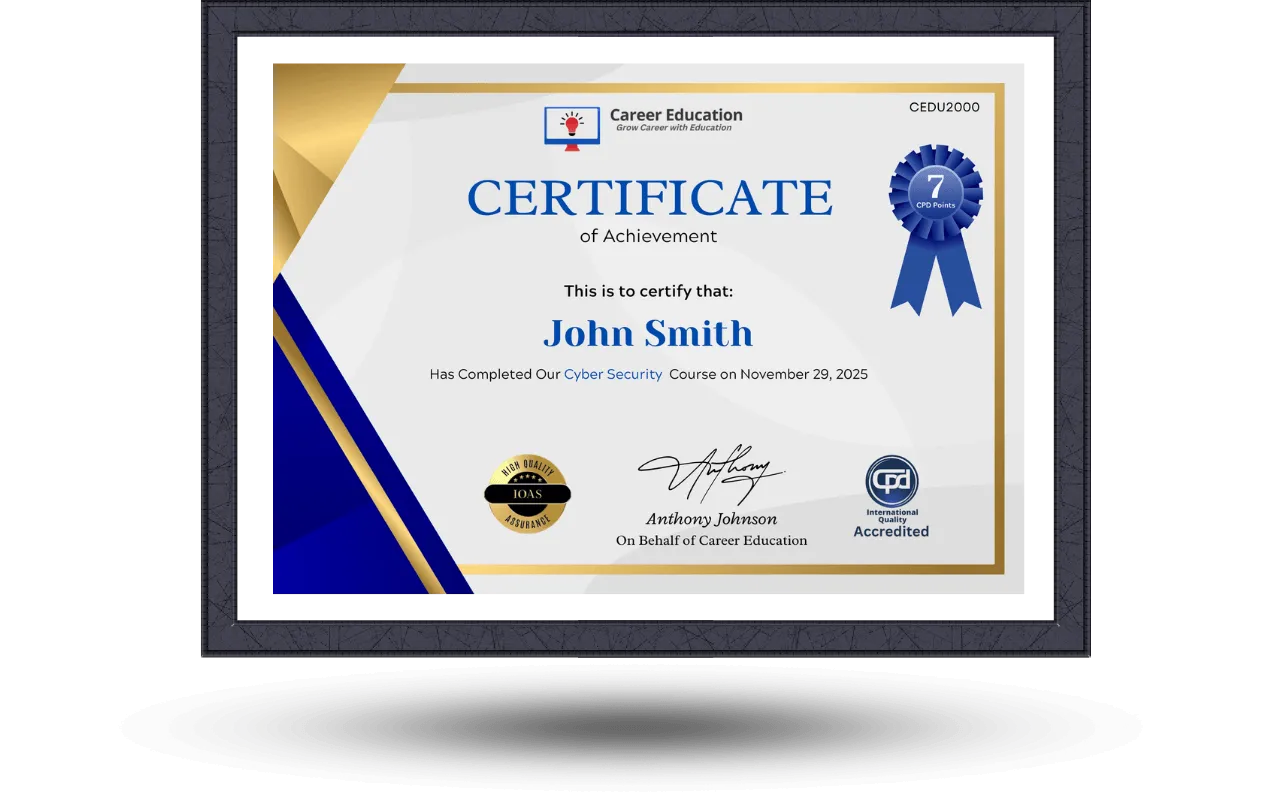
Upon completion of any course, all students are entitled to a CPD IQ Accredited e-certificate that will be issued by Career Education signifying the completion of your course.
After you complete the course and assignment, you will be eligible to order a free certificate accredited by CPD International Quality by completing the form below.
Hardcopy certificates and transcripts are also available for a small additional fee. More information is disclosed upon course completion.
Similar Courses




Frequently Asked Questions
The lifetime membership includes unlimited access to all courses, resources, and updates for a one-time fee.
You can purchase the membership directly from our website using a secure checkout process.
Yes, selected courses can be downloaded for offline access through our mobile app.
Yes, all future updates and new courses are included at no extra cost.
Yes, we offer a 30-day money-back guarantee if you are not satisfied with the membership.