
94%
OFF
OFF
Professional Proofreading Skills
- Lifetime Access
- All Levels
- PDF Certificate
£296
£19
14-Day Money-Back Guarantee
Learn With Confidence




Professional Proofreading Skills: Build Accuracy, Confidence, and Editorial Expertise
In a world where written communication plays a vital role in business, publishing, education, marketing, and digital media, producing accurate and polished content is more important than ever. Even a small spelling mistake, punctuation error, formatting inconsistency, or unclear sentence can affect how professional a document appears. Professional Proofreading Skills can help you develop the practical knowledge and attention to detail needed to identify and correct common errors while improving the overall quality of written content.
This course is designed for learners who want to strengthen their proofreading abilities and understand the processes used to review written material professionally. Rather than simply looking for spelling mistakes, you will explore structured proofreading methods, style sheets, copy-editing principles, on-screen proofreading, common problems, and legal checks.
By completing Professional Proofreading Skills, you can develop a more systematic approach to reviewing documents and gain greater confidence when working with written content.
Why Develop Professional Proofreading Skills?
Proofreading is an essential part of the content production process. Articles, reports, websites, books, marketing materials, business documents, and other forms of written communication often go through several stages of review before publication. Effective proofreading helps ensure that the finished material is accurate, consistent, readable, and professionally presented.
Developing Professional Proofreading Skills can help you move beyond simply noticing obvious mistakes. You can learn how to approach a document methodically, recognise recurring problems, apply established style requirements, and perform final checks before content is published or distributed.
Strong proofreading skills can be useful for a wide range of roles and activities, including editing, content creation, administration, publishing, communications, marketing, education, and freelance work. They can also benefit anyone who regularly produces important written documents and wants to improve their accuracy and confidence.
What Will You Learn?
The Professional Proofreading Skills course covers key principles and practical techniques involved in professional proofreading. Each module focuses on an important area of the proofreading process, allowing you to develop your knowledge progressively.
Module 1 – Introduction to Proofreading
Begin by understanding what proofreading involves and why it matters. This introductory module establishes the foundations you need before progressing to more advanced techniques.
You will explore the purpose of proofreading and how it fits into the wider editing and publishing process. Understanding the difference between proofreading and other forms of editorial work can help you approach documents with the right mindset.
You will also begin developing the careful, detail-oriented approach required for effective proofreading. By understanding what to look for and why accuracy matters, you can build a stronger foundation for reviewing written content.
Module 2 – Methods of Proofreading
A professional proofreader needs an organised method for checking content. Reading through a document casually may cause important errors to be overlooked, particularly when working with lengthy or complex material.
This module introduces different methods of proofreading and helps you understand how a structured process can make your reviews more effective.
You can learn how to approach documents systematically, identify areas that require attention, and use appropriate techniques depending on the type of content being reviewed. Developing a reliable proofreading process can help you work more consistently and reduce the likelihood of missing errors.
By the end of this module, you should have a clearer understanding of how professional proofreading can be approached as a repeatable process rather than a simple final read-through.
Module 3 – Applying the Style Sheet
Consistency is one of the key elements of professional written communication. A document may contain technically correct words and sentences but still appear unpolished if spelling, punctuation, formatting, terminology, or other editorial choices are inconsistent.
This module introduces the use of style sheets and explains how they can support a consistent approach to proofreading.
You will learn about the importance of following established style requirements and checking content against those requirements. Applying a style sheet can help you identify inconsistencies that might otherwise be missed during a standard proof.
Developing this skill can be particularly valuable when working on longer documents or projects involving multiple contributors, where maintaining consistency becomes increasingly important.
Module 4 – Introduction to Copy-Editing
Proofreading and copy-editing are closely related but serve different purposes. Understanding the distinction can help you determine what type of correction or improvement is appropriate when reviewing written material.
This module provides an introduction to copy-editing and helps you understand how it differs from proofreading. You will explore the role of copy-editing in improving written content and gain a broader understanding of the editorial process.
This knowledge can help you recognise when a problem requires more than a straightforward proof correction. It can also give you a stronger overall understanding of how written material progresses from an initial draft to a polished final version.
Module 5 – Common Problems to Check in a Proof
Even experienced writers can make mistakes. Some errors are easy to spot, while others can be hidden by familiarity with the content. A professional proofreader therefore needs to know which areas deserve particular attention.
This module focuses on common problems that should be checked during a proof. You will develop greater awareness of the types of issues that can affect the accuracy, consistency, clarity, and presentation of written material.
Learning to recognise common problem areas can make your proofreading process more thorough and efficient. Instead of relying solely on instinct, you can develop a practical checklist of areas to examine as part of your review.
This approach can help you become more confident when working with different types of written content and reduce the risk of overlooking important issues.
Module 6 – On-Screen Proofreading
Much modern proofreading takes place digitally. Rather than reviewing printed pages, many proofreaders work directly with documents on computers and other digital devices.
This module focuses on on-screen proofreading and introduces considerations that are important when reviewing digital content.
You will develop an understanding of how to approach proofreading on screen and how digital working environments can influence the review process. Building effective on-screen proofreading habits can help you work more comfortably and efficiently with electronic documents.
As digital publishing and online communication continue to play an important role in many industries, the ability to proofread digital content is a valuable addition to your skill set.
Module 7 – Legal Checks
Accuracy is not the only consideration when reviewing professional content. Written material may also contain information that requires careful legal consideration.
The final module introduces legal checks as part of the proofreading process. You will learn why certain content may require additional scrutiny and why proofreaders should be aware of potential legal concerns when reviewing documents.
Understanding the importance of legal checks can help you approach proofreading more responsibly. It can also improve your awareness of issues that may need to be flagged for further review rather than simply corrected as a spelling or grammatical mistake.
Develop Practical Proofreading Confidence
One of the main outcomes of Professional Proofreading Skills is the ability to approach written content with greater confidence and structure. Instead of reading a document simply as a reader, you can learn to examine it from a professional perspective.
You can develop greater awareness of:
-
Spelling and grammatical issues
-
Punctuation and consistency
-
Formatting and presentation
-
Style requirements
-
Common proofreading problems
-
Copy-editing principles
-
Digital proofreading practices
-
Legal considerations
-
Systematic checking methods
These skills can help you become more thorough when reviewing written material and more confident in identifying areas that need attention.
Who Can Benefit from Professional Proofreading Skills?
This course can be suitable for a variety of learners who want to improve their proofreading and editorial knowledge.
It may be particularly useful for aspiring proofreaders, editors, writers, content creators, administrators, marketers, students, communications professionals, and anyone who regularly works with written documents.
You do not necessarily need to work in publishing to benefit from stronger proofreading abilities. Professionals across many industries produce reports, emails, presentations, policies, website content, promotional materials, and other documents. Being able to review these materials carefully can support clearer and more professional communication.
The course can also provide a useful foundation for learners considering future development in editing, content production, publishing, or freelance proofreading.
Improve the Quality of Written Content
A well-proofread document can create a stronger impression of professionalism and attention to detail. By developing Professional Proofreading Skills, you can learn how to identify issues before content reaches its intended audience.
The course focuses on practical knowledge that can be applied to different types of written material. Whether you are reviewing a short document or working through a longer publication, a structured proofreading approach can help you maintain accuracy and consistency.
You can also develop transferable skills such as concentration, organisation, critical reading, attention to detail, and quality control. These abilities can be useful well beyond proofreading itself.
Build a More Systematic Approach
Effective proofreading is not simply about having a good eye for mistakes. It involves using appropriate methods, understanding editorial standards, checking content consistently, and knowing when an issue requires further attention.
Professional Proofreading Skills gives you the opportunity to develop this systematic approach. From introductory proofreading principles and established methods to style sheets, copy-editing, on-screen review, common problems, and legal checks, the curriculum covers important stages of the proofreading process.
By the end of the course, you can have a stronger understanding of what professional proofreading involves and how to approach written content more effectively.
Take the Next Step
If you want to improve your ability to identify errors, maintain consistency, review digital content, and approach written material with greater confidence, Professional Proofreading Skills can provide a valuable learning opportunity.
With seven focused modules covering the essential areas of proofreading, the course can help you build practical knowledge that supports accurate and professional written communication.
Start developing your Professional Proofreading Skills today and take a positive step towards becoming a more confident, methodical, and detail-focused reviewer of written content.
Course Modules
Course Content
Module 1 – Introduction to Proofreading
-
Lesson 1 – Introduction to Proofreading
Module 2 – Methods of Proofreading
Module 3 – Applying the Style Sheet
Module 4 – Introduction to Copy-Editing
Module 5 – Common Problems to check in a Proof
Module 6 – On-Screen Proofreading
Module 7 – Legal Checks
What our students say
Excellent
4.9 average
158 Reviews

Earn an Accredited Certificate
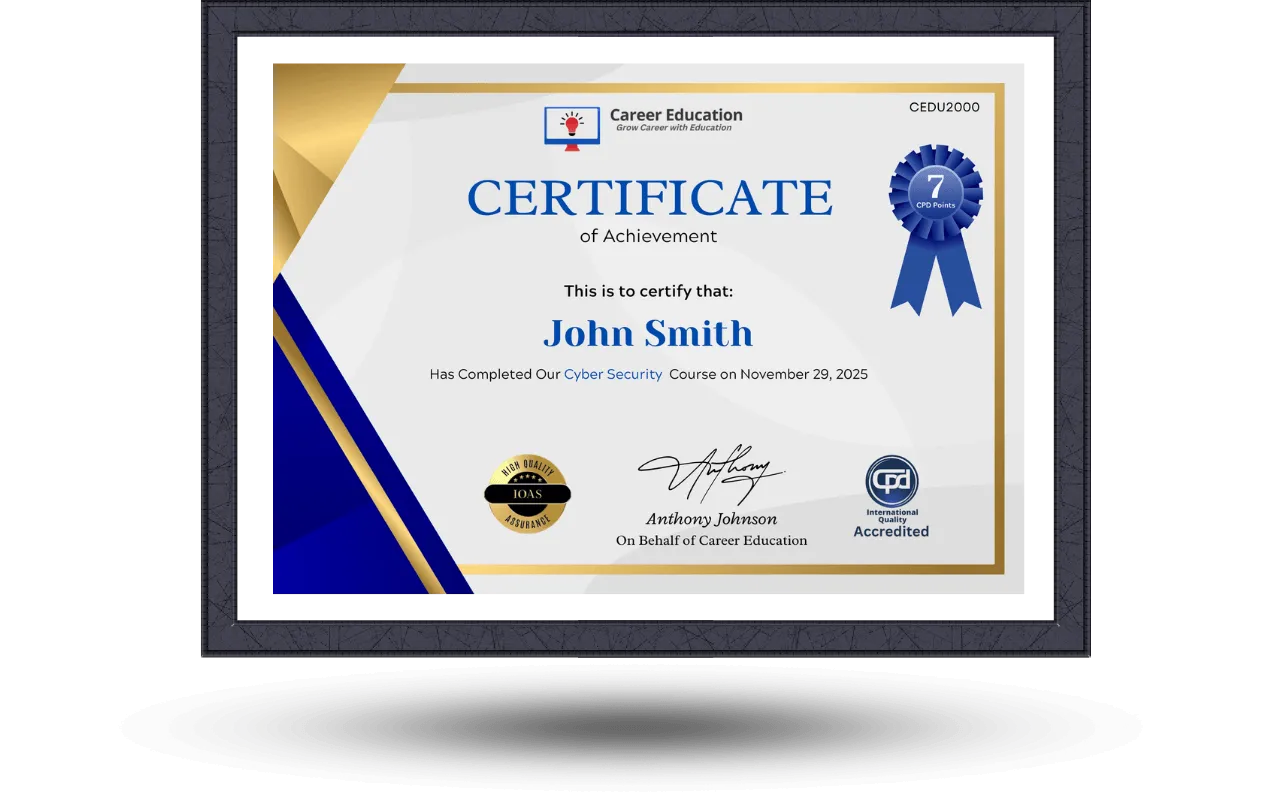
Upon completion of any course, all students are entitled to a CPD IQ Accredited e-certificate that will be issued by Career Education signifying the completion of your course.
After you complete the course and assignment, you will be eligible to order a free certificate accredited by CPD International Quality by completing the form below.
Hardcopy certificates and transcripts are also available for a small additional fee. More information is disclosed upon course completion.
Similar Courses


Frequently Asked Questions
The lifetime membership includes unlimited access to all courses, resources, and updates for a one-time fee.
You can purchase the membership directly from our website using a secure checkout process.
Yes, selected courses can be downloaded for offline access through our mobile app.
Yes, all future updates and new courses are included at no extra cost.
Yes, we offer a 30-day money-back guarantee if you are not satisfied with the membership.