
94%
OFF
OFF
Understanding and Managing Unconscious Bias
- Lifetime Access
- All Levels
- PDF Certificate
£296
£19
14-Day Money-Back Guarantee
Learn With Confidence








Understanding and Managing Unconscious Bias
Unconscious bias can influence the way people perceive situations, evaluate information, interact with colleagues, and make decisions, often without realising it. In professional environments, these automatic assumptions can affect recruitment, promotion, communication, teamwork, performance evaluation, leadership, and workplace relationships.
The Understanding and Managing Unconscious Bias course provides a practical introduction to how unconscious bias develops, how it can influence behaviour and decision-making, and what individuals and organisations can do to reduce its potential impact.
Rather than presenting bias as simply a personal failing, the course explores the cognitive processes that contribute to automatic judgements and provides constructive strategies for becoming more aware of these influences. Learners will examine different types of unconscious bias, understand their potential effects, and explore practical approaches for making workplace decisions more thoughtfully and consistently.
The course also examines unconscious bias in specific professional contexts, with particular attention to hiring and promotion. This makes it especially relevant for managers, team leaders, HR professionals, recruiters, business owners, and employees who want to contribute to a more objective and inclusive working environment.
Why Understanding Unconscious Bias Matters
People make countless decisions every day. Many of these decisions involve rapidly processing information, interpreting social cues, forming impressions, and responding to familiar patterns. These mental processes can be useful, but they can also contribute to assumptions that are not always based on complete or objective information.
Unconscious bias does not necessarily mean that someone intentionally discriminates against another person. Instead, it can involve automatic associations or preferences that influence judgement without deliberate awareness.
In the workplace, these influences may affect who receives an opportunity, how someone’s performance is interpreted, which candidates are shortlisted, whose ideas receive attention, or how potential is assessed.
The Understanding and Managing Unconscious Bias course helps learners recognise these possibilities and develop strategies for more deliberate decision-making.
The goal is not to eliminate every automatic thought—something that is neither realistic nor necessary—but to increase awareness and introduce practical methods for reducing the influence of inappropriate or irrelevant assumptions.
What You Will Learn
Throughout the Understanding and Managing Unconscious Bias course, learners will develop an understanding of:
-
What unconscious bias means
-
How automatic thinking can influence judgement
-
How cognitive processes contribute to bias formation
-
Different types of unconscious bias
-
The potential effects of bias on individuals and organisations
-
Strategies individuals can use to recognise and manage bias
-
Organisational approaches to reducing the impact of bias
-
How bias can influence recruitment and promotion decisions
-
The importance of structured and evidence-based decision-making
-
How awareness can contribute to more inclusive workplace practices
By the end of the course, learners should have a stronger understanding of how unconscious bias can operate and how thoughtful strategies can help minimise its impact.
Module 1: Introduction to Unconscious Bias
The course begins with an introduction to the concept of unconscious bias.
Learners will explore what unconscious bias is and how it differs from deliberate or conscious prejudice. The module introduces the idea that people can hold automatic associations that influence their perceptions and decisions without intentionally choosing to do so.
The introductory lesson also considers why unconscious bias is relevant in professional environments. Workplace decisions frequently involve people, relationships, performance, potential, and opportunities, making awareness of bias particularly important.
Learners will begin to recognise situations where automatic assumptions may influence their thinking. The course encourages self-reflection without assigning blame, helping participants consider how bias can arise as part of normal human cognitive processes.
By completing this module, learners will have a foundation for understanding the subject and recognising why unconscious bias deserves attention in modern workplaces.
Module 2: Cognitive Processes and Bias Formation
Understanding unconscious bias requires some knowledge of how the human mind processes information.
This module explores the cognitive processes that can contribute to the development of automatic associations and judgements.
Learners will examine how people use mental shortcuts to process large amounts of information efficiently. These shortcuts can be helpful when making everyday decisions, but they may also result in assumptions that do not accurately reflect an individual situation.
The module explores the relationship between experience, familiarity, expectations, social information, and automatic thinking.
Learners will gain a better understanding of why people may reach conclusions quickly and why those conclusions are not always completely objective.
This knowledge can help learners recognise that managing unconscious bias requires more than simply trying to “think positively”. It involves creating opportunities to slow down, examine evidence, challenge assumptions, and make decisions based on relevant information.
By the end of this module, learners will have a stronger understanding of the cognitive foundations behind unconscious bias.
Module 3: Types of Unconscious Bias
Unconscious bias can appear in different forms and may affect different types of decisions.
This module introduces learners to several common forms of unconscious bias and explores how they can influence workplace behaviour.
Topics may include affinity bias, where people may favour those they perceive as similar to themselves; confirmation bias, where individuals may give greater weight to information that supports existing beliefs; and halo or horn effects, where one positive or negative characteristic influences an overall judgement.
Learners will also explore other forms of bias that may affect workplace interactions, assessments, recruitment, and decision-making.
The objective is not to label individuals but to provide learners with a vocabulary for recognising patterns that may affect judgement.
By understanding different types of bias, learners can become more alert to situations where decisions may benefit from additional reflection or structured evaluation.
Module 4: Effects of Unconscious Bias
Unconscious bias can have consequences for both individuals and organisations.
This module explores the potential effects of unconscious bias on workplace experiences, decision-making, communication, teamwork, recruitment, development opportunities, and organisational culture.
Learners will consider how repeated biased decisions can influence employee experiences over time. For example, if assumptions affect who receives challenging assignments, mentoring, recognition, or promotion opportunities, the cumulative impact may be significant.
The module also considers organisational consequences. Inconsistent decision-making can affect employee engagement, trust, collaboration, talent development, and perceptions of fairness.
Importantly, the course encourages learners to consider bias as a process that can be influenced rather than as an unavoidable outcome.
Recognising where bias may occur provides an opportunity to introduce better decision-making practices and more consistent processes.
By completing this module, learners will better understand why unconscious bias deserves attention at both individual and organisational levels.
Module 5: Mitigating Unconscious Bias: Strategies for Individuals
Awareness is an important first step, but effective bias management also requires practical strategies.
This module focuses on techniques individuals can use to reduce the potential influence of unconscious bias on their decisions and interactions.
Learners will explore the value of slowing down important decisions, questioning assumptions, considering alternative perspectives, and focusing on relevant evidence.
Self-reflection can also play an important role. Learners will be encouraged to examine situations where automatic judgements may have influenced their reactions and consider what could be done differently in the future.
Other useful approaches can include seeking diverse perspectives, using structured decision-making methods, applying consistent criteria, and separating personal preferences from legitimate professional requirements.
The module focuses on practical behaviour rather than expecting individuals to completely eliminate unconscious thoughts.
By completing this module, learners should have a range of strategies they can apply to everyday workplace decisions and interactions.
Module 6: Mitigating Unconscious Bias: Strategies for Organizations
While individual awareness is valuable, organisations also have an important role to play in reducing the potential impact of unconscious bias.
This module examines organisational approaches to managing bias.
Learners will explore how policies, procedures, decision-making frameworks, training, accountability mechanisms, and workplace culture can influence the way bias is managed.
Structured processes can be particularly valuable in areas where subjective judgement plays a significant role. Clearly defined criteria, consistent evaluation methods, documented decisions, and multiple perspectives can help reduce the influence of irrelevant personal preferences.
The module also considers the importance of leadership. Leaders and managers can influence organisational culture through their own behaviour, expectations, communication, and approach to decision-making.
Learners will gain a broader understanding of how organisations can move beyond awareness training and incorporate fairness and consistency into everyday processes.
The aim is to help organisations create systems that support better decisions rather than relying entirely on individuals to recognise and correct their own biases.
Module 7: Bias in Specific Contexts: Hiring and Promotion
Recruitment and promotion are particularly important areas for understanding unconscious bias because they directly influence access to employment opportunities and career development.
This module examines how unconscious bias can potentially affect hiring and promotion decisions.
Learners will explore how assumptions may influence job descriptions, candidate sourcing, CV or application screening, interviews, candidate evaluation, performance assessments, and promotion decisions.
The course introduces strategies that can support more structured and consistent decision-making. These may include clearly defined selection criteria, standardised interview questions, objective evaluation frameworks, evidence-based assessments, and multiple decision-makers where appropriate.
The module also encourages learners to distinguish between relevant professional criteria and assumptions that are unrelated to an individual’s ability to perform a role.
By applying structured processes, organisations can create greater consistency and make it easier to identify when decisions may be influenced by irrelevant factors.
By the end of this module, learners will have a clearer understanding of how unconscious bias can affect career opportunities and how more deliberate processes can help reduce its potential impact.
Practical Outcomes of the Course
The Understanding and Managing Unconscious Bias course is designed to provide practical, outcome-focused knowledge that can be applied in professional environments.
After completing the course, learners should be able to:
-
Explain the concept of unconscious bias
-
Understand how automatic cognitive processes can influence judgement
-
Recognise common forms of unconscious bias
-
Identify situations where assumptions may affect decision-making
-
Understand the potential impact of bias on employees and organisations
-
Apply practical strategies for questioning assumptions
-
Use more structured approaches to important workplace decisions
-
Understand how organisations can reduce the influence of bias
-
Recognise potential bias within recruitment and promotion processes
-
Support more consistent and evidence-based decision-making
-
Encourage greater awareness of fairness and inclusion in workplace interactions
-
Reflect more critically on personal decision-making patterns
The course is designed to encourage practical application rather than simply providing theoretical information.
Who Should Take This Course?
The Understanding and Managing Unconscious Bias course can benefit professionals at all levels of an organisation.
It may be particularly valuable for:
-
HR professionals
-
Recruitment specialists
-
Hiring managers
-
Team leaders
-
Supervisors
-
Business owners
-
Department managers
-
Workplace trainers
-
Diversity and inclusion professionals
-
Senior leaders
-
Employees involved in recruitment or promotion decisions
-
Professionals interested in improving workplace decision-making
The course can also be useful for employees who want to understand how unconscious bias may influence workplace relationships and contribute to a more thoughtful professional environment.
Build More Thoughtful and Consistent Workplace Decisions
Unconscious bias can be subtle, automatic, and difficult to recognise. However, awareness of how bias develops and where it may influence decisions can provide opportunities to improve workplace practices.
The Understanding and Managing Unconscious Bias course provides a structured journey from understanding the cognitive foundations of bias to exploring practical strategies for individuals and organisations.
Learners will examine different forms of bias, consider their potential effects, and explore approaches for reducing their influence. Particular attention is given to hiring and promotion, where consistent and evidence-based decision-making can have a significant impact on people’s professional opportunities.
Importantly, managing unconscious bias is not about expecting people to be perfectly objective at all times. It is about creating greater awareness and using practical processes that encourage people to examine assumptions, focus on relevant evidence, and make decisions more deliberately.
For organisations, this can mean developing clearer processes and accountability. For individuals, it can mean becoming more reflective and intentional in everyday interactions and decisions.
Enrol in Understanding and Managing Unconscious Bias today and develop the awareness, practical strategies, and decision-making skills needed to recognise bias, challenge assumptions, and support a more fair and inclusive workplace.
Course Modules
Course Content
Module 1_ Introduction to Unconscious Bias.
-
Lesson 1_ Introduction to Unconscious Bias.
Module 2_ Cognitive Processes and Bias Formation.
Module 3_ Types of Unconscious Bias.
Module 4_ Effects of Unconscious Bias.
Module 5_ Mitigating Unconscious Bias_ Strategies for Individuals.
Module 6_ Mitigating Unconscious Bias_ Strategies for Organizations.
Module 7_ Bias in Specific Contexts_ Hiring and Promotion.
What our students say
Excellent
4.9 average
158 Reviews

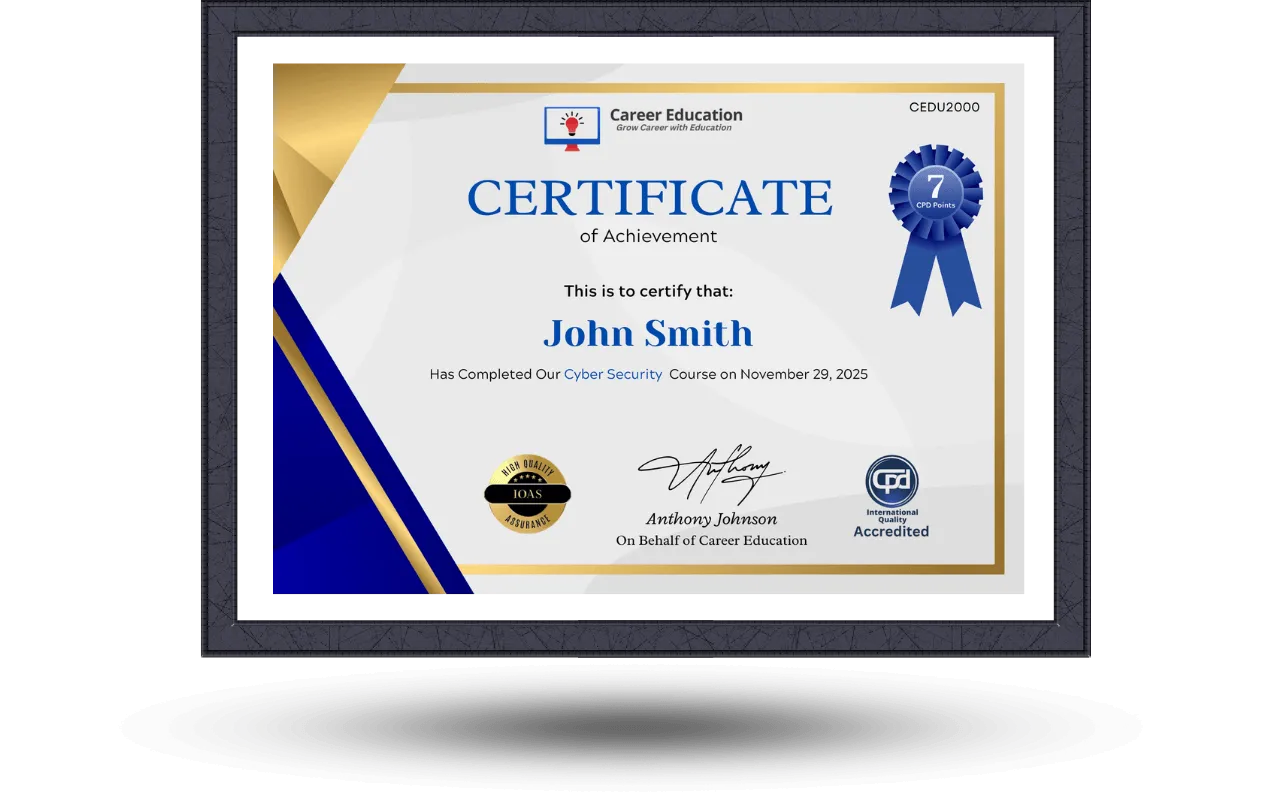
Earn an Accredited Certificate
Upon completion of any course, all students are entitled to a CPD IQ Accredited e-certificate that will be issued by Career Education signifying the completion of your course.
After you complete the course and assignment, you will be eligible to order a free certificate accredited by CPD International Quality by completing the form below.
Hardcopy certificates and transcripts are also available for a small additional fee. More information is disclosed upon course completion.
Similar Courses




Frequently Asked Questions
The lifetime membership includes unlimited access to all courses, resources, and updates for a one-time fee.
You can purchase the membership directly from our website using a secure checkout process.
Yes, selected courses can be downloaded for offline access through our mobile app.
Yes, all future updates and new courses are included at no extra cost.
Yes, we offer a 30-day money-back guarantee if you are not satisfied with the membership.