
94%
OFF
OFF
Managing Remote Teams Effectively
- Lifetime Access
- All Levels
- PDF Certificate
£296
£19
14-Day Money-Back Guarantee
Learn With Confidence


Managing Remote Teams Effectively
Remote work has transformed the way organisations build teams, collaborate, and deliver results. While remote working offers flexibility, access to wider talent pools, and new opportunities for productivity, it also creates unique management challenges. Leaders must know how to maintain communication, establish clear processes, support performance, resolve conflicts, and build trust when team members may rarely—or never—meet in person.
Managing Remote Teams Effectively is designed to help managers, team leaders, supervisors, and aspiring leaders develop the practical knowledge and strategies needed to lead remote teams with greater confidence and consistency. Rather than focusing only on the theory of remote work, this course concentrates on outcomes that can be applied to real workplace situations.
Whether you are managing a fully remote team, supporting hybrid employees, or preparing to take responsibility for a distributed workforce, this course can help you develop a structured approach to remote team management.
Why Managing Remote Teams Effectively Matters
Managing a team remotely requires more than transferring traditional management practices into an online environment. Without effective systems and communication, remote employees can experience confusion around responsibilities, inconsistent expectations, communication gaps, and difficulties maintaining team connection.
Effective remote management creates clarity.
When team members understand their responsibilities, know how work should be completed, have reliable communication channels, and receive appropriate feedback, they are better positioned to contribute effectively. Managers can also spend less time dealing with preventable misunderstandings and more time supporting team development and organisational objectives.
Managing Remote Teams Effectively helps learners understand the core principles behind successful remote leadership and how these principles can be applied across different teams and working environments.
What You Can Gain from This Course
By completing Managing Remote Teams Effectively, learners can develop a stronger understanding of how to:
-
Manage the challenges associated with remote and distributed teams
-
Build effective and collaborative remote teams
-
Establish clear structures, workflows, and processes
-
Select appropriate communication approaches for different situations
-
Set expectations around responsibilities and performance
-
Monitor progress without creating unnecessary micromanagement
-
Encourage accountability across remote teams
-
Handle workplace disagreements constructively
-
Develop trust between managers and remote employees
-
Create a more connected and productive remote working environment
These skills can support managers in creating better working relationships while helping teams remain focused on shared objectives.
Course Curriculum
Module 1: Introduction to Remote Team Management
The course begins by introducing the fundamentals of remote team management. Learners explore what makes remote teams different from traditional workplace teams and why management approaches may need to change when employees work from different locations.
This module provides a foundation for understanding the opportunities and challenges associated with remote working. You will develop greater awareness of issues such as communication barriers, employee engagement, coordination, accountability, and maintaining team cohesion.
The outcome is a clearer understanding of the manager’s role in creating an effective remote working environment.
Module 2: Building a Successful Remote Team
A successful remote team starts with the right people, expectations, and working relationships. This module explores the principles involved in building a team that can collaborate effectively despite physical distance.
You will learn about creating a strong team environment, encouraging collaboration, and establishing shared expectations. The module also focuses on the importance of understanding individual strengths and ensuring that team members know how their contributions support wider organisational goals.
By the end of this module, learners can approach remote team development with a more structured mindset and recognise the factors that contribute to team effectiveness.
Module 3: Establishing Remote Team Structure and Processes
Remote teams need clear structures and dependable processes. When employees work independently from different locations, ambiguity around responsibilities or workflows can quickly lead to delays and duplicated work.
This module explores how managers can establish practical structures that help remote employees understand who is responsible for what, how tasks should progress, and where information should be shared.
Learners will gain insight into creating clearer workflows, defining responsibilities, establishing expectations, and supporting consistency across remote operations.
The outcome is the ability to create a more organised remote working environment where employees can work with greater clarity and confidence.
Module 4: Communication Strategies for Remote Teams
Communication is one of the most important elements of successful remote team management. In a physical workplace, employees can often resolve minor questions through quick conversations. Remote teams need more deliberate communication strategies.
This module focuses on developing effective communication practices for distributed teams. Learners explore how managers can support clear information sharing, maintain regular contact, and reduce misunderstandings.
You will develop a stronger understanding of how communication can influence collaboration, productivity, engagement, and team relationships.
The goal is not simply to communicate more frequently, but to communicate more effectively. By applying appropriate communication strategies, managers can help employees remain informed, connected, and aligned with team objectives.
Module 5: Managing Performance and Accountability
Managing performance remotely requires a balanced approach. Employees need clear expectations and measurable objectives, while managers need to provide appropriate support without relying on constant supervision.
This module explores practical approaches to performance management and accountability within remote teams. Learners consider how expectations can be communicated, how progress can be monitored, and how managers can provide useful feedback.
You will develop greater awareness of how to encourage responsibility while maintaining a supportive management style.
The outcome is a more structured approach to remote performance management, helping managers focus on results, development, and continuous improvement rather than simply monitoring activity.
Module 6: Resolving Conflict and Building Trust
Conflict can occur in any workplace, and remote environments can sometimes make disagreements more difficult to identify and resolve. Differences in communication styles, expectations, responsibilities, or working practices can create tension if they are not addressed appropriately.
This module focuses on managing conflict constructively while developing stronger levels of trust within remote teams.
Learners will explore the importance of trust, respectful communication, and effective conflict resolution. You will gain a better understanding of how managers can respond to disagreements and support healthier professional relationships.
Building trust is particularly important in remote environments because managers cannot rely on constant physical interaction to maintain team connections. A culture based on reliability, transparency, respect, and clear communication can help remote employees feel more confident in their roles.
Who Can Benefit from Managing Remote Teams Effectively?
Managing Remote Teams Effectively can be valuable for a wide range of learners, including:
-
Team leaders managing remote employees
-
Managers responsible for distributed teams
-
Supervisors working in hybrid environments
-
Business owners leading remote staff
-
HR and people-management professionals
-
Project and operations managers
-
Professionals preparing for leadership responsibilities
-
Anyone seeking to improve their remote management skills
The course can also provide useful knowledge for professionals who expect remote and hybrid working to remain an important part of modern business operations.
Develop Practical Remote Leadership Skills
One of the key benefits of Managing Remote Teams Effectively is its focus on practical management outcomes. Successful remote leadership is not based on a single technique. It requires a combination of communication, organisation, accountability, trust-building, conflict resolution, and performance management.
This course brings these areas together into a structured learning experience.
Instead of treating remote management as simply supervising employees from a distance, learners can develop a broader understanding of how to create an environment where remote employees can collaborate, communicate, and contribute effectively.
Improve Team Communication and Collaboration
Strong communication can help prevent many of the problems associated with remote working. Clear expectations reduce uncertainty, consistent processes improve coordination, and effective conversations help managers understand what their teams need.
Through Managing Remote Teams Effectively, learners can develop strategies for creating stronger communication practices and encouraging collaboration across locations.
These skills can be particularly valuable when team members work different schedules, operate from different locations, or have limited opportunities for face-to-face interaction.
Support Better Performance Without Micromanagement
Remote management does not have to mean constantly checking whether employees are online or monitoring every task they complete. Effective managers focus on expectations, outcomes, accountability, and support.
The course helps learners understand how to create clearer performance expectations while giving employees the space to carry out their responsibilities.
This approach can contribute to a healthier working environment in which employees understand what is expected of them while managers remain focused on meaningful results.
Build Trust Across Distributed Teams
Trust is fundamental to successful remote teamwork. Employees need confidence in their managers, colleagues, processes, and responsibilities. Managers also need to trust team members to complete their work professionally.
Managing Remote Teams Effectively explores how trust can be developed through consistency, communication, accountability, and respectful leadership.
A stronger culture of trust can support collaboration and help remote employees feel more connected to the wider team.
Strengthen Your Professional Development
Remote and hybrid working have created new expectations for managers across many industries. Professionals who can confidently manage distributed teams can bring valuable skills to modern workplaces.
Completing Managing Remote Teams Effectively can help you strengthen your understanding of remote leadership and demonstrate your commitment to developing relevant management capabilities.
Whether your goal is to become a more effective team leader, improve your current management approach, or prepare for future career opportunities, the knowledge gained from this course can support your professional development.
Start Managing Remote Teams with Greater Confidence
Managing people across different locations requires planning, communication, flexibility, and strong leadership. With the right approach, remote teams can remain connected, accountable, productive, and focused on shared goals.
Managing Remote Teams Effectively provides a structured opportunity to develop the knowledge needed to navigate the key challenges of remote team leadership. From building successful teams and establishing processes to improving communication, managing performance, resolving conflict, and developing trust, the course covers essential areas of effective remote management.
If you want to improve your remote leadership capabilities and develop practical strategies for managing distributed teams, Managing Remote Teams Effectively can provide a valuable foundation for your continued professional development.
Start learning today and build the skills needed to lead remote teams with greater clarity, consistency, and confidence.
Course Modules
Course Content
Module 1_ Introduction to Remote Team Management
-
Lesson 1_ Introduction to Remote Team Management
Module 2_ Building a Successful Remote Team
Module 3_ Establishing Remote Team Structure and Processes
Module 4_ Communication Strategies for Remote Teams
Module 5_ Managing Performance and Accountability
Module 6_ Resolving Conflict and Building Trust
What our students say
Excellent
4.9 average
158 Reviews

Earn an Accredited Certificate
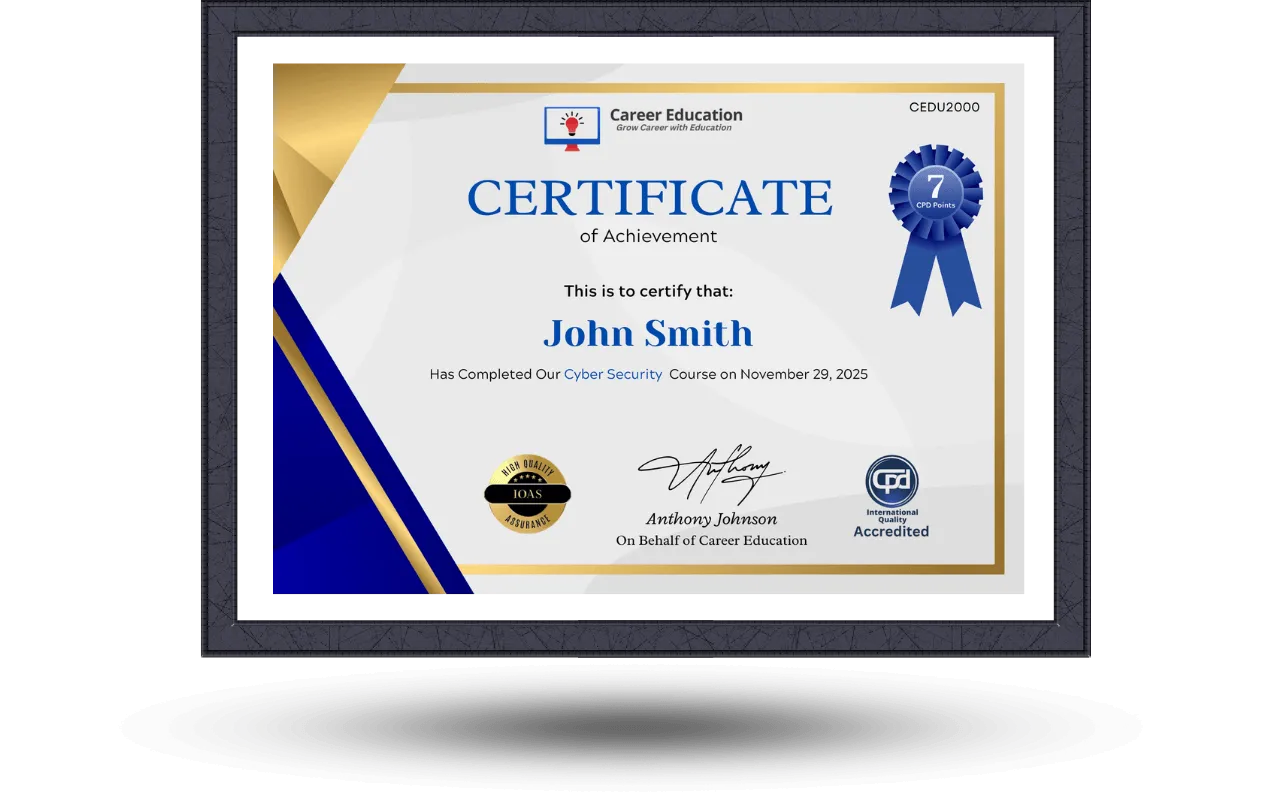
Upon completion of any course, all students are entitled to a CPD IQ Accredited e-certificate that will be issued by Career Education signifying the completion of your course.
After you complete the course and assignment, you will be eligible to order a free certificate accredited by CPD International Quality by completing the form below.
Hardcopy certificates and transcripts are also available for a small additional fee. More information is disclosed upon course completion.
Similar Courses




Frequently Asked Questions
The lifetime membership includes unlimited access to all courses, resources, and updates for a one-time fee.
You can purchase the membership directly from our website using a secure checkout process.
Yes, selected courses can be downloaded for offline access through our mobile app.
Yes, all future updates and new courses are included at no extra cost.
Yes, we offer a 30-day money-back guarantee if you are not satisfied with the membership.