
94%
OFF
OFF
Lead Exposure Safety in Construction
- Lifetime Access
- All Levels
- PDF Certificate
£296
£19
14-Day Money-Back Guarantee
Learn With Confidence









Lead Exposure Safety in Construction
Construction work can involve a wide range of hazards, but lead exposure remains an important occupational safety concern, particularly during renovation, demolition, maintenance, painting, surface preparation, and work involving older structures or lead-containing materials. Without appropriate awareness and controls, lead-containing dust, fumes, and residues can create serious health and workplace risks.
The Lead Exposure Safety in Construction course is designed to help learners develop a practical understanding of lead hazards and the measures used to reduce exposure in construction environments. The course focuses on awareness, hazard identification, risk assessment, safe work practices, control measures, remediation, and worker education.
Rather than focusing only on theory, the Lead Exposure Safety in Construction course is designed around practical outcomes. Learners can develop the knowledge needed to recognise potential lead hazards, understand how exposure can occur, appreciate the health implications, and identify appropriate approaches for controlling risks.
Whether you are involved in construction, renovation, maintenance, property management, site supervision, occupational safety, or workforce training, understanding lead exposure can contribute to safer working environments and more informed workplace decisions.
Why Lead Exposure Safety Matters in Construction
Lead may be present in older paints, coatings, pipes, contaminated dust, soil, and other construction-related materials. Activities such as sanding, scraping, cutting, burning, demolition, drilling, or disturbing painted surfaces can potentially release lead-containing particles.
The risk is not limited to workers directly handling lead-containing materials. Dust can spread to surrounding areas, equipment, clothing, vehicles, and other workspaces when appropriate controls are not implemented.
A strong understanding of Lead Exposure Safety in Construction helps workers and organisations approach these situations more systematically. Awareness can support better hazard recognition, appropriate controls, improved work practices, and stronger communication between workers and supervisors.
This course provides a structured learning pathway covering the essential areas of lead safety, from introductory concepts through worker training and education.
What You Will Learn
By completing the Lead Exposure Safety in Construction course, learners can develop knowledge in several important areas, including:
-
The fundamentals of lead exposure in construction environments
-
Common sources and routes of lead exposure
-
Potential health effects associated with lead exposure
-
Methods for recognising potential lead hazards
-
The importance of hazard assessment before work begins
-
Control measures used to reduce exposure
-
The role of engineering controls and safe work practices
-
Key principles associated with lead abatement and remediation
-
The importance of worker training and safety communication
-
Ways to contribute to a more informed and safety-conscious workplace
The curriculum is divided into seven focused modules, allowing learners to build their understanding progressively.
Module 1: Introduction to Lead Exposure
The course begins by establishing a foundation in lead exposure and its relevance to construction work.
In this module, learners explore what lead is, where it may be encountered, and why construction activities can create opportunities for exposure. Understanding the characteristics of lead-containing materials is an important first step toward recognising potential hazards.
Learners also consider how construction activities can disturb existing materials and potentially generate contaminated dust or other forms of exposure. This introductory knowledge helps create a stronger foundation for the risk-management principles covered throughout the remainder of the course.
Outcome: Learners can develop a clear understanding of lead exposure and recognise why lead safety should be considered when planning and performing relevant construction activities.
Module 2: Health Risks and Effects of Lead Exposure
Understanding the potential health consequences of lead exposure is essential for appreciating why appropriate workplace controls matter.
This module examines the health risks associated with lead exposure and explains why preventing unnecessary exposure is an important occupational safety consideration. Learners develop an awareness of how lead can affect the body and why exposure management is particularly important when work involves lead-containing materials.
The module also encourages learners to understand the relationship between workplace exposure and preventive safety measures. Rather than treating lead safety as simply a compliance requirement, learners can recognise the broader importance of protecting worker health.
Outcome: Learners can explain the potential health risks associated with lead exposure and understand the importance of preventing and controlling workplace exposure.
Module 3: Hazard Identification and Assessment
Effective lead safety begins with recognising potential hazards before work takes place.
In this module, learners develop their understanding of hazard identification and assessment. They explore why construction activities should be evaluated before materials are disturbed and why identifying potential sources of lead is an important part of planning.
Learners consider how site conditions, building age, existing coatings, planned activities, and work methods can influence potential exposure risks. The module reinforces the importance of assessing hazards systematically rather than relying on assumptions.
Good hazard identification can help organisations determine what controls may be necessary and what information workers need before beginning work.
Outcome: Learners can identify potential lead hazards and understand the role of assessment in developing safer approaches to construction activities.
Module 4: Control Measures and Engineering Controls
Once a potential hazard has been identified, appropriate controls are essential.
This module explores the principles behind controlling lead exposure, with particular attention to engineering controls and other measures designed to reduce the opportunity for exposure. Learners gain an understanding of how workplace controls can be incorporated into construction planning and operations.
The course highlights the importance of selecting controls based on the nature of the hazard and the work being performed. Learners can develop a stronger appreciation for methods that reduce the generation and spread of lead-containing dust and help separate workers from potential sources of exposure.
The module also supports a broader understanding of the hierarchy of controls and how preventive measures can be integrated into workplace safety procedures.
Outcome: Learners can understand how control measures and engineering controls contribute to reducing lead exposure risks in construction settings.
Module 5: Work Practices for Lead Safety
Safe procedures are an important part of controlling exposure, particularly when workers are carrying out activities that may disturb lead-containing materials.
This module focuses on practical work practices that support lead safety. Learners explore why appropriate planning, housekeeping, work methods, personal protective measures, and contamination-control practices are important when working in potentially contaminated environments.
The emphasis is on developing safer habits and understanding how everyday decisions can affect exposure risk. Learners can also appreciate why following established workplace procedures and safety instructions is essential.
By understanding appropriate work practices, workers can become better prepared to recognise unsafe conditions and contribute to maintaining controlled work areas.
Outcome: Learners can recognise the importance of safe work practices and apply lead-safety principles when approaching relevant construction activities.
Module 6: Lead Abatement and Remediation
Lead-related work may require specialist approaches to reduce or remove hazards from buildings, structures, or affected areas.
This module introduces learners to the principles of lead abatement and remediation. It explores why such work requires careful planning, appropriate controls, competent personnel, and effective management of contaminated materials.
Learners develop an understanding of the objectives of abatement and remediation and how these activities differ from ordinary construction work. The module also reinforces the importance of controlling contamination and maintaining safe conditions throughout relevant projects.
Where specialist assessment, testing, removal, or remediation is required, learners can better understand why appropriate professional procedures and applicable requirements should be followed.
Outcome: Learners can explain the purpose of lead abatement and remediation and understand the importance of controlled, properly planned approaches to lead-related work.
Module 7: Worker Training and Education
A workplace safety programme is only effective when workers understand the hazards and know how to follow the required procedures.
The final module focuses on worker training and education. Learners explore why clear communication, appropriate instruction, and ongoing safety awareness are essential components of lead exposure prevention.
Effective training can help workers recognise potential hazards, understand workplace procedures, use controls appropriately, and communicate concerns to supervisors or responsible personnel. It can also support a stronger safety culture in which workers understand their responsibilities and take workplace hazards seriously.
This module brings together the knowledge developed throughout the course and reinforces the importance of continuous learning and communication.
Outcome: Learners can understand the role of worker education in lead exposure prevention and contribute to improved safety awareness within construction teams.
Who Can Benefit from This Course?
The Lead Exposure Safety in Construction course can be valuable for individuals who want to improve their knowledge of lead-related workplace hazards, including:
-
Construction workers
-
Renovation and maintenance workers
-
Site supervisors
-
Construction managers
-
Health and safety personnel
-
Property and facilities professionals
-
Contractors and subcontractors
-
Building maintenance teams
-
Individuals involved in workplace safety training
-
Learners seeking knowledge of construction-related occupational hazards
The course may also be useful as part of broader professional development for individuals whose responsibilities involve construction safety or potentially hazardous building materials.
Practical Knowledge for Safer Construction Environments
Lead exposure prevention requires more than simply knowing that lead can be hazardous. Workers and organisations need to understand how hazards can arise, how risks can be assessed, and how appropriate controls and work practices can reduce exposure opportunities.
The Lead Exposure Safety in Construction course provides a structured way to develop that understanding. From recognising potential sources of lead to exploring control measures, work practices, remediation principles, and worker education, the course covers key areas that support informed workplace safety.
The outcome is a stronger foundation for recognising lead-related risks and understanding the importance of appropriate preventive measures.
Build Your Lead Safety Knowledge
Construction professionals encounter changing environments, materials, tasks, and risks. Developing knowledge about lead exposure can help learners become more aware of potential hazards and better prepared to participate in workplace safety procedures.
The Lead Exposure Safety in Construction course takes learners through the subject step by step, beginning with the fundamentals and progressing toward hazard assessment, control strategies, safe work practices, remediation, and training.
By completing the course, learners can strengthen their understanding of lead exposure risks and the principles used to manage them. This knowledge can support safer decision-making, better workplace communication, and a more proactive approach to occupational safety.
If you want to build practical awareness of lead-related hazards in construction and develop a stronger foundation in exposure prevention, the Lead Exposure Safety in Construction course provides a focused learning experience designed around essential workplace safety outcomes.
Enrol today and develop the knowledge needed to recognise lead exposure hazards, understand effective control principles, promote safer work practices, and contribute to a more informed construction safety culture.
Course Modules
Course Content
Module 1_ Introduction to Lead Exposure
-
Lesson 1_ Introduction to Lead Exposure
Module 2_ Health Risks and Effects of Lead Exposure
Module 3_ Hazard Identification and Assessment
Module 4_ Control Measures and Engineering Controls
Module 5_ Work Practices for Lead Safety
Module 6_ Lead Abatement and Remediation
Module 7_ Worker Training and Education
What our students say
Excellent
4.9 average
158 Reviews

Earn an Accredited Certificate
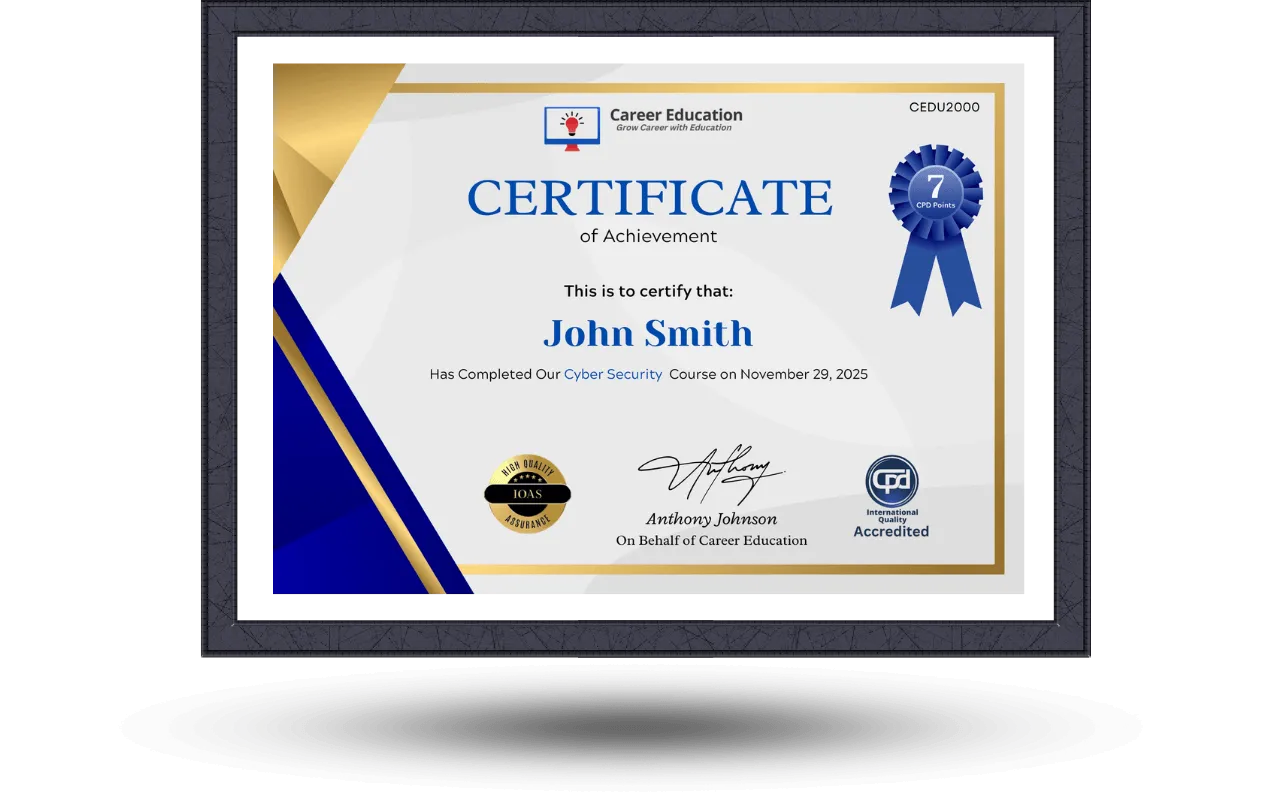
Upon completion of any course, all students are entitled to a CPD IQ Accredited e-certificate that will be issued by Career Education signifying the completion of your course.
After you complete the course and assignment, you will be eligible to order a free certificate accredited by CPD International Quality by completing the form below.
Hardcopy certificates and transcripts are also available for a small additional fee. More information is disclosed upon course completion.
Similar Courses


Frequently Asked Questions
The lifetime membership includes unlimited access to all courses, resources, and updates for a one-time fee.
You can purchase the membership directly from our website using a secure checkout process.
Yes, selected courses can be downloaded for offline access through our mobile app.
Yes, all future updates and new courses are included at no extra cost.
Yes, we offer a 30-day money-back guarantee if you are not satisfied with the membership.