
OFF
Effective Feedback and Performance Evaluation
- Lifetime Access
- All Levels
- PDF Certificate
Learn With Confidence







Overview
# Effective Feedback and Performance Evaluation
**Effective Feedback and Performance Evaluation** is a practical, outcome-focused course designed to help managers, team leaders, supervisors, HR professionals, business owners, and professionals build stronger workplace performance through effective communication, constructive feedback, clear expectations, and meaningful performance reviews.
Providing feedback is one of the most important responsibilities of a successful leader, yet it is often one of the most difficult. Poorly delivered feedback can create defensiveness, confusion, disengagement, and conflict, while thoughtful and constructive feedback can improve performance, strengthen relationships, increase accountability, and help employees reach their potential.
This **Effective Feedback and Performance Evaluation** course provides a structured approach to giving, receiving, and applying feedback in professional environments. Rather than focusing only on theory, the course explores practical techniques that can be applied to everyday conversations, one-to-one meetings, team discussions, and formal performance reviews.
Whether you are new to management or looking to improve your existing leadership skills, this course will help you communicate expectations more clearly, address performance challenges professionally, recognise achievements effectively, and conduct performance evaluations that support continuous development.
## Why Effective Feedback and Performance Evaluation Matters
Feedback is more than telling someone whether they have done a good or bad job. Effective feedback provides useful information that helps people understand what they are doing well, where improvement is needed, and what they can do differently in the future.
Similarly, performance evaluation should not be viewed simply as an annual administrative exercise. When conducted effectively, performance evaluation becomes an opportunity to review achievements, discuss challenges, identify development needs, establish future objectives, and strengthen the relationship between employees and managers.
An effective feedback culture can contribute to:
* Improved employee performance
* Greater clarity around workplace expectations
* Stronger manager-employee relationships
* Better communication across teams
* Increased employee engagement
* Greater accountability
* More effective professional development
* Early identification of performance issues
* Recognition of employee achievements
* Stronger alignment between individual and organisational goals
This course helps you develop the practical skills required to make feedback and performance discussions more productive, professional, and purposeful.
## What You Will Learn
Throughout **Effective Feedback and Performance Evaluation**, you will explore the essential principles behind successful feedback and performance management. You will learn how to prepare for feedback conversations, communicate observations clearly, establish realistic expectations, respond professionally to feedback, and conduct structured performance reviews.
By completing the course, you will be better prepared to:
* Understand the purpose and value of workplace feedback
* Recognise the relationship between feedback and performance
* Distinguish constructive feedback from unhelpful criticism
* Use different types of feedback appropriately
* Establish clear and measurable performance expectations
* Communicate feedback confidently and respectfully
* Address performance concerns before they become larger problems
* Recognise and reinforce positive performance
* Receive feedback without becoming unnecessarily defensive
* Use feedback as an opportunity for professional growth
* Prepare effectively for performance review meetings
* Conduct structured and productive performance evaluations
* Create meaningful performance improvement discussions
* Encourage continuous learning and development
—
# Course Curriculum
## Module 1: Introduction to Feedback and Performance Reviews
### Lesson 1: Introduction to Feedback and Performance Reviews
The course begins by establishing a strong foundation in feedback and performance reviews. You will explore why feedback matters in the workplace and how regular performance conversations can contribute to individual and organisational success.
You will examine the purpose of performance reviews and understand how they can be used to evaluate progress, recognise achievements, identify development opportunities, and establish future goals.
You will also explore common challenges associated with feedback, including avoidance of difficult conversations, unclear communication, overly negative criticism, personal bias, and feedback that is too vague to be useful.
By the end of this module, you will understand how effective feedback can become a tool for improvement rather than simply a method of pointing out mistakes.
## Module 2: Principles of Constructive Feedback
Constructive feedback should provide useful information while maintaining professionalism and respect. In this module, you will explore the core principles that make feedback effective.
You will learn how to focus feedback on observable behaviours and results rather than personal characteristics. This distinction is essential because effective feedback should help people understand what they can improve without making them feel personally attacked.
The module will also explore the importance of being specific, timely, balanced, objective, and solution-focused.
You will learn how to:
* Focus on facts and observable behaviour
* Explain the impact of workplace behaviour
* Avoid vague or overly general statements
* Separate performance issues from personal judgement
* Balance positive recognition with improvement suggestions
* Encourage practical solutions
* Maintain a respectful and professional tone
These principles will help you deliver feedback that employees can understand and act upon.
## Module 3: Types of Feedback
Not all feedback serves the same purpose. Understanding different types of feedback allows managers and professionals to choose the most appropriate approach for each situation.
This module explores different forms of workplace feedback, including positive feedback, constructive feedback, corrective feedback, developmental feedback, informal feedback, and formal feedback.
You will learn when each type is appropriate and how to adapt your communication depending on the situation.
For example, recognising strong performance can reinforce desirable behaviour, while developmental feedback can help someone build new skills. Corrective feedback, when handled professionally, can address performance concerns and establish a path towards improvement.
You will develop a broader understanding of how feedback can be integrated into everyday workplace communication instead of being reserved only for formal review periods.
## Module 4: Setting Clear Expectations
Effective performance evaluation starts long before the review meeting. Employees need to understand what is expected of them if their performance is going to be evaluated fairly and consistently.
This module focuses on setting clear expectations and creating a foundation for accountability.
You will explore how to communicate responsibilities, standards, objectives, deadlines, quality requirements, and behavioural expectations. You will also learn why unclear expectations can contribute to misunderstandings and performance problems.
The module will help you understand how clear expectations can:
* Reduce confusion
* Improve accountability
* Support better decision-making
* Establish measurable performance standards
* Align individual responsibilities with team objectives
* Make future performance discussions more objective
You will learn how effective leaders can establish expectations at the beginning of a task, project, role, or performance period rather than waiting until a problem develops.
## Module 5: Techniques for Giving Feedback
Knowing that feedback is important is not enough. You also need to know how to deliver it effectively.
This module introduces practical techniques for giving feedback in a clear, confident, and respectful manner. You will learn how to prepare for important conversations and structure your message so that the recipient understands both the issue and the desired outcome.
You will explore techniques for discussing positive performance as well as performance concerns. The module also addresses how to remain professional when conversations become uncomfortable or emotionally charged.
You will learn how to:
* Prepare before giving feedback
* Choose an appropriate time and environment
* Communicate observations clearly
* Explain the impact of behaviour or performance
* Ask questions and encourage dialogue
* Listen actively during feedback conversations
* Avoid unnecessarily confrontational language
* Focus discussions on improvement and solutions
* Agree on practical next steps
These techniques can be applied to informal conversations as well as structured performance meetings.
## Module 6: Receiving and Accepting Feedback
Feedback is not a one-way process. Professionals also need the ability to receive feedback effectively.
This module explores how employees, managers, and leaders can respond positively when receiving feedback. You will learn how to listen carefully, ask clarifying questions, consider different perspectives, and avoid immediate defensive reactions.
Receiving feedback professionally can turn challenging conversations into valuable learning opportunities.
You will explore how to:
* Listen without interrupting
* Understand the message before responding
* Ask constructive questions
* Separate useful feedback from emotional reactions
* Identify practical areas for improvement
* Reflect on feedback objectively
* Respond professionally to criticism
* Turn feedback into actionable development goals
You will also gain a better understanding of why feedback can sometimes feel uncomfortable and how a growth-oriented mindset can make it easier to use feedback constructively.
## Module 7: Conducting Effective Performance Reviews
The final module brings together the knowledge and techniques developed throughout the course to focus specifically on effective performance reviews.
You will explore how to prepare for a performance evaluation, review relevant performance information, structure the conversation, discuss achievements and challenges, and establish future objectives.
An effective performance review should be more than a list of past mistakes or achievements. It should create a meaningful conversation about performance, development, expectations, and future success.
You will learn how to:
* Prepare for performance review meetings
* Review performance against established expectations
* Recognise achievements fairly
* Discuss areas requiring improvement
* Encourage employee participation
* Establish realistic development objectives
* Agree on practical action points
* Create a constructive follow-up process
* Support continuous performance improvement
By the end of this module, you will have a clearer framework for conducting performance reviews that are structured, balanced, professional, and focused on outcomes.
—
# Practical Outcomes of the Course
The goal of **Effective Feedback and Performance Evaluation** is to help you transform workplace feedback from an uncomfortable obligation into a valuable performance-management tool.
After completing the course, you will be able to approach feedback conversations with greater confidence and structure. You will understand how to communicate what is working, explain what needs to change, and work collaboratively towards practical solutions.
You will also be better equipped to create a workplace environment where employees understand expectations and feel encouraged to improve.
Rather than waiting for annual performance reviews to address problems, you will be able to use regular feedback to identify opportunities for improvement earlier. This proactive approach can support better performance and reduce misunderstandings between employees and managers.
## Who Is This Course For?
This course is suitable for anyone who is responsible for giving, receiving, or managing workplace performance feedback.
It is particularly valuable for:
* Managers and team leaders
* Supervisors and department heads
* HR professionals
* Business owners
* Entrepreneurs
* Team coordinators
* Project managers
* Workplace trainers
* Emerging leaders
* Professionals preparing for management roles
* Employees who want to improve their ability to receive feedback
The course can also benefit organisations seeking to strengthen communication, accountability, employee development, and performance-management practices.
## Build a Stronger Feedback Culture
Organisations perform better when people understand what is expected of them and receive useful information about their progress.
A strong feedback culture encourages employees to discuss challenges before they become serious problems. It also creates opportunities to recognise good performance, develop skills, clarify expectations, and strengthen professional relationships.
**Effective Feedback and Performance Evaluation** gives you the knowledge and practical framework to contribute to that culture.
Instead of avoiding difficult conversations, you can learn to approach them with preparation and professionalism. Instead of giving vague criticism, you can provide clear information that supports improvement. Instead of treating performance reviews as routine paperwork, you can use them as structured conversations about achievement, development, and future success.
## Start Developing Better Performance Conversations
Effective feedback is a skill that improves with knowledge, practice, and consistency. Whether you are managing a small team, leading a department, supporting employees through HR, or developing your own professional skills, understanding how to give and receive feedback can have a meaningful impact on workplace performance.
**Effective Feedback and Performance Evaluation** provides a practical learning experience focused on the skills that matter most: constructive communication, clear expectations, thoughtful feedback, professional responses, and productive performance reviews.
By completing this course, you can develop a more confident and structured approach to workplace feedback and performance evaluation—helping individuals understand their strengths, recognise development opportunities, and take meaningful steps towards better performance.
**Enrol in Effective Feedback and Performance Evaluation today and develop the practical skills to make feedback more constructive, performance discussions more productive, and professional development more purposeful.**
Course Modules
Course Content
Module 1_ Introduction to Feedback and Performance Reviews
-
Lesson 1_ Introduction to Feedback and Performance Reviews
Module 2_ Principles of Constructive Feedback
Module 3_ Types of Feedback
Module 4_ Setting Clear Expectations
Module 5_ Techniques for Giving Feedback
Module 6_ Receiving and Accepting Feedback
Module 7_ Conducting Effective Performance Reviews
What our students say

Earn an Accredited Certificate
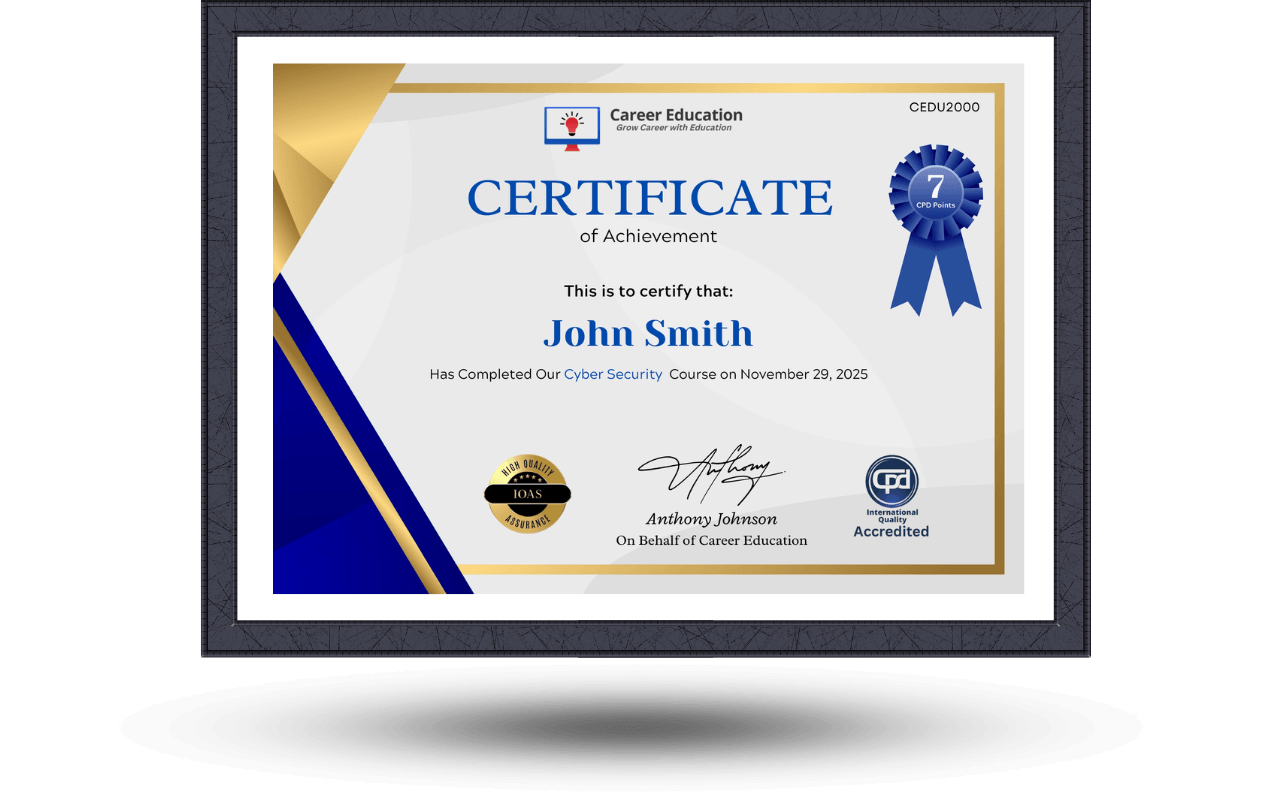
Upon completion of the course, an e-certificate will be downloadable from Khan Education signifying the completion of your course. But, the course is CPD Accredited and after you complete the assignment, you will be eligible to order a certificate accredited by CPD International Quality for £5.99 only. If you want a hardcopy certificate accredited by CPD IQ, you can get it for only £15.99.
Get your CertificateSimilar Courses