
94%
OFF
OFF
Lean Startup Strategies for Building a Business with Limited Resources
- Lifetime Access
- All Levels
- PDF Certificate
£296
£19
14-Day Money-Back Guarantee
Learn With Confidence






Lean Startup Strategies for Building a Business with Limited Resources
Starting a business does not always require a large budget, a big team, or extensive resources. What matters is knowing how to identify valuable opportunities, test ideas efficiently, understand customers, and make informed decisions before committing significant time and money. Lean Startup Strategies for Building a Business with Limited Resources is designed to help aspiring entrepreneurs and business professionals develop practical skills for building and growing a business while making the most of limited resources.
This outcome-focused course introduces proven lean startup principles and shows you how to turn an initial business idea into a practical, testable opportunity. Rather than relying on assumptions or investing heavily before understanding the market, you will learn how to experiment, gather feedback, adapt your approach, and focus resources on activities that create genuine business value.
Whether you are planning to launch your first business, developing a new product, or exploring a startup opportunity with a limited budget, this course can help you approach entrepreneurship with greater structure, flexibility, and confidence.
Why Choose Lean Startup Strategies for Building a Business with Limited Resources?
One of the biggest challenges faced by new entrepreneurs is deciding where to invest limited resources. A promising idea can quickly become expensive if it is developed without validating customer demand. The lean startup approach provides a more flexible way to build a business by prioritising learning, experimentation, customer feedback, and continuous improvement.
Lean Startup Strategies for Building a Business with Limited Resources focuses on helping you reduce unnecessary spending and avoid investing heavily in ideas that have not yet been validated. You will explore how to test assumptions early, develop minimum viable products, engage potential customers, and use real-world feedback to guide business decisions.
By the end of the course, you will have a clearer understanding of how to work strategically with limited resources and how to create a repeatable approach to developing and improving a startup.
What Will You Learn?
The course is structured around seven practical modules that cover important stages of the lean startup journey.
Module 1: Introduction to Lean Startup Principles
Begin by developing a strong foundation in lean startup thinking. You will explore the key principles behind lean business development and understand why traditional approaches to launching businesses can create unnecessary risk and expense.
You will learn how experimentation, validation, customer feedback, and continuous learning can influence startup decisions. The module helps you understand how to replace assumptions with evidence and how to make better use of limited time, money, and other business resources.
This foundation will prepare you to apply lean principles throughout the rest of the course.
Module 2: Identifying a Viable Business Idea
A successful business begins with a problem worth solving and a clearly defined customer need. In this module, you will explore practical approaches for identifying and evaluating business ideas before committing significant resources.
You will learn how to examine potential opportunities, consider customer problems, assess market needs, and determine whether an idea has the potential to provide meaningful value.
The focus is not simply on generating ideas but on learning how to distinguish between an interesting concept and an opportunity that can be realistically developed into a business.
By applying these principles, you can make more informed decisions about which ideas deserve further investment and which should be reconsidered or refined.
Module 3: MVP Development
Developing a complete product before receiving customer feedback can be costly and risky. The Minimum Viable Product, or MVP, provides a way to test an idea with a practical version of a product or service without unnecessary development.
In this module, you will learn the purpose of an MVP and how to identify the essential features needed to test your core business assumptions. You will explore how to focus on delivering value while avoiding unnecessary complexity.
The goal is to help you move from an idea to a testable offering more efficiently. You will gain an understanding of how MVP development can support faster learning, reduce waste, and provide useful evidence about customer demand.
Module 4: Customer Development
Understanding customers is essential to building a sustainable business. This module focuses on developing meaningful customer insight and using feedback to improve your business idea.
You will explore approaches for identifying target customers, understanding their needs, gathering feedback, and learning from real-world interactions. Rather than relying entirely on what you think customers want, you will learn how customer development can help you discover what they actually value.
The knowledge gained in this module can help you refine your product, improve your value proposition, and make customer needs a central part of your business development process.
Module 5: Agile Methodology for Startups
Startups often operate in uncertain and rapidly changing environments. Agile methodology can help teams respond to changing requirements while maintaining focus on delivering useful outcomes.
In this module, you will explore agile approaches that can be applied within startup environments. You will learn how iterative development, prioritisation, collaboration, and regular improvement can support efficient business and product development.
The module can help you become more comfortable with adapting plans when new information becomes available. Instead of treating an initial plan as fixed, you will learn how an agile mindset can help you respond constructively to customer feedback, market changes, and emerging opportunities.
Module 6: Growth Hacking Techniques
Once a business has developed a viable offering, finding effective ways to reach and retain customers becomes increasingly important. This module introduces growth hacking techniques designed to help startups explore practical approaches to business growth without relying solely on large marketing budgets.
You will examine how experimentation, creative marketing approaches, customer insights, and performance measurement can contribute to sustainable growth. The emphasis is on finding efficient opportunities to increase awareness, engagement, acquisition, and customer retention.
These concepts can be particularly valuable for startups that need to make every marketing resource count.
Module 7: Lean Financial Management
Financial discipline is especially important when resources are limited. This final module explores how lean financial management can help entrepreneurs make responsible decisions about spending, priorities, and business resources.
You will learn why financial planning, resource allocation, cost awareness, and ongoing evaluation are important for startup sustainability. The module encourages you to think carefully about where money is being spent and whether that spending contributes to meaningful business outcomes.
By understanding lean financial management, you can develop a more disciplined approach to controlling unnecessary costs while directing available resources toward activities that support business development and growth.
Practical Outcomes of the Course
By completing Lean Startup Strategies for Building a Business with Limited Resources, you can develop a practical framework for approaching entrepreneurship more efficiently.
You will be better prepared to:
-
Understand the core principles of lean startup methodology.
-
Evaluate potential business ideas before making major investments.
-
Identify customer problems and market opportunities.
-
Develop and test a Minimum Viable Product.
-
Use customer feedback to refine products and services.
-
Apply agile principles to startup development.
-
Experiment with cost-effective growth strategies.
-
Make more informed decisions about limited financial resources.
-
Reduce unnecessary business development activities.
-
Adapt your strategy as new evidence and customer insights emerge.
-
Build a more structured approach to startup experimentation and validation.
Who Is This Course For?
Lean Startup Strategies for Building a Business with Limited Resources is suitable for aspiring entrepreneurs, startup founders, small business owners, innovators, freelancers, and professionals interested in developing entrepreneurial skills.
It can also benefit individuals who have a business idea but are unsure how to test it without committing substantial resources. If you want to understand how to validate ideas, learn from customers, develop practical solutions, and make more informed startup decisions, this course provides a useful foundation.
You do not need to have a fully developed business idea before starting. The course can help you understand the process of evaluating opportunities and progressively developing an idea based on evidence and feedback.
Build Smarter, Learn Faster, and Use Resources Effectively
Entrepreneurship involves uncertainty, but uncertainty does not mean every decision has to involve unnecessary risk. A lean approach encourages entrepreneurs to learn quickly, test assumptions, listen to customers, and adapt based on evidence.
Lean Startup Strategies for Building a Business with Limited Resources gives you the opportunity to explore these principles in a structured way. From identifying a viable business idea and creating an MVP to developing customers, applying agile methods, exploring growth opportunities, and managing finances, the course covers key areas involved in building a resource-conscious startup.
Instead of focusing only on launching quickly, you will learn how to create a process for learning what works and improving what does not. This can help you approach business development with greater clarity and make better use of the resources available to you.
Start Developing Your Lean Startup Skills
A limited budget does not necessarily prevent you from exploring a business opportunity. With the right approach, limited resources can encourage greater focus, experimentation, and discipline.
Lean Startup Strategies for Building a Business with Limited Resources can help you develop the knowledge and practical mindset needed to test ideas, understand customers, improve products, explore growth opportunities, and manage resources more effectively.
If you are ready to approach entrepreneurship with a more flexible, evidence-driven, and resource-conscious mindset, this course offers a practical starting point for turning business ideas into informed opportunities.
Course Modules
Course Content
Module 1_ Introduction to Lean Startup Principles
-
Lesson 1_ Introduction to Lean Startup Principles
Module 2_ Identifying a Viable Business Idea
Module 3_ MVP Development
Module 4_ Customer Development
Module 5_ Agile Methodology for Startups
Module 6_ Growth Hacking Techniques
Module 7_ Lean Financial Management
What our students say
Excellent
4.9 average
158 Reviews

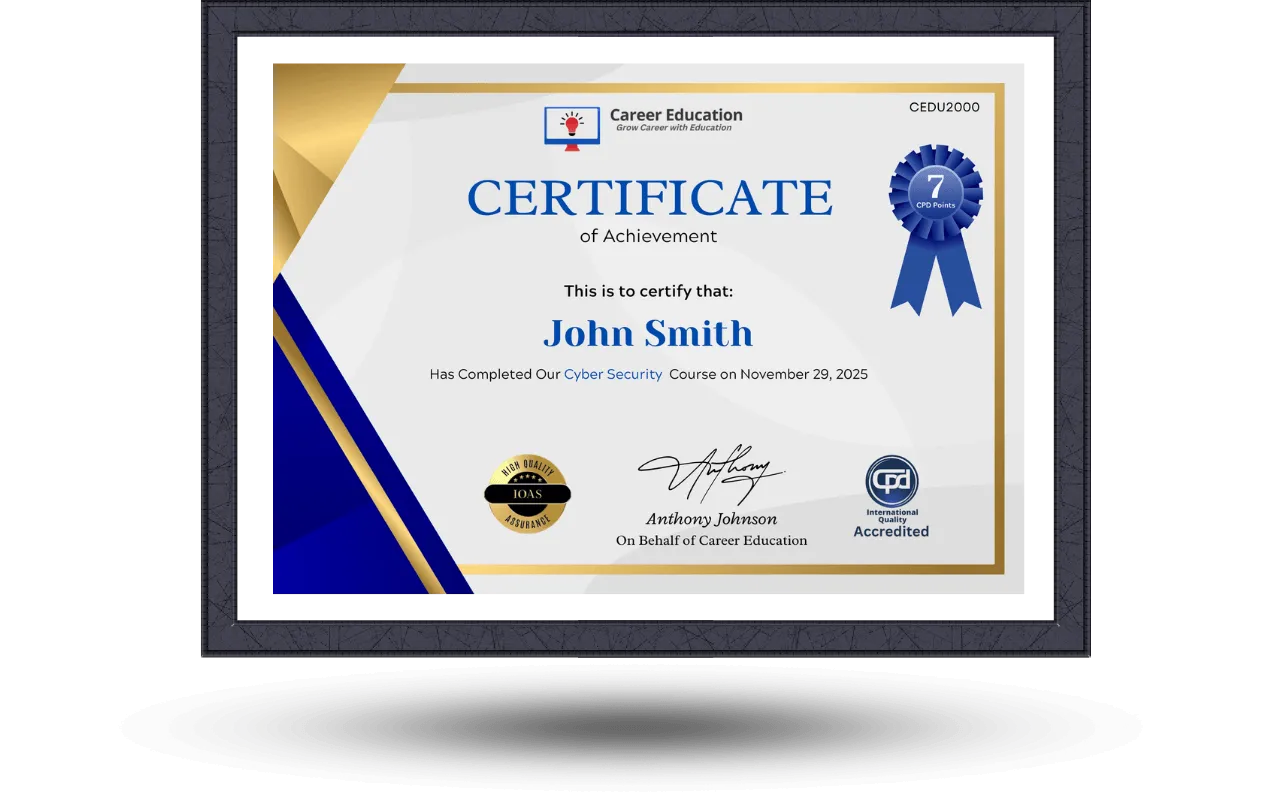
Earn an Accredited Certificate
Upon completion of any course, all students are entitled to a CPD IQ Accredited e-certificate that will be issued by Career Education signifying the completion of your course.
After you complete the course and assignment, you will be eligible to order a free certificate accredited by CPD International Quality by completing the form below.
Hardcopy certificates and transcripts are also available for a small additional fee. More information is disclosed upon course completion.
Similar Courses




Frequently Asked Questions
The lifetime membership includes unlimited access to all courses, resources, and updates for a one-time fee.
You can purchase the membership directly from our website using a secure checkout process.
Yes, selected courses can be downloaded for offline access through our mobile app.
Yes, all future updates and new courses are included at no extra cost.
Yes, we offer a 30-day money-back guarantee if you are not satisfied with the membership.