
94%
OFF
OFF
HAZWOPER Confined Space Safety Essentials
- Lifetime Access
- All Levels
- PDF Certificate
£296
£19
14-Day Money-Back Guarantee
Learn With Confidence








HAZWOPER Confined Space Safety Essentials
Confined spaces can present serious hazards for workers, particularly when they are located within hazardous waste operations, industrial facilities, construction sites, remediation projects, or emergency response environments. Limited access, restricted movement, hazardous atmospheres, toxic substances, engulfment hazards, and difficult rescue conditions can make confined spaces significantly more dangerous than ordinary work areas.
The HAZWOPER Confined Space Safety Essentials course provides practical foundational knowledge for recognising, assessing, and managing confined space hazards. The course covers confined space fundamentals, hazard identification, entry procedures, permit-required confined spaces, atmospheric monitoring, ventilation, PPE, emergency response, and rescue procedures.
This outcome-focused course is designed to help learners understand why confined space work requires careful planning and why workers should never enter a confined space without appropriate hazard assessment, controls, communication, and emergency arrangements.
Rather than focusing solely on entry procedures, the HAZWOPER Confined Space Safety Essentials course takes a comprehensive approach to confined space safety. Learners will explore what makes a space hazardous, how risks can be evaluated, how atmospheric conditions can be monitored, and how emergency response planning can help protect workers.
Why HAZWOPER Confined Space Safety Essentials Matters
Confined spaces can create hazards that are not immediately visible.
A space may contain dangerous gases, insufficient oxygen, toxic vapours, combustible atmospheres, chemicals, engulfment materials, or physical hazards. Conditions can also change unexpectedly while workers are inside.
Examples of confined spaces may include:
-
Tanks
-
Silos
-
Vessels
-
Storage containers
-
Pits
-
Trenches
-
Manholes
-
Sewers
-
Utility spaces
-
Tunnels
-
Process vessels
-
Underground chambers
In hazardous waste operations, the risks can be further complicated by contaminated materials and unknown substances.
The HAZWOPER Confined Space Safety Essentials course helps learners understand why confined space entry should be treated as a planned operation rather than an ordinary work task.
Appropriate procedures, competent assessment, atmospheric monitoring, communication, PPE, and emergency planning can all contribute to safer confined space operations.
What You Will Learn
By completing the HAZWOPER Confined Space Safety Essentials course, learners will be able to:
-
Explain what constitutes a confined space.
-
Recognise common confined space hazards.
-
Understand why confined spaces may require additional precautions.
-
Identify potential physical, chemical, and atmospheric hazards.
-
Understand the importance of risk assessment before entry.
-
Recognise key elements of safe confined space entry procedures.
-
Understand the concept of permit-required confined spaces.
-
Appreciate the purpose of atmospheric testing.
-
Understand the role of ventilation in controlling atmospheric hazards.
-
Recognise appropriate PPE considerations.
-
Understand the importance of communication and continuous monitoring.
-
Recognise why emergency rescue planning is essential.
-
Support safer confined space work practices.
Course Curriculum
Module 1: Introduction to Confined Spaces
Lesson 1: Introduction to Confined Spaces
The course begins with an introduction to confined spaces and the characteristics that distinguish them from ordinary work areas.
Learners will explore common characteristics of confined spaces, including areas that:
-
Are large enough for a worker to enter.
-
Have limited or restricted means of entry or exit.
-
Are not designed for continuous occupancy.
The module also introduces the concept of hazardous atmospheres and other conditions that can make confined spaces particularly dangerous.
Learners will explore examples of confined spaces across different industries and understand why the same type of space may present different risks depending on its contents, location, work activity, and environmental conditions.
The module highlights an important safety principle: a confined space should never be assumed to be safe simply because it appears empty or has been entered safely in the past.
Conditions can change, and hazards may not be visible.
By completing this module, learners will have a solid foundation in confined space awareness.
Module 2: Hazard Identification and Risk Assessment
Before entering a confined space, workers and supervisors need to understand the potential hazards.
This module focuses on identifying and assessing risks associated with confined space work.
Learners will explore hazards such as:
-
Oxygen deficiency
-
Toxic gases
-
Flammable atmospheres
-
Chemical exposure
-
Engulfment
-
Electrical hazards
-
Mechanical hazards
-
Moving equipment
-
Temperature extremes
-
Slips and falls
-
Limited visibility
-
Restricted movement
-
Biological hazards
The module also considers hazards that may be introduced by the work itself.
For example, welding, cutting, cleaning, chemical use, or other activities can change atmospheric conditions or create additional hazards.
Learners will understand why risk assessment should take place before entry and be reviewed whenever conditions change.
The course encourages workers to consider:
-
What hazards are present?
-
What could change during the work?
-
How will hazards be controlled?
-
What PPE is required?
-
How will workers communicate?
-
What happens if conditions become unsafe?
-
How will an emergency be managed?
By completing this module, participants will be better prepared to recognise potential hazards and understand the importance of risk-based confined space planning.
Module 3: Confined Space Entry Procedures
Safe entry requires structured procedures.
This module introduces the key principles involved in confined space entry.
Learners will explore important considerations such as:
-
Pre-entry assessment
-
Hazard identification
-
Isolation of energy sources
-
Atmospheric testing
-
Ventilation
-
Entry authorisation
-
Communication
-
PPE
-
Continuous monitoring
-
Attendant responsibilities
-
Emergency arrangements
The module emphasises that entry should not begin until required controls are in place.
Where applicable, workers should understand the roles of different personnel involved in confined space operations.
These may include:
-
Entrants
-
Attendants
-
Entry supervisors
-
Safety personnel
-
Rescue personnel
Clear communication between these individuals can be critical.
Learners will also explore the importance of maintaining communication with workers inside the space and monitoring conditions throughout the entry operation.
By completing this module, participants will understand the basic structure of a controlled confined space entry process.
Module 4: Permit-Required Confined Spaces
Some confined spaces present hazards significant enough to require additional controls and a formal permit system.
This module introduces permit-required confined spaces and the purpose of entry permits.
Learners will explore characteristics that can make a confined space permit-required, including spaces that may contain or have the potential to contain serious hazards.
The module examines key elements that may be included in a confined space entry permit, such as:
-
Identification of the space
-
Identified hazards
-
Required control measures
-
Atmospheric testing results
-
PPE requirements
-
Communication arrangements
-
Personnel involved
-
Entry duration
-
Emergency procedures
-
Rescue arrangements
Learners will understand that a permit is not simply paperwork. It is a planning and communication tool designed to confirm that appropriate precautions have been considered before entry.
The course also emphasises that permit procedures should be followed according to the applicable workplace programme and regulatory requirements.
If conditions change or required controls are no longer effective, the entry may need to be stopped and reassessed.
By completing this module, learners will understand the purpose and importance of permit-required confined space procedures.
Module 5: Atmospheric Monitoring and Ventilation
Atmospheric hazards are among the most serious risks associated with confined spaces.
This module focuses on atmospheric monitoring and ventilation.
Learners will explore the importance of testing for:
-
Oxygen concentration
-
Flammable gases and vapours
-
Toxic contaminants
-
Other relevant atmospheric hazards
The module explains why atmospheric testing should be conducted using appropriate equipment and procedures.
Learners will also explore why testing may need to occur before entry and continue during work, particularly where conditions can change.
Atmospheric monitoring can provide important information about whether conditions remain within acceptable limits established by the applicable workplace procedures.
The course also introduces ventilation as a potential control measure.
Ventilation may help remove or dilute contaminants and improve atmospheric conditions, but it must be appropriately designed and monitored.
Simply placing a fan near an opening does not automatically make a confined space safe.
Learners will understand the importance of considering where air is introduced, where contaminated air is removed, and whether ventilation could unintentionally spread hazardous substances.
By completing this module, participants will develop greater awareness of atmospheric hazards, monitoring, and ventilation principles.
Module 6: Personal Protective Equipment (PPE) for Confined Spaces
PPE can provide an important layer of protection when working in confined spaces.
This module explores PPE considerations based on the hazards identified during the risk assessment.
Learners will examine potential PPE such as:
-
Protective helmets
-
Eye protection
-
Face protection
-
Gloves
-
Protective clothing
-
Safety footwear
-
Respiratory protection
-
Fall protection
-
Personal retrieval equipment
The module emphasises that PPE selection must be based on the hazards present and the nature of the work.
For example, respiratory protection may be required where appropriate controls cannot adequately eliminate or reduce airborne hazards. Fall protection may be necessary where workers are exposed to specific fall hazards around entry points or within the space.
Learners will also explore the importance of PPE inspection, correct fit, maintenance, and compatibility.
PPE should not interfere with communication, movement, monitoring equipment, or other essential safety systems.
The course reinforces that PPE is only one component of confined space safety and should be combined with engineering, administrative, and procedural controls.
By completing this module, participants will better understand the role of PPE in confined space operations.
Module 7: Emergency Response and Rescue Procedures
Emergency preparedness is one of the most important elements of confined space safety.
A worker who becomes incapacitated inside a confined space may be extremely difficult to reach and remove safely.
This module focuses on emergency response and rescue planning.
Learners will explore the importance of:
-
Pre-entry rescue planning
-
Emergency communication
-
Retrieval systems
-
Rescue equipment
-
Trained rescue personnel
-
Emergency services
-
Evacuation procedures
-
Worker accountability
-
Incident communication
The course emphasises that rescue should never be improvised.
Unplanned rescues can place additional workers at risk, particularly when the original emergency involves an atmospheric hazard.
A common danger is the instinct for an unprotected worker to enter the space to help a colleague. Without appropriate training and equipment, this can result in multiple casualties.
Learners will understand why rescue plans should be developed before entry begins and why rescue personnel need appropriate training and equipment.
The module also highlights the importance of maintaining communication and monitoring workers throughout the operation.
By completing this module, participants will understand why emergency planning is an essential part of confined space safety.
Who Is This Course For?
The HAZWOPER Confined Space Safety Essentials course is suitable for individuals who may work in or around confined spaces, particularly in hazardous environments.
It may be particularly useful for:
-
HAZWOPER workers
-
Hazardous waste personnel
-
Remediation workers
-
Environmental workers
-
Construction workers
-
Industrial workers
-
Maintenance personnel
-
Utility workers
-
Site supervisors
-
Safety professionals
-
Environmental health and safety personnel
-
Contractors
-
Subcontractors
-
Emergency response personnel
-
Confined space attendants
-
Workplace safety representatives
It can also benefit managers and supervisors responsible for planning or overseeing confined space activities.
Practical Learning Outcomes
The HAZWOPER Confined Space Safety Essentials course is designed to help learners apply confined space safety principles to practical workplace situations.
After completing the course, participants should be better prepared to recognise the characteristics of confined spaces and identify hazards that may not be immediately visible.
Learners will understand why confined spaces require careful assessment before entry and why atmospheric conditions must be evaluated using appropriate monitoring procedures.
They will also appreciate the importance of permits, communication, PPE, ventilation, and emergency planning.
Most importantly, learners will understand that confined space safety does not end once a worker enters the space. Conditions should be monitored and controlled throughout the operation.
Build a Stronger Confined Space Safety Culture
A strong confined space safety culture encourages workers to stop and assess conditions before entering.
Workers should be encouraged to:
-
Never enter an unidentified or unauthorised confined space.
-
Follow established entry procedures.
-
Understand identified hazards.
-
Participate in required training.
-
Use appropriate PPE.
-
Follow atmospheric monitoring requirements.
-
Maintain communication with attendants.
-
Report changing conditions.
-
Leave the space when instructed or when conditions become unsafe.
-
Never attempt an unauthorised rescue.
Supervisors and employers also have important responsibilities in ensuring that confined space procedures, equipment, training, and emergency arrangements are appropriate for the work being performed.
The HAZWOPER Confined Space Safety Essentials course supports this proactive safety culture by helping learners understand the reasons behind these requirements.
Understand Atmospheric Hazards
One of the most important lessons in confined space safety is that an atmosphere can become dangerous without obvious warning.
A space may contain contaminants that cannot be seen or smelled. Oxygen levels may also be unsafe without producing obvious signs.
This is why atmospheric testing and appropriate monitoring procedures are so important.
Workers should never rely on their senses to determine whether an atmosphere is safe.
The HAZWOPER Confined Space Safety Essentials course helps learners understand the importance of using appropriate monitoring equipment and following established testing procedures.
Never Underestimate Rescue Risks
Confined space emergencies can create difficult and dangerous rescue conditions.
A person who enters a confined space to rescue another worker without appropriate training can quickly become another victim.
For this reason, rescue planning should take place before work begins.
Organisations should determine:
-
Who will perform the rescue?
-
What equipment is required?
-
How will emergency services be contacted?
-
How will the worker be retrieved?
-
What hazards could affect rescuers?
-
What communication methods will be used?
The HAZWOPER Confined Space Safety Essentials course helps learners understand why these questions must be addressed before entry.
Support Safer Confined Space Operations
Confined space safety requires careful coordination between workers, supervisors, safety professionals, and emergency personnel.
Hazard identification, risk assessment, entry procedures, atmospheric monitoring, PPE, communication, and rescue planning all contribute to a comprehensive approach.
The HAZWOPER Confined Space Safety Essentials course provides structured learning across each of these areas.
By developing this knowledge, learners can become more aware of confined space hazards and contribute to safer work practices.
Enrol in HAZWOPER Confined Space Safety Essentials Today
Confined spaces can contain hazards that are difficult to see, detect, or escape from quickly. Safe operations therefore require preparation, appropriate controls, continuous awareness, and reliable emergency procedures.
The HAZWOPER Confined Space Safety Essentials course provides a practical foundation covering confined space identification, hazard assessment, entry procedures, permit-required spaces, atmospheric monitoring, ventilation, PPE, and emergency response.
Whether you work in hazardous waste operations, construction, remediation, industrial maintenance, or another environment involving confined spaces, this course can help strengthen your safety knowledge.
Enrol in the HAZWOPER Confined Space Safety Essentials course today and build the knowledge needed to recognise confined space hazards, follow safer entry practices, and support effective emergency preparedness.
Course Modules
Course Content
Module 1_ Introduction to Confined Spaces
-
Lesson 1_ Introduction to Confined Spaces
Module 2_ Hazard Identification and Risk Assessment
Module 3_ Confined Space Entry Procedures
Module 4_ Permit-Required Confined Spaces
Module 5_ Atmospheric Monitoring and Ventilation
Module 6_ Personal Protective Equipment (PPE) for Confined Spaces
Module 7_ Emergency Response and Rescue Procedures
What our students say
Excellent
4.9 average
158 Reviews

Earn an Accredited Certificate
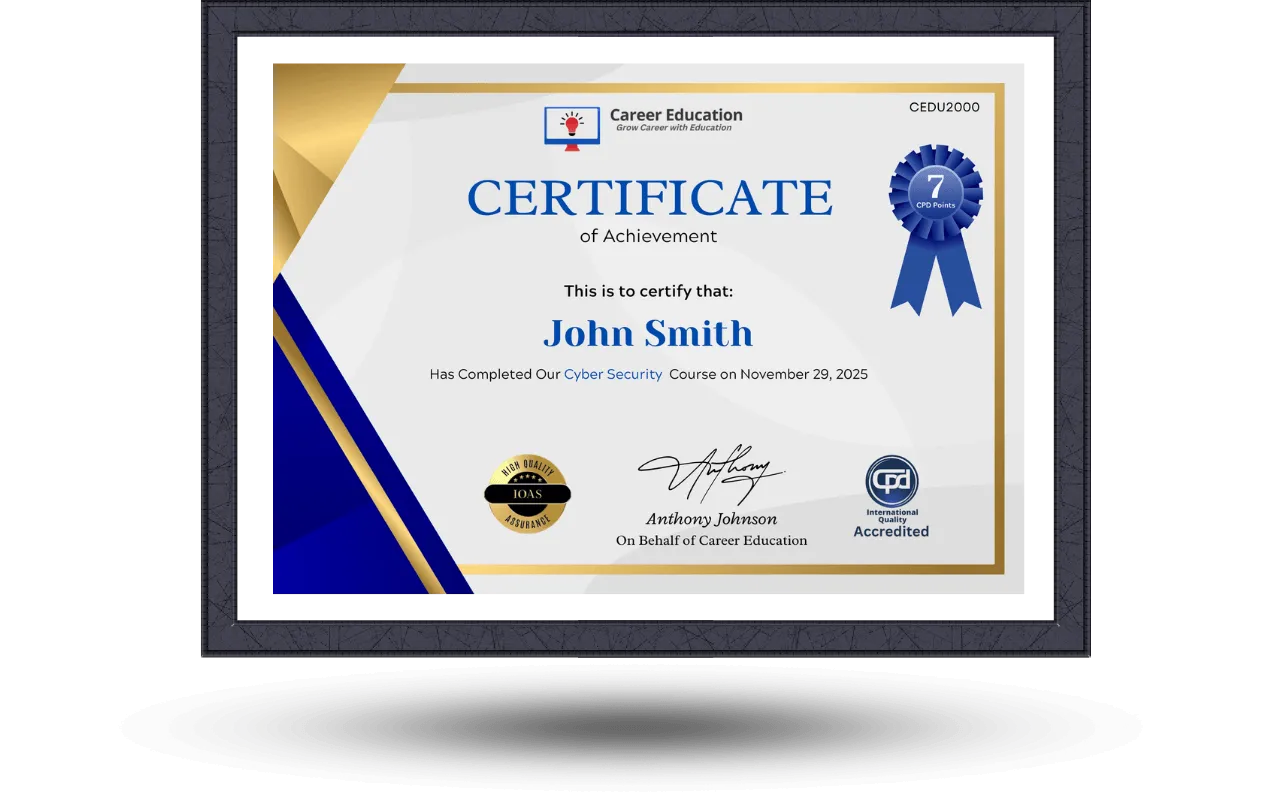
Upon completion of any course, all students are entitled to a CPD IQ Accredited e-certificate that will be issued by Career Education signifying the completion of your course.
After you complete the course and assignment, you will be eligible to order a free certificate accredited by CPD International Quality by completing the form below.
Hardcopy certificates and transcripts are also available for a small additional fee. More information is disclosed upon course completion.
Similar Courses




Frequently Asked Questions
The lifetime membership includes unlimited access to all courses, resources, and updates for a one-time fee.
You can purchase the membership directly from our website using a secure checkout process.
Yes, selected courses can be downloaded for offline access through our mobile app.
Yes, all future updates and new courses are included at no extra cost.
Yes, we offer a 30-day money-back guarantee if you are not satisfied with the membership.