OFF
Essential Risk Management Skills
- Lifetime Access
- All Levels
- PDF Certificate
Learn With Confidence




Overview
Essential Risk Management Skills: Build Confidence in Identifying, Assessing and Managing Risk
In today’s fast-changing business environment, organisations face risks from many directions. Financial uncertainty, operational disruptions, cybersecurity threats, regulatory changes, supply chain challenges and changing market conditions can all affect performance and long-term success. The ability to recognise these risks early and respond effectively is therefore an essential professional skill.
The Essential Risk Management Skills course is designed to help learners develop a practical understanding of risk management and build the skills needed to identify, assess, analyse, communicate and mitigate risks effectively. Whether you are beginning your career, moving into a management position, supporting organisational decision-making or simply looking to strengthen your professional skill set, this course can provide valuable knowledge you can apply across a wide range of workplace situations.
Rather than focusing only on theoretical concepts, Essential Risk Management Skills takes an outcome-focused approach. You will explore how risks arise, how they can be assessed, how appropriate controls and mitigation strategies can be selected, and how risk information can be communicated to the people responsible for making decisions.
Why Risk Management Skills Matter
Risk is present in virtually every organisation and industry. While some risks can be anticipated, others emerge unexpectedly. Effective risk management does not mean eliminating every possible risk. Instead, it involves understanding potential threats and opportunities, evaluating their potential impact and taking appropriate action to keep risks within acceptable levels.
Professionals with strong Essential Risk Management Skills can contribute to better decision-making by helping organisations understand what could go wrong, what consequences may arise and what actions can reduce exposure.
Developing these skills can help you:
-
Identify potential risks before they become major problems
-
Assess the likelihood and potential impact of different risks
-
Understand risk assessment and analysis techniques
-
Develop appropriate risk mitigation strategies
-
Communicate risk information clearly to stakeholders
-
Support informed organisational decision-making
-
Understand advanced approaches to managing complex risks
-
Apply risk management principles to different industries
-
Improve your confidence when dealing with uncertainty
-
Contribute more effectively to organisational resilience
The knowledge gained throughout this course can be useful for professionals working in management, administration, operations, finance, project environments, compliance, consulting, business development and many other areas.
What You Will Learn in the Essential Risk Management Skills Course
The course provides a structured learning journey covering fundamental concepts through to more advanced risk management techniques. Each module is designed to build practical knowledge and support your ability to approach workplace risks systematically.
Module 1: Introduction to Risk Management
The course begins by establishing a strong foundation in risk management.
You will explore what risk means within an organisational context and why effective risk management is important for achieving strategic and operational objectives. You will also develop an understanding of the relationship between risk, uncertainty and decision-making.
This introductory module helps you understand how organisations can create structured approaches to recognising and managing risk rather than simply reacting when problems occur.
You will explore areas such as:
-
The fundamentals of risk management
-
The purpose and importance of managing risk
-
Common categories and sources of risk
-
The relationship between risk and organisational objectives
-
Risk management processes
-
The importance of proactive risk identification
-
The role of risk management in organisational resilience
By completing this module, you will have a clear foundation that allows you to approach subsequent risk management concepts with greater confidence.
Module 2: Risk Assessment and Analysis
Identifying a risk is only the beginning. Organisations also need to understand how significant that risk could be.
Module 2 focuses on risk assessment and analysis, helping you explore ways of evaluating potential risks based on factors such as likelihood, impact and organisational exposure.
You will learn why structured assessment is important and how analysis can support prioritisation. By understanding which risks require immediate attention and which can be monitored, organisations can allocate their resources more effectively.
Topics covered include:
-
Risk identification
-
Risk assessment principles
-
Risk analysis approaches
-
Likelihood and impact
-
Risk prioritisation
-
Risk evaluation
-
Risk registers and documentation
-
Supporting evidence-based risk decisions
The outcome is a more systematic approach to understanding risk. Instead of treating every potential problem as equally important, you can develop the ability to assess risks according to their significance and potential consequences.
Module 3: Risk Mitigation Strategies and Techniques
Once risks have been identified and assessed, the next step is deciding how they should be managed.
Module 3 explores risk mitigation strategies and techniques that organisations can use to reduce exposure and protect their objectives.
You will examine different approaches to responding to risk and consider how mitigation decisions should reflect the nature, likelihood and potential impact of each risk.
You will learn about:
-
Risk response strategies
-
Risk reduction techniques
-
Risk avoidance
-
Risk transfer
-
Risk acceptance
-
Risk controls
-
Preventive and corrective approaches
-
Developing practical mitigation plans
-
Monitoring the effectiveness of risk responses
This module is particularly valuable because it moves from identifying problems to taking action.
By the end of the module, you will be better prepared to think critically about what should be done when a risk has been identified and how appropriate mitigation measures can help reduce potential disruption.
Module 4: Risk Communication and Stakeholder Engagement
Even a well-designed risk management strategy can fail if important information is not communicated effectively.
Risk management often involves multiple stakeholders with different responsibilities, priorities and levels of understanding. Decision-makers need relevant information, managers need actionable insights and teams need clarity about their responsibilities.
Module 4 focuses on developing effective risk communication and stakeholder engagement skills.
You will explore:
-
The importance of effective risk communication
-
Communicating risk to different audiences
-
Stakeholder identification
-
Stakeholder engagement
-
Presenting risk information clearly
-
Supporting collaborative decision-making
-
Building awareness of risk responsibilities
-
Managing risk-related discussions
Strong communication can help organisations develop a shared understanding of potential threats and appropriate responses.
After completing this module, you will have a stronger understanding of how to present risk information in a clear, structured and useful way, helping stakeholders participate more effectively in the risk management process.
Module 5: Advanced Risk Management Techniques
As organisations become more complex, their risk management requirements can also become more sophisticated.
Module 5 introduces advanced risk management techniques and encourages learners to develop a broader perspective when dealing with uncertainty and interconnected risks.
You will build upon the foundational principles introduced earlier in the course and explore how more advanced approaches can support complex organisational environments.
This module can help you develop your ability to:
-
Examine complex and interconnected risks
-
Think strategically about risk
-
Improve risk analysis and decision-making
-
Consider emerging and evolving risks
-
Strengthen risk monitoring
-
Support organisational resilience
-
Integrate risk considerations into broader planning
Understanding advanced techniques can help you move beyond a basic reactive approach and develop a more strategic mindset toward risk.
Module 6: Industry-Specific Risk Management
Risk does not look the same in every organisation.
A financial organisation may face significant financial and regulatory risks, while a technology company may be particularly concerned with cybersecurity, data protection and technology disruption. A construction organisation may have operational and workplace safety considerations, while a healthcare environment can involve complex operational, regulatory and service-related risks.
Module 6 explores the importance of adapting risk management practices to different industry environments.
You will consider how risk management principles can be applied according to:
-
Industry-specific conditions
-
Organisational objectives
-
Regulatory environments
-
Operational processes
-
Stakeholder requirements
-
Industry-specific threats and challenges
This broader perspective helps you understand that effective risk management is not a one-size-fits-all process. The ability to adapt your approach can make your risk management practices more relevant and effective.
Practical Outcomes You Can Take From the Course
The Essential Risk Management Skills course is designed with practical professional outcomes in mind.
After completing the course, you should have a stronger understanding of how to approach risk systematically and confidently. You will be better equipped to recognise potential risks, analyse their significance and consider appropriate responses.
You can develop the ability to:
Identify Risks More Effectively
Learn to recognise potential threats and uncertainties that could affect organisational objectives. A structured approach to identification can help teams become more proactive instead of waiting for problems to occur.
Assess and Prioritise Risks
Develop a clearer understanding of how likelihood and potential impact can be considered when evaluating risks. This can help organisations focus attention and resources where they are most needed.
Develop Risk Responses
Explore different mitigation strategies and understand how risk responses can be selected according to individual circumstances.
Communicate Risk Clearly
Improve your understanding of how risk information can be communicated to stakeholders in a way that supports awareness and informed decision-making.
Think More Strategically
Advanced risk management concepts can help you consider risk within the wider context of organisational goals, resilience and long-term planning.
Adapt to Different Industries
Understand why risk management approaches need to reflect industry-specific conditions, responsibilities and challenges.
Who Can Benefit From Essential Risk Management Skills?
This course can be valuable for a wide range of learners who want to understand risk management or strengthen their professional capabilities.
It may be suitable for:
-
Business professionals
-
Managers and team leaders
-
Project professionals
-
Operations professionals
-
Administrators
-
Entrepreneurs and business owners
-
Compliance and governance professionals
-
Finance professionals
-
Consultants
-
Professionals involved in organisational planning
-
Individuals seeking to develop transferable workplace skills
-
Learners interested in building a foundation in risk management
You do not necessarily need to be a dedicated risk professional to benefit from risk management knowledge. Risk-related decisions can form part of many different professional roles, making these skills broadly transferable.
Strengthen Your Professional Decision-Making
Good decisions require an understanding of uncertainty.
When professionals can recognise potential risks, assess possible consequences and consider appropriate responses, they can make more informed decisions. This is why risk management is not simply a specialist organisational function—it is a valuable capability for professionals across many fields.
The Essential Risk Management Skills course can help you develop a structured way of thinking about uncertainty. Instead of approaching risk as something that only needs attention after an incident, you can learn how proactive identification, assessment, communication and mitigation can contribute to stronger organisational outcomes.
Build a More Proactive Approach to Risk
Successful organisations do not simply respond to problems. They prepare for potential challenges.
By developing Essential Risk Management Skills, you can strengthen your ability to look ahead, recognise vulnerabilities and contribute to practical solutions. This proactive mindset can support better preparation, more informed planning and improved organisational resilience.
Throughout the course, you will progress from fundamental risk management concepts to assessment, mitigation, communication, advanced techniques and industry-specific applications. This structured approach makes it easier to connect individual concepts and understand how they contribute to a broader risk management process.
Why Choose This Course?
The Essential Risk Management Skills course offers a structured way to build relevant knowledge without limiting learning to a single industry or professional role.
Its six-module curriculum covers the complete risk management journey—from understanding fundamental concepts and assessing risks through to developing mitigation strategies, engaging stakeholders, applying advanced techniques and considering industry-specific requirements.
Most importantly, the course focuses on what you can understand and apply after learning. You can build knowledge that supports professional discussions, planning activities, decision-making and risk-related responsibilities.
Whether you are developing your career, taking on new responsibilities or looking to broaden your existing professional skill set, learning about risk management can provide a valuable foundation for navigating uncertainty in the modern workplace.
Start Developing Your Essential Risk Management Skills
Risk is an unavoidable part of business and professional decision-making, but uncertainty does not have to mean being unprepared.
With the right knowledge and approach, potential risks can be identified, assessed, communicated and managed more effectively. The Essential Risk Management Skills course provides a structured learning experience designed to help you understand these processes and develop practical capabilities that can be applied across different professional environments.
From the fundamentals of risk management to advanced techniques and industry-specific considerations, each module contributes to a stronger understanding of how effective risk management works.
Take the opportunity to strengthen your professional knowledge, improve your approach to uncertainty and develop valuable Essential Risk Management Skills that can support better-informed decisions and more resilient organisations.
Enrol today and begin building the knowledge and confidence needed to approach risk with greater structure, awareness and strategic thinking.
Course Modules
Course Content
Module 1_ Introduction to Risk Management.
-
Lesson 1_ Introduction to Risk Management.
Module 2_ Risk Assessment and Analysis.
Module 3_ Risk Mitigation Strategies and Techniques.
Module 4_ Risk Communication and Stakeholder Engagement.
Module 5_ Advanced Risk Management Techniques.
Module 6_ Industry-Specific Risk Management.
What our students say

Earn an Accredited Certificate
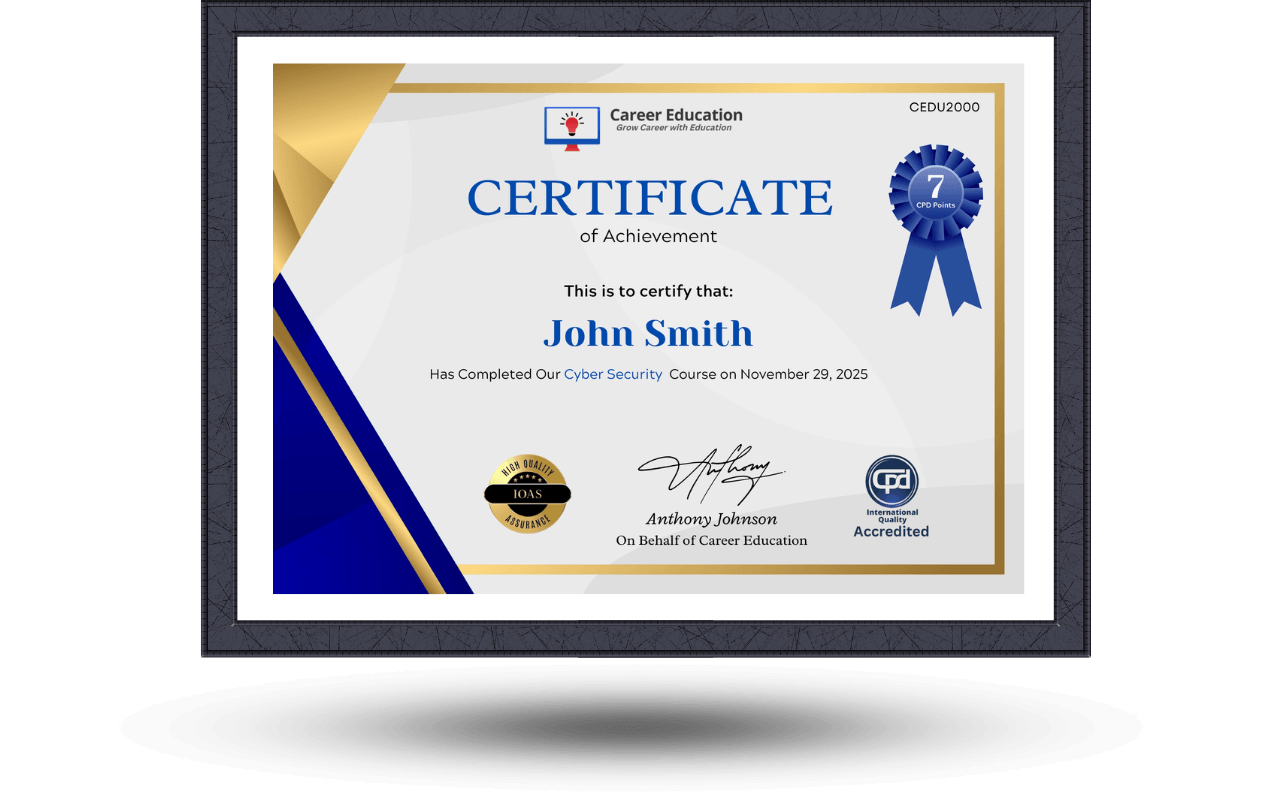
Upon completion of the course, an e-certificate will be downloadable from Khan Education signifying the completion of your course. But, the course is CPD Accredited and after you complete the assignment, you will be eligible to order a certificate accredited by CPD International Quality for £5.99 only. If you want a hardcopy certificate accredited by CPD IQ, you can get it for only £15.99.
Get your CertificateSimilar Courses