
Hazmat Placarding Essentials
- Lifetime Access
- All Levels
- PDF Certificate
£296
14-Day Money-Back Guarantee
Learn With Confidence









Hazmat Placarding Essentials
Hazardous materials transportation requires clear and effective communication of risks. One of the most visible tools used to communicate hazardous material hazards is the hazmat placard. Placards provide important hazard information to transport workers, emergency responders, enforcement personnel, and others who may encounter a vehicle, railcar, aircraft, vessel, or storage area containing regulated hazardous materials.
The Hazmat Placarding Essentials course provides a practical introduction to hazardous materials placarding and the principles behind placard selection, identification, placement, and use. The course explores placarding requirements across road, rail, air, and marine transportation, while also examining the role of placards in storage and warehousing environments.
This outcome-focused course is designed to help learners understand why placarding matters, how hazard information is communicated, and why placarding requirements can vary according to the material, quantity, mode of transport, and applicable regulations.
Learners will develop a stronger foundation in recognising hazmat placards, understanding hazardous materials identification systems, and appreciating the importance of accurate hazard communication.
Why Hazmat Placarding Essentials Matters
Hazardous materials can present significant risks when transported or stored. A vehicle carrying flammable liquids, a railcar containing toxic substances, a vessel transporting corrosive chemicals, or a warehouse storing dangerous goods may require visible hazard identification.
Placards can help communicate these risks.
A properly displayed placard can provide an immediate visual indication of the type of hazard present. During an emergency, this information may help responders recognise potential dangers and determine appropriate protective measures.
Placarding can also support routine transportation and storage operations by helping workers identify hazardous materials and understand applicable handling requirements.
However, placarding requirements are not always identical.
They may depend on factors such as:
-
Type of hazardous material
-
Hazard class
-
Quantity
-
Packaging
-
Mode of transportation
-
Regulatory requirements
-
Special provisions
-
Specific operating circumstances
The Hazmat Placarding Essentials course helps learners understand these fundamental concepts and the role placarding plays within a broader hazardous materials safety system.
What You Will Learn
By completing the Hazmat Placarding Essentials course, learners will be able to:
-
Explain the purpose of hazardous materials placarding.
-
Recognise common hazmat placard categories.
-
Understand basic hazardous materials identification systems.
-
Explain why placard requirements vary by transportation mode.
-
Understand fundamental road transportation placarding principles.
-
Recognise key rail transportation placarding considerations.
-
Understand basic air transportation hazard communication concepts.
-
Recognise marine transportation placarding considerations.
-
Understand the role of placards in storage and warehousing.
-
Appreciate the importance of accurate hazard communication.
-
Identify situations where current regulatory guidance is required.
-
Support safer hazardous materials transportation and storage practices.
Course Curriculum
Module 1: Introduction to Hazmat Placarding
Lesson 1: Introduction to Hazmat Placarding
The course begins with an introduction to hazardous materials placarding and its purpose.
Learners will explore why placards are used and how they contribute to hazard communication.
Placards can communicate information about hazards such as:
-
Flammability
-
Toxicity
-
Corrosivity
-
Oxidising properties
-
Radioactivity
-
Explosives
-
Compressed gases
-
Other regulated hazardous materials
The module introduces the difference between placards, labels, markings, and other forms of hazardous material identification.
Learners will understand that these systems serve related but different purposes.
The course also explains why placards should be visible, legible, and appropriate for the hazardous material and transportation circumstances.
The module highlights the importance of using current applicable regulations when determining specific placarding requirements.
By completing this module, participants will develop a strong foundation in the purpose and importance of hazmat placarding.
Module 2: Hazardous Materials Identification System
Correct identification is essential before determining appropriate placarding.
This module introduces learners to hazardous materials identification systems and the information used to communicate material hazards.
Learners will explore concepts such as:
-
Hazard classes
-
Division numbers
-
Identification numbers
-
Hazard symbols
-
Colour and visual identification
-
Placard text
-
Regulatory descriptions
-
Hazard communication systems
The module explains how classification can influence the placard selected for a shipment.
Learners will also examine common hazard categories and the types of risks associated with them.
For example, materials may present fire hazards, health hazards, reactive hazards, or environmental concerns.
The course emphasises that appearance alone should not be used to identify hazardous materials.
Workers should rely on appropriate documentation, labels, shipping papers, Safety Data Sheets, container information, and other reliable sources.
By completing this module, participants will better understand the relationship between hazardous material identification and placarding.
Module 3: Placarding Requirements for Road Transportation
Road transportation is one of the most common ways hazardous materials are moved.
This module introduces key placarding considerations for trucks, trailers, tank vehicles, and other road transportation equipment.
Learners will explore factors that may influence road transportation placarding, including:
-
Hazard class
-
Quantity
-
Material type
-
Packaging
-
Transport conditions
-
Regulatory thresholds
-
Vehicle configuration
-
Special provisions
The course explains why placarding requirements may differ depending on the material and quantity being transported.
Learners will also explore the importance of positioning and visibility.
Placards should be displayed in accordance with applicable requirements so that relevant hazard information can be recognised by other road users, enforcement personnel, workers, and emergency responders.
The module highlights the importance of checking that placards are:
-
Correct
-
Legible
-
Secure
-
Visible
-
Appropriate for the shipment
Participants will understand why placarding should be verified before a hazardous materials vehicle begins transportation.
By completing this module, learners will develop greater awareness of road transportation placarding principles.
Module 4: Placarding Requirements for Rail Transportation
Rail transportation presents its own operational and regulatory considerations.
This module examines the fundamental principles associated with hazardous materials placarding on railcars and related equipment.
Learners will explore how rail transportation may involve:
-
Tank cars
-
Railcars
-
Containers
-
Intermodal equipment
-
Bulk shipments
-
Multiple hazardous materials
The course explains why clear hazard identification is particularly important for rail operations.
Rail incidents can involve large quantities of hazardous materials, making effective hazard communication an important component of emergency preparedness.
Learners will explore the role of placards in helping personnel identify hazards associated with rail equipment.
The module also highlights the importance of checking placards before movement and following applicable inspection procedures.
Workers should report missing, damaged, incorrect, or illegible placards according to established workplace procedures.
By completing this module, participants will understand the foundational considerations surrounding hazardous materials placarding in rail transportation.
Module 5: Placarding Requirements for Air Transportation
Air transportation involves specialised safety requirements because hazardous materials may be transported in aircraft under tightly controlled conditions.
This module introduces learners to basic hazmat hazard communication considerations associated with air transportation.
Learners will explore concepts such as:
-
Hazard identification
-
Package markings
-
Labels
-
Documentation
-
Handling procedures
-
Aircraft-specific requirements
-
Emergency information
The course highlights that air transportation may involve requirements that differ from road, rail, or marine transportation.
Hazard communication must be clear and appropriate for the specific transportation environment.
Learners will also understand the importance of following applicable aviation regulations and carrier procedures.
The module reinforces the importance of checking current requirements before transporting hazardous materials by air.
By completing this module, participants will develop greater awareness of how hazardous materials are identified and communicated within air transportation operations.
Module 6: Placarding Requirements for Marine Transportation
Marine transportation involves the movement of hazardous materials by vessels, including cargo ships, tankers, and other maritime equipment.
This module introduces learners to the fundamental considerations surrounding hazardous material placarding and hazard communication in marine environments.
Learners will explore:
-
Hazard identification
-
Container markings
-
Placards
-
Labels
-
Cargo documentation
-
Vessel considerations
-
Containerised hazardous materials
-
Emergency response information
The course explains why marine transportation requires careful hazard communication.
A vessel may carry different hazardous materials in multiple containers, making accurate identification essential for safe loading, storage, movement, and emergency response.
Learners will also explore the importance of segregation and compatibility considerations for hazardous materials.
Different substances may require separation to prevent dangerous interactions.
By completing this module, participants will understand the basic role of placarding and hazard communication in marine transportation.
Module 7: Placarding for Storage and Warehousing
Hazard communication does not end when hazardous materials arrive at a warehouse or storage facility.
This module focuses on the role of placards and other identification methods in storage and warehousing environments.
Learners will explore considerations such as:
-
Storage area identification
-
Hazard signs
-
Container labels
-
Chemical segregation
-
Compatibility
-
Access control
-
Emergency information
-
Spill response
-
Fire prevention
The course explains why workers need to know what hazardous materials are stored in their work areas and what risks they present.
Clear identification can help workers select appropriate PPE, follow correct handling procedures, and respond more effectively to emergencies.
Learners will also understand the importance of keeping storage areas organised and maintaining accurate inventory and hazard information.
Damaged or missing hazard identification should be reported according to workplace procedures.
By completing this module, participants will understand how placarding and hazard identification contribute to safer storage and warehousing operations.
Who Is This Course For?
The Hazmat Placarding Essentials course may be suitable for individuals involved in hazardous materials transportation, handling, storage, and emergency response.
It can benefit:
-
Hazmat employees
-
Transportation workers
-
Truck drivers
-
Warehouse personnel
-
Logistics professionals
-
Shipping and receiving staff
-
Rail workers
-
Maritime personnel
-
Aviation cargo personnel
-
Emergency responders
-
Safety professionals
-
Environmental workers
-
Facility managers
-
Supervisors
-
Contractors
-
Workplace safety representatives
It may also be useful for organisations seeking to strengthen hazardous material identification and communication awareness among employees.
Practical Learning Outcomes
The Hazmat Placarding Essentials course focuses on practical knowledge that can be applied across different hazardous materials environments.
After completing the training, learners should have a clearer understanding of why placards are used and how they contribute to hazard communication.
Participants will be better prepared to recognise common placard categories and understand the relationship between hazardous material classification and placard selection.
They will also understand why transportation mode can influence placarding requirements.
Improve Hazard Communication
Hazardous materials can create risks that are not immediately obvious.
Clear placarding helps communicate important hazard information to individuals who may encounter a shipment or storage area.
During an emergency, responders may use visible hazard identification to support their initial assessment.
The Hazmat Placarding Essentials course reinforces the importance of accurate, visible, and appropriate hazard communication.
Understand Transportation Differences
Hazardous materials transportation does not follow one universal set of procedures.
Road, rail, air, and marine transportation can involve different operational conditions and regulatory requirements.
The course introduces learners to these differences so they can appreciate why a placarding practice suitable for one mode may not automatically apply to another.
This awareness encourages workers to consult the appropriate current regulations and procedures for the specific transportation environment.
Support Safer Road Operations
For road transportation personnel, correct placarding can be an important part of preparing a hazardous materials shipment.
Before transportation begins, relevant personnel may need to verify:
-
Correct placards
-
Proper placement
-
Legibility
-
Security
-
Consistency with shipping information
-
Applicable regulatory requirements
These checks can help identify problems before a vehicle enters public roadways.
Strengthen Rail Safety Awareness
Rail operations may involve bulk quantities of hazardous materials and complex transportation environments.
Clear hazard identification can help support communication between rail personnel, facility workers, and emergency responders.
Understanding the basic principles of rail placarding can therefore contribute to broader hazardous materials safety awareness.
Promote Safer Air and Marine Transportation
Air and marine transportation involve unique operational environments.
The consequences of a hazardous material incident can be particularly significant when materials are transported in aircraft or vessels.
The course helps learners appreciate why accurate identification, documentation, labels, placards, and other controls are important components of safe transportation.
Improve Storage and Warehouse Safety
Warehouses may contain multiple hazardous materials with different risks.
Clear identification can help workers understand where materials are located and what precautions may be required.
Good storage practices should also consider:
-
Compatibility
-
Segregation
-
Ventilation
-
Fire protection
-
Spill prevention
-
Emergency access
-
Appropriate PPE
The Hazmat Placarding Essentials course provides foundational awareness of these considerations.
Recognise the Importance of Regulatory Compliance
Hazardous materials placarding requirements can be detailed and may vary based on the substance, quantity, packaging, transportation mode, and other circumstances.
This course provides foundational knowledge rather than replacing applicable regulations or task-specific compliance requirements.
Learners are encouraged to use current regulatory sources and employer procedures when determining specific placarding requirements.
This approach helps ensure that decisions are based on accurate and up-to-date information.
Build a Stronger Hazmat Safety Culture
Effective hazardous materials safety depends on everyone understanding their responsibilities.
Workers can contribute by:
-
Checking placards before transportation.
-
Reporting damaged or missing placards.
-
Following established procedures.
-
Keeping hazard information accessible.
-
Using appropriate PPE.
-
Communicating hazards clearly.
-
Maintaining storage areas properly.
-
Participating in emergency preparedness activities.
Small checks can help prevent larger problems.
Enrol in Hazmat Placarding Essentials Today
Hazardous materials placards provide an important visual method of communicating risks during transportation and storage.
The Hazmat Placarding Essentials course provides a structured introduction to placarding principles, hazardous materials identification, transportation requirements, and storage considerations.
From understanding the fundamentals of hazmat placarding to exploring road, rail, air, and marine transportation, the course helps learners appreciate how hazard communication supports safer operations.
Whether you work in logistics, transportation, warehousing, emergency response, aviation, rail, marine operations, environmental safety, or industrial facilities, this course can strengthen your foundational understanding of hazardous materials placarding.
Enrol in the Hazmat Placarding Essentials course today and develop the knowledge needed to better understand hazmat placards, support effective hazard communication, and contribute to safer transportation and storage practices.
Course Modules
Course Content
Module 1_ Introduction to Hazmat Placarding
-
Lesson 1_ Introduction to Hazmat Placarding
Module 2_ Hazardous Materials Identification System
Module 3_ Placarding Requirements for Road Transportation
Module 4_ Placarding Requirements for Rail Transportation
Module 5_ Placarding Requirements for Air Transportation
Module 6_ Placarding Requirements for Marine Transportation
Module 7_ Placarding for Storage and Warehousing
What our students say
Excellent
4.9 average
158 Reviews

Earn an Accredited Certificate
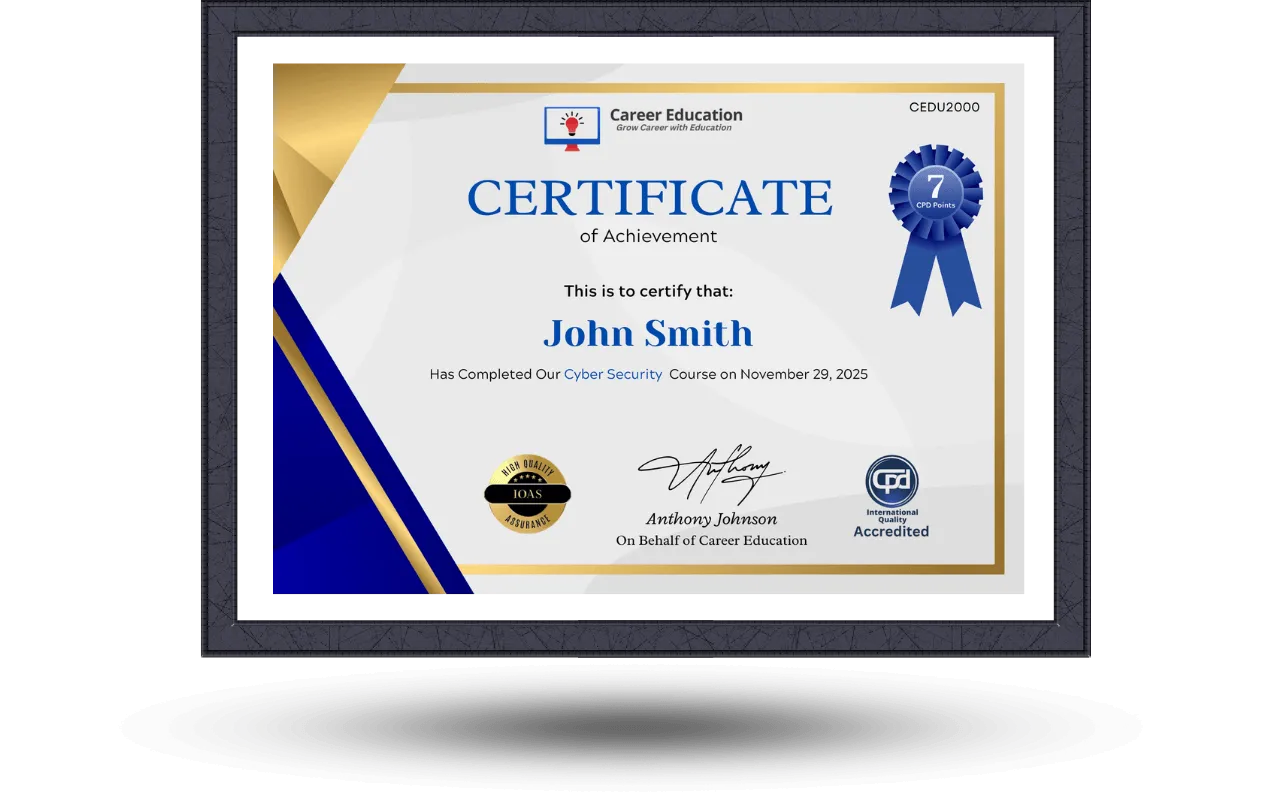
Upon completion of any course, all students are entitled to a CPD IQ Accredited e-certificate that will be issued by Career Education signifying the completion of your course.
After you complete the course and assignment, you will be eligible to order a free certificate accredited by CPD International Quality by completing the form below.
Hardcopy certificates and transcripts are also available for a small additional fee. More information is disclosed upon course completion.
Similar Courses



Frequently Asked Questions
The lifetime membership includes unlimited access to all courses, resources, and updates for a one-time fee.
You can purchase the membership directly from our website using a secure checkout process.
Yes, selected courses can be downloaded for offline access through our mobile app.
Yes, all future updates and new courses are included at no extra cost.
Yes, we offer a 30-day money-back guarantee if you are not satisfied with the membership.