
94%
OFF
OFF
Child Nutrition Training
- Lifetime Access
- All Levels
- PDF Certificate
£296
£19
14-Day Money-Back Guarantee
Learn With Confidence






# Child Nutrition Training
Give yourself the knowledge and practical confidence to support healthier eating habits and better nutritional outcomes for children with **Child Nutrition Training**. This course is designed to help learners understand the foundations of good nutrition, recognise common nutrient gaps, encourage healthy eating habits, plan balanced meals and understand how poor nutrition can affect children’s health and development.
Good nutrition during childhood is about much more than simply making sure a child has enough food to eat. Childhood is a crucial period of physical growth, brain development, learning and emotional development. The foods children regularly consume can contribute to their energy levels, concentration, growth, immune function and long-term health. At the same time, establishing positive attitudes towards food at an early age can help children develop healthy habits that may continue into adulthood.
**Child Nutrition Training** provides an accessible introduction to the principles of children’s nutrition and gives learners useful knowledge that can be applied in everyday family, childcare, education and support settings. Whether you are a parent, childcare worker, teaching assistant, educator, health and wellbeing professional or simply someone interested in children’s healthy development, this course can help you build a stronger understanding of the role nutrition plays in childhood.
## Why Child Nutrition Matters
Children have nutritional requirements that change as they grow. Their bodies need a suitable balance of carbohydrates, proteins, fats, vitamins, minerals, fibre and fluids to support normal development and everyday activity. However, encouraging children to eat a balanced diet can sometimes be challenging.
Children may become selective about food, reject unfamiliar ingredients, prefer highly processed snacks or develop routines that make balanced eating difficult. Adults supporting children therefore need to understand not only what constitutes nutritious food but also how to create a positive environment in which children can learn to make healthier choices.
This **Child Nutrition Training** course explores the foundations of proper nutrition and explains why nutritional quality matters throughout childhood. You will develop a practical understanding of how food supports children’s development and why healthy eating habits should be encouraged from an early age.
## What You Will Learn
Throughout the course, you will explore key principles of childhood nutrition and develop knowledge that can help you support healthier food choices.
You will learn how to:
* Explain the importance of proper nutrition during childhood.
* Understand the relationship between nutrition, growth and development.
* Identify nutrients that children may commonly lack in their diets.
* Recognise the importance of a varied and balanced diet.
* Encourage children to develop healthier eating habits.
* Understand approaches that can make healthy foods more appealing to children.
* Apply basic principles of optimal nutrition for children.
* Create more positive and structured mealtime experiences.
* Recognise potential health concerns associated with poor nutrition.
* Develop greater confidence when discussing children’s food and nutritional needs.
## Module 1: The Importance of Proper Nutrition
The first module introduces the fundamental principles of children’s nutrition. You will explore why proper nutrition is essential during childhood and how food contributes to children’s physical and cognitive development.
Children are constantly growing and developing, which means their nutritional needs are particularly important. Nutrients obtained through food contribute to energy production, healthy bones and muscles, brain function, immune health and many other processes within the body.
This module helps you understand the wider importance of providing children with nutritious and varied foods. Rather than viewing nutrition simply in terms of individual foods, you will consider the overall quality and balance of a child’s diet.
By completing this module, you will have a clearer understanding of why childhood nutrition deserves careful attention and how healthy eating can contribute to children’s wellbeing.
## Module 2: What Nutrients Are Kids Commonly Missing?
Even when children have access to plenty of food, their diets may not always provide all the nutrients they need. Picky eating, limited food preferences, busy lifestyles and an overreliance on highly processed foods can contribute to nutritional gaps.
In this module, you will explore nutrients that children may commonly struggle to obtain in adequate amounts. You will develop a better understanding of why nutrients such as iron, calcium, vitamin D, fibre and other essential nutrients are important to growing children.
You will also learn to think critically about children’s diets as a whole rather than focusing on one particular food or nutrient.
The module can help you recognise potential nutritional weaknesses and understand the importance of variety when supporting children with their food choices.
## Module 3: Teach Your Children to Eat Healthy
Knowing what children should eat is only part of the challenge. Helping children actually develop healthy eating habits requires patience, consistency and a supportive approach.
This module focuses on practical ways to encourage children to make healthier choices. You will explore how adults can influence children’s attitudes towards food and how everyday experiences can help children become more comfortable with nutritious foods.
You will consider approaches such as introducing variety, providing positive examples, encouraging children to explore different foods and creating an environment where mealtimes are not unnecessarily stressful.
Rather than relying on pressure or conflict, the focus is on developing positive relationships with food and helping children gradually understand the value of healthier choices.
By the end of this module, you will have practical ideas for supporting healthy eating behaviours in children and encouraging habits that can become part of everyday life.
## Module 4: Optimal Nutrition for Kids
This module brings together the principles of balanced childhood nutrition. You will explore what a nutritious diet can look like and how different food groups contribute to children’s nutritional needs.
You will develop a stronger understanding of the role played by carbohydrates, proteins, healthy fats, fruit and vegetables, dairy or suitable alternatives, fibre and fluids.
The goal is not to promote rigid eating patterns but to develop an appreciation of balance, variety and moderation. Children’s nutritional requirements differ according to factors such as age, development, activity and individual circumstances, so a flexible approach is important.
This module will help you recognise the characteristics of a balanced approach to children’s nutrition and apply those principles when thinking about meals, snacks and everyday food choices.
## Module 5: Mealtime for Your Kids
Mealtimes can have a significant influence on children’s relationship with food. A positive mealtime environment can help children develop healthy eating behaviours, while stressful or inconsistent experiences may make eating more difficult.
In this module, you will explore practical considerations for creating more positive mealtimes. You will learn why routine, appropriate food choices, a supportive atmosphere and positive role modelling can all contribute to healthier eating experiences.
You will also consider the challenges that can arise when children refuse foods, eat selectively or become distracted during meals.
The objective is to help adults approach mealtimes with greater confidence and consistency. By understanding the behavioural and environmental aspects of eating, you can create opportunities for children to develop healthier relationships with food.
## Module 6: Illnesses Associated with Poor Nutrition
Poor nutrition can have a significant impact on health, particularly when unhealthy dietary patterns continue over time. This final module examines health problems and illnesses associated with inadequate or unbalanced nutrition.
You will explore the potential consequences of nutritional deficiencies and unhealthy eating patterns, including issues related to inadequate nutrient intake and excessive consumption of energy-dense foods.
Understanding these risks can help learners appreciate why children’s nutrition should be taken seriously. The module also reinforces the importance of prevention, healthy lifestyle habits and appropriate professional support when concerns arise.
This course is educational in nature and is not intended to replace personalised medical, dietary or nutritional advice. Where a child has a diagnosed condition, significant dietary restriction, suspected deficiency, allergy or other specific health concern, appropriate advice should be obtained from a qualified healthcare or nutrition professional.
## Practical Knowledge You Can Apply
One of the key advantages of **Child Nutrition Training** is its practical focus. The course is designed to move beyond general statements about “eating healthy” and help you understand the principles behind children’s nutritional needs.
You can use the knowledge gained to think more carefully about everyday food choices, meal routines, snacks and children’s attitudes towards food. You will be better equipped to identify areas where a child’s diet may lack variety and understand how adults can encourage healthier habits in a supportive way.
For parents and carers, this knowledge can provide greater confidence when planning everyday meals and discussing food with children.
For childcare and education professionals, it can strengthen your general understanding of the nutritional factors that influence children’s wellbeing and development.
For learners interested in health and wellbeing, it provides a useful foundation for understanding childhood nutrition and its wider role in healthy development.
## Who Is This Course For?
**Child Nutrition Training** is suitable for a wide range of learners, including:
* Parents and carers who want to understand children’s nutritional needs.
* Childcare workers and nursery staff.
* Teaching assistants and education support staff.
* Early years professionals.
* Individuals interested in children’s health and wellbeing.
* People considering careers involving childcare or family support.
* Professionals seeking to broaden their general knowledge of nutrition.
* Anyone interested in developing healthier eating habits for children.
No advanced nutritional background is required. The course is structured around accessible concepts, making it suitable for beginners as well as learners who want to refresh their existing knowledge.
## Develop Greater Confidence Around Children’s Nutrition
Children’s eating habits can sometimes be difficult to navigate. A child may refuse vegetables, prefer familiar foods, skip meals, ask repeatedly for snacks or resist trying something new. Understanding nutrition can help adults respond more constructively.
With **Child Nutrition Training**, you can develop the knowledge needed to look beyond individual eating behaviours and consider the bigger picture. You will learn why nutritional variety matters, how healthy habits can be encouraged and why positive mealtimes are an important part of children’s overall relationship with food.
The course can also help you approach children’s nutrition with greater awareness rather than relying on assumptions or outdated ideas.
## Support Healthier Habits from an Early Age
Healthy habits developed during childhood can provide an important foundation for future wellbeing. Children learn from the environment around them, including the foods they see adults eating, the choices available to them and the way food is discussed at home or in childcare settings.
Supporting good nutrition therefore involves more than putting healthy food on a plate. It involves creating positive routines, providing appropriate choices, modelling healthy behaviours and allowing children to develop familiarity with a wide range of foods.
**Child Nutrition Training** gives you the knowledge to understand these principles and apply them in practical situations.
## A Valuable Addition to Your Professional Development
If you work with children, families or education, developing your knowledge of nutrition can complement your existing skills. An understanding of children’s nutritional needs can contribute to a broader awareness of wellbeing, development and healthy lifestyle practices.
The course can also serve as a useful learning experience for anyone considering further study in childcare, education, health, wellbeing or related areas.
While this course does not replace regulated professional qualifications or specialist dietary training, it can provide valuable foundational knowledge for personal and professional development.
## Why Choose Child Nutrition Training?
Choosing **Child Nutrition Training** means investing in practical knowledge that can be relevant both personally and professionally.
You will gain a structured introduction to:
* The importance of childhood nutrition.
* Common nutritional gaps.
* Healthy eating education.
* Balanced nutrition.
* Positive mealtime practices.
* Health consequences associated with poor nutrition.
Instead of focusing exclusively on theory, the course encourages you to think about how nutritional principles apply to children’s everyday lives.
## Start Building Your Knowledge Today
Good nutrition is one of the foundations of healthy childhood development. Understanding what children need, recognising common nutritional challenges and knowing how to encourage positive eating habits can make a meaningful difference to the way adults support children.
**Child Nutrition Training** provides a convenient and accessible way to build this knowledge. Through six focused modules, you will explore the importance of nutrition, common nutrient deficiencies, healthy eating habits, optimal nutrition, positive mealtimes and the health concerns associated with poor nutrition.
Whether you are looking to improve your understanding as a parent or carer, strengthen your childcare knowledge or expand your professional development, this course gives you a practical foundation to work from.
**Enrol in Child Nutrition Training today and develop the knowledge and confidence to better understand, encourage and support healthy eating habits throughout childhood.**
Course Modules
Course Content
Module 1 The Importance of Proper Nutrition
-
Lesson 1 The Importance of Proper Nutrition
Module 2 What Nutrients are Kids Commonly Missing
Module 3 Teach Your Children to Eat Healthy
Module 4 Optimal Nutrition for Kids
Module 5 Meal Time for Your Kids
Module 6 Illnesses Associated with Poor Nutrition
What our students say
Excellent
4.9 average
158 Reviews

Earn an Accredited Certificate
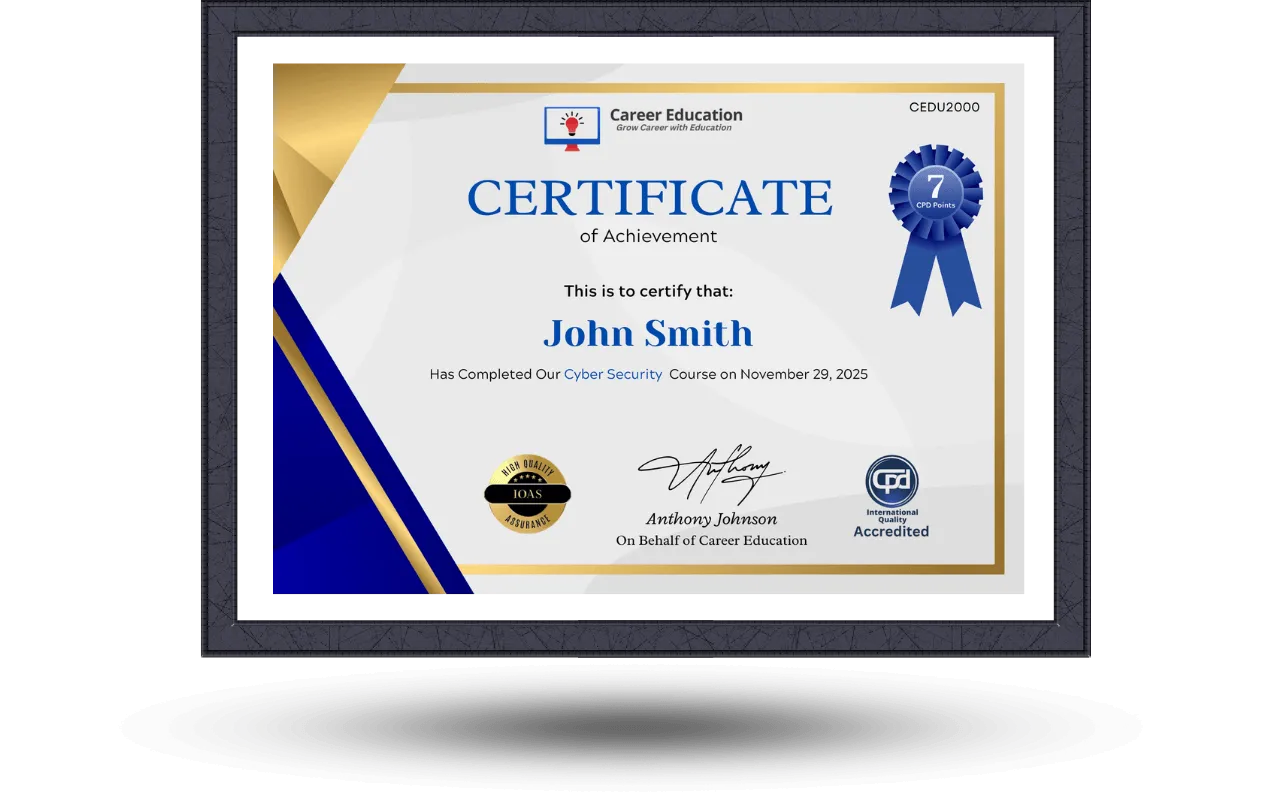
Upon completion of any course, all students are entitled to a CPD IQ Accredited e-certificate that will be issued by Career Education signifying the completion of your course.
After you complete the course and assignment, you will be eligible to order a free certificate accredited by CPD International Quality by completing the form below.
Hardcopy certificates and transcripts are also available for a small additional fee. More information is disclosed upon course completion.
Similar Courses




Frequently Asked Questions
The lifetime membership includes unlimited access to all courses, resources, and updates for a one-time fee.
You can purchase the membership directly from our website using a secure checkout process.
Yes, selected courses can be downloaded for offline access through our mobile app.
Yes, all future updates and new courses are included at no extra cost.
Yes, we offer a 30-day money-back guarantee if you are not satisfied with the membership.