94%
OFF
OFF
GHS Safety Data Sheets for Laboratory Safety
- Lifetime Access
- All Levels
- PDF Certificate
£296
£19
14-Day Money-Back Guarantee
Learn With Confidence








# GHS Safety Data Sheets for Laboratory Safety
Working safely with chemicals in a laboratory requires more than knowing the names of substances being used. Laboratory personnel need to understand the hazards associated with chemicals, know where to find reliable safety information, and be able to interpret that information before handling, storing, transporting, or responding to chemical incidents.
**GHS Safety Data Sheets for Laboratory Safety** is a practical, outcome-focused course designed to help learners understand, interpret, and apply information contained in Safety Data Sheets (SDS) within laboratory environments. The course introduces the Globally Harmonized System of Classification and Labelling of Chemicals (GHS), explores hazard identification, and provides a structured overview of the 16-section SDS format.
From chemical identification and composition through first aid, firefighting, exposure controls, storage, toxicological information, disposal, and transport considerations, learners will develop the knowledge needed to use SDS information more effectively as part of laboratory safety practices.
The course is suitable for laboratory workers, technicians, researchers, students, supervisors, safety personnel, and other professionals who work with or around hazardous chemicals.
—
## Why GHS Safety Data Sheets for Laboratory Safety Matters
Laboratories may contain a wide range of chemical substances, including solvents, reagents, acids, bases, oxidisers, toxic substances, flammable materials, and other potentially hazardous products.
Each chemical can present different risks.
One substance may require special ventilation, another may require particular protective equipment, while another may present significant fire, toxicity, reactivity, or environmental concerns.
Safety Data Sheets provide important information that helps workers understand these hazards and take appropriate precautions.
However, simply having access to an SDS is not enough. Laboratory personnel need to know how to find and interpret the information that is relevant to their work.
**GHS Safety Data Sheets for Laboratory Safety** helps learners build that capability.
The course provides a structured approach to understanding SDS information so that learners can use it when planning laboratory activities, assessing hazards, selecting controls, responding to emergencies, and making safer decisions.
—
# What You Will Learn
By completing the **GHS Safety Data Sheets for Laboratory Safety** course, learners will be able to:
* Explain the purpose of the GHS and Safety Data Sheets.
* Understand the role of SDSs in laboratory chemical safety.
* Recognise key chemical hazards.
* Navigate the standard 16-section SDS format.
* Locate important chemical identification information.
* Understand composition and hazard information.
* Find first aid and firefighting recommendations.
* Identify handling and storage precautions.
* Understand exposure control information.
* Interpret key physical and chemical properties.
* Locate toxicological and ecological information.
* Understand disposal and transport considerations.
* Apply SDS information to practical laboratory situations.
* Use SDS information as part of workplace risk assessment and safe working practices.
—
# Course Curriculum
## Module 1: Introduction to GHS Safety Data Sheets (SDS)
### Lesson 1: Introduction to GHS Safety Data Sheets (SDS)
The course begins by introducing the purpose and importance of Safety Data Sheets in laboratory environments.
Learners will explore what an SDS is, why it is used, and how it supports chemical hazard communication.
The module introduces the Globally Harmonized System of Classification and Labelling of Chemicals, commonly known as GHS.
Learners will develop an understanding of how GHS provides a consistent framework for communicating chemical hazards through classifications, labels, pictograms, signal words, hazard statements, precautionary statements, and Safety Data Sheets.
The module also explains why SDSs are valuable to different groups of people, including:
* Laboratory workers
* Researchers
* Technicians
* Supervisors
* Emergency responders
* Safety professionals
* Employers
Participants will learn that an SDS is an important source of information but should be used alongside laboratory procedures, risk assessments, training, chemical inventories, workplace controls, manufacturer instructions, and applicable requirements.
The module also introduces the standard 16-section SDS structure.
By completing this module, learners will understand the purpose of GHS and the role SDSs play in laboratory chemical safety.
—
# Module 2: Hazard Identification
Before working with a chemical, it is important to understand what hazards it may present.
This module focuses on hazard identification and classification.
Learners will explore different categories of chemical hazards, including:
* Physical hazards
* Health hazards
* Environmental hazards
The course introduces common hazard characteristics such as flammability, corrosivity, toxicity, irritation, sensitisation, reactivity, and other potential risks.
Learners will also explore the importance of GHS hazard pictograms and signal words.
Pictograms can provide an immediate visual indication of certain hazard categories, while signal words help communicate the relative level of hazard associated with a classified chemical.
The module also examines hazard statements and precautionary statements.
Participants will learn how these elements can provide information about:
* The nature of a hazard
* Potential routes of exposure
* Prevention measures
* Response actions
* Storage precautions
* Disposal considerations
Understanding these elements can help workers make better-informed decisions before using a chemical.
By completing this module, learners will have a stronger foundation for recognising and interpreting chemical hazards.
—
# Module 3: SDS Sections 1–4: Identification and Composition
This module begins a detailed exploration of the SDS structure.
Learners will examine Sections 1 through 4 and understand where to locate essential information.
### Section 1: Identification
Learners will explore information such as:
* Product identifier
* Recommended uses
* Restrictions on use
* Supplier information
* Emergency contact information
Understanding this section can help workers confirm that they are reviewing the correct SDS for the chemical or product they intend to use.
### Section 2: Hazard Identification
This section provides important information about the hazards associated with the substance or mixture.
Learners will explore how to identify:
* Hazard classifications
* Signal words
* Hazard statements
* Precautionary statements
* Pictograms
### Section 3: Composition/Information on Ingredients
Learners will explore how composition information can help identify relevant substances and hazardous ingredients.
The module also discusses why understanding composition can be important when assessing exposure and determining appropriate controls.
### Section 4: First-Aid Measures
Learners will explore the types of first aid information that may be provided for different exposure routes, including:
* Inhalation
* Skin contact
* Eye contact
* Ingestion
The course emphasises the importance of following workplace emergency procedures and obtaining appropriate medical assistance when required.
By completing this module, learners will be able to navigate the first four sections of an SDS and identify key information relating to chemical identity, hazards, composition, and initial response.
—
# Module 4: SDS Sections 5–8: Hazards, First Aid Measures, and Firefighting Measures
This module continues the detailed exploration of SDS information.
Learners will examine Sections 5 through 8 and understand how these sections can support emergency planning and exposure prevention.
### Section 5: Fire-Fighting Measures
Participants will explore information relating to:
* Suitable extinguishing media
* Unsuitable extinguishing media
* Specific hazards arising from the chemical
* Protective equipment
* Firefighting precautions
Understanding this information can help laboratory personnel recognise the hazards associated with chemical fires.
### Section 6: Accidental Release Measures
Learners will explore information concerning chemical spills and accidental releases.
This may include:
* Personal precautions
* Protective equipment
* Emergency procedures
* Environmental precautions
* Containment
* Cleanup methods
The course emphasises that chemical spill response should be appropriate to the substance and the level of risk, and that workers should not attempt response activities beyond their training, equipment, or authority.
### Section 7: Handling and Storage
This section provides information about safe handling and storage considerations.
Learners will explore precautions relating to:
* Safe handling
* Storage conditions
* Incompatible materials
* Temperature
* Ventilation
* Other relevant precautions
### Section 8: Exposure Controls/Personal Protection
Learners will examine information relating to exposure limits and protective measures.
The module explores how SDS information can support decisions involving:
* Engineering controls
* Ventilation
* Respiratory protection
* Eye protection
* Skin protection
* Protective clothing
By completing this module, learners will better understand how SDS information can support emergency preparedness, spill response, chemical handling, storage, and exposure control.
—
# Module 5: SDS Sections 9–12: Handling and Storage, Exposure Controls, and Physical/Chemical Properties
This module focuses on Sections 9 through 12 and explores information that can be particularly valuable when assessing how a chemical behaves.
### Section 9: Physical and Chemical Properties
Learners will explore properties that may include:
* Appearance
* Odour
* pH
* Melting point
* Boiling point
* Flash point
* Vapour pressure
* Density
* Solubility
* Flammability characteristics
Understanding these properties can help workers recognise potential hazards associated with handling and storage.
### Section 10: Stability and Reactivity
Participants will explore information concerning:
* Chemical stability
* Conditions to avoid
* Incompatible materials
* Hazardous reactions
* Hazardous decomposition products
This information can be particularly important when chemicals are used in experiments or processes involving multiple substances.
### Section 11: Toxicological Information
Learners will examine information relating to potential health effects.
The module explores how SDS information can describe routes of exposure and other toxicological considerations.
Potential exposure routes may include:
* Inhalation
* Skin contact
* Eye contact
* Ingestion
### Section 12: Ecological Information
Learners will explore information concerning potential environmental effects and how chemicals may interact with environmental systems.
By completing this module, learners will develop greater confidence in locating and interpreting information about chemical behaviour, stability, health effects, and environmental considerations.
—
# Module 6: SDS Sections 13–16: Toxicological, Ecological, Disposal, and Transport Information
The course continues with the final four sections of the SDS.
### Section 13: Disposal Considerations
Learners will explore information related to the safe disposal of substances and contaminated materials.
The module emphasises the importance of following applicable waste management procedures and local requirements rather than disposing of chemicals through inappropriate routes.
### Section 14: Transport Information
Participants will explore information relevant to the transportation of hazardous substances.
This can include information such as:
* Transport classifications
* UN numbers
* Proper shipping names
* Hazard classes
* Packing information
Learners will gain a better understanding of why transport information is important when hazardous chemicals are moved between locations.
### Section 15: Regulatory Information
This section can provide information about relevant regulatory considerations.
Learners will explore the importance of recognising that regulatory requirements may vary depending on location, chemical, industry, and application.
### Section 16: Other Information
The final section may contain additional information relevant to the SDS, including revision details and other supporting information.
By completing this module, learners will understand how to navigate the final sections of an SDS and identify information relating to disposal, transport, regulatory considerations, and document updates.
—
# Module 7: SDS Interpretation and Application
The final module brings the course together by focusing on practical application.
Having access to an SDS is valuable, but knowing how to use the information effectively is even more important.
Learners will explore how SDS information can support everyday laboratory activities such as:
* Planning experiments
* Assessing chemical hazards
* Selecting controls
* Choosing appropriate PPE
* Preparing for spills
* Developing emergency procedures
* Reviewing storage arrangements
* Understanding exposure risks
* Supporting chemical inventories
* Training laboratory personnel
The course encourages learners to approach an SDS systematically.
For example, before using a new chemical, a worker may need to identify the substance, review its hazards, examine handling and storage requirements, consider exposure controls, understand emergency measures, and ensure that appropriate workplace procedures are available.
The module also reinforces the importance of reviewing the most current available SDS and recognising that an SDS should not be considered a replacement for formal risk assessment or site-specific procedures.
By completing this module, learners will be able to apply SDS information more effectively to practical laboratory safety situations.
—
# Who Is This Course For?
**GHS Safety Data Sheets for Laboratory Safety** is suitable for professionals and learners who work with or around chemicals in laboratory environments.
It may benefit:
* Laboratory technicians
* Laboratory assistants
* Researchers
* Scientists
* Chemical analysts
* Quality-control personnel
* Laboratory supervisors
* Research students
* University laboratory staff
* Industrial laboratory workers
* Health and safety personnel
* Laboratory managers
* Facilities and support personnel
The course can also be useful for organisations looking to strengthen basic SDS awareness among laboratory personnel.
—
# Practical Learning Outcomes
The course is designed to help learners turn SDS information into practical safety decisions.
After completing **GHS Safety Data Sheets for Laboratory Safety**, participants will be better prepared to ask:
**What chemical am I working with?**
**What are its primary hazards?**
**What precautions should I take before using it?**
**What PPE or exposure controls may be appropriate?**
**How should the substance be stored?**
**What should I do if there is an accidental release?**
**What first aid information is provided?**
**What should I know about fire hazards?**
**Is the substance stable under the conditions in which I intend to use it?**
**How should waste be managed?**
These questions encourage workers to consult relevant safety information before beginning potentially hazardous laboratory activities.
—
# Improve Chemical Hazard Awareness
Chemical safety begins with understanding hazards.
The course helps learners become more familiar with GHS classifications, pictograms, signal words, hazard statements, precautionary statements, and SDS information.
This awareness can support safer decision-making in laboratory environments.
—
# Navigate SDS Information with Greater Confidence
A 16-section SDS can contain a considerable amount of technical information.
The course provides a structured approach to finding important information quickly and understanding the purpose of each section.
This can be especially useful when workers need to locate emergency information or review precautions before using a chemical.
—
# Support Better Risk Assessment
SDS information can contribute valuable information to the risk assessment process.
Learners will understand how to use information about hazards, exposure controls, physical properties, stability, toxicology, and other characteristics when considering laboratory risks.
—
# Improve Emergency Preparedness
Knowing where to find first aid, firefighting, accidental release, and exposure-control information can help laboratory personnel prepare more effectively for potential incidents.
Emergency response should always follow the laboratory’s established procedures and the level of training and equipment available.
—
# Support Safer Chemical Handling and Storage
Information in SDS Sections 7 and 8 can help workers understand relevant handling, storage, exposure-control, and personal-protection considerations.
This can contribute to more consistent laboratory safety practices.
—
# Develop Stronger Laboratory Safety Practices
SDS knowledge is an important part of broader chemical safety.
When combined with appropriate training, risk assessments, engineering controls, safe operating procedures, suitable PPE, emergency planning, and effective supervision, SDS information can support a stronger laboratory safety culture.
—
# Enrol in GHS Safety Data Sheets for Laboratory Safety Today
Safety Data Sheets are an essential source of chemical hazard information in many laboratory environments. However, their value depends on the ability of workers to find, understand, and apply the information they contain.
**GHS Safety Data Sheets for Laboratory Safety** provides a structured and practical introduction to the GHS framework and the 16-section Safety Data Sheet format.
Across seven focused modules, learners explore GHS fundamentals, hazard identification, SDS Sections 1–4, Sections 5–8, Sections 9–12, Sections 13–16, and practical SDS interpretation and application.
By completing the course, participants can develop greater confidence in identifying chemical hazards, locating critical safety information, understanding exposure controls, preparing for potential emergencies, and applying SDS information to everyday laboratory activities.
The course is designed to complement—not replace—site-specific risk assessments, laboratory procedures, formal chemical safety training, applicable legislation, manufacturer instructions, emergency plans, and professional advice. SDS requirements and regulatory frameworks can vary by jurisdiction and should always be checked against current applicable requirements.
Whether you are an experienced laboratory professional or developing your foundational chemical safety knowledge, this course provides practical skills for making better use of Safety Data Sheets.
**Enrol in GHS Safety Data Sheets for Laboratory Safety today and develop the knowledge to interpret SDS information, recognise chemical hazards, support safer laboratory practices, and make more informed decisions when working with hazardous substances.**
Course Modules
Course Content
Module 1_ Introduction to GHS Safety Data Sheets (SDS)
-
Lesson 1_ Introduction to GHS Safety Data Sheets (SDS)
Module 2_ Hazard Identification
Module 3_ SDS Sections 1-4_ Identification and Composition
Module 4_ SDS Sections 5-8_ Hazards, First Aid Measures, and Firefighting Measures
Module 5_ SDS Sections 9-12_ Handling and Storage, Exposure Controls, and Physical_Chemical Properties
Module 6_ SDS Sections 13-16_ Toxicological, Ecological, Disposal, and Transport Information
Module 7_ SDS Interpretation and Application
What our students say
Excellent
4.9 average
158 Reviews

Earn an Accredited Certificate
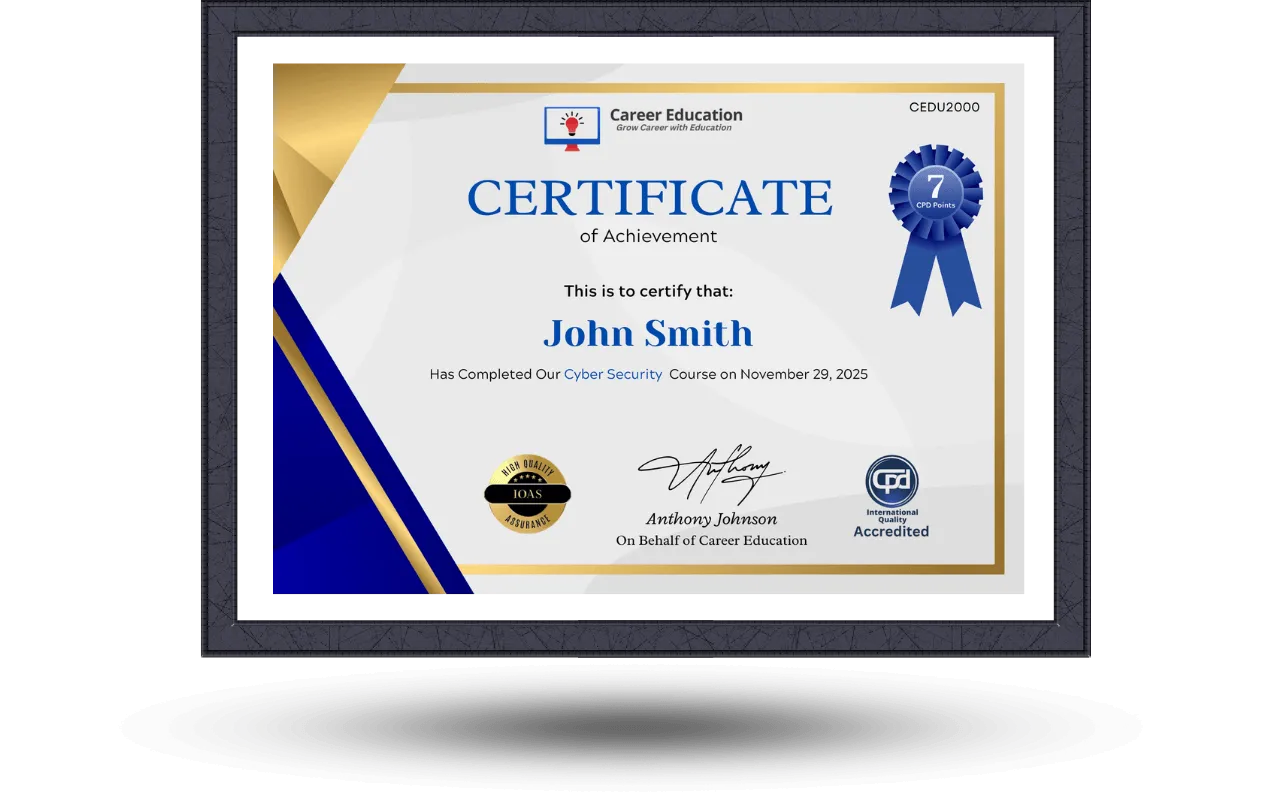
Upon completion of any course, all students are entitled to a CPD IQ Accredited e-certificate that will be issued by Career Education signifying the completion of your course.
After you complete the course and assignment, you will be eligible to order a free certificate accredited by CPD International Quality by completing the form below.
Hardcopy certificates and transcripts are also available for a small additional fee. More information is disclosed upon course completion.
Similar Courses


Frequently Asked Questions
The lifetime membership includes unlimited access to all courses, resources, and updates for a one-time fee.
You can purchase the membership directly from our website using a secure checkout process.
Yes, selected courses can be downloaded for offline access through our mobile app.
Yes, all future updates and new courses are included at no extra cost.
Yes, we offer a 30-day money-back guarantee if you are not satisfied with the membership.