
94%
OFF
OFF
Artificial Intelligence for Small Businesses
- Lifetime Access
- All Levels
- PDF Certificate
£296
£19
14-Day Money-Back Guarantee
Learn With Confidence






Artificial Intelligence for Small Businesses
Overview
Running a small business requires balancing countless responsibilities, from attracting customers and managing finances to improving productivity and staying ahead of competitors. As technology continues to evolve, Artificial Intelligence for Small Businesses has become an increasingly valuable area of knowledge for entrepreneurs, managers, and professionals who want to work smarter rather than harder.
Artificial intelligence is no longer reserved for large corporations with extensive budgets and dedicated technical teams. Today, affordable AI-powered tools enable small businesses to automate routine tasks, improve customer experiences, analyse business data, strengthen marketing campaigns, optimise operations, and make more informed decisions. Businesses across retail, hospitality, professional services, healthcare, education, e-commerce, manufacturing, and many other sectors are already benefiting from practical AI solutions.
Despite the growing availability of AI technologies, many business owners remain uncertain about where to begin. Questions about selecting the right tools, managing data, understanding costs, implementing AI responsibly, and measuring business value often prevent organisations from taking advantage of these innovations. Without a structured learning path, it can be difficult to identify which AI applications genuinely improve business performance.
This course has been designed to remove that uncertainty by providing a practical introduction to Artificial Intelligence for Small Businesses. Rather than focusing on highly technical programming concepts, it explores real-world business applications that can be implemented across everyday operations.
Throughout the course, you will discover how AI can support marketing, sales, customer service, finance, recruitment, operations, and long-term business growth. You will also learn how to prepare your organisation for successful AI adoption while considering ethical responsibilities, data quality, and future technological developments.
By completing this course, you will gain greater confidence in evaluating AI opportunities, selecting suitable solutions, and integrating intelligent technologies into your business strategy. Whether you run a new start-up or an established company, the knowledge gained can help you improve efficiency, enhance decision-making, and build a more competitive business.
The following modules provide a comprehensive, step-by-step journey through the practical use of artificial intelligence within small business environments.
Course Description
Artificial Intelligence for Small Businesses is a practical business-focused course designed to help entrepreneurs, business owners, managers, and professionals understand how artificial intelligence can create measurable improvements across daily business operations.
The course begins by introducing the fundamental concepts of artificial intelligence before exploring how modern AI technologies are transforming small businesses around the world. Rather than concentrating on complex technical development, the programme focuses on practical implementation, enabling learners to identify realistic opportunities for AI within their own organisations.
As businesses generate increasing volumes of information, effective data management becomes essential. Learners will understand why quality data forms the foundation of successful AI systems and how organised business information contributes to better predictions, automation, and decision-making.
Marketing and sales are major areas where AI delivers significant value. Throughout the course, learners will explore how intelligent tools can improve customer targeting, personalise communications, automate campaigns, generate insights, and support lead generation. These capabilities help businesses build stronger customer relationships while improving marketing efficiency.
Operational efficiency is another key focus. Learners will discover how AI can automate repetitive administrative tasks, improve workflows, reduce manual errors, and increase productivity across multiple departments. From scheduling to inventory management and process optimisation, AI provides opportunities to free valuable time for higher-value business activities.
Excellent customer service remains a competitive advantage for every organisation. This course demonstrates how AI-powered support systems, virtual assistants, and intelligent customer engagement solutions can improve response times while maintaining high levels of customer satisfaction.
Financial management is equally important for sustainable growth. Learners will explore how AI assists budgeting, forecasting, financial analysis, fraud detection, expense monitoring, and reporting, enabling better financial planning and informed business decisions.
Human resources also continue to benefit from AI technologies. Recruitment, onboarding, workforce planning, and employee engagement can all be enhanced through intelligent automation while maintaining ethical recruitment practices.
One of the most valuable aspects of this course is its emphasis on successful implementation. Adopting AI requires careful planning, selecting suitable technologies, preparing staff, managing organisational change, and measuring outcomes. Learners will develop practical strategies for introducing AI solutions that align with business objectives.
Finally, the course explores future developments in artificial intelligence, emerging innovations, and evolving business opportunities. As AI continues to advance, organisations that understand these trends will be better positioned to adapt and remain competitive.
By the end of Artificial Intelligence for Small Businesses, learners will possess practical knowledge that can be applied immediately within organisations of all sizes. The course supports professional development, strengthens strategic thinking, improves digital confidence, and helps learners identify realistic ways to use AI to create long-term business value.
What You Will Learn in Artificial Intelligence for Small Businesses
Module 1: Introduction to AI for Small Businesses
This opening module introduces artificial intelligence from a business perspective, helping learners understand what AI is, how it works, and why it has become increasingly important for small businesses. You will explore common AI terminology, different categories of AI technologies, and practical examples of AI already being used across industries.
The module explains how AI supports business growth through automation, improved decision-making, customer insights, and operational efficiency. Learners will also examine common misconceptions surrounding AI and understand how even small organisations can benefit without requiring advanced technical expertise.
Best practices for beginning an AI journey are introduced, while common implementation mistakes are discussed to help businesses start with realistic expectations.
After completing this module you will be able to:
-
Explain the fundamentals of artificial intelligence.
-
Identify common business applications for AI.
-
Recognise opportunities for AI within small businesses.
-
Understand basic AI terminology and concepts.
-
Differentiate between various AI technologies.
-
Appreciate the strategic value of AI adoption.
-
Build confidence in exploring AI solutions.
-
Establish realistic expectations for AI implementation.
Module 2: AI Tools and Platforms
This module explores the growing range of AI tools and software platforms available to small businesses. Learners compare different categories of AI applications including automation, analytics, marketing, customer engagement, content generation, and productivity solutions.
The module provides guidance on evaluating software features, selecting appropriate platforms, understanding costs, and integrating AI into existing business systems.
Attention is given to choosing scalable, secure, and user-friendly solutions that align with business objectives rather than adopting technology simply because it is available.
After completing this module you will be able to:
-
Compare different AI software solutions.
-
Evaluate business requirements before selecting tools.
-
Understand AI platform capabilities.
-
Choose cost-effective AI technologies.
-
Assess software compatibility.
-
Identify scalable business solutions.
-
Improve technology selection decisions.
-
Support successful digital transformation.
Module 3: Data Management and Preparation
Artificial intelligence relies on quality information. This module explains why accurate, organised, and secure business data is essential for successful AI performance.
Learners explore data collection, organisation, cleaning, storage, governance, and security while understanding how poor-quality data affects AI outcomes. The module also introduces responsible data management practices that support reliable business intelligence.
Practical examples demonstrate how improved data preparation contributes to better forecasting, reporting, and automation.
After completing this module you will be able to:
-
Understand the importance of quality data.
-
Organise business information effectively.
-
Improve data accuracy.
-
Apply basic data governance principles.
-
Recognise common data management challenges.
-
Support reliable AI decision-making.
-
Protect valuable business information.
-
Prepare data for AI applications.
Module 4: AI in Marketing and Sales
Marketing and sales are among the most accessible areas for AI implementation. This module explores how artificial intelligence supports customer segmentation, personalised marketing, campaign optimisation, lead generation, and sales forecasting.
Learners examine how AI analyses customer behaviour to improve engagement and increase conversion opportunities. The module also discusses responsible marketing practices and maintaining authentic customer relationships while using automation.
After completing this module you will be able to:
-
Improve customer targeting.
-
Use AI to personalise marketing campaigns.
-
Analyse customer behaviour.
-
Support sales forecasting.
-
Generate higher-quality business insights.
-
Increase marketing efficiency.
-
Strengthen customer engagement.
-
Make informed marketing decisions.
Module 5: AI in Operations and Productivity
This module focuses on improving day-to-day business efficiency through AI-powered automation. Learners discover how AI reduces repetitive manual tasks, streamlines workflows, enhances scheduling, supports inventory management, and improves operational decision-making.
Best practices for balancing automation with human oversight are explored alongside strategies for increasing productivity without compromising quality.
After completing this module you will be able to:
-
Identify operational automation opportunities.
-
Improve workplace productivity.
-
Streamline business workflows.
-
Reduce manual administrative tasks.
-
Enhance operational efficiency.
-
Support process optimisation.
-
Improve resource management.
-
Increase organisational effectiveness.
Module 6: AI in Customer Service
Excellent customer service remains essential for business success. This module explains how AI supports customer interactions through chatbots, virtual assistants, automated responses, and intelligent support systems.
Learners explore methods for improving customer satisfaction while maintaining personal service where appropriate. Practical examples demonstrate how AI helps businesses respond more quickly and consistently.
After completing this module you will be able to:
-
Improve customer response times.
-
Understand AI-powered customer support.
-
Enhance customer satisfaction.
-
Implement intelligent service solutions.
-
Balance automation with human interaction.
-
Improve customer communication.
-
Reduce service delays.
-
Strengthen customer relationships.
Module 7: Financial Management with AI
This module introduces practical financial applications of artificial intelligence, including budgeting, forecasting, reporting, fraud detection, and financial analysis.
Learners explore how AI assists business owners in understanding financial performance, identifying trends, and making informed financial decisions while improving reporting accuracy.
The module also highlights responsible financial oversight and the importance of combining AI insights with professional judgement.
After completing this module you will be able to:
-
Understand AI financial applications.
-
Improve financial forecasting.
-
Analyse business performance.
-
Support budgeting processes.
-
Monitor financial trends.
-
Strengthen financial decision-making.
-
Recognise fraud detection opportunities.
-
Improve financial reporting accuracy.
Module 8: AI in HR and Recruitment
Recruitment and workforce management increasingly benefit from intelligent technologies. This module explains how AI supports recruitment planning, candidate screening, employee onboarding, workforce analytics, and staff development.
Ethical recruitment practices, fairness, and transparency remain central themes throughout the module, ensuring learners understand both the benefits and responsibilities associated with AI-driven HR processes.
After completing this module you will be able to:
-
Understand AI recruitment tools.
-
Improve hiring efficiency.
-
Support workforce planning.
-
Enhance onboarding processes.
-
Analyse workforce data.
-
Promote ethical AI recruitment.
-
Improve employee management.
-
Strengthen HR decision-making.
Module 9: Implementing AI in Your Business
Successful implementation requires more than purchasing software. This module provides a structured approach to introducing AI within small businesses, including planning, budgeting, stakeholder engagement, employee training, change management, and performance evaluation.
Learners identify common implementation challenges and discover practical strategies for achieving successful adoption while minimising disruption.
After completing this module you will be able to:
-
Develop an AI implementation strategy.
-
Plan realistic business projects.
-
Manage organisational change.
-
Measure AI performance.
-
Identify implementation risks.
-
Improve employee engagement.
-
Support successful technology adoption.
-
Align AI with business objectives.
Module 10: Future Trends and Innovation
The final module explores the future of artificial intelligence and its continuing influence on small businesses. Learners examine emerging technologies, evolving business models, ethical developments, and innovation opportunities that may shape future competitiveness.
The module encourages strategic thinking and continuous learning so businesses remain adaptable as AI technologies continue to develop.
After completing this module you will be able to:
-
Understand emerging AI trends.
-
Recognise future business opportunities.
-
Prepare for technological change.
-
Support long-term innovation.
-
Evaluate new AI developments.
-
Strengthen strategic planning.
-
Promote continuous improvement.
-
Build future-ready business capabilities.
Who Is This Course For?
Artificial Intelligence for Small Businesses is suitable for:
-
Entrepreneurs launching new businesses.
-
Small business owners seeking greater efficiency.
-
Managers responsible for business operations.
-
Supervisors leading digital transformation initiatives.
-
Marketing and sales professionals.
-
Customer service managers.
-
HR professionals and recruiters.
-
Finance professionals supporting business growth.
-
Freelancers and consultants.
-
Business advisers.
-
Students exploring business technology.
-
Career changers entering digital business roles.
-
Job seekers wishing to strengthen their professional skills.
-
Lifelong learners interested in practical AI applications.
Requirements
There are no complex technical prerequisites for this course.
You only need:
-
An interest in artificial intelligence and business improvement.
-
A computer, tablet, or smartphone.
-
A reliable internet connection.
-
Basic digital literacy.
-
A willingness to learn and apply new ideas.
No previous experience with artificial intelligence or programming is required, making the course suitable for beginners as well as experienced professionals.
Career Path
Completing Artificial Intelligence for Small Businesses can support progression into a wide variety of business and technology-related roles, including:
Small Business Owner
Apply AI to improve productivity, customer engagement, financial planning, and operational efficiency while supporting sustainable business growth.
Business Manager
Lead AI implementation projects, improve workflows, analyse business performance, and support strategic decision-making.
Digital Transformation Coordinator
Help organisations adopt new technologies, manage change initiatives, and improve digital capability across business operations.
Marketing Manager
Use AI to enhance customer segmentation, campaign management, content planning, and sales performance.
Operations Manager
Improve business processes, automate repetitive tasks, optimise resource allocation, and increase organisational efficiency.
Customer Experience Manager
Implement intelligent customer support solutions while improving customer satisfaction and service quality.
HR Professional
Support recruitment, employee engagement, workforce planning, and talent management using AI-enabled tools.
Business Consultant
Advise organisations on selecting, implementing, and optimising AI technologies that support business objectives.
The knowledge gained also supports freelancing, consulting, entrepreneurship, continuous professional development, and long-term career advancement as artificial intelligence becomes increasingly integrated across every industry.
Frequently Asked Questions
1. What is Artificial Intelligence for Small Businesses?
Artificial Intelligence for Small Businesses is a practical course that teaches how AI technologies can improve everyday business activities, including marketing, finance, operations, customer service, recruitment, and decision-making.
2. Who should take this course?
The course is suitable for entrepreneurs, business owners, managers, freelancers, consultants, professionals, students, and anyone interested in applying AI within a small business environment.
3. Is previous experience required?
No. The course is designed for beginners and does not require programming knowledge or prior experience with artificial intelligence.
4. What will I learn?
You will learn how AI can improve marketing, sales, operations, finance, customer service, recruitment, data management, implementation planning, and future business innovation.
5. How long does the course take?
The study time varies depending on your learning pace. Because the course is self-paced, you can complete it at a schedule that suits your personal and professional commitments.
6. Can beginners complete this course?
Yes. The course starts with the fundamentals before progressing to practical business applications, making it suitable for learners with little or no prior knowledge.
7. How does this course help my career?
The knowledge gained can improve your digital business skills, strengthen strategic thinking, support technology adoption projects, and enhance your professional value across many industries.
8. Will I receive a certificate?
Certification depends on your training provider’s assessment and completion requirements. Please refer to the course information provided by your chosen learning platform.
9. Can I study at my own pace?
Yes. The course is designed for flexible online learning, allowing you to study whenever it is most convenient.
10. Why should I choose this course?
This course focuses on practical, real-world business applications of AI rather than technical programming. It provides structured guidance that helps learners confidently identify opportunities, implement appropriate solutions, and prepare their businesses for future technological developments.
Enrol Today
Artificial Intelligence for Small Businesses equips you with practical knowledge that can transform the way you manage, grow, and innovate within your organisation. From improving marketing and customer service to streamlining operations and making smarter financial decisions, the skills developed throughout this course are immediately applicable to real business challenges.
As artificial intelligence continues to reshape the business landscape, developing a clear understanding of its opportunities and responsible implementation has become an increasingly valuable professional skill. Start learning today and take the next step towards building a more efficient, competitive, and future-ready business with confidence.
Course Modules
Course Content
Module 1_ Introduction to AI for Small Businesses.
-
Lesson 1_ Introduction to AI for Small Businesses.
Module 2_ AI Tools and Platforms.
Module 3_ Data Management and Preparation.
Module 4_ AI in Marketing and Sales.
Module 5_ AI in Operations and Productivity.
Module 6_ AI in Customer Service.
Module 7_ Financial Management with AI.
Module 8_ AI in HR and Recruitment.
Module 9_ Implementing AI in Your Business.
Module 10_ Future Trends and Innovation.
What our students say
Excellent
4.9 average
158 Reviews

Earn an Accredited Certificate
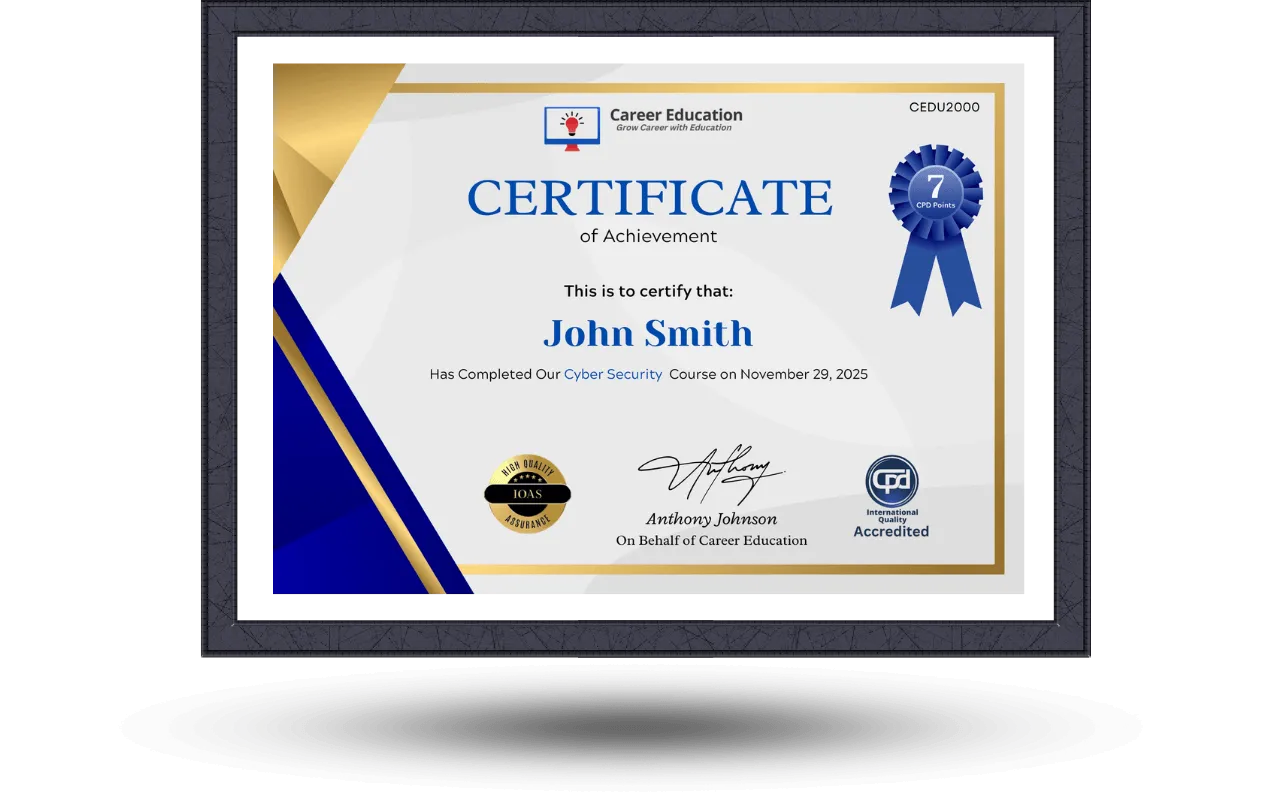
Upon completion of any course, all students are entitled to a CPD IQ Accredited e-certificate that will be issued by Career Education signifying the completion of your course.
After you complete the course and assignment, you will be eligible to order a free certificate accredited by CPD International Quality by completing the form below.
Hardcopy certificates and transcripts are also available for a small additional fee. More information is disclosed upon course completion.
Similar Courses


Frequently Asked Questions
The lifetime membership includes unlimited access to all courses, resources, and updates for a one-time fee.
You can purchase the membership directly from our website using a secure checkout process.
Yes, selected courses can be downloaded for offline access through our mobile app.
Yes, all future updates and new courses are included at no extra cost.
Yes, we offer a 30-day money-back guarantee if you are not satisfied with the membership.