
Fundamentals of Professional Email Writing
- Lifetime Access
- All Levels
- PDF Certificate
14-Day Money-Back Guarantee
Learn With Confidence








# Fundamentals of Professional Email Writing
Email remains one of the most important communication tools in modern workplaces. From communicating with colleagues and managers to contacting clients, customers, suppliers and professional partners, the ability to write clear and appropriate emails can have a direct impact on how you are understood and perceived.
**Fundamentals of Professional Email Writing** is designed to help learners develop practical email communication skills for professional and workplace environments. The course focuses on the essential principles of effective email writing, from understanding the purpose of an email and planning your message to creating effective subject lines, using appropriate greetings, following email etiquette and managing communication overload.
A professional email should do more than simply transfer information. It should communicate your purpose clearly, respect the reader’s time and make it easy for the recipient to understand what action, response or information is required.
Poorly written emails can lead to misunderstandings, unnecessary follow-ups, delays and frustration. On the other hand, well-structured emails can make communication more efficient, strengthen professional relationships and help you present yourself with greater confidence.
**Fundamentals of Professional Email Writing** provides a structured approach to developing these skills. Whether you are new to professional communication or simply want to improve your existing writing, the course can help you develop a more thoughtful and effective approach to workplace emails.
—
# Why Study Fundamentals of Professional Email Writing?
Writing an effective email may appear simple, but professional communication involves several important decisions.
Before sending an email, you need to consider:
* Why am I sending this message?
* Who is the recipient?
* What information do they need?
* What action do I want them to take?
* What tone is appropriate?
* How can I make the message easy to read?
* What should the subject line communicate?
* How quickly does the recipient need to respond?
**Fundamentals of Professional Email Writing** explores these questions and provides learners with a practical framework for better email communication.
Through the course, you can learn how to:
* Understand the purpose of professional emails
* Identify your communication objective
* Plan emails before writing
* Organise information logically
* Create clear subject lines
* Choose appropriate greetings
* Apply professional email etiquette
* Communicate with clarity and professionalism
* Reduce unnecessary email exchanges
* Manage large volumes of email more effectively
* Respect the recipient’s time
* Improve workplace communication
—
# Module 1 – Understanding the Purpose of Email
The first step towards effective email writing is understanding why you are sending the message.
Module 1 introduces the purpose of email communication and explores how different objectives can influence the structure and tone of a message.
You will explore:
* The purpose of professional email
* Workplace communication
* Different types of emails
* Audience awareness
* Communication objectives
* Formal and informal communication
* Clarity and relevance
* Appropriate email structure
—
## Identify Your Communication Purpose
Every professional email should have a clear reason for being sent.
You might be:
* Requesting information
* Providing an update
* Confirming arrangements
* Asking for assistance
* Sharing documents
* Responding to a question
* Making an announcement
* Following up on an earlier conversation
* Giving instructions
Identifying the purpose before writing can help you avoid unnecessary information and keep your message focused.
—
## Understand Your Audience
The same information may need to be communicated differently depending on who receives it.
An email to a colleague may have a different tone from an email to a senior manager, client or external organisation.
Understanding your audience can help you decide:
* How formal the email should be
* How much context is required
* Which terminology is appropriate
* What information should be included
* What action is expected
—
## Communicate With Clarity
Professional emails should make information easy to understand.
This means avoiding unnecessarily complicated language and presenting information in a logical order.
Clear communication can reduce confusion and minimise the need for additional clarification.
—
# Module 2 – Planning Your Email Writing
Good emails often begin before the first sentence is written.
Module 2 focuses on planning and organising your message so that the final email is focused, purposeful and easy to follow.
You will explore:
* Identifying your objective
* Understanding your recipient
* Organising key information
* Structuring an email
* Prioritising information
* Choosing an appropriate tone
* Reviewing your message
—
## Define Your Objective
Before writing, determine exactly what you want your email to achieve.
For example, if you are asking someone to approve a proposal, the purpose should be clear from the beginning.
A defined objective helps you decide what information belongs in the email and what can be left out.
—
## Organise Your Information
Professional readers often receive many messages throughout the day.
Presenting information in a logical order makes it easier for them to understand your message quickly.
A useful structure may include:
1. Greeting
2. Opening purpose
3. Relevant information
4. Required action
5. Closing
6. Sign-off
The exact structure can vary depending on the situation.
—
## Prioritise Important Information
Not all information has equal importance.
Learners will explore how to identify essential details and place them where the recipient can easily find them.
This can be especially useful when communicating deadlines, requests, decisions or important updates.
—
## Review Before Sending
Taking a moment to review an email can help identify:
* Spelling errors
* Missing information
* Unclear wording
* Incorrect attachments
* Inappropriate tone
* Unnecessary content
A brief review can significantly improve the quality of professional communication.
—
# Module 3 – Crafting Effective Subject Lines and Greetings
The subject line and greeting are among the first things a recipient sees.
Module 3 explores how to create professional openings that immediately provide context.
You will explore:
* Effective subject lines
* Clear email titles
* Professional greetings
* Formal and informal greetings
* Recipient awareness
* Email openings
* First impressions
—
## Write Effective Subject Lines
A good subject line helps the recipient understand what the email is about before opening it.
An effective subject line should generally be:
* Clear
* Specific
* Relevant
* Concise
* Appropriate to the message
Vague subject lines can make it harder for recipients to prioritise and retrieve messages.
—
## Use Appropriate Greetings
The greeting sets the tone for the rest of the email.
The appropriate greeting depends on factors such as:
* Your relationship with the recipient
* The purpose of the email
* The organisation’s communication culture
* The level of formality required
Understanding these differences can help you avoid greetings that feel either excessively formal or unnecessarily casual.
—
## Create Strong First Impressions
Professional communication contributes to how others perceive your reliability and attention to detail.
A clear subject line and appropriate greeting can immediately establish a professional tone.
—
# Module 4 – Email Etiquette
Email etiquette refers to the conventions and behaviours that help communication remain professional, respectful and effective.
Module 4 explores important principles for professional email communication.
You will explore:
* Professional tone
* Courtesy
* Response times
* Email formatting
* Attachments
* CC and BCC
* Privacy considerations
* Professional language
* Proofreading
* Appropriate use of email
—
## Use a Professional Tone
Tone can be difficult to communicate through written messages because the reader cannot hear your voice or see your facial expressions.
Words that appear neutral to the sender can sometimes sound abrupt or unfriendly to the recipient.
The course explores ways to maintain a professional and respectful tone.
—
## Respect the Recipient’s Time
Professional email should be efficient.
This does not necessarily mean every email needs to be extremely short. Instead, the message should contain the information the recipient needs without unnecessary repetition.
Using concise paragraphs, clear wording and logical formatting can make emails easier to process.
—
## Understand CC and BCC
Copying people into emails can be useful, but unnecessary recipients can contribute to communication overload.
Learners will develop greater awareness of when additional recipients may be relevant and why careful use of email fields matters.
—
## Use Attachments Responsibly
When sending an attachment, the email should make it clear:
* What the attachment contains
* Why it is being provided
* What the recipient should do with it, if applicable
Checking attachments before sending can also help prevent avoidable mistakes.
—
## Proofread Your Emails
Professional emails represent both the writer and, in many situations, the organisation they work for.
Proofreading can help identify:
* Typographical errors
* Grammar problems
* Missing words
* Incorrect names
* Incorrect dates
* Inconsistent formatting
Developing a proofreading habit can improve communication quality.
—
# Module 5 – Managing Email Communication Overload
Modern professionals can receive dozens or even hundreds of emails.
Without effective organisation, email can become a significant source of distraction and lost productivity.
Module 5 focuses on managing email communication overload.
You will explore:
* Email volume
* Prioritisation
* Inbox organisation
* Response management
* Email boundaries
* Efficient communication
* Reducing unnecessary messages
—
## Understand Email Overload
Email overload occurs when the volume of messages becomes difficult to manage effectively.
It can lead to:
* Missed information
* Delayed responses
* Reduced concentration
* Increased stress
* Repeated messages
* Communication inefficiency
Understanding the causes of email overload is the first step towards managing it.
—
## Prioritise Messages
Not every email requires the same level of attention.
Learners can explore ways of distinguishing between:
* Urgent messages
* Important messages
* Routine requests
* Informational messages
* Messages that require no response
This can help create a more structured approach to inbox management.
—
## Reduce Unnecessary Communication
Effective email writing is also about knowing when email may not be the best communication method.
Some issues may be resolved more efficiently through:
* A quick conversation
* A meeting
* A phone call
* A shared document
* A project-management system
Choosing the appropriate communication method can reduce unnecessary email traffic.
—
## Develop Better Email Habits
Small improvements in email habits can create significant benefits over time.
These may include:
* Writing clear subject lines
* Keeping messages focused
* Avoiding unnecessary recipients
* Organising messages
* Setting appropriate response expectations
* Reviewing emails before sending
* Using templates where appropriate
* Protecting focused work time
These habits can make professional communication more manageable.
—
# Practical Learning Outcomes
After completing **Fundamentals of Professional Email Writing**, learners can expect to develop practical skills that can be applied across a range of professional environments.
You will be able to:
* Explain the purpose of professional email communication
* Identify the objective of an email
* Adapt communication to different audiences
* Plan emails before writing
* Organise information logically
* Prioritise important details
* Structure professional emails effectively
* Write clear and relevant subject lines
* Select appropriate greetings
* Establish a professional tone
* Apply essential email etiquette
* Communicate requests and information clearly
* Use professional formatting
* Understand appropriate use of CC and BCC
* Manage attachments more effectively
* Proofread emails before sending
* Recognise common causes of email overload
* Prioritise incoming messages
* Develop better inbox-management habits
* Reduce unnecessary email communication
* Improve overall workplace communication
—
# Who Is This Course For?
**Fundamentals of Professional Email Writing** is suitable for anyone who uses email as part of their personal or professional communication.
It may be particularly useful for:
* Office professionals
* Administrative staff
* Managers
* Team leaders
* Customer-service professionals
* Freelancers
* Business owners
* Students
* Job seekers
* Remote workers
* Entrepreneurs
* Professionals developing workplace communication skills
The course is suitable for beginners as well as individuals who already use email regularly but want to improve their communication skills.
—
# Improve Your Professional Communication
Professional email writing is a practical skill that can influence productivity, relationships and workplace efficiency.
A clear email can save time. A well-planned request can produce a faster response. An appropriate subject line can help a message receive attention. A respectful tone can strengthen professional relationships.
By contrast, unclear or poorly structured emails can create unnecessary back-and-forth communication.
**Fundamentals of Professional Email Writing** helps learners develop a more deliberate approach to writing emails so that each message has a clear purpose and communicates information effectively.
—
# Build Confidence in Workplace Email Writing
Many people know what they want to say but struggle to communicate it effectively in writing.
They may wonder:
* How should I begin?
* What should I put in the subject line?
* How formal should I be?
* How much detail should I include?
* How should I make my request clear?
* When should I follow up?
* How can I make the message more concise?
This course provides a structured foundation for addressing these common challenges.
—
# Develop Efficient Communication Habits
Strong email writing is not only about grammar.
It is also about thinking before writing, understanding the recipient and choosing the most effective way to communicate.
By developing better planning, structuring and proofreading habits, learners can create emails that are easier for others to understand and respond to.
—
# Prepare for Professional Environments
Email is used across virtually every modern industry.
From internal team communication and client correspondence to customer service and administrative work, professional email skills can be valuable across many roles.
Developing these skills can help you communicate with greater confidence and professionalism in different workplace situations.
—
# A Foundation for Further Communication Skills
The principles covered in **Fundamentals of Professional Email Writing** can also support further development in areas such as:
* Business communication
* Workplace writing
* Customer communication
* Business correspondence
* Professional etiquette
* Report writing
* Administrative skills
* Leadership communication
* Digital communication
The course provides a foundation that learners can continue building through practice and professional experience.
—
# Start Writing Better Professional Emails
Effective email writing is about more than putting words on a screen.
It is about communicating a purpose clearly, respecting the recipient’s time, choosing an appropriate tone and making the desired outcome easy to understand.
**Fundamentals of Professional Email Writing** introduces learners to these essential principles through five focused modules covering the purpose of email, planning, subject lines and greetings, email etiquette and communication overload.
Whether you are entering the workplace, managing a busy inbox, communicating with clients or simply looking to improve your professional writing, the skills developed through this course can make everyday communication more effective.
## Enrol Today
Build practical email-writing skills that you can apply immediately in professional and workplace settings.
Learn how to plan your messages, write stronger subject lines, communicate with the right tone, follow professional etiquette and manage email more efficiently.
**Enrol in Fundamentals of Professional Email Writing today and start communicating with greater clarity, confidence and professionalism.**
Course Modules
Course Content
Module 1_ Understanding the Purpose of Email
-
Lesson 1_ Understanding the Purpose of Email
Module 2_ Planning Your Email Writing
Module 3_ Crafting Effective Subject Lines and Greetings
Module 4_ Email Etiquette
Module 5_ Managing Email Communication Overload
What our students say
Excellent
4.9 average
158 Reviews

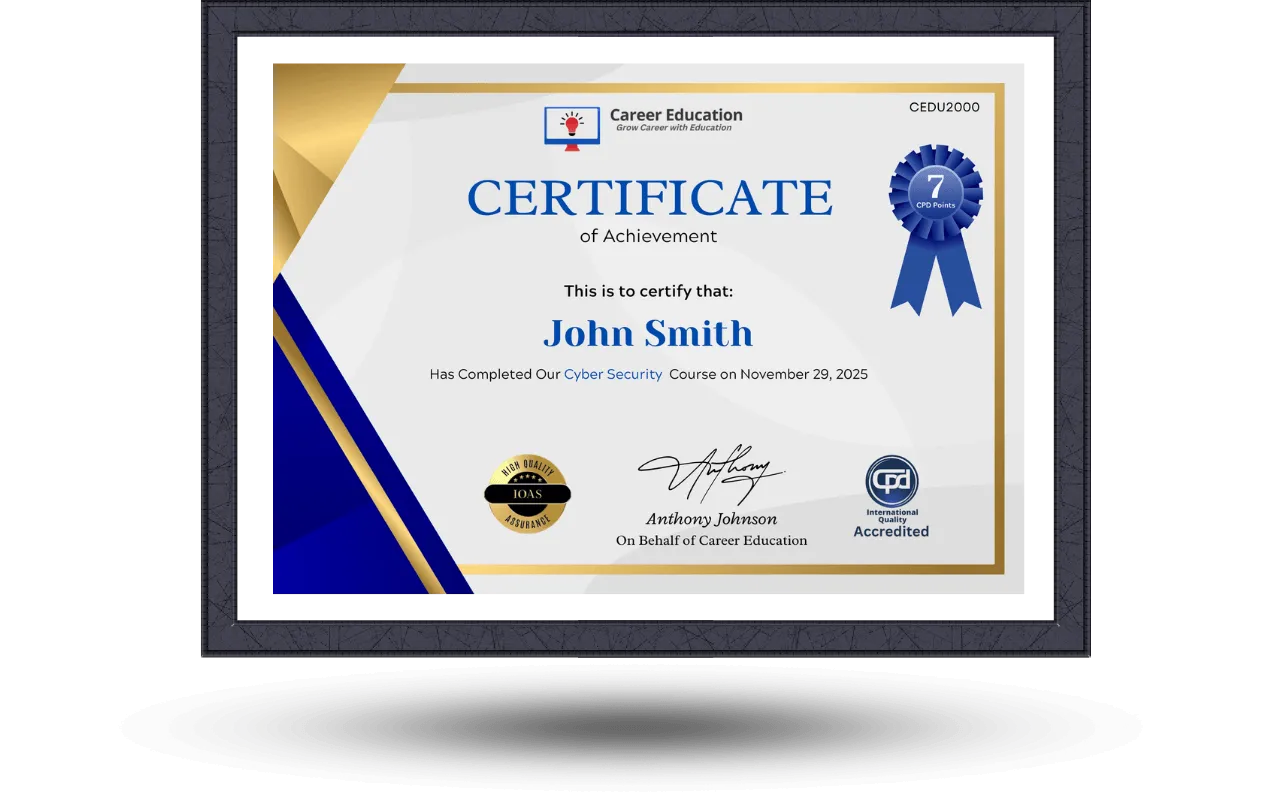
Earn an Accredited Certificate
Upon completion of any course, all students are entitled to a CPD IQ Accredited e-certificate that will be issued by Career Education signifying the completion of your course.
After you complete the course and assignment, you will be eligible to order a free certificate accredited by CPD International Quality by completing the form below.
Hardcopy certificates and transcripts are also available for a small additional fee. More information is disclosed upon course completion.
Similar Courses


Frequently Asked Questions
The lifetime membership includes unlimited access to all courses, resources, and updates for a one-time fee.
You can purchase the membership directly from our website using a secure checkout process.
Yes, selected courses can be downloaded for offline access through our mobile app.
Yes, all future updates and new courses are included at no extra cost.
Yes, we offer a 30-day money-back guarantee if you are not satisfied with the membership.