Skip to content
94%
OFF

Customer Engagement and Relationship Management

  • Lifetime Access
  • All Levels
  • PDF Certificate
£19.00 £296.00
14-Day Money-Back Guarantee

Learn With Confidence
IOAS High Quality Assurance
AoHT Member
Disability Confident Committed
CPD Accredited Provider
CPD International Quality
14 Days Money Back Guarantee
Lifetime Access
Incensu Registered
SSL Secure

Overview

Enrollment Guide & Course Foundation

Overview

Customer Engagement and Relationship Management is a comprehensive course designed to help learners understand how organisations can build stronger customer relationships, improve engagement, and create experiences that encourage loyalty and long-term business success. In competitive markets, attracting customers is only the beginning. Businesses must understand customer needs, communicate effectively, provide consistent service, and use reliable relationship management strategies to retain valuable customers.

Customer Relationship Management (CRM) brings together people, processes, data, and technology to help businesses understand and serve their customers more effectively. Modern CRM systems can support sales, marketing, customer service, communication, reporting, and data management, giving organisations a more complete view of customer interactions. This course introduces learners to the principles behind successful CRM and explains how these principles can be applied across different industries.

Throughout the course, learners will explore customer behaviour and segmentation, CRM strategies and frameworks, system implementation, customer data management, engagement techniques, and the relationship between CRM, sales, and marketing. Practical examples and realistic business scenarios help learners understand how organisations can turn customer information into meaningful strategies and stronger relationships.

By the end of this course, learners will confidently understand how to develop customer-focused strategies, support CRM implementation, manage customer information responsibly, improve engagement, and contribute to long-term customer loyalty and business growth.


Description

Customer expectations have changed significantly in the modern business environment. Customers increasingly expect personalised communication, responsive service, convenient experiences, and organisations that understand their individual needs. Businesses that fail to manage customer relationships effectively can struggle with customer retention, loyalty, reputation, and sustainable growth.

Customer Engagement and Relationship Management provides a practical introduction to the principles and processes that help organisations build meaningful, long-lasting relationships with their customers. The course is suitable for learners interested in sales, marketing, customer service, business management, account management, and digital business operations.

Customer Relationship Management is not simply about using CRM software. Effective CRM requires a combination of strategy, customer knowledge, communication, data management, technology, and consistent execution. Throughout the course, learners develop an understanding of how these elements work together to create a customer-focused organisation.

The programme begins by introducing the fundamentals of Customer Relationship Management and examining why customer relationships are strategically important. Learners explore the role of CRM within modern organisations and discover how effective relationship management can improve customer satisfaction, retention, loyalty, sales performance, and overall business results.

Understanding customer behaviour is another essential component of successful CRM. Customers have different needs, expectations, preferences, purchasing habits, and motivations. By analysing customer behaviour and using segmentation techniques, organisations can create more relevant experiences and communicate with different customer groups more effectively.

The course then explores CRM strategies and frameworks that businesses can use to structure their customer relationship activities. Learners discover how to establish customer-focused objectives, map customer journeys, identify touchpoints, develop relationship strategies, and measure performance. These principles can be adapted to businesses of different sizes and across multiple industries.

Technology plays an important role in modern CRM. CRM systems allow businesses to organise customer information, track interactions, manage leads, monitor sales activities, automate communications, and generate useful reports. The course introduces the key considerations involved in implementing CRM systems, including planning, user adoption, system configuration, data migration, workflow design, and ongoing improvement.

Data management is equally important. Customer information must be accurate, organised, secure, and handled responsibly. Learners explore data collection, data quality, customer records, data protection, privacy, access controls, and responsible use of customer information. Strong data management provides a reliable foundation for effective CRM decision-making.

Customer engagement is another major focus. Engagement goes beyond individual transactions and involves creating meaningful interactions throughout the customer journey. Learners examine personalisation, communication strategies, feedback, loyalty initiatives, customer service, digital engagement, and relationship-building techniques that can strengthen customer connections.

The course also explores the relationship between CRM, sales, and marketing. CRM systems provide valuable information that can help sales teams identify opportunities, understand prospects, track leads, manage accounts, and improve follow-up activities. Marketing teams can use customer insights to develop more targeted campaigns, segment audiences, personalise communications, and measure campaign performance.

Practical business scenarios are used throughout the programme to demonstrate how CRM principles can be applied in real organisations. Examples include retail businesses, professional services, e-commerce companies, financial services, hospitality, education, healthcare, technology businesses, and subscription-based organisations.

The course also highlights common CRM challenges. These may include poor data quality, limited employee adoption, disconnected systems, inadequate customer segmentation, inconsistent communication, insufficient training, and focusing too heavily on technology rather than customer needs. Learners gain practical strategies for recognising and addressing these challenges.

Professional CRM requires continuous improvement. Customer expectations, technology, communication channels, and market conditions continue to change. Successful organisations regularly analyse customer feedback, review performance, improve processes, update customer data, and refine engagement strategies.

You’ll discover how to use Customer Engagement and Relationship Management for:

  • Building stronger customer relationships
  • Improving customer retention
  • Understanding customer behaviour
  • Segmenting customer audiences
  • Developing CRM strategies
  • Implementing CRM systems
  • Managing customer databases
  • Improving customer data quality
  • Personalising customer communications
  • Creating effective engagement campaigns
  • Supporting sales teams
  • Improving marketing performance
  • Managing customer journeys
  • Tracking customer interactions
  • Improving customer service
  • Supporting customer loyalty
  • Analysing CRM performance
  • Identifying relationship-building opportunities

Throughout the programme, learners explore professional CRM workflows that begin with understanding customer needs and continue through segmentation, engagement, sales interaction, service delivery, feedback collection, retention, and performance evaluation. These workflows help businesses create a consistent customer experience across different communication channels.

Best practices include keeping customer information accurate, establishing clear CRM processes, training employees effectively, protecting customer data, defining measurable objectives, monitoring customer satisfaction, personalising communication appropriately, and regularly reviewing CRM performance.

The course also examines common mistakes, including collecting unnecessary customer information, failing to maintain accurate records, treating every customer identically, ignoring customer feedback, implementing technology without a clear strategy, and failing to encourage staff adoption. Understanding these challenges helps learners contribute to more effective CRM programmes.

Hands-on learning is incorporated through realistic business scenarios and practical examples. Learners can explore customer segmentation exercises, engagement strategies, CRM workflows, data management scenarios, sales processes, and marketing applications to reinforce their understanding.

Responsible customer relationship management is also emphasised. Businesses must respect customer privacy, protect personal information, communicate transparently, and use customer data appropriately. Ethical CRM practices help organisations build trust while supporting sustainable customer relationships.

Finally, the course encourages continuous improvement. Effective CRM is an ongoing process rather than a one-time project. By regularly analysing customer needs, measuring engagement, improving communication, and adapting to changing expectations, organisations can build stronger relationships and create lasting business value.


Course Modules

Module 1: Introduction to Customer Relationship Management

  • Understanding Customer Relationship Management
  • Importance of customer relationships
  • CRM objectives and benefits
  • Customer-focused business principles
  • CRM and customer loyalty
  • Key CRM processes
  • CRM across different industries
  • Introduction to CRM technology

Module 2: Understanding Customer Behaviour and Segmentation

  • Understanding customer behaviour
  • Customer needs and expectations
  • Customer personas
  • Customer segmentation principles
  • Demographic segmentation
  • Behavioural segmentation
  • Customer journey analysis
  • Using customer insights effectively

Module 3: CRM Strategies and Frameworks

  • Developing CRM strategies
  • Customer relationship objectives
  • Customer journey mapping
  • Identifying customer touchpoints
  • Relationship-building frameworks
  • Customer retention strategies
  • CRM performance measurement
  • Continuous strategy improvement

Module 4: Implementing CRM Systems

  • Understanding CRM platforms
  • CRM implementation planning
  • Selecting suitable CRM solutions
  • System configuration
  • Workflow design
  • Data migration
  • Employee training and adoption
  • Monitoring CRM implementation

Module 5: Data Management in CRM

  • Understanding customer data
  • Customer data collection
  • Data quality management
  • Maintaining accurate customer records
  • Data organisation
  • Data security and privacy
  • Access and permissions
  • Responsible customer data management

Module 6: Customer Engagement Strategies

  • Understanding customer engagement
  • Personalised communication
  • Multi-channel engagement
  • Customer feedback strategies
  • Customer service and support
  • Loyalty and retention initiatives
  • Digital customer engagement
  • Measuring engagement performance

Module 7: CRM in Sales and Marketing

  • CRM and sales management
  • Lead management
  • Prospect tracking
  • Sales pipeline management
  • Customer relationship development
  • Targeted marketing campaigns
  • Marketing segmentation
  • CRM analytics for sales and marketing
 

Requirements, Career Path & Final Thoughts

Who Is This Course For

Strong customer relationships are essential across almost every modern industry. This course is designed for learners who want to understand how businesses attract, engage, support, and retain customers using effective CRM strategies, data, technology, and communication. It is suitable for beginners as well as professionals looking to strengthen their existing customer relationship and business skills.

This course is ideal for:

  • Customer service professionals
  • Sales representatives and account managers
  • Marketing professionals
  • CRM administrators and coordinators
  • Business development professionals
  • Customer success specialists
  • Retail and e-commerce professionals
  • Business owners and entrepreneurs
  • Digital marketing professionals
  • Sales managers and team leaders
  • Customer experience professionals
  • Business analysts
  • Relationship managers
  • Office and administrative professionals
  • Anyone interested in customer engagement and CRM

Whether you work directly with customers or support sales and marketing operations behind the scenes, this course provides practical knowledge that can help you contribute to stronger customer experiences and improved business performance.


Requirements

To take this course, learners should have:

  • A basic understanding of business or customer service
  • Basic computer and internet skills
  • Access to a computer, laptop, or suitable digital device
  • Basic English reading and communication skills
  • An interest in customer relationships, sales, marketing, or business
  • A willingness to learn about CRM strategies and technologies
  • No previous experience with CRM software is required
  • A commitment to professional and responsible customer data management

The course is designed to be beginner-friendly, making it suitable for learners entering customer-facing roles as well as professionals seeking to improve their existing CRM knowledge.


Career Path

Customer relationship management skills are valuable across sales, marketing, customer service, business development, and management. Organisations of all sizes need professionals who can understand customer needs, manage relationships effectively, use customer data responsibly, and contribute to customer retention and business growth.

Potential career opportunities include:

  • Customer Relationship Manager
  • CRM Administrator
  • CRM Coordinator
  • Customer Success Specialist
  • Customer Experience Specialist
  • Account Manager
  • Sales Executive
  • Business Development Executive
  • Sales Operations Specialist
  • Marketing Executive
  • Digital Marketing Specialist
  • Customer Service Manager
  • Relationship Manager
  • Client Services Coordinator
  • Customer Engagement Specialist

The skills developed through this course can support career opportunities across retail, e-commerce, banking, insurance, hospitality, healthcare, education, technology, professional services, telecommunications, and many other sectors. With further experience and professional development, learners can progress into senior customer experience, sales management, CRM strategy, marketing management, and business leadership positions.


Final Thoughts

Customer Engagement and Relationship Management provides a practical foundation for understanding how successful organisations build meaningful and lasting relationships with their customers. From understanding customer behaviour and segmentation to implementing CRM systems and developing engagement strategies, the course provides learners with the knowledge needed to contribute effectively to customer-focused business operations.

Throughout the programme, learners develop practical skills in CRM strategy, customer data management, customer segmentation, engagement, sales support, marketing coordination, and CRM technology. The course emphasises the importance of combining reliable data and effective technology with communication, empathy, professionalism, and a genuine understanding of customer needs.

As customer expectations continue to evolve, businesses must continually improve how they communicate and interact with their audiences. Professionals who understand CRM principles can help organisations deliver more personalised experiences, improve customer retention, strengthen sales and marketing performance, and create greater long-term value.

By the end of this course, learners will have the confidence to understand customer behaviour, support CRM implementation, manage customer information responsibly, develop effective engagement strategies, and contribute to stronger customer relationships. Whether your goal is to begin a career in customer service, sales, marketing, CRM, or business management, Customer Engagement and Relationship Management provides the practical knowledge and professional foundation needed to succeed in today’s customer-focused business environment.

£296.00 £19.00

Save Over 94% - Offer Ends soon

BUY NOW

14-Day Money-Back Guarantee

Course Modules

Course Content

Module 1_ Introduction to Customer Relationship Management

  • Lesson 1_ Introduction to Customer Relationship Management

Module 2_ Understanding Customer Behavior and Segmentation

Module 3_ CRM Strategies and Frameworks

Module 4_ Implementing CRM Systems

Module 5_ Data Management in CRM

Module 6_ Customer Engagement Strategies

Module 7_ CRM in Sales and Marketing

What our students say

Excellent
4.9 average
158 Reviews

Taufiq Israil
Verified Customer

This course completely transformed how I approach design. The section on design systems was worth the price alone. I landed a Junior Designer role three weeks after finishing!

Andrew Osborne
Verified Customer

The courses provided a wide variety of complete program materials and exam mockups. Fantastic!

Gregory Holmes
Verified Customer

The range of courses offered is extensive and the quality of training is top notch, second to pretty perfect!

Zach Parks
Verified Customer

The course I completed was engaging, insightful, informative! The instructor kept me motivated throughout.

Earn an Accredited Certificate

Earn an Accredited Certificate

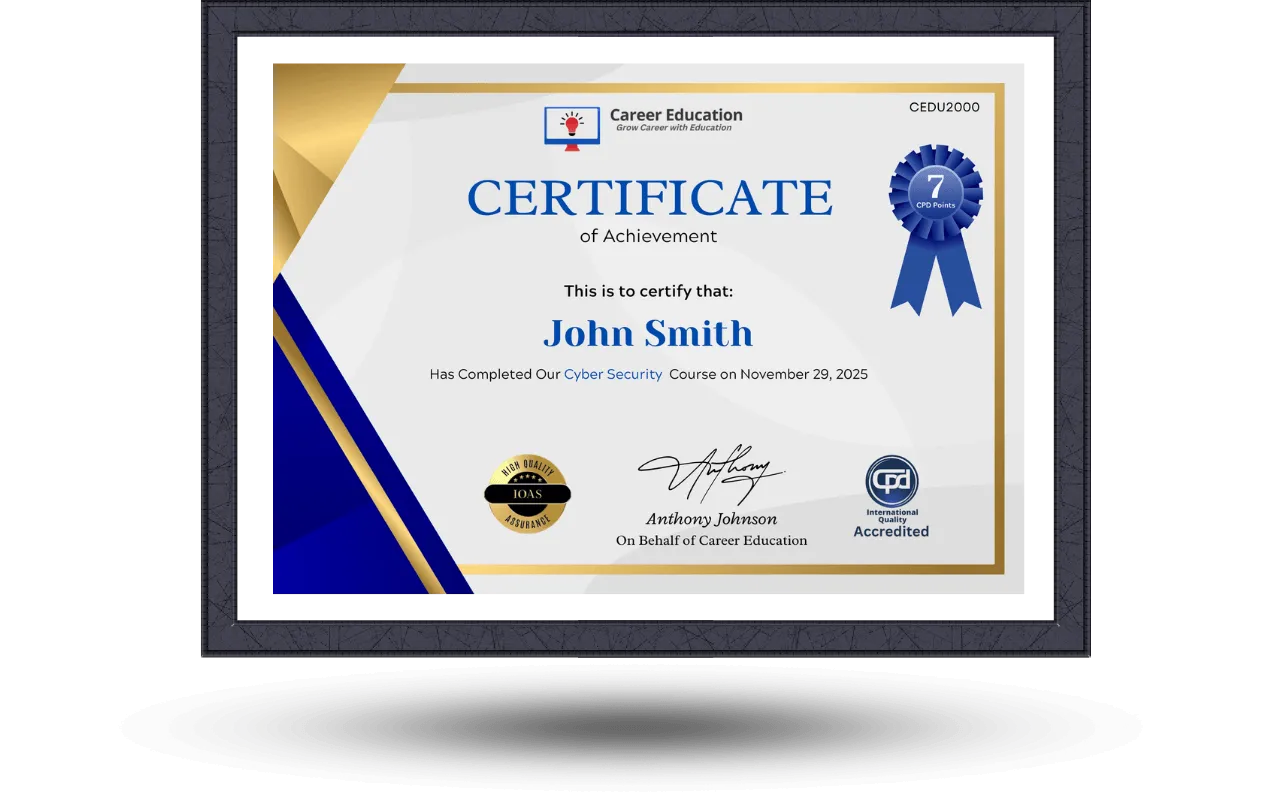
Upon completion of the course, an e-certificate will be downloadable from Khan Education signifying the completion of your course. But, the course is CPD Accredited and after you complete the assignment, you will be eligible to order a certificate accredited by CPD International Quality for £5.99 only. If you want a hardcopy certificate accredited by CPD IQ, you can get it for only £15.99.

Get your Certificate

Similar Courses

Frequently Asked Questions

The lifetime membership includes unlimited access to all courses, resources, and updates for a one-time fee.

You can purchase the membership directly from our website using a secure checkout process.

Yes, selected courses can be downloaded for offline access through our mobile app.

Yes, all future updates and new courses are included at no extra cost.

Yes, we offer a 30-day money-back guarantee if you are not satisfied with the membership.