
94%
OFF
OFF
Safe Work Practices and Engineering Controls
- Lifetime Access
- All Levels
- PDF Certificate
£296
£19
14-Day Money-Back Guarantee
Learn With Confidence








Safe Work Practices and Engineering Controls
Workplace safety is not simply about following rules—it is about creating an environment where hazards are identified early, risks are controlled effectively, and employees have the knowledge to work safely every day. The Safe Work Practices and Engineering Controls course is designed to help learners develop a practical understanding of workplace hazards, risk assessment, engineering controls, and safe working procedures across a range of industrial and professional environments.
Whether you are beginning your career, working in an industrial setting, involved in workplace safety, or looking to strengthen your knowledge of occupational risk management, this course provides valuable insights into how safe work practices and engineering controls can reduce exposure to hazards and support a safer workplace.
Why Learn Safe Work Practices and Engineering Controls?
Every workplace can contain hazards. These may include chemical exposure, electrical risks, excessive noise, vibration, poor workstation design, machinery hazards, and unsafe working procedures. Simply being aware of these hazards is not always enough. Effective safety management requires workers and organisations to understand how hazards can be identified, assessed, and controlled.
The Safe Work Practices and Engineering Controls course focuses on practical approaches to workplace safety. You will explore how engineering controls can help reduce hazards at their source and how appropriate work practices can minimise the likelihood of accidents and injuries.
Rather than focusing only on theoretical concepts, the course helps you understand the relationship between hazard identification, risk assessment, engineering solutions, employee behaviour, and injury prevention.
By completing the course, you can build a stronger foundation for recognising workplace hazards and understanding appropriate methods for controlling occupational risks.
What Will You Learn?
The course covers key areas of workplace health and safety, providing a structured learning experience across seven modules. You will develop knowledge of safe work practices, engineering controls, risk assessment, chemical handling, ergonomics, electrical safety, and noise and vibration control.
Module 1: Introduction to Work Practices and Engineering Controls
The course begins by introducing the fundamental principles of safe work practices and engineering controls.
You will explore why workplace controls are important and how organisations can use different safety measures to reduce exposure to hazards. You will also develop an understanding of the role workers, supervisors, and organisations play in maintaining safe working environments.
This module establishes the foundation for understanding how safe procedures and physical workplace controls can work together.
You will learn to:
-
Understand the fundamentals of safe work practices
-
Recognise the purpose of engineering controls
-
Understand how workplace hazards can affect employees
-
Identify the importance of preventative safety measures
-
Appreciate the relationship between safe procedures and workplace controls
Module 2: Risk Assessment and Hazard Identification
Effective workplace safety begins with recognising hazards before they cause harm. This module introduces the principles of hazard identification and risk assessment.
You will learn how workplace hazards can be identified and assessed systematically. Understanding the difference between a hazard and a risk can help you make more informed decisions when considering workplace safety.
The module also explores how risk assessment can support the selection of appropriate control measures.
You will learn to:
-
Identify common workplace hazards
-
Understand the principles of risk assessment
-
Recognise factors that can increase workplace risk
-
Evaluate potential sources of occupational hazards
-
Understand how risk assessment supports effective control measures
These skills can be particularly valuable in environments where workers may encounter machinery, chemicals, electrical systems, physical hazards, or other occupational risks.
Module 3: Engineering Controls in Industrial Settings
Engineering controls are an important part of effective workplace hazard management. Instead of relying entirely on workers to avoid hazards, engineering controls can be used to remove, isolate, or reduce hazards at their source.
This module explores the role of engineering controls in industrial environments and explains how physical or technical solutions can contribute to workplace safety.
You will develop an understanding of how workplace design, machinery safeguards, ventilation systems, isolation methods, and other engineering approaches can help reduce exposure to hazards.
You will learn to:
-
Understand the purpose of engineering controls
-
Recognise different types of engineering control measures
-
Understand how controls can reduce exposure to hazards
-
Identify opportunities for engineering-based safety improvements
-
Appreciate the importance of designing safer working environments
The knowledge gained from this module can help you understand why engineering solutions are often an important component of a broader workplace safety strategy.
Module 4: Work Practices for Chemical Handling
Chemicals are used across numerous industries, and incorrect handling can create significant workplace risks. Appropriate work practices can help minimise unnecessary exposure and support safer chemical-related activities.
This module focuses on safe work practices associated with chemical handling. You will explore the importance of appropriate procedures, hazard awareness, protective measures, storage considerations, and safe handling practices.
You will learn to:
-
Recognise common hazards associated with chemical handling
-
Understand the importance of safe chemical work practices
-
Identify ways to reduce unnecessary chemical exposure
-
Understand the importance of appropriate storage and handling procedures
-
Appreciate the role of workplace procedures in chemical safety
The objective is to help learners develop a stronger awareness of the principles that support safer chemical-related work activities.
Module 5: Ergonomics and Injury Prevention
Workplace injuries are not always caused by dramatic accidents. Repetitive tasks, awkward working positions, poorly designed workstations, manual handling, and prolonged physical strain can also contribute to discomfort and injury.
This module introduces ergonomics and its role in injury prevention. You will explore how workplace tasks and environments can be designed or adjusted to better support safe and efficient working.
You will learn to:
-
Understand basic ergonomic principles
-
Recognise common ergonomic hazards
-
Identify factors that may contribute to workplace strain
-
Understand the importance of appropriate workstation design
-
Recognise the role of ergonomics in injury prevention
-
Understand how safe work practices can support healthier working conditions
Developing ergonomic awareness can be useful across offices, warehouses, manufacturing facilities, laboratories, workshops, and other working environments.
Module 6: Electrical Safety Practices
Electrical hazards can present serious risks in workplaces where electrical equipment, machinery, tools, or systems are used. Understanding basic electrical safety practices is therefore an important part of overall workplace risk awareness.
This module introduces essential principles of electrical safety and safe working practices.
You will explore common electrical hazards and learn why appropriate procedures, equipment maintenance, isolation, and hazard awareness are important when working around electrical systems.
You will learn to:
-
Recognise common electrical hazards
-
Understand the importance of electrical safety procedures
-
Identify unsafe practices involving electrical equipment
-
Understand the importance of appropriate maintenance and controls
-
Appreciate the role of hazard awareness in reducing electrical risks
The module helps learners develop a stronger foundation for recognising electrical safety concerns within the workplace.
Module 7: Control of Noise and Vibrations
Noise and vibration can be significant occupational hazards, particularly in industrial, construction, manufacturing, engineering, and machinery-based environments.
This module examines the importance of controlling workplace noise and vibration. You will explore how these hazards can be identified and managed through appropriate workplace practices and control measures.
You will learn to:
-
Recognise sources of workplace noise and vibration
-
Understand potential occupational risks associated with excessive exposure
-
Identify approaches for reducing workplace exposure
-
Understand the role of engineering controls in noise management
-
Appreciate the importance of safe working practices around vibrating equipment
By understanding these principles, learners can become more aware of the importance of controlling physical workplace hazards.
Practical Knowledge for Safer Workplaces
One of the key benefits of the Safe Work Practices and Engineering Controls course is its broad coverage of workplace safety principles. Rather than concentrating on one specific hazard, the course introduces several important areas that can influence occupational safety.
You will explore how different control methods can work together to create safer working conditions. Hazard identification can help reveal potential problems, risk assessment can help evaluate their significance, and engineering controls and safe work practices can contribute to reducing exposure.
This approach can help you think more systematically about workplace safety.
Who Can Benefit From This Course?
The Safe Work Practices and Engineering Controls course can be suitable for learners who want to improve their understanding of occupational safety and hazard control.
It may be particularly useful for:
-
Employees working in industrial environments
-
Health and safety learners
-
Supervisors and team leaders
-
Manufacturing and production workers
-
Engineering and technical professionals
-
Construction and maintenance personnel
-
Warehouse and facilities workers
-
Individuals interested in occupational safety
-
Professionals seeking to broaden their workplace safety knowledge
-
Learners preparing for responsibilities involving workplace risk awareness
No matter your current level of experience, the course can provide a structured introduction to important safety concepts.
Develop Valuable Workplace Safety Skills
Completing the Safe Work Practices and Engineering Controls course can help you develop knowledge that is relevant to a wide range of workplace situations.
You can improve your ability to:
Recognise hazards: Develop greater awareness of common workplace risks and understand why early identification matters.
Understand risk assessment: Learn the principles behind evaluating hazards and considering appropriate control measures.
Explore engineering controls: Understand how workplace design, equipment, isolation, ventilation, and other engineering approaches can help reduce exposure to hazards.
Improve chemical safety awareness: Build knowledge of safe work practices associated with chemical handling.
Understand ergonomics: Recognise common ergonomic risks and understand their relationship with injury prevention.
Strengthen electrical safety awareness: Develop a better understanding of electrical hazards and appropriate workplace safety practices.
Recognise noise and vibration hazards: Understand why excessive noise and vibration require appropriate control measures.
These outcomes can support safer decision-making and contribute to a stronger workplace safety culture.
Support a Stronger Safety Culture
A positive safety culture depends on more than policies and documentation. It requires people to understand workplace hazards and recognise the importance of following appropriate procedures.
The Safe Work Practices and Engineering Controls course can help learners develop the knowledge needed to participate more effectively in workplace safety initiatives. Understanding why a control measure is necessary can make it easier to appreciate the importance of applying safe working procedures consistently.
When employees understand hazards, controls, and prevention strategies, they can become more aware of potential risks within their working environment and contribute more effectively to organisational safety objectives.
Improve Your Professional Knowledge
Workplace safety knowledge can be valuable across many industries. Employers and organisations need people who understand the importance of hazard awareness, risk reduction, safe procedures, and preventative controls.
By studying the Safe Work Practices and Engineering Controls course, you can add another area of knowledge to your professional development. The course can complement existing experience in engineering, manufacturing, construction, facilities management, operations, maintenance, or other workplace environments where safety is important.
It can also provide a useful learning foundation for individuals who are considering further study in occupational health and safety, risk management, or related areas.
Learn at Your Own Pace
The course provides a structured learning journey covering seven important areas of workplace safety. You can work through the modules progressively, building your knowledge from fundamental principles through to specific workplace hazards and control strategies.
This makes the course suitable for learners who want to expand their professional knowledge without focusing exclusively on a single workplace hazard.
Take the Next Step Toward Better Workplace Safety Knowledge
Understanding workplace hazards is an important first step toward preventing incidents and creating safer working environments. From risk assessment and engineering controls to chemical handling, ergonomics, electrical safety, noise, and vibration, the Safe Work Practices and Engineering Controls course covers essential concepts that can help you develop a broader understanding of occupational safety.
By completing this course, you can strengthen your knowledge of hazard identification, risk control, and safe working practices while developing skills that can support your personal and professional development.
If you are ready to expand your workplace safety knowledge and gain a stronger understanding of engineering controls and preventative work practices, enrol in the Safe Work Practices and Engineering Controls course today and take a practical step toward becoming more safety-aware and risk-conscious in the workplace.
Course Modules
Course Content
Module 1_ Introduction to Work Practices and Engineering Controls.
-
Lesson 1_ Introduction to Work Practices and Engineering Controls.
Module 2_ Risk Assessment and Hazard Identification.
Module 3_ Engineering Controls in Industrial Settings.
Module 4_ Work Practices for Chemical Handling.
Module 5 – Ergonomics and Injury Prevention.
Module 6_ Electrical Safety Practices.
Module 7_ Control of Noise and Vibrations.
What our students say
Excellent
4.9 average
158 Reviews

Earn an Accredited Certificate
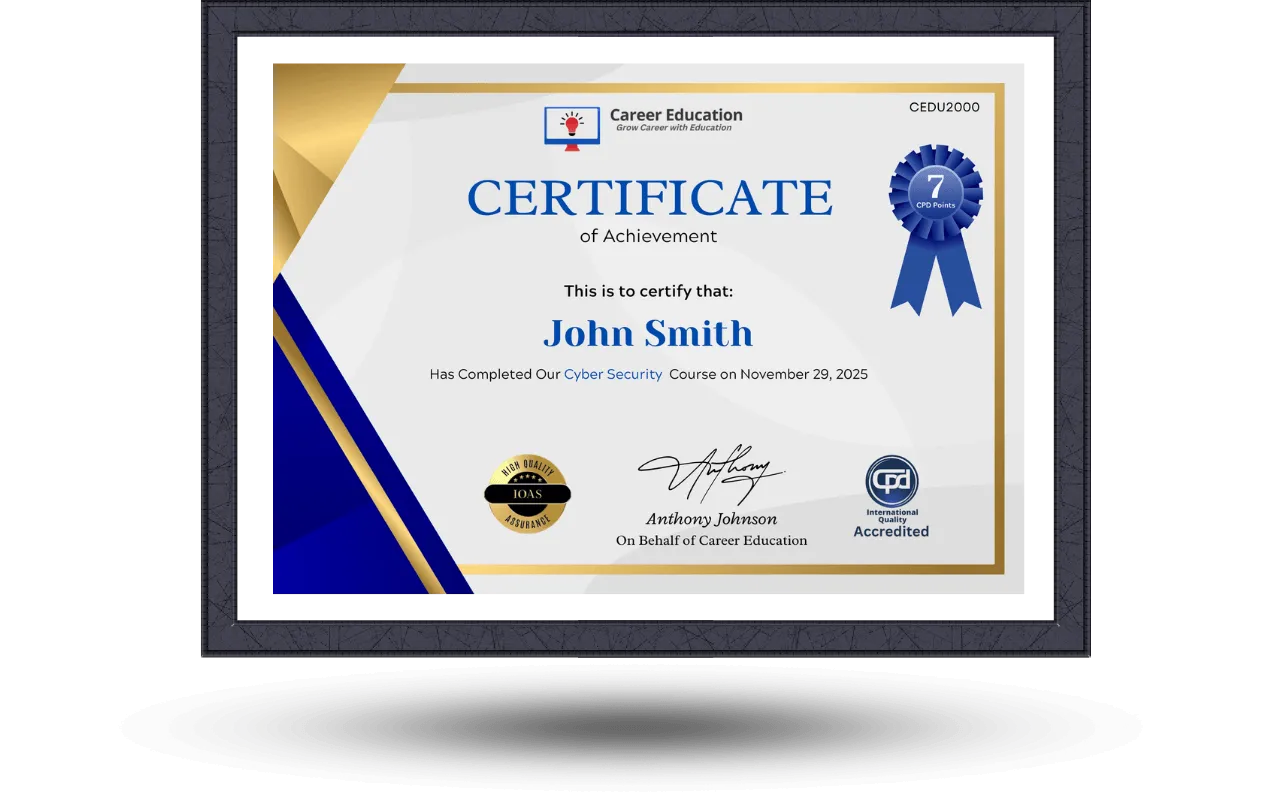
Upon completion of any course, all students are entitled to a CPD IQ Accredited e-certificate that will be issued by Career Education signifying the completion of your course.
After you complete the course and assignment, you will be eligible to order a free certificate accredited by CPD International Quality by completing the form below.
Hardcopy certificates and transcripts are also available for a small additional fee. More information is disclosed upon course completion.
Similar Courses


Frequently Asked Questions
The lifetime membership includes unlimited access to all courses, resources, and updates for a one-time fee.
You can purchase the membership directly from our website using a secure checkout process.
Yes, selected courses can be downloaded for offline access through our mobile app.
Yes, all future updates and new courses are included at no extra cost.
Yes, we offer a 30-day money-back guarantee if you are not satisfied with the membership.