
94%
OFF
OFF
Duty of Care: Management Responsibilities and Best Practices
- Lifetime Access
- All Levels
- PDF Certificate
£296
£19
14-Day Money-Back Guarantee
Learn With Confidence









Duty of Care: Management Responsibilities and Best Practices
In health and social care, management is about more than overseeing daily operations. Effective managers have a responsibility to protect people, promote wellbeing, respect individual choices, and help create environments where everyone receives safe, dignified, and appropriate support. Understanding these responsibilities is essential for anyone involved in managing care services or supporting teams that work directly with individuals.
The Duty of Care: Management Responsibilities and Best Practices course provides practical knowledge to help learners understand the principles of duty of care and apply them effectively in professional care environments. The course focuses on person-centred approaches, individualized support planning, health and wellness, and the importance of positive social connections.
Whether you are developing your management knowledge, working in a care setting, supporting a care team, or looking to strengthen your professional skills, this course can help you build a clearer understanding of the responsibilities involved in delivering safe, respectful, and effective care.
What Is Duty of Care?
Duty of care is a fundamental principle across health and social care. It refers to the responsibility professionals and organisations have to take reasonable steps to protect individuals from avoidable harm while providing appropriate support.
For managers, duty of care involves creating systems, expectations, and working practices that help staff provide safe and respectful services. It also means understanding the needs of individuals, supporting appropriate decision-making, promoting wellbeing, and responding responsibly when concerns arise.
The Duty of Care: Management Responsibilities and Best Practices course explores these principles from a management perspective. Rather than focusing solely on theory, the course helps learners understand how duty of care connects with everyday responsibilities and person-centred practice.
Why Study Duty of Care: Management Responsibilities and Best Practices?
Managers and care professionals often have to balance different needs and responsibilities. Individuals may have different preferences, abilities, health needs, communication styles, and personal goals. Effective support therefore requires a flexible approach rather than a one-size-fits-all solution.
This course can help learners develop the knowledge needed to approach these responsibilities more effectively.
By completing the course, learners can develop their understanding of:
-
The fundamental principles of duty of care
-
Management responsibilities within care environments
-
Person-centred care and support
-
Individualized support planning
-
Health and wellness considerations
-
Social connections and relationships
-
Respectful and individual-focused approaches to care
-
The importance of promoting independence and wellbeing
These areas can help professionals contribute more confidently to safe, supportive, and person-centred care environments.
Course Learning Outcomes
The Duty of Care: Management Responsibilities and Best Practices course is designed with practical outcomes in mind.
By the end of the course, learners should be able to:
-
Explain the meaning and importance of duty of care
-
Recognize key responsibilities associated with managing care and support
-
Understand the importance of person-centred approaches
-
Identify why individual needs should influence support planning
-
Appreciate the relationship between care, health, and overall wellbeing
-
Understand how social connections can contribute to quality of life
-
Apply core principles when considering individual support needs
-
Develop greater confidence in professional care-related decision-making
-
Recognize the importance of respectful, individualized support
-
Contribute to a culture focused on safety, dignity, wellbeing, and quality care
Module 1: Introduction to Duty of Care
The first module introduces the core concept of duty of care and establishes a foundation for the rest of the course.
Learners will explore what duty of care means in a professional care context and why it is an important responsibility for managers and care teams. Understanding the concept helps professionals recognize their role in protecting individuals, supporting their wellbeing, and maintaining appropriate standards of practice.
The module also provides an opportunity to consider how duty of care can influence everyday decisions and professional responsibilities.
For managers, having a strong understanding of duty of care can support better leadership and help establish expectations for safe and respectful working practices. It can also help managers understand the importance of creating an environment where staff take individual needs and wellbeing seriously.
By completing this module, learners can build a strong foundation for understanding their responsibilities and the principles that underpin effective care management.
Module 2: Person-Centred Care and Support
Every individual is different. Their preferences, values, experiences, abilities, and goals can influence the type of support they need. Person-centred care recognizes these differences and places the individual at the heart of care and support.
This module explores the importance of person-centred care and how it can contribute to better experiences and outcomes for individuals.
Learners will consider why care should be tailored to the person rather than relying on standardized approaches. They will develop a greater appreciation of listening to individuals, respecting their choices, and considering their preferences when support is provided.
For managers, understanding person-centred care is particularly valuable because leadership decisions can influence how teams deliver services. Managers can help encourage working environments where staff understand the importance of dignity, respect, choice, and individual needs.
The module can therefore help learners develop a stronger understanding of how person-centred principles can become part of everyday professional practice.
Module 3: Individualized Support Planning
Effective support begins with understanding the individual.
This module focuses on individualized support planning and explores why personal circumstances and needs should be considered when developing appropriate support.
A well-considered support plan can help professionals understand what an individual needs, what matters to them, and how support can be delivered appropriately. Individualized planning can also help care teams work with greater consistency and clarity.
Learners will explore the importance of taking individual circumstances into account and understanding that needs can change over time. This encourages a flexible approach to care and helps professionals recognize the importance of reviewing support as circumstances develop.
For managers, knowledge of individualized support planning can support better coordination and communication within teams. It can also help managers encourage staff to focus on meaningful outcomes rather than simply completing routine tasks.
By the end of this module, learners should have a clearer understanding of why individualized approaches are important for effective care and support.
Module 4: Health and Wellness
Supporting individuals involves more than responding to immediate care needs. Health and wellness are important components of overall quality of life.
This module explores the relationship between care, health, and wellbeing. Learners will consider how professionals can support a broader understanding of wellness while keeping individual circumstances and preferences in mind.
Health and wellness can include a range of factors that influence how a person feels and functions. A person-centred approach considers these factors in the context of the individual’s needs and circumstances.
For managers, understanding health and wellness can help when developing supportive working practices and encouraging teams to consider the whole person. It can also reinforce the importance of creating environments that promote wellbeing alongside appropriate care and support.
This module helps learners appreciate that effective duty of care includes consideration of an individual’s broader wellbeing and not simply their immediate needs.
Module 5: Social Connections and Relationships
Human wellbeing can be influenced by meaningful relationships and opportunities for social connection. Family, friends, colleagues, community groups, and other relationships can all contribute to a person’s sense of belonging and quality of life.
The final module explores the importance of social connections and relationships within care and support.
Learners will consider why social wellbeing should be recognized as part of person-centred support. They will gain a better understanding of how relationships and social opportunities can contribute to an individual’s overall experience.
From a management perspective, this knowledge can help professionals appreciate the importance of supporting environments that respect individuals’ relationships and encourage appropriate opportunities for social engagement.
The module reinforces the wider message of the course: effective care should consider the individual as a whole.
Who Can Benefit From This Course?
The Duty of Care: Management Responsibilities and Best Practices course can be useful for a wide range of learners interested in care management and professional responsibilities.
It may be particularly relevant to:
-
Care managers and aspiring care managers
-
Health and social care professionals
-
Team leaders and supervisors
-
Care coordinators
-
Support workers
-
Individuals preparing for management responsibilities
-
Professionals seeking to strengthen their care knowledge
-
Learners interested in person-centred care
-
Anyone looking to understand management responsibilities within care settings
The course can also be useful for individuals who want to improve their understanding before progressing into roles involving greater responsibility for care teams or service delivery.
Develop More Confident Care Management Knowledge
Effective management can have an important influence on the quality of care individuals receive. Managers help establish expectations, support staff, encourage good practices, and contribute to environments where individuals are treated with dignity and respect.
The Duty of Care: Management Responsibilities and Best Practices course brings together essential concepts that can help learners develop a more complete understanding of these responsibilities.
From the foundations of duty of care to person-centred support, individualized planning, health and wellness, and social relationships, the course provides a broad learning experience focused on the individual.
Rather than viewing care as a collection of routine tasks, learners can develop an understanding of how professional responsibilities connect with safety, wellbeing, choice, dignity, and quality of life.
Build Skills That Support Better Outcomes
Professional development is an important part of building confidence in health and social care. As responsibilities increase, having a strong understanding of fundamental care principles can help professionals approach their roles with greater awareness.
This course gives learners an opportunity to strengthen their knowledge in several important areas while considering how those principles relate to management responsibilities.
Whether your goal is to enhance your existing professional knowledge, prepare for greater responsibility, or develop a stronger understanding of person-centred practice, the course provides valuable learning across key areas of care management.
The focus on outcomes means learners can move beyond simply understanding terminology and develop knowledge that can inform their professional approach.
Enrol in Duty of Care: Management Responsibilities and Best Practices
Good care management starts with understanding responsibility.
The Duty of Care: Management Responsibilities and Best Practices course provides a structured introduction to the principles and practices that can help support safe, respectful, individualized, and wellbeing-focused care.
Through five focused modules, learners explore duty of care, person-centred support, individualized planning, health and wellness, and social relationships. Together, these topics provide a valuable foundation for understanding how professional responsibilities can contribute to better care experiences and outcomes.
If you want to strengthen your knowledge of duty of care and develop a clearer understanding of management responsibilities in care environments, this course is a practical step toward your professional development.
Enrol today and build the knowledge needed to support person-centred care, promote wellbeing, and approach care management responsibilities with greater confidence.
Course Modules
Course Content
Module 1_ Introduction to Duty of Care.
-
Lesson 1_ Introduction to Duty of Care.
Module 2_ Person-centered care and support.
Module 3_ Individualized support planning.
Module 4_ Health and wellness.
Module 5_ Social connections and relationships.
What our students say
Excellent
4.9 average
158 Reviews

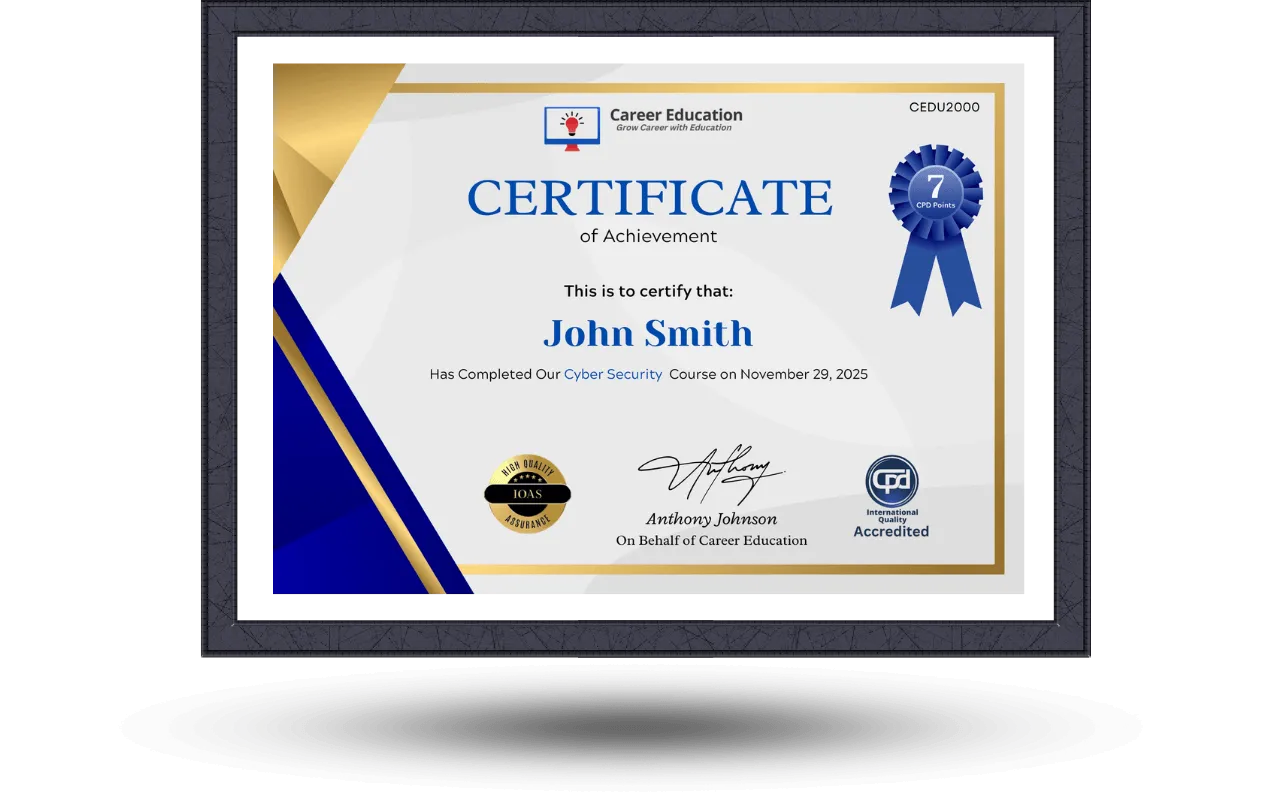
Earn an Accredited Certificate
Upon completion of any course, all students are entitled to a CPD IQ Accredited e-certificate that will be issued by Career Education signifying the completion of your course.
After you complete the course and assignment, you will be eligible to order a free certificate accredited by CPD International Quality by completing the form below.
Hardcopy certificates and transcripts are also available for a small additional fee. More information is disclosed upon course completion.
Similar Courses




Frequently Asked Questions
The lifetime membership includes unlimited access to all courses, resources, and updates for a one-time fee.
You can purchase the membership directly from our website using a secure checkout process.
Yes, selected courses can be downloaded for offline access through our mobile app.
Yes, all future updates and new courses are included at no extra cost.
Yes, we offer a 30-day money-back guarantee if you are not satisfied with the membership.