
94%
OFF
OFF
Aviation Human Factors and Crew Resource Management Diploma
- Lifetime Access
- All Levels
- PDF Certificate
£296
£19
14-Day Money-Back Guarantee
Learn With Confidence









Aviation Human Factors and Crew Resource Management Diploma
Build the Skills to Improve Safety, Teamwork, and Decision-Making in Aviation
Aviation is one of the most safety-critical industries in the world, where effective communication, sound judgement, teamwork, and awareness can have a direct impact on operational safety. While aircraft technology, procedures, and systems continue to advance, human performance remains a crucial part of safe and efficient aviation operations.
The Aviation Human Factors and Crew Resource Management Diploma is designed to help learners develop a practical understanding of the human factors that influence aviation safety and performance. The course explores how people interact with aircraft, technology, procedures, organisations, and one another, while introducing the principles of Crew Resource Management (CRM) and their importance in aviation environments.
Rather than focusing only on theoretical concepts, the course is designed around practical outcomes. You will explore how human factors contribute to accidents and incidents, how organisational conditions can influence performance, and how effective CRM can strengthen communication and teamwork. You will also develop knowledge of situational awareness and decision-making, two essential capabilities for managing complex aviation situations.
Whether you are developing your aviation knowledge, preparing for further professional training, or seeking to strengthen your understanding of aviation safety and human performance, this diploma can provide a valuable foundation.
Why Study Aviation Human Factors and Crew Resource Management?
Aviation safety depends on more than technical expertise. Even highly trained professionals operate within teams, organisations, procedures, and constantly changing environments. Fatigue, workload, communication difficulties, poor coordination, distractions, assumptions, and decision-making challenges can all influence human performance.
Understanding these factors can help aviation professionals recognise potential risks before they develop into more serious problems.
Through the Aviation Human Factors and Crew Resource Management Diploma, you can develop knowledge that supports:
-
Better understanding of human performance in aviation
-
More effective communication and teamwork
-
Stronger awareness of operational risks
-
Improved situational awareness
-
More structured decision-making
-
Greater understanding of accident and incident factors
-
Better appreciation of organisational influences on safety
-
More effective application of CRM principles
The course is particularly useful for learners who want to understand how human behaviour and organisational systems interact with aviation safety.
What Will You Learn?
The Aviation Human Factors and Crew Resource Management Diploma covers six focused modules that progressively develop your knowledge of human factors, CRM, safety, awareness, and decision-making.
Module 1: Introduction to Aviation Human Factors and CRM
The course begins with an introduction to the fundamental concepts of aviation human factors and Crew Resource Management.
You will explore what human factors means within an aviation context and why understanding human performance is essential for safe operations. The module introduces the relationship between people, equipment, procedures, working environments, and organisational systems.
You will also be introduced to Crew Resource Management and its role in helping aviation teams use available resources effectively. CRM extends beyond simply working together; it involves communication, coordination, leadership, teamwork, problem-solving, and effective use of information.
By completing this module, you can:
-
Develop a foundation in aviation human factors
-
Understand the purpose of CRM
-
Recognise the relationship between human performance and safety
-
Understand how people interact with aviation systems
-
Appreciate the importance of teamwork and communication
This foundation prepares you to explore the wider organisational and operational influences on aviation performance.
Module 2: Organizational Factors in Aviation Human Factors and CRM
Human performance does not occur in isolation. Aviation professionals work within organisations that establish policies, procedures, schedules, cultures, communication systems, and operational expectations.
This module examines how organisational factors can influence human performance and aviation safety. You will consider how workplace structures and organisational practices may support or challenge effective performance.
Understanding these influences can help you look beyond individual mistakes and consider the wider circumstances surrounding human performance.
By completing this module, you can:
-
Understand organisational influences on human factors
-
Recognise how workplace conditions can affect performance
-
Explore the relationship between organisational practices and safety
-
Understand why human performance should be considered within a wider system
-
Develop a broader perspective on aviation safety
This systems-based understanding can help learners assess aviation risks more comprehensively.
Module 3: Human Factors in Aviation Accidents and Incidents
Accidents and incidents can have multiple contributing factors. Technical problems, environmental conditions, procedures, communication, decision-making, workload, organisational practices, and human performance may interact in complex ways.
This module explores the role of human factors in aviation accidents and incidents. You will develop a greater understanding of how human factors can contribute to undesirable outcomes and why analysing these factors is important for safety improvement.
The objective is not simply to identify individual errors, but to understand the conditions and contributing factors that can influence human performance.
By completing this module, you can:
-
Understand the role of human factors in aviation accidents and incidents
-
Recognise potential human performance contributors
-
Appreciate the importance of learning from safety events
-
Develop a broader approach to accident and incident analysis
-
Understand why prevention requires attention to both people and systems
This knowledge can support a stronger safety mindset and encourage proactive consideration of potential risks.
Module 4: Crew Resource Management
CRM is a central component of modern aviation safety because aviation operations often require individuals to work effectively as part of a team.
This module explores the principles and practical importance of Crew Resource Management. You will examine how communication, coordination, teamwork, leadership, and resource utilisation can influence operational effectiveness.
Effective CRM can help teams share information, identify concerns, coordinate tasks, and respond appropriately when circumstances change. It can also encourage individuals to contribute information and raise concerns when necessary.
By completing this module, you can:
-
Understand core CRM principles
-
Recognise the importance of effective team communication
-
Develop greater awareness of teamwork and coordination
-
Understand the importance of leadership and cooperation
-
Appreciate how CRM can contribute to aviation safety
-
Apply CRM concepts to aviation-related situations
The knowledge gained from this module can help you understand how strong team performance contributes to safer and more efficient operations.
Module 5: Situational Awareness
Situational awareness is essential when operating in environments where conditions can change rapidly. Aviation professionals need to gather relevant information, understand what that information means, and anticipate how situations may develop.
This module focuses on the importance of situational awareness within aviation human factors and CRM. You will explore how awareness can influence communication, teamwork, risk recognition, and decision-making.
You will also develop an understanding of why distractions, workload, incomplete information, assumptions, and communication problems can affect awareness.
By completing this module, you can:
-
Understand the importance of situational awareness
-
Recognise factors that can influence awareness
-
Develop a more structured approach to processing information
-
Understand the relationship between awareness and decision-making
-
Recognise the importance of maintaining awareness in changing situations
These skills can contribute to more informed and timely responses in operational environments.
Module 6: Decision Making
Aviation professionals frequently need to make decisions using available information, procedures, experience, and professional judgement. Some decisions may need to be made quickly, while others require careful evaluation of available options.
The final module examines decision-making within the context of aviation human factors and CRM. You will explore the importance of structured thinking, information assessment, communication, and awareness when making operational decisions.
Understanding decision-making as part of a wider human factors system can help learners recognise the conditions that may affect judgement and response.
By completing this module, you can:
-
Understand key principles of decision-making in aviation
-
Recognise factors that can influence judgement
-
Appreciate the connection between situational awareness and decisions
-
Understand how communication supports effective decision-making
-
Develop a more systematic approach to evaluating situations
By the end of the course, you will have explored how human factors, organisational influences, teamwork, situational awareness, and decision-making connect to aviation safety.
Develop a Stronger Aviation Safety Mindset
One of the key outcomes of the Aviation Human Factors and Crew Resource Management Diploma is developing a more comprehensive understanding of safety.
Aviation incidents rarely result from a single isolated factor. Human performance is influenced by the environment, available information, organisational conditions, workload, communication, procedures, technology, and interactions between team members.
By studying these connections, you can develop a more informed approach to aviation safety.
The course encourages you to consider questions such as:
-
What factors may influence human performance?
-
How can communication affect team effectiveness?
-
How can organisational conditions influence safety?
-
What role does situational awareness play in operational performance?
-
How can teams make better use of available resources?
-
What factors can influence aviation decision-making?
-
What can be learned from accidents and incidents?
These perspectives can be valuable for anyone interested in the human side of aviation operations.
Who Is This Course For?
The Aviation Human Factors and Crew Resource Management Diploma can be suitable for learners interested in aviation safety, human performance, operational teamwork, and CRM.
It may be particularly relevant to:
-
Aviation professionals seeking to expand their knowledge
-
Learners interested in aviation safety
-
Individuals exploring aviation-related careers
-
Aviation management and operations learners
-
Professionals interested in human factors
-
Individuals seeking knowledge of Crew Resource Management
-
Learners interested in safety and risk awareness
-
Professionals who want to strengthen their understanding of aviation teamwork and decision-making
The course can also serve as a useful learning opportunity for anyone who wants to understand the human and organisational dimensions of aviation safety.
Practical Knowledge for Real-World Aviation Environments
The value of the Aviation Human Factors and Crew Resource Management Diploma lies in connecting concepts to real-world aviation challenges.
You will explore how human performance affects operational outcomes and how effective teamwork can support safety. You will also develop an understanding of how situational awareness and decision-making work together when responding to changing circumstances.
Instead of viewing aviation safety solely through a technical lens, the course encourages you to consider the complete operational picture.
This broader perspective can help you communicate more effectively, recognise potential human factors concerns, understand team dynamics, and approach aviation situations with greater awareness.
Strengthen Your Professional Knowledge
Professional development is particularly important in industries where safety, communication, and effective decision-making are essential.
Completing the Aviation Human Factors and Crew Resource Management Diploma can demonstrate your commitment to expanding your knowledge of aviation human factors and CRM. It can also help you build a stronger foundation for continued learning in aviation safety, operations, management, and related areas.
The course provides an opportunity to develop knowledge that complements technical and professional training.
Whether your goal is to enhance your existing aviation knowledge or prepare for further development, the learning outcomes can help you approach aviation-related responsibilities with greater confidence and awareness.
Your Learning Outcomes
After completing the Aviation Human Factors and Crew Resource Management Diploma, you will have developed knowledge of:
-
Aviation human factors and their importance
-
The fundamental principles of Crew Resource Management
-
Organisational influences on human performance
-
Human factors associated with aviation accidents and incidents
-
Effective teamwork and resource management
-
Situational awareness and its role in aviation
-
Factors influencing aviation decision-making
-
The relationship between communication, awareness, teamwork, and safety
Most importantly, you will gain a stronger understanding of how people and organisational systems contribute to aviation safety.
Take the Next Step in Your Aviation Learning Journey
Aviation depends on people who can communicate effectively, work collaboratively, remain aware of changing circumstances, and make informed decisions. Understanding human factors and Crew Resource Management is therefore an important part of developing a comprehensive aviation safety perspective.
The Aviation Human Factors and Crew Resource Management Diploma gives you the opportunity to explore these critical areas through a structured six-module learning experience.
From the fundamentals of aviation human factors to organisational influences, accident and incident factors, CRM, situational awareness, and decision-making, the course provides a broad foundation for understanding human performance in aviation.
If you want to strengthen your knowledge of aviation safety, teamwork, human performance, and operational decision-making, this course can help you take a meaningful step forward.
Enrol in the Aviation Human Factors and Crew Resource Management Diploma today and build knowledge that can support safer, more effective, and more informed aviation operations.
Course Modules
Course Content
Module 1 Introduction to Aviation Human Factors and CRM.
-
Lesson 1 Introduction to Aviation Human Factors and CRM.
Module 2 Organizational Factors in Aviation Human Factors and CRM.
Module 3 Human Factors in Aviation Accidents and Incidents.
Module 4 Crew Resource Management.
Module 5 Situational Awareness.
Module 6 Decision Making.
What our students say
Excellent
4.9 average
158 Reviews

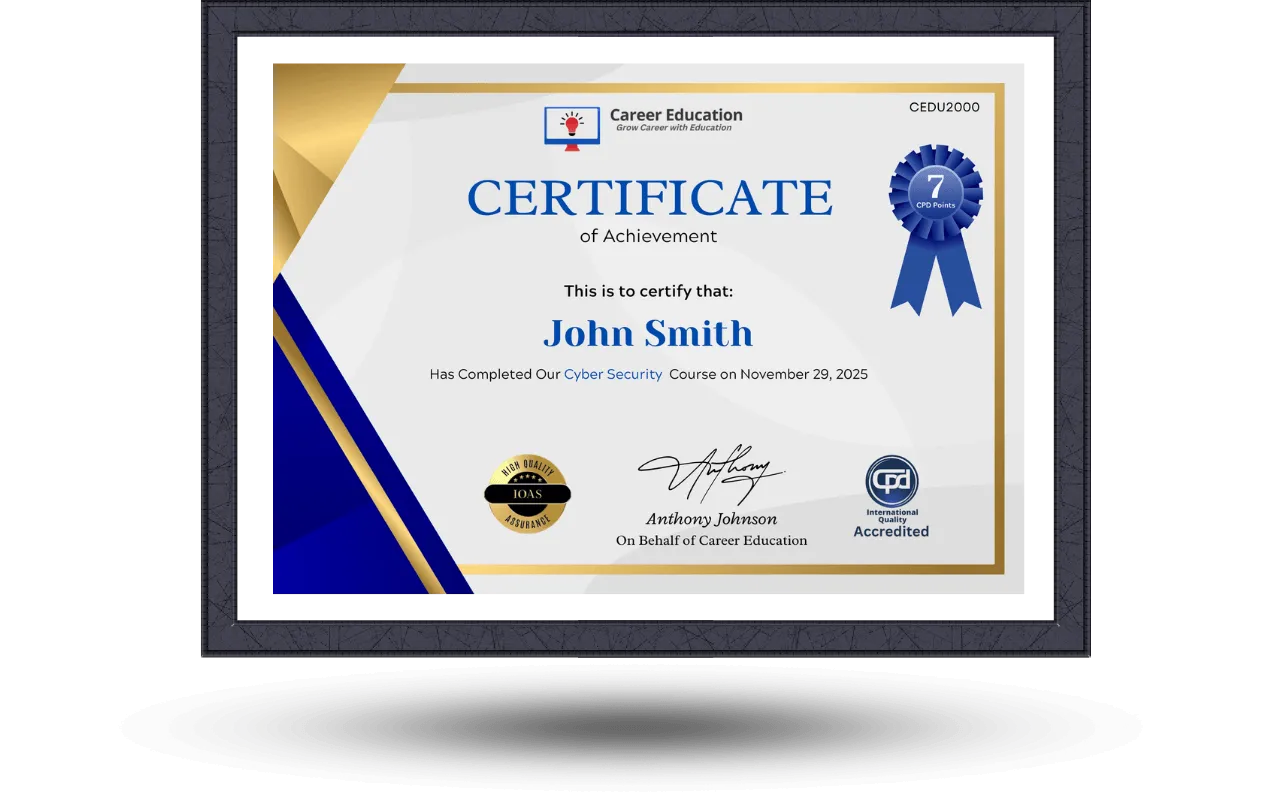
Earn an Accredited Certificate
Upon completion of any course, all students are entitled to a CPD IQ Accredited e-certificate that will be issued by Career Education signifying the completion of your course.
After you complete the course and assignment, you will be eligible to order a free certificate accredited by CPD International Quality by completing the form below.
Hardcopy certificates and transcripts are also available for a small additional fee. More information is disclosed upon course completion.
Similar Courses


Frequently Asked Questions
The lifetime membership includes unlimited access to all courses, resources, and updates for a one-time fee.
You can purchase the membership directly from our website using a secure checkout process.
Yes, selected courses can be downloaded for offline access through our mobile app.
Yes, all future updates and new courses are included at no extra cost.
Yes, we offer a 30-day money-back guarantee if you are not satisfied with the membership.