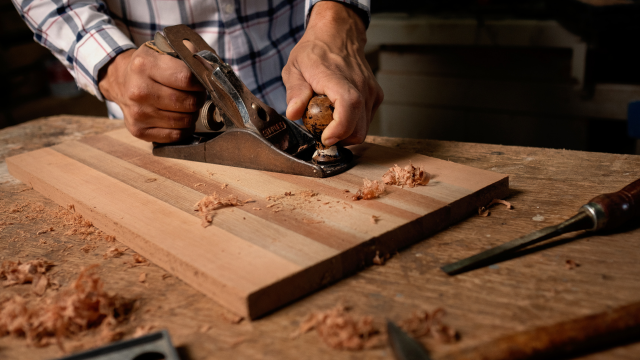


What is the difference between carpentry and joinery? In simple terms, carpenters generally install, repair and construct timber components at a building or customer’s premises, while joiners generally manufacture timber components in a workshop before those items are taken to the site.
A carpenter might fit floor joists, roof structures, doors, skirting boards, partitions or kitchen units. A joiner might manufacture a staircase, window frame, door set or other architectural component using detailed drawings and workshop machinery.
That distinction is useful, but it is not absolute. Both trades work with timber and manufactured wood products. Both require accurate measurement, technical drawings, safe tool use and an understanding of how components fit into a completed building. Some skilled workers perform both types of work, and employers sometimes use “carpenter”, “joiner” or “carpenter and joiner” interchangeably.
For beginners, the best way to understand carpentry course vs joinery is to compare where the work happens, what is produced and how the finished item is used. This guide explains those differences, the skills involved, available UK training routes and how to choose a suitable carpentry course.
Carpentry and joinery in one simple example
Imagine that a house needs a new staircase.
An architectural or bench joiner may receive the drawings, select the materials, calculate dimensions and manufacture the staircase in a controlled workshop. The work could involve preparing individual parts, forming joints, assembling sections and checking that the finished staircase matches the specification.
The staircase is then transported to the property. A site carpenter positions it, makes any permitted adjustments, fixes it securely and coordinates the installation with the surrounding floors, walls and other building work.
The joiner makes the architectural component. The carpenter integrates that component into the building.
The same broad pattern can apply to doors and windows. A joiner may manufacture the frame, door leaf or window unit, while a carpenter fits it into the building and completes the surrounding site work. In practice, responsibilities vary according to the employer, project and worker’s skills.
What is carpentry?
carpentry course is skilled construction work involving the preparation, installation, maintenance and repair of timber and wood-based building components.
Carpenters normally work on construction sites, in occupied buildings or at customers’ premises. Their work must respond to real site conditions. Floors may be uneven, walls may not be perfectly square and existing buildings may differ from the drawings. A carpenter therefore needs practical judgement as well as accurate technical ability.
Skills England describes a site carpenter as someone who prepares and installs components such as doors, straight staircases, wall and floor units, structural carpentry course and roof structures on building sites or in domestic and commercial premises.
People who search for “what carpentry do” are usually asking what carpenters do from day to day. Typical work can include discussing instructions, interpreting drawings, measuring materials, fitting structural components, installing doors and internal finishes, repairing damaged woodwork and coordinating with other construction trades.
The National Careers Service lists tasks such as cutting timber for floors, doors, skirting and window frames; making and fitting staircases and roof timbers; installing cabinets and shelving; constructing timber supports for concrete; and fitting interiors in commercial premises.
First-fix carpentry
First-fix carpentry course generally takes place during the earlier structural stages of construction, before surfaces and decorative finishes are completed.
Depending on the project, it may involve floor joists, roof structures, timber frames, stud partitions, door linings and structural flooring. Much of the work will later be concealed by plasterboard, flooring or finishes, but its accuracy affects everything installed afterwards.
A poorly positioned door lining can create difficulties when the door is hung. Inaccurate floor or wall construction can affect finishes, furniture and other trades. First-fix work therefore requires careful setting out and constant reference to plans and levels.
Second-fix carpentry
Second-fix carpentry course usually follows plastering and other major internal work. It includes visible components and finishes such as doors, architraves, skirting boards, handrails, shelving and fitted units.
The work requires technical accuracy and attention to appearance. Joints, gaps and fixing positions may remain visible when the building is handed over, so small errors can noticeably reduce the quality of the finished room.
Some workers specialise mainly in first fix or second fix, while others carry out both.
Maintenance and refurbishment carpentry
Carpententers also work in existing homes, hospitals, schools, offices and public buildings. Maintenance work might involve repairing doors, replacing damaged flooring, adjusting cabinets or renewing parts of a timber structure.
Refurbishment can be more unpredictable than new construction because the worker must understand what is already present. There may be limited access, concealed damage or a need to preserve surrounding finishes.
What is joinery?
Joinery is the skilled manufacture of timber components by joining prepared pieces together to form a finished product.
Joiners normally work in workshops where they can use benches, templates, specialist hand tools and fixed machinery. A controlled environment makes it possible to produce components to precise dimensions and repeat a design where several identical items are required.
Skills England describes an architectural joiner as someone who sets out, marks out and manufactures products including doors, windows, straight staircases and associated ironmongery.
Joiners may produce standard building components or bespoke items designed for a particular project. Their work can range from straightforward door frames to complex staircases, shop interiors and specialist architectural woodwork.
Architectural and bench joinery
The terms “architectural joiner” and “bench joiner” are often used for workshop-based tradespeople who manufacture building components.
The work begins with drawings and specifications. The joiner must understand dimensions, materials, tolerances, joints, finishes and the relationship between the product and the building into which it will be installed.
City & Guilds identifies bench joinery skills including producing setting-out details, marking out from those details and manufacturing bench-joinery products. Its wider carpentry course and joinery provision also recognises site carpentry, shopfitting joinery and wood machining as separate trade areas.
Shopfitting joinery
Shopfitting joinery involves manufacturing internal or external components for shops, restaurants, hotels, offices and other commercial environments.
The work may be highly customised because the interior must reflect a particular layout, brand or customer experience. Joiners may need to coordinate timber products with glass, metal, lighting, electrical services and specialist finishes.
The final installation may be completed by the same business, a site carpentry course team or specialist shopfitters.
Bespoke joinery
Bespoke joinery is made for a specific opening, building or design rather than produced as a general standard item.
Examples can include an unusual staircase, traditional window, fitted library, decorative screen or reproduction component for a historic property.
Bespoke work demands high levels of setting out, material knowledge and quality control. It may also require an understanding of traditional methods alongside modern manufacturing equipment.
carpentry course vs joinery: the main differences
The following comparison describes the traditional distinction. Actual job descriptions may combine responsibilities.
| Area | Carpentry | Joinery |
| Main workplace | Construction sites, buildings and customers’ premises | Workshop or manufacturing environment |
| Main purpose | Install, construct, maintain and repair building components | Manufacture timber components before installation |
| Typical work | Roofs, floors, partitions, doors, skirting and fitted units | Windows, doors, staircases, frames and bespoke products |
| Working conditions | Variable weather, access and existing site conditions | More controlled working environment |
| Main challenge | Adapting components accurately to the building | Producing components accurately from drawings |
| Common title | Site carpenter | Architectural joiner or bench joiner |
| Relationship to the project | Fits products into the structure and finishes the site work | Creates products that will become part of the structure or interior |
The practical difference can be summarised as manufacture versus installation. However, both trades may measure, cut, shape, assemble, fit and repair wood-based products.
A small building company may employ one experienced person to make a simple item in a workshop and fit it on site. A large manufacturer may separate design, machining, assembly, finishing and installation among different teams.
Job titles should therefore be interpreted through the actual duties rather than the title alone.
Is joinery part of carpentry?
Joinery is closely related to carpentry course and is often treated as a specialism within the wider wood-trades or construction field.
The current Level 2 apprenticeship standard in England combines the occupations under the title carpentry course and Joinery but provides two options: Site Carpenter and Architectural Joiner. This reflects their common technical foundation and different occupational outcomes.
Both pathways require workers to understand materials, drawings, measurements, tools, health and safety, quality requirements and the wider construction process. The difference becomes clearer when learners begin applying those common skills to site installation or workshop manufacture.
It is therefore reasonable to describe carpentry course and joinery as related trades rather than completely separate professions.
How is woodworking different?

carpentry course & woodworking are sometimes used as though they mean the same thing, but woodworking is the broader term.
Woodworking can include carpentry, joinery, cabinetmaking, furniture making, carving, turning and recreational projects. A woodworker may make decorative or functional objects without working in construction.
carpentry course is more closely connected to buildings and construction. Joinery also serves construction but concentrates on manufactured architectural components.
Someone making a small decorative box as a hobby is doing woodworking. Someone fitting a timber roof is carrying out carpentry. Someone manufacturing a staircase for installation in a building is undertaking joinery.
A general woodworking course can be an enjoyable introduction to tools, joints and materials. It should not automatically be treated as occupational training for site carpentry course or architectural joinery.
Skills shared by carpenters and joiners
The trades share many foundation skills. A learner who develops them properly can later specialise with a clearer understanding of both pathways.
What is the difference between carpentry course and joinery? & Measurement and setting out
Accurate measurement is essential. Workers must interpret dimensions, mark materials clearly and understand how individual components relate to the complete structure.
Accuracy means more than reading a tape measure. It includes checking references, accounting for the position of other components and recognising when a drawing or site condition needs clarification.
Reading drawings and specifications
Carpenters and joiners work from plans, schedules, sketches and written specifications. Beginners need to understand scales, symbols, dimensions and views.
A drawing communicates the intended result, but the craftsperson must translate it into a sequence of practical operations. They must also recognise when information is missing or inconsistent rather than guessing.
Understanding timber and manufactured boards
Different timber species and board products behave differently. Moisture, grain, defects, storage and intended use can affect whether a material is suitable.
Modern work may involve solid timber, plywood, medium-density fibreboard and other engineered products. Training should explain where materials can be used and how their properties affect manufacture or installation.
Hand and power-tool competence
Both trades use hand and powered equipment. A competent worker must select suitable tools, check their condition and use them according to training, manufacturer instructions and workplace controls.
Tool use should be learned through supervised practical training. Watching an online demonstration is not evidence that a beginner can use workshop machinery or construction equipment safely.
Forming joints
Joinery takes its name from the process of joining pieces, but carpenters also create and use joints.
The suitable joint depends on the material, forces, location, appearance and manufacturing method. Learning should cover not only how a joint is formed but why it is appropriate for the product.
Problem-solving
Site carpenters constantly adapt to real buildings, changing schedules and coordination with other trades. Joiners solve manufacturing problems involving dimensions, machinery, material behaviour and quality.
Good problem-solving does not mean improvising without control. It means identifying the issue, checking the specification and finding an approved solution.
Communication and teamwork
Carpenters may work with bricklayers, plasterers, roofers, electricians, plumbers and site managers. Joiners may coordinate with designers, machinists, finishers, delivery teams and installers.
Clear communication prevents wasted materials and incorrect work. Workers must be able to report defects, confirm changes and explain what information they need.
Which trade should you choose?
Choose site carpentry course if you prefer varied locations, active construction environments and seeing components become part of a building.
The role may suit someone who enjoys practical problem-solving and adapting to changing conditions. Site work can involve travel, noise, weather and coordination with several trades, so it is important to understand the working environment before committing.
Choose architectural joinery if you prefer detailed manufacturing in a workshop. Joiners often spend more time setting out components, operating workshop equipment, assembling products and checking repeatable accuracy.
The workshop is usually more controlled than a construction site, but the work still involves physical activity, machinery, deadlines and strict quality requirements.
Neither route is inherently more skilled or prestigious. They apply related expertise to different stages of the construction process.
A learner who remains uncertain may benefit from an introductory course covering both pathways before choosing a Level 2 specialism or apprenticeship option.
The main UK training routes
There is no single compulsory route that applies to every carpenter or joiner. Learners may enter through college, an apprenticeship or employment followed by workplace assessment.
The training structure also differs across the four UK nations.
Introductory and Level 1 courses
An introductory or Level 1 carpentry course can help a beginner explore the trade, learn basic joints and develop safe workshop habits.
City & Guilds describes its Level 1 provision as an introduction that allows learners to develop and practise skills for employment or progression. It covers basic woodworking joints and the safe use of hand and power tools.
This type of course can help someone decide whether they enjoy practical woodwork. It does not usually prove the full workplace competence expected of an employed carpenter or joiner.
Level 2 college qualifications
At Level 2, learners normally begin specialising.
A site-carpentry course programme may include first-fix flooring and roofing, frames, partitions, stairs, second-fix work and maintenance. Bench-joinery training may include setting out, marking out and manufacturing products.
College training can provide valuable workshop practice and technical knowledge, particularly for someone who has not yet secured employment. However, a classroom-based diploma and an occupational competence qualification are not necessarily the same.
Check whether the programme includes real work experience, what qualification is awarded and how it supports progression into employment, an apprenticeship or an NVQ.
Level 2 apprenticeship in England
The Level 2 carpentry course and Joinery apprenticeship in England has Site Carpenter and Architectural Joiner options.
Skills England states that a full-time apprentice typically spends about 24 months on the programme before completing an end-point assessment. The learner is employed, receives structured training and must demonstrate occupational competence against the standard.
An apprenticeship can be particularly valuable because skills are repeatedly applied in real work. The learner also gains experience of site or workshop standards, schedules, communication and employer expectations.
An applicant must secure an apprenticeship job. Enrolling with a training provider alone does not create an apprenticeship unless an appropriate employer is involved.
Level 3 craft progression
The Level 3 Craft carpentry course and Joinery apprenticeship supports progression into more complex site-carpentry or architectural-joinery work.
Skills England lists Craft Site Carpenter and Craft Architectural Joiner as its two options and gives a typical programme duration of 15 months. The route is intended for advanced work requiring greater skill, planning and responsibility.
Level 3 is not simply a repetition of Level 2. It should develop the learner’s capacity to handle more complex tasks, organise work and operate with greater independence.
Experienced-worker assessment
Someone who has worked in the trade for years without a formal qualification may be able to complete an NVQ or SVQ through workplace assessment.
CITB’s National Construction College states that its assessment service can recognise existing skills and knowledge and help experienced workers achieve a qualification without necessarily leaving employment for a full-time course.
This route is designed to assess existing competence. It should not be presented as a shortcut for a beginner who has not yet developed the required practical evidence.
Training routes across the UK
In Scotland, relevant Modern Apprenticeships are available within construction, building, wood and timber industries. Current Scottish information includes carpentry course and joinery within Construction: Building at SCQF Level 6 and identifies related wood-manufacturing and joinery routes.
In Wales, Careers Wales identifies college courses, apprenticeships and employer-based NVQ training as possible routes. Learners should check Qualifications in Wales recognition and current funding with the college or apprenticeship service.
Northern Ireland uses separate apprenticeship frameworks. Its published construction framework includes carpentry course and joinery at Level 2, while Level 3 pathways include competence- and knowledge-based wood-occupation qualifications.
Course levels cannot always be compared by number alone across different qualification frameworks. Applicants should check what the qualification represents in their nation and whether it supports their intended job.
How to find the best course
The best carpentry course and joinery skills courses UK learners can choose are those that provide substantial supervised practice, an appropriate recognised qualification and a clear route into workplace competence.
Do not select a programme solely because it is short or described as “professional”. Begin by confirming the exact qualification title, awarding organisation, level and registration status.
City & Guilds stated that registrations for several qualifications within its established 6706 suite would close on 31 August 2026, while alternative technical and apprenticeship provision would remain available. A provider may therefore still advertise a familiar title even though the registration timetable is changing.
Ask the provider how much workshop time is included, how many learners share the facilities and who supervises practical tasks. A strong course should assess practical work rather than relying entirely on multiple-choice questions or video attendance.
Also check whether tools, materials, protective equipment, examinations and resits are included in the advertised fee. A low headline price may exclude significant compulsory costs.
Most importantly, establish what the qualification enables you to do next. A short introductory certificate may support personal development but provide little evidence of occupational competence. A college diploma may lead to an apprenticeship, while an NVQ normally requires workplace evidence.
Do you need a CSCS card?
A CSCS card is not a legal requirement in itself. CITB explains that the decision rests with the principal contractor or client, although most principal contractors and major housebuilders require workers on their sites to hold a valid card.
The card should correspond to the worker’s occupation, qualification and status. carpentry & woodworking basic health-and-safety test alone does not prove that someone is a qualified carpenter.
Workshop joiners who do not enter construction sites may have different card requirements from site carpenters. Learners should check the current scheme rules and the requirements of the employers or sites where they intend to work.
Career prospects and earnings

The National Careers Service currently gives carpenters an indicative salary range of approximately £24,000 for starters to £40,000 for experienced workers, with typical hours of 40 to 45 per week. It includes joiner and bench joiner as alternative titles within the same profile.
These figures are broad estimates rather than fixed pay scales. An apprentice will generally earn less than an experienced craftsperson, while a specialist, supervisor or successful self-employed contractor may earn differently from the published range.
Earnings can be affected by region, overtime, travel, employment status and the consistency of available work. Self-employment may provide greater control over rates but also brings responsibility for quotations, tools, transport, insurance, tax, administration and periods without paid work.
Progression may include advanced craft work, site supervision, workshop leadership, estimating, construction management, heritage work, teaching or running a business.
Common misunderstandings
One misconception is that a joiner makes only furniture. Some joiners do work in furniture-related fields, but architectural joiners commonly manufacture building components such as windows, doors and staircases.
Another is that carpenters only cut and fit timber. carpentry & woodworking Modern work may involve engineered wood products, boards, proprietary fixings, technical drawings and coordination with several building systems.
A third mistake is assuming that a college certificate immediately proves full trade competence. Practical ability develops through repeated supervised work and assessment in suitable conditions.
It is also misleading to claim that one trade always earns more than the other. Pay depends more on skill, demand, responsibility, region and type of employment than on the title alone.
Finally,carpentry course should not be reduced to DIY. Domestic projects can develop interest, but professional construction work requires reliable standards, safety controls and accountability for the completed product.
Frequently asked questions
What is the main difference between carpentry and joinery?
Joiners generally manufacture timber building components in a workshop, while carpenters generally install, construct and repair components on site. Some workers perform both kinds of work.
Is a joiner more skilled than a carpenter?
No. Both are skilled trades. They require different applications of related knowledge. Joiners concentrate on precise manufacture, while site carpenters concentrate on installation and adaptation to building conditions.
Do carpenters make furniture?
Some do, particularly those with cabinetmaking or general carpentry & woodworking skills. However, site carpentry course is mainly connected with building components such as floors, roofs, partitions, doors and fitted units.
What does a bench joiner make?
A bench joiner may manufacture doors, windows, frames, staircases, shopfitting components and bespoke architectural woodwork from drawings and specifications.
What is the difference between carpentry and joinery? Can a joiner work as a carpenter?
A joiner may possess transferable skills, but site carpentry course has its own occupational requirements. The person must be competent in the specific site tasks they undertake rather than relying only on a related job title.
What is the best qualification for a beginner?
A Level 1 or introductory course can help someone test their interest. For occupational progression, a Level 2 site-carpentry courseor architectural-joinery route, preferably combined with employment and practical assessment, is usually more substantial.
Is an apprenticeship better than a college course?
An apprenticeship provides employment and real workplace experience, while a college course may be easier to begin without an employer. The better route depends on available vacancies, carpentry & woodworking prior experience and the exact qualification.
Can I become a carpenter through an online course?
Online learning can support drawing knowledge, calculations and theory, but it cannot by itself establish practical competence in using tools, manufacturing products or completing site work. Meaningful training requires supervised practice and assessment.
Do carpenters and joiners need their own tools?
Employers and training providers have different arrangements. Beginners should not buy an expensive collection before confirming what is supplied, what is permitted and which items are genuinely required.
Is carpentry a good career in the UK?
It can provide varied, practical work and routes into specialisation, supervision or self-employment. Suitability depends on the individual’s interests, physical capability, training quality and willingness to keep developing technical and business skills.
Conclusion
What is the difference between carpentry and joinery? The clearest distinction is that joinery usually involves manufacturing timber components in a workshop, while carpentry course usually involves installing and adapting components on a construction site or within a building.
The trades are closely connected. Both require measurement, drawings, material knowledge, practical problem-solving and safe tool use. This is why UK qualifications and apprenticeships often place them within the same occupational family while providing separate site-carpentry course and architectural-joinery pathways.
Anyone comparing carpentry vs joinery should focus on the kind of working environment and tasks they prefer. Site carpentry course offers varied locations and direct involvement in construction. Joinery offers detailed workshop manufacture and the opportunity to create complete architectural products.
Before choosing a carpentry course, check its recognised qualification, practical hours, assessment, progression route and current registration status. The right training should develop genuine carpentry & woodworking knowledge without claiming that a short course alone proves professional competence.