


Data analysis in simple words means looking at information carefully to find useful answers. It is the process of cleaning, organising, studying and explaining data so that people can make better decisions.
Data can be anything that gives information. It can be numbers, names, dates, sales records, website visits, customer feedback, survey answers, exam marks or even social media comments. On its own, data can look messy or confusing. Data analysis helps turn that messy information into something clear and useful.
For example, imagine a coffee shop keeps a record of what it sells every day. At first, the owner may only see a long list of drinks, prices and dates. But after analysing the data, the owner may discover that cold brew sells more on sunny days, hot chocolate sells more in winter, and fewer people buy pastries after 5 pm.
That is data analysis.
It helps answer questions like:
- What happened?
- Why did it happen?
- What is happening now?
- What might happen next?
- What should we do about it?
In short, data analysis is like a translator. It takes raw information and translates it into useful meaning.
What Is Data Analysis in Simple Words?
Data analysis is the process of studying data to find patterns, trends and answers.
A simple definition would be:
Data analysis means turning raw information into useful insight.
Raw data can be difficult to understand. For example, if you see a spreadsheet with 5,000 rows of customer orders, it may not immediately tell you anything. But if you analyse it, you may find that one product sells better than others, one city brings more customers, or one month has higher sales.
That insight can then help a business decide what to do next.
For example:
| Raw data | Data analysis finding | Decision |
| Daily coffee shop sales | Cold drinks sell more on hot days | Stock more cold drinks in summer |
| Student exam marks | Many students scored low in one topic | Give extra lessons on that topic |
| Website visits | Many users leave at checkout | Improve the checkout page |
| Customer feedback | People complain about slow delivery | Review delivery process |
This is why data analysis is useful. It helps people move from guessing to knowing.
Without data analysis, decisions are often based on opinion. With data analysis, decisions can be based on evidence.
What Is Data Analytics in Simple Words?
Data analytics is very similar to data analysis. In everyday language, people often use the two terms almost the same way.
In simple words, data analytics means using data to understand problems, find patterns and make better decisions.
Some people use “data analysis” to mean the process of studying data. They use “data analytics” to mean the wider use of data, tools and methods to solve business or real-world problems.
But for beginners, you can understand it like this:
| Term | Simple meaning |
| Data analysis | Looking at data to understand what it shows |
| Data analytics | Using data analysis to support decisions and actions |
For example, if a business checks last month’s sales and finds that sales dropped, that is data analysis. If the business then uses that information to change pricing, improve marketing or order more stock, that becomes data analytics in action.
So, data analytics is not just about looking at data. It is about using data to make smarter choices.
What Is a Data Analyst in Simple Words?
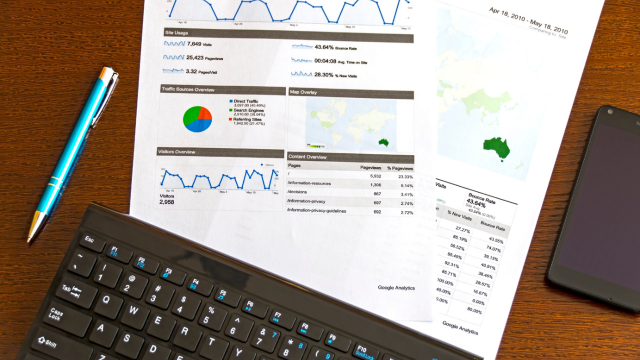
A data analyst is a person who works with data to find useful information.
In simple words, a data analyst studies information and explains what it means.
A data analyst may work for a business, hospital, school, bank, government office, charity, marketing agency or technology company. Their job is to help people understand data so they can make better decisions.
For example, a data analyst may help a company answer questions like:
- Which product sells the most?
- Why are customers leaving?
- Which advert brings the most buyers?
- Which branch is performing best?
- Which students need more support?
- How can we reduce costs?
A data analyst usually collects data, cleans it, studies it, creates charts or dashboards, and explains the findings to other people.
They may use tools such as Excel, SQL, Power BI, Tableau or Python. But the most important part of the job is not just using tools. It is understanding what the data means and explaining it clearly.
What Is Data Analysis in Easy Words?
Data analysis in easy words means checking information to understand what it is telling you.
Let’s say you have a list of your monthly expenses. The list includes food, transport, rent, shopping and bills. If you only look at the list, it may feel like random spending. But if you analyse it, you may discover that you spend too much on food delivery or that your transport costs are increasing.
Then you can make a better decision. You may decide to cook more at home or buy a monthly travel pass.
That is data analysis in everyday life.
It does not always need advanced software. Sometimes data analysis can be done with a notebook, calculator or simple spreadsheet.
The main idea is always the same:
- Collect information.
- Organise it.
- Look for patterns.
- Understand what it means.
- Use it to make a better decision.
Why Is Data Analysis Important?
Data analysis is important because it helps people make decisions based on facts.
Without data, people often guess. A shop owner may guess which product is popular. A teacher may guess which students are struggling. A business may guess why customers are leaving.
Data analysis reduces guesswork.
It helps people understand what is actually happening.
For example, a company may think customers are leaving because the product is expensive. But after analysing customer feedback, the company may discover that the real problem is poor customer service. That changes the solution completely.
Data analysis is useful because it can help with:
| Area | How data analysis helps |
| Business | Understand sales, customers and profit |
| Education | Track student progress and learning gaps |
| Healthcare | Study patient outcomes and service quality |
| Marketing | Find which campaigns work best |
| Finance | Monitor spending, risk and performance |
| Sports | Track player performance and team strategy |
| Personal life | Manage budget, habits and goals |
In simple terms, data analysis helps people make better choices.
Key Parts of Data Analysis in Simple Terms
Data analysis usually has four main parts: cleaning, analysing, visualising and interpreting. These words may sound technical, but the ideas are easy to understand.
1. Cleaning the Data
Cleaning means fixing mistakes in the data.
Raw data is often messy. It may have duplicate entries, spelling mistakes, missing values or wrong formats.
For example, a customer list may show the same city in different ways:
- London
- london
- LDN
- Greater London
If these are not cleaned, the analysis may treat them as different places. That can lead to wrong results.
Data cleaning may include:
- removing duplicate records
- fixing spelling mistakes
- filling missing information
- correcting date formats
- deleting irrelevant data
- making categories consistent
Cleaning is important because bad data leads to bad decisions.
If a business has wrong sales data, it may order the wrong stock. If a school has wrong attendance data, it may misunderstand student behaviour. If a hospital has wrong patient records, the consequences can be serious.
So, before analysing data, you must make sure the data is as accurate as possible.
2. Analysing the Data
Analysing means studying the data to find patterns or answers.
This can be simple or advanced. Simple analysis may involve calculating totals, averages, percentages or comparing values. Advanced analysis may involve statistics, forecasting or machine learning.
For beginners, simple analysis is enough to understand the basic idea.
For example, a small business may analyse:
- total sales this month
- average order value
- best-selling products
- worst-selling products
- sales by location
- customer complaints
The goal is to find useful information.
For example, if sales dropped in one branch but not others, the business may investigate that branch. If one product sells well every weekend, the business may stock more of it before Saturday.
Analysis helps find what is hidden inside the data.
3. Visualising the Data
Visualising means showing data through charts, graphs or dashboards.
A long table of numbers can be hard to understand. A chart can make the message clearer.
For example, if monthly sales are increasing, a line graph can show that trend quickly. If one product sells more than others, a bar chart can make it obvious.
Common visuals include:
| Visual type | What it shows well |
| Bar chart | Comparing categories |
| Line chart | Showing trends over time |
| Pie chart | Showing simple proportions |
| Table | Showing exact values |
| Dashboard | Showing many key figures in one place |
Visualisation is useful because people understand pictures faster than large tables.
However, charts should be clear. A confusing chart can make the data harder to understand. Good data visualisation should make the main message easy to see.
4. Interpreting the Data
Interpreting means explaining what the data means.
This is one of the most important parts of data analysis.
For example, imagine a website report shows that 70% of visitors leave before buying anything. That is the analysis result. The interpretation may be that the website is difficult to use, the price is too high, or the checkout page is confusing.
Analysis shows the fact. Interpretation explains the meaning.
Another example:
| Analysis result | Interpretation |
| Sales dropped by 20% | Customers may be unhappy with price, product or service |
| Students scored low in maths | They may need more practice in a specific topic |
| Website traffic increased | A marketing campaign may have worked |
| Complaints increased | There may be a service or delivery problem |
Good interpretation helps people take action.
Without interpretation, data analysis is incomplete. A chart may show what happened, but people still need to understand why it matters.
Simple Example of Data Analysis

Let’s use a simple coffee shop example.
A coffee shop records its sales every day for one month. The owner wants to know which drinks sell best and how to prepare better for busy days.
The raw data includes:
- date
- weather
- drink sold
- price
- time of purchase
After analysing the data, the owner finds:
| Finding | Meaning |
| Cold brew sells more on sunny days | Weather affects drink choice |
| Hot chocolate sells more in the evening | Customers prefer warm drinks later |
| Monday mornings are slow | Staff planning can be adjusted |
| Pastries sell best before 11 am | More pastries should be ready early |
| Iced coffee sells more at weekends | Stock should increase before weekends |
Now the owner can make better decisions.
They may stock more cold brew before hot weekends, prepare more pastries in the morning and reduce waste by ordering fewer slow-selling items.
This is data analysis in simple words. It takes everyday information and turns it into useful action.
Types of Data Analysis in Simple Words
There are four common types of data analysis: descriptive, diagnostic, predictive and prescriptive.
These names may sound complicated, but the ideas are easy.
Descriptive Analysis: What Happened?
Descriptive analysis explains what happened in the past.
For example:
- Sales increased by 10%.
- 200 students completed a course.
- Website visits dropped last week.
- Customer complaints rose in January.
Descriptive analysis is often the first step. It summarises data so you can understand the situation.
A monthly sales report is a good example of descriptive analysis. It tells you what happened during the month.
Diagnostic Analysis: Why Did It Happen?
Diagnostic analysis explains why something happened.
For example, if sales dropped, diagnostic analysis tries to find the reason.
Maybe the price increased. Maybe a competitor launched a discount. Maybe fewer people visited the website. Maybe stock was unavailable.
Diagnostic analysis goes deeper than descriptive analysis.
Descriptive analysis says:
“Sales dropped by 15%.”
Diagnostic analysis asks:
“Why did sales drop by 15%?”
This is important because you cannot fix a problem properly if you do not understand the cause.
Predictive Analysis: What Might Happen Next?
Predictive analysis uses past data to estimate what may happen in the future.
For example:
- A shop may predict next month’s sales.
- A bank may predict which customers may miss payments.
- A school may predict which students may need extra support.
- A business may forecast demand for a product.
Predictive analysis is not perfect. It does not guarantee the future. But it can help people prepare.
For example, if past data shows that cold drinks sell more during hot weather, a coffee shop can prepare more cold drinks before a sunny weekend.
Prescriptive Analysis: What Should We Do?
Prescriptive analysis suggests what action should be taken.
It goes one step further than prediction.
For example, predictive analysis may say:
“Cold brew sales may increase this weekend.”
Prescriptive analysis may say:
“Order 30% more cold brew ingredients before Friday.”
This type of analysis is useful because it connects data with action.
A business does not only want to know what happened. It wants to know what to do next.
What Is Big Data Analysis in Simple Words?
Big data analysis means analysing very large amounts of data.
Normal data may fit in a small spreadsheet. Big data is much larger. It may come from websites, apps, social media, online shopping, sensors, bank transactions or mobile devices.
For example, a streaming platform may analyse millions of viewing habits to recommend shows. An online shop may analyse customer behaviour to suggest products. A transport company may analyse traffic data to improve routes.
In simple words, big data analysis means finding useful patterns in huge amounts of information.
The idea is the same as normal data analysis, but the size is much bigger. Because of that, big data often needs stronger tools and systems.
What Is Exploratory Data Analysis in Simple Words?
Exploratory data analysis means looking through data to understand it before making final conclusions.
It is like exploring a new place before making a map.
You check what is inside the dataset, what looks unusual, what patterns appear and what questions should be asked next.
For example, if you receive a spreadsheet of customer orders, you may first check:
- How many rows are there?
- Are any values missing?
- Are there duplicate orders?
- Which products appear most often?
- Are there any unusually high or low values?
This helps you understand the data before doing deeper analysis.
Exploratory data analysis is useful because it prevents mistakes. If you do not explore the data first, you may miss problems or misunderstand the results.
What Is Data Analysis in Research in Simple Words?
Data analysis in research means studying the information collected during a research project so that the researcher can answer the research question.
For example, a student may research whether online learning helps working adults. They may collect survey answers, interview responses or course completion data. Data analysis helps them understand what the information shows.
In simple words, research data analysis means:
Looking carefully at research information to find answers, patterns and meaning.
Research data can be numerical or written.
| Type of research data | Example | How it may be analysed |
| Numerical data | Survey scores, test marks, attendance | Percentages, averages, charts |
| Written data | Interview answers, comments, opinions | Themes, categories, repeated ideas |
| Mixed data | Survey scores plus comments | Both statistics and themes |
For example, if 80 out of 100 students say they prefer recorded lectures, the researcher can say that 80% of students in the sample prefer recorded lectures. If many students also explain that recorded lectures help them study after work, the researcher can identify flexibility as an important theme.
That is how research data analysis turns collected information into findings.
Data Analysis in Research Example
Let’s imagine a simple research project.
A researcher wants to study why learners drop out of online courses. They collect data from 100 learners using a survey and interview 10 learners in more detail.
The survey shows:
| Finding | Result |
| Learners who completed the course | 58% |
| Learners who dropped out | 42% |
| Learners who said they lacked time | 46% |
| Learners who wanted more tutor support | 38% |
| Learners who had technical problems | 22% |
This is the numerical part of the analysis.
The interviews show repeated comments such as:
- “I could not manage the course with my job.”
- “I needed more reminders.”
- “I did not know who to ask for help.”
- “The platform was confusing at first.”
From these comments, the researcher may identify themes such as time pressure, lack of support and digital difficulty.
The final conclusion may be:
“Learners are not dropping out only because the course content is difficult. Many are struggling with time, support and platform confidence. Course providers may improve completion by offering clearer deadlines, tutor check-ins and beginner guidance.”
This is a simple example of data analysis in research. It uses both numbers and words to understand the problem.
How to Analyse Research Data
To analyse research data, you should follow a clear process. The exact method depends on your research topic, but the basic steps are usually similar.
First, check your research question. You need to know what you are trying to answer. If your question is unclear, your analysis will also be unclear.
Second, organise the data. Put survey responses, interview notes, scores or records into a format that is easy to review. This may be a spreadsheet, table, document or analysis software.
Third, clean the data. Remove duplicate responses, fix obvious mistakes and check missing values. If the data is messy, your findings may be unreliable.
Fourth, analyse the data. If it is numerical, calculate totals, percentages, averages or comparisons. If it is written, read the responses carefully and look for repeated ideas.
Fifth, visualise or summarise the findings. Use charts, tables or themes to make the results easier to understand.
Finally, interpret the results. Explain what the findings mean and how they answer your research question.
A simple research analysis process looks like this:
| Step | Simple meaning |
| Question | What do you want to find out? |
| Organise | Put the data in order |
| Clean | Fix mistakes and remove duplicates |
| Analyse | Look for patterns |
| Summarise | Use tables, charts or themes |
| Interpret | Explain what it means |
This process helps make your research more organised and believable.
What Is Data Analysis with Example?
Data analysis with example means understanding the idea through a real situation.
Let’s use a simple online shop example.
An online shop sells shoes, bags and jackets. The owner collects sales data for three months. After analysing the data, they find:
| Product | Sales result | Meaning |
| Shoes | Highest sales | Most popular product |
| Bags | Medium sales | Stable demand |
| Jackets | Low sales | May need discount or better marketing |
| Weekend sales | Higher than weekdays | Customers buy more at weekends |
| London customers | Highest order value | Strongest customer location |
From this, the owner may decide to promote shoes more, run a discount on jackets and increase advertising before weekends.
That is data analysis. It helps turn business records into useful decisions.
Another example can be personal budgeting. If you track your monthly spending, data analysis may show that food delivery is taking too much of your income. Once you know that, you can decide to cook more at home or set a weekly limit.
Data analysis is not only for big companies. It can help in everyday life too.
Data Analysis Tools in Simple Words

Data analysis tools are the software or systems people use to work with data. Some tools are simple. Others are more advanced.
For beginners, Excel or Google Sheets are often enough. These tools help you sort, filter, calculate and create charts.
For larger or more professional work, people may use SQL, Power BI, Tableau, Python or R.
| Tool | Simple use |
| Excel | Spreadsheets, formulas, charts |
| Google Sheets | Online spreadsheet work |
| SQL | Getting data from databases |
| Power BI | Creating dashboards |
| Tableau | Making visual reports |
| Python | Cleaning and analysing larger data |
| R | Statistical analysis |
You do not need to learn every tool at once. If you are new, start with Excel or Google Sheets. Learn how to clean data, use formulas, make charts and understand simple patterns.
After that, SQL is a useful next step because many companies store data in databases. Power BI or Tableau can help if you want to build dashboards. Python or R can come later if you want to move into more advanced analysis.
Basic Skills Needed for Data Analysis
You need both technical and thinking skills for data analysis. The technical side helps you work with the data. The thinking side helps you understand what it means.
Basic data analysis skills include:
| Skill | Why it matters |
| Attention to detail | Helps you spot mistakes |
| Basic maths | Helps with totals, averages and percentages |
| Excel skills | Helps you organise and calculate data |
| Chart-making | Helps you show results clearly |
| Critical thinking | Helps you avoid wrong conclusions |
| Communication | Helps you explain findings simply |
You do not need to be perfect at maths to start. Many beginner tasks involve simple calculations. The most important thing is to be careful and curious.
A good beginner analyst asks questions like:
“Is this data correct?”
“What pattern can I see?”
“Is there another explanation?”
“What does this mean for the decision?”
These questions are more important than memorising complicated formulas.
Common Mistakes in Data Analysis
One common mistake is analysing data before cleaning it. If the data contains duplicates, missing values or wrong formats, the result may be wrong.
Another mistake is jumping to conclusions too quickly. For example, if sales dropped after a price increase, the price may be the reason. But there may be other reasons too, such as seasonality, poor marketing, stock problems or a competitor discount.
A third mistake is using confusing charts. A chart should make the data easier to understand. If it makes the result harder to read, it is not helping.
Some people also focus only on numbers and forget interpretation. A number is useful only when you explain what it means.
For example, saying “website visits increased by 30%” is not enough. You should explain whether this increase led to more sales, better enquiries or improved performance.
Good data analysis is careful, clear and honest.
Data Analysis in Simple Terms for Work and Career
In the workplace, data analysis helps teams make better decisions. It is useful in many jobs, not only data analyst roles.
A marketing executive may analyse campaign results. A teacher may analyse student marks. A manager may analyse staff performance. A finance assistant may analyse expenses. A business owner may analyse sales and stock.
This is why data analysis is becoming an important career skill. Even if you do not want to become a data analyst, learning basic data analysis can make you better at your current job.
It can help you:
- make stronger decisions
- explain your work with evidence
- spot problems earlier
- measure performance
- improve reports
- support business planning
Employers value people who can use information properly. In many roles, being comfortable with data can make your CV stronger.
Is Data Analysis Difficult?
Data analysis can feel difficult at first, but the basic idea is not hard. You are simply trying to understand what information is telling you.
The difficulty depends on the level.
Basic data analysis is not too difficult. It may involve Excel, charts, averages and percentages.
Advanced data analysis can be harder. It may involve statistics, coding, machine learning or large databases.
The best way to learn is step by step. Start with simple examples. Analyse your own expenses, a small sales table or a survey result. Once you understand the basic process, the more advanced tools will feel easier.
Do not try to learn everything in one week. Data analysis improves with practice.
Final Thoughts
Data analysis in simple words means studying information to find useful answers. It helps people understand what happened, why it happened, what may happen next and what action should be taken.
It usually involves cleaning data, analysing it, visualising it and interpreting the results. The data may come from sales records, surveys, websites, research projects, customer feedback or everyday activities.
The easiest way to remember it is this:
Data analysis turns raw information into useful decisions.
A coffee shop can use it to stock the right drinks. A teacher can use it to support students. A business can use it to improve sales. A researcher can use it to answer a study question. A person can even use it to manage personal spending.
You do not need to be an expert to start. Begin with simple tools like Excel or Google Sheets. Learn how to organise data, calculate basic figures, create charts and explain what the results mean.
Once you can look at data and say, “This is what is happening, this is why it matters, and this is what we should do next,” you are already using data analysis in a meaningful way.