
94%
OFF
OFF
Understanding Organizational Behavior
- Lifetime Access
- All Levels
- PDF Certificate
£296
£19
14-Day Money-Back Guarantee
Learn With Confidence









Understanding Organizational Behavior
Organisations are built around people. Strategies, technologies, processes, and systems are important, but it is people who make decisions, collaborate, solve problems, lead teams, communicate, respond to challenges, and ultimately influence organisational performance.
Understanding how people behave at work is therefore essential for anyone who wants to become a more effective employee, manager, team leader, or business professional.
Understanding Organizational Behavior is a practical course designed to help learners explore the factors that influence individual and group behaviour in workplace environments. The course examines personality, motivation, leadership, teamwork, communication, organisational culture, and change management, giving learners a broad foundation for understanding people and organisations.
Rather than viewing workplace behaviour as unpredictable or purely personal, this course helps you recognise the patterns, influences, and organisational factors that shape how people think, interact, perform, and respond to change.
Through seven focused modules, you will explore the foundations of organisational behaviour, individual differences, workplace motivation, leadership and influence, group dynamics, communication, organisational culture, and change management.
The goal of Understanding Organizational Behavior is to help you develop practical knowledge that can be applied to everyday workplace situations.
Why Study Understanding Organizational Behavior?
Every workplace contains different personalities, motivations, communication styles, leadership approaches, expectations, and working relationships. These differences can contribute to creativity and innovation, but they can also create misunderstandings, conflict, disengagement, and performance challenges.
Understanding organisational behaviour can help professionals respond to these situations more effectively.
By completing Understanding Organizational Behavior, you can learn how to:
-
Understand the foundations of organisational behaviour.
-
Recognise factors that influence individual workplace behaviour.
-
Understand personality differences and their impact on work.
-
Explore what motivates employees.
-
Develop greater awareness of leadership and influence.
-
Understand group dynamics and team development.
-
Improve workplace communication.
-
Recognise the influence of organisational culture.
-
Understand how people respond to organisational change.
-
Build stronger professional relationships.
-
Contribute more effectively to teams.
-
Support a positive and productive workplace environment.
The course is designed to provide practical, accessible knowledge that can benefit learners across industries and professional roles.
What You Will Learn
Module 1 – Introduction to Organizational Behavior
Lesson 1 – Introduction to Organizational Behavior
The course begins by introducing the fundamental concepts of organisational behaviour and explaining why they matter in modern workplaces.
Organisational behaviour examines how individuals and groups behave within organisations and how organisational systems and environments influence that behaviour.
You will explore:
-
What organisational behaviour means.
-
Why organisational behaviour matters.
-
Individual behaviour in the workplace.
-
Group and team behaviour.
-
Organisational systems and structures.
-
Factors that influence workplace behaviour.
-
The connection between behaviour and performance.
-
Employee engagement and workplace relationships.
-
The role of managers in understanding behaviour.
-
The importance of organisational behaviour for business success.
You will also consider how individual, group, and organisational factors interact.
For example, an employee’s performance may be influenced not only by their skills and personality but also by leadership, team relationships, communication, organisational culture, resources, and motivation.
Understanding these connections can help professionals approach workplace challenges from a broader perspective.
Outcome: You will understand the foundations of organisational behaviour and recognise how individual, group, and organisational factors influence workplace outcomes.
Module 2 – Individual Behavior and Personality
Every employee brings a unique combination of personality, experiences, attitudes, values, abilities, and expectations to the workplace.
Understanding these differences can help organisations create more effective working relationships and help managers support employees more effectively.
This module explores individual behaviour and personality in organisational settings.
You will learn about:
-
Individual differences.
-
Personality and workplace behaviour.
-
Attitudes and values.
-
Perception and interpretation.
-
Emotional responses at work.
-
Individual decision-making.
-
Workplace behaviour patterns.
-
The influence of personal characteristics.
-
Differences in working styles.
-
The relationship between personality and professional interactions.
You will explore why two employees may respond differently to the same workplace situation.
For example, one employee might welcome a new responsibility while another may initially feel uncertain. Understanding individual differences can help leaders and colleagues respond appropriately rather than assuming everyone will react in the same way.
The module encourages learners to recognise differences without using personality as a rigid label. People can adapt their behaviour depending on their environment, responsibilities, relationships, and experiences.
Outcome: You will develop greater awareness of how personality, attitudes, perceptions, and individual differences influence behaviour and workplace relationships.
Module 3 – Motivation in the Workplace
Motivation plays an important role in employee performance, engagement, satisfaction, persistence, and commitment.
However, people are not motivated by exactly the same things. Different employees may value recognition, achievement, responsibility, career development, autonomy, meaningful work, financial rewards, learning opportunities, or supportive relationships.
This module explores the principles of workplace motivation and how organisations can create conditions that encourage productive behaviour.
You will explore:
-
What workplace motivation means.
-
Factors that influence motivation.
-
Intrinsic and extrinsic motivation.
-
Employee needs and expectations.
-
Recognition and rewards.
-
Goal setting.
-
Feedback and performance.
-
Job satisfaction.
-
Employee engagement.
-
Creating motivating work environments.
-
The relationship between motivation and performance.
You will also consider why motivation cannot always be solved simply by offering rewards. Employees may become disengaged because of poor leadership, unclear expectations, limited development opportunities, ineffective communication, excessive workload, or a lack of recognition.
Understanding these factors can help managers take a more thoughtful approach to employee motivation.
Outcome: You will understand key influences on workplace motivation and be better prepared to recognise factors that can support employee engagement and performance.
Module 4 – Leadership and Influence Processes
Leadership affects how employees work, communicate, collaborate, make decisions, and respond to organisational challenges.
Effective leadership is not limited to job titles. Individuals can influence others through expertise, credibility, communication, relationships, decision-making, and behaviour.
This module explores leadership and influence processes within organisations.
You will learn about:
-
The meaning of leadership.
-
Leadership responsibilities.
-
Leadership styles and approaches.
-
Influence in organisations.
-
Building trust and credibility.
-
Decision-making and leadership.
-
Employee engagement.
-
Supporting performance.
-
Leading by example.
-
Leadership communication.
-
Ethical influence.
-
Adapting leadership approaches to different situations.
You will examine how leaders can influence workplace behaviour without relying solely on authority.
Strong leadership can help employees understand expectations, build confidence, collaborate effectively, and work towards shared objectives.
The module also highlights the importance of self-awareness. Leaders who understand their own behaviour and its impact on others are often better positioned to develop effective relationships.
Outcome: You will understand fundamental leadership and influence principles and recognise how leadership behaviour can shape employee performance and organisational outcomes.
Module 5 – Group Dynamics and Team Building
Organisations rely heavily on teams. Employees collaborate on projects, solve problems, exchange information, make decisions, and work towards shared objectives.
Yet putting people together does not automatically create an effective team.
This module explores group dynamics and the factors that influence team effectiveness.
You will learn about:
-
The difference between groups and teams.
-
Team roles and responsibilities.
-
Group development.
-
Team cohesion.
-
Trust within teams.
-
Collaboration.
-
Team communication.
-
Shared objectives.
-
Decision-making in groups.
-
Conflict within teams.
-
Building productive working relationships.
-
Creating effective teams.
You will explore how team behaviour can influence individual performance and vice versa.
Effective teams often depend on clear expectations, mutual trust, open communication, accountability, complementary skills, and a shared understanding of objectives.
You will also learn why disagreements are not necessarily harmful. When managed constructively, different perspectives can improve decision-making and encourage innovation.
Outcome: You will understand key group dynamics and develop greater awareness of the factors that contribute to effective teamwork and collaboration.
Module 6 – Communication in Organizations
Communication is one of the most important processes within any organisation.
Employees need to exchange information, clarify expectations, provide feedback, solve problems, make decisions, and maintain professional relationships. Poor communication can contribute to misunderstandings, errors, conflict, low morale, and reduced productivity.
This module examines communication within organisational environments.
You will explore:
-
The fundamentals of workplace communication.
-
Verbal and written communication.
-
Non-verbal communication.
-
Active listening.
-
Giving and receiving feedback.
-
Communication barriers.
-
Information flow within organisations.
-
Formal and informal communication.
-
Communication between managers and employees.
-
Team communication.
-
Communicating clearly and professionally.
-
Supporting open communication.
You will learn that effective communication involves more than delivering a message. It also involves understanding the audience, listening carefully, checking understanding, selecting appropriate communication methods, and responding constructively.
The module encourages learners to consider how their own communication style affects workplace relationships.
Outcome: You will develop a stronger understanding of organisational communication and learn how effective communication can support collaboration, trust, clarity, and workplace performance.
Module 7 – Organizational Culture and Change Management
Organisational culture influences how people behave, communicate, make decisions, solve problems, and respond to challenges.
At the same time, organisations must constantly adapt to new technologies, customer expectations, market conditions, competition, regulations, and internal priorities.
This module brings together organisational culture and change management to help learners understand how organisations evolve.
You will explore:
-
What organisational culture means.
-
Workplace values and beliefs.
-
Organisational norms.
-
How culture influences behaviour.
-
Positive and negative aspects of organisational culture.
-
Building healthy workplace cultures.
-
Organisational change.
-
Why employees may resist change.
-
Communication during change.
-
Supporting employees through transitions.
-
Leadership during organisational change.
-
Creating adaptable organisations.
You will learn why cultural factors can significantly influence whether change succeeds or fails.
Employees may resist change when they do not understand its purpose, fear its consequences, lack trust in leadership, or feel excluded from the process. Effective communication, leadership, involvement, and support can help organisations navigate these challenges.
Outcome: You will understand how organisational culture influences workplace behaviour and gain awareness of the human factors involved in managing organisational change.
Practical Skills You Can Develop
The Understanding Organizational Behavior course focuses on knowledge that can be applied to everyday workplace situations.
After completing the course, you can develop the ability to:
Understand Workplace Behaviour
Recognise how individual, group, and organisational factors influence employee behaviour and workplace outcomes.
Recognise Individual Differences
Understand how personality, attitudes, values, perceptions, and experiences can influence workplace interactions.
Support Motivation
Identify factors that can influence employee motivation, engagement, satisfaction, and performance.
Strengthen Leadership Awareness
Understand how leadership behaviour and influence can affect teams and individuals.
Improve Teamwork
Recognise the characteristics of effective teams and understand factors that influence collaboration and team performance.
Communicate More Effectively
Develop greater awareness of communication barriers and the importance of listening, clarity, feedback, and appropriate communication methods.
Understand Organisational Culture
Recognise how workplace values, norms, and behaviours contribute to organisational culture.
Navigate Organisational Change
Understand why employees may respond differently to change and how communication and leadership can support transitions.
Who Is This Course For?
Understanding Organizational Behavior is suitable for professionals at different stages of their careers.
It can benefit:
-
Managers and supervisors.
-
Team leaders.
-
HR professionals.
-
Business owners.
-
Entrepreneurs.
-
Project managers.
-
Department managers.
-
Team members.
-
Emerging leaders.
-
Business and management students.
-
Professionals seeking career development.
-
Anyone interested in workplace psychology and organisational behaviour.
You do not need extensive management experience to benefit from the course. The concepts are presented in a way that can be applied by both employees and leaders.
Benefits for Managers and Leaders
Managers work with people every day, making an understanding of organisational behaviour particularly valuable.
The course can help managers become more aware of:
-
Why employees behave differently.
-
What can influence motivation.
-
How leadership affects performance.
-
Why communication problems develop.
-
How teams function.
-
How organisational culture shapes behaviour.
-
Why people may resist change.
-
How workplace relationships influence performance.
This knowledge can support more thoughtful management decisions and help leaders approach workplace challenges with greater awareness.
Benefits for Employees and Team Members
Understanding organisational behaviour is not only useful for managers.
Employees can also benefit by developing greater awareness of their own behaviour and the behaviour of colleagues.
The course can help employees:
-
Understand different working styles.
-
Improve professional relationships.
-
Communicate more effectively.
-
Collaborate with colleagues.
-
Handle workplace differences more constructively.
-
Understand factors affecting motivation.
-
Participate more effectively in teams.
-
Adapt to organisational change.
-
Develop stronger self-awareness.
By understanding the factors that influence workplace behaviour, employees can become more effective contributors to their organisations.
Develop a Stronger Understanding of People at Work
Workplaces are complex because people are complex.
A successful organisation requires more than talented individuals. It requires people who can communicate, collaborate, adapt, solve problems, manage differences, and work towards shared goals.
Understanding Organizational Behavior provides a framework for exploring these dynamics.
By examining individual behaviour, motivation, leadership, teams, communication, culture, and change, learners can develop a more complete understanding of what happens inside organisations and why people respond to workplace situations in different ways.
This perspective can be particularly valuable when dealing with challenges such as declining engagement, team conflict, communication breakdowns, resistance to change, leadership difficulties, or inconsistent performance.
Why Choose Understanding Organizational Behavior?
This course offers a comprehensive introduction to the human side of organisations.
Rather than concentrating on a single workplace issue, it explores the connections between:
-
Individual behaviour.
-
Personality.
-
Motivation.
-
Leadership.
-
Influence.
-
Team dynamics.
-
Communication.
-
Organisational culture.
-
Change management.
These areas are closely connected. For example, communication can influence motivation, leadership can influence team dynamics, organisational culture can influence individual behaviour, and change can affect almost every aspect of workplace life.
Understanding these relationships can help learners develop a broader and more practical perspective on organisational effectiveness.
Start Learning Today
People are at the centre of every organisation. Understanding how they think, communicate, collaborate, respond to leadership, and adapt to change can provide valuable insight for professionals at every career level.
Understanding Organizational Behavior provides a practical introduction to the principles that shape workplace behaviour and organisational effectiveness.
From individual personality and motivation to leadership, teamwork, communication, culture, and change management, the course gives you the knowledge needed to better understand the human dynamics that influence organisations.
Whether you are managing a team, developing your leadership career, working as part of a team, studying business, or simply looking to improve your professional effectiveness, this course can provide a valuable foundation.
Enrol in Understanding Organizational Behavior today and develop the knowledge to understand workplace behaviour, strengthen teamwork, improve communication, support motivation, recognise effective leadership practices, and contribute more effectively to organisational success.
Course Modules
Course Content
Module 1_ Introduction to Organizational Behavior
-
Lesson 1_ Introduction to Organizational Behavior
Module 2_ Individual Behavior and Personality
Module 3_ Motivation in the Workplace
Module 4_ Leadership and Influence Processes
Module 5_ Group Dynamics and Team Building
Module 6_ Communication in Organizations
Module 7_ Organizational Culture and Change Management
What our students say
Excellent
4.9 average
158 Reviews

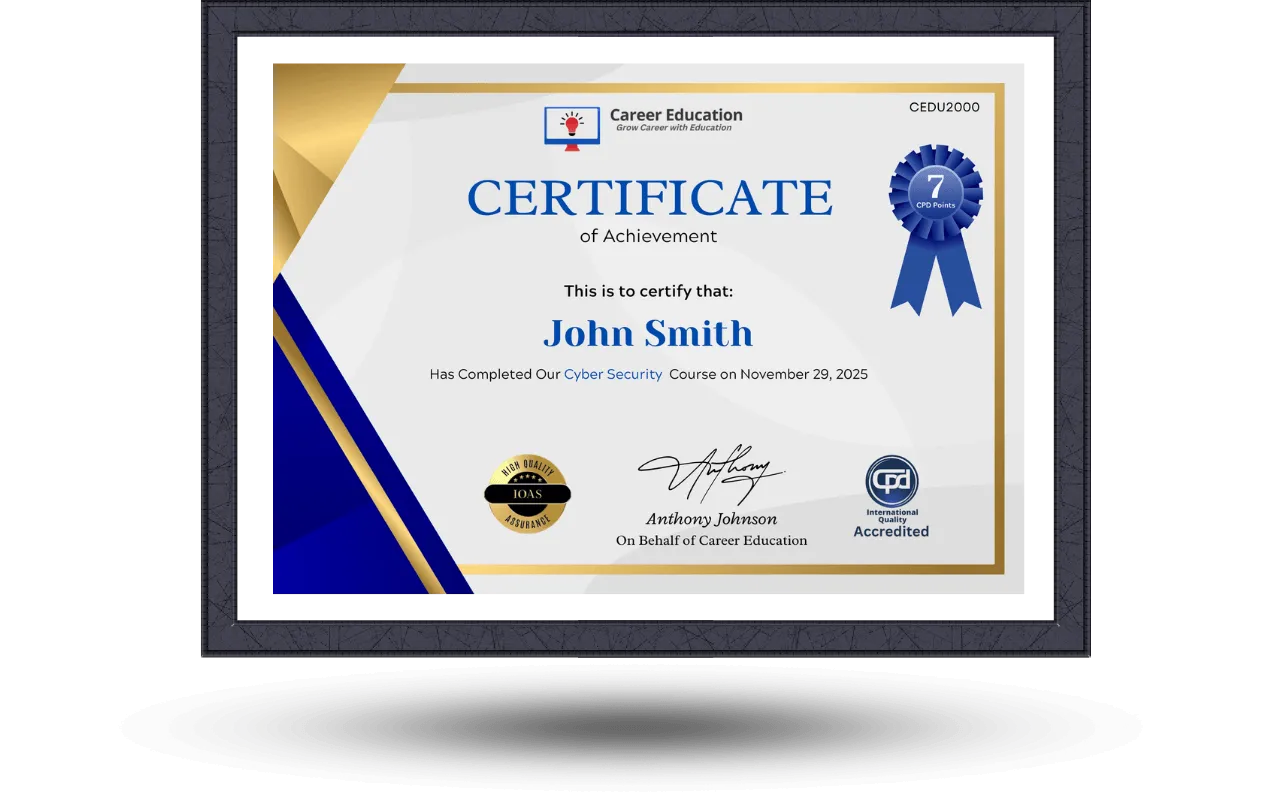
Earn an Accredited Certificate
Upon completion of any course, all students are entitled to a CPD IQ Accredited e-certificate that will be issued by Career Education signifying the completion of your course.
After you complete the course and assignment, you will be eligible to order a free certificate accredited by CPD International Quality by completing the form below.
Hardcopy certificates and transcripts are also available for a small additional fee. More information is disclosed upon course completion.
Similar Courses



Frequently Asked Questions
The lifetime membership includes unlimited access to all courses, resources, and updates for a one-time fee.
You can purchase the membership directly from our website using a secure checkout process.
Yes, selected courses can be downloaded for offline access through our mobile app.
Yes, all future updates and new courses are included at no extra cost.
Yes, we offer a 30-day money-back guarantee if you are not satisfied with the membership.