
94%
OFF
OFF
Personal Safety and Security Training for CMV Drivers
- Lifetime Access
- All Levels
- PDF Certificate
£296
£19
14-Day Money-Back Guarantee
Learn With Confidence







Personal Safety and Security Training for CMV Drivers
Commercial motor vehicle (CMV) drivers face unique safety and security challenges every time they get behind the wheel. Long hours on the road, changing weather conditions, unfamiliar locations, traffic hazards, vehicle breakdowns, fatigue, security threats and unexpected emergencies can all create risks that require preparation and sound decision-making.
Personal Safety and Security Training for CMV Drivers is designed to help commercial vehicle drivers develop practical knowledge and habits that support safer journeys, stronger hazard awareness and better personal security. The course focuses on risk assessment, defensive driving, emergency preparedness, security measures, fatigue management and driver health and wellness.
Professional driving is about much more than controlling a vehicle. Drivers must continually assess their surroundings, anticipate potential hazards, make responsible decisions and respond appropriately when conditions change. A strong safety mindset can help drivers recognise risks before they become incidents.
This course takes an outcome-focused approach to personal safety and security. Learners will develop practical awareness that can be applied before, during and after their journeys, helping them become more prepared, alert and safety-conscious CMV professionals.
Why Take Personal Safety and Security Training for CMV Drivers?
Commercial vehicle drivers may spend significant periods working independently and travelling through a wide range of environments. This can expose them to risks that are different from those faced in conventional workplace settings.
Drivers may encounter:
-
Heavy traffic.
-
Poor road conditions.
-
Severe weather.
-
Unfamiliar routes.
-
Vehicle or equipment failures.
-
Unsafe parking areas.
-
Security threats.
-
Fatigue and reduced alertness.
-
Health and wellbeing challenges.
-
Emergency situations.
Personal Safety and Security Training for CMV Drivers helps learners understand how to identify and manage these risks proactively.
Through this course, participants will learn how to:
-
Recognise common personal safety and security risks.
-
Assess hazards before and during a journey.
-
Apply defensive driving techniques.
-
Prepare for roadside and workplace emergencies.
-
Improve personal security awareness.
-
Manage fatigue and maintain alertness.
-
Support their physical and mental wellbeing.
-
Make safer decisions under changing conditions.
-
Develop stronger safety habits.
-
Contribute to a positive safety culture within their organisation.
The goal is to help drivers become more prepared and proactive rather than simply reacting to problems after they occur.
What You Will Learn
By completing Personal Safety and Security Training for CMV Drivers, learners will gain a broader understanding of the risks associated with commercial vehicle operations and the practical measures that can help reduce those risks.
The course covers both driving-related and personal safety considerations. Participants will explore how to assess hazards, anticipate potential problems, respond to emergencies and protect themselves while working on the road.
The course also recognises that driver wellbeing is closely connected to safety. Fatigue, poor health, stress and inadequate recovery can affect concentration, reaction time and decision-making.
By addressing safety, security, emergency preparedness, fatigue and wellness together, the course provides a more complete approach to commercial driver safety.
Module 1: Introduction to Personal Safety & Security for CMV Drivers
The course begins by introducing the principles of personal safety and security for commercial motor vehicle drivers.
Learners will explore the unique challenges associated with working on the road and understand why personal safety should be considered an essential part of professional driving.
The module introduces common risks that drivers may encounter before, during and after a journey.
Participants will consider the importance of:
-
Preparing before departure.
-
Understanding the planned route.
-
Checking the vehicle and equipment.
-
Remaining aware of surroundings.
-
Following workplace safety procedures.
-
Maintaining communication.
-
Recognising unusual or unsafe situations.
-
Knowing when to seek assistance.
The module also encourages learners to adopt a proactive safety mindset.
Rather than assuming that incidents will not happen, drivers can prepare for potential problems and develop strategies for responding appropriately.
By completing this module, learners will have a strong foundation for understanding personal safety and security responsibilities as CMV drivers.
Module 2: Risk Assessment and Hazard Recognition
Effective safety begins with identifying hazards.
This module focuses on recognising risks that can affect commercial vehicle drivers and assessing those risks before they result in an incident.
Learners will explore how hazards may arise from road conditions, weather, traffic, vehicle condition, loading arrangements, work locations, personal behaviour and environmental circumstances.
Participants will consider questions such as:
-
What hazards are present?
-
How could the hazard affect the driver or others?
-
What conditions could make the risk worse?
-
What precautions are available?
-
Is the journey or task safe to continue?
-
Has anything changed since the original assessment?
The module encourages drivers to continually reassess conditions rather than treating risk assessment as a one-time activity.
For example, a route that appears safe during initial planning may become more hazardous because of congestion, severe weather, road closures or unexpected incidents.
Learners will develop greater awareness of how situational awareness and risk assessment can support safer driving decisions.
Module 3: Defensive Driving Techniques
Defensive driving is an essential skill for professional drivers.
This module focuses on techniques that can help drivers anticipate hazards and reduce the likelihood of collisions.
Learners will explore the importance of maintaining awareness of surrounding traffic, identifying potential hazards early and creating appropriate space around the vehicle.
Key defensive driving principles include:
-
Maintaining appropriate following distances.
-
Monitoring traffic conditions.
-
Anticipating the actions of other road users.
-
Adjusting driving to road and weather conditions.
-
Maintaining appropriate speed.
-
Reducing distractions.
-
Using mirrors effectively.
-
Remaining alert to changing situations.
-
Planning ahead.
-
Avoiding unnecessary risks.
The course emphasises that defensive driving is not simply about reacting quickly. It is about anticipating what may happen and making decisions that provide sufficient time and space to respond.
Participants will develop a stronger understanding of how defensive driving can support safer journeys and reduce exposure to avoidable hazards.
Module 4: Emergency Preparedness
Unexpected situations can occur even when drivers plan carefully.
This module focuses on preparing for emergencies that may occur during commercial vehicle operations.
Learners will explore the importance of having appropriate emergency procedures and knowing how to respond when circumstances change suddenly.
Potential situations may include:
-
Vehicle breakdowns.
-
Road collisions.
-
Severe weather.
-
Medical emergencies.
-
Dangerous roadside conditions.
-
Security concerns.
-
Unexpected delays.
-
Other incidents requiring assistance.
Participants will consider how preparation can influence emergency response.
Important preparation measures may include knowing relevant communication procedures, understanding organisational protocols and having access to appropriate emergency equipment and information.
The module also reinforces the importance of staying calm and assessing the situation before taking action.
Drivers will gain greater awareness of how preparation, communication and appropriate decision-making can support safer emergency responses.
Module 5: Security Measures for CMV Drivers
Commercial vehicle drivers may face personal security risks, particularly when working alone, travelling through unfamiliar locations or stopping in isolated areas.
This module focuses on personal security awareness and practical measures that can help reduce exposure to security threats.
Learners will explore how to:
-
Maintain awareness of their surroundings.
-
Select safer stopping and parking locations where possible.
-
Protect vehicles, cargo and personal belongings.
-
Avoid unnecessary exposure to unsafe environments.
-
Follow organisational security procedures.
-
Recognise unusual or suspicious circumstances.
-
Maintain appropriate communication.
-
Report security concerns through established channels.
The emphasis is on prevention and situational awareness.
Drivers will learn why personal security should be considered as part of journey planning rather than only after a security problem occurs.
The module also encourages learners to trust appropriate safety procedures and seek assistance when a situation appears unsafe.
By completing this module, participants will have greater awareness of personal and operational security while working on the road.
Module 6: Fatigue Management
Fatigue is a significant concern for professional drivers because reduced alertness can affect concentration, reaction time, judgement and decision-making.
This module explores the importance of recognising and managing fatigue.
Learners will consider factors that can contribute to tiredness, including demanding schedules, inadequate rest, disrupted sleep, long periods of driving and other lifestyle factors.
Participants will develop awareness of signs that may indicate reduced alertness, such as:
-
Difficulty concentrating.
-
Frequent yawning.
-
Heavy or tired eyes.
-
Reduced attention.
-
Slower reactions.
-
Difficulty remembering recent events.
-
Drifting attention.
-
Feeling unusually irritable or mentally exhausted.
The course emphasises the importance of following applicable driving hours, rest and fatigue-management requirements.
Participants will also explore practical habits that support alertness and recovery, including appropriate rest, healthy routines and recognising when they are not fit to continue driving safely.
The objective is to help drivers understand that fatigue management is a safety responsibility, not simply a matter of personal comfort.
Module 7: Health and Wellness
Driver health and wellness can directly influence workplace safety.
Commercial drivers may spend long periods sitting, work irregular schedules and experience physical or mental demands associated with professional driving.
This module explores practical approaches to supporting overall health and wellbeing.
Learners will consider the importance of:
-
Healthy nutrition.
-
Adequate hydration.
-
Regular physical activity.
-
Quality sleep and recovery.
-
Managing workplace stress.
-
Maintaining good personal hygiene.
-
Taking appropriate breaks.
-
Recognising health concerns.
-
Seeking appropriate professional support when necessary.
The module also highlights the relationship between personal wellbeing and safe driving performance.
When drivers look after their physical and mental wellbeing, they may be better positioned to maintain concentration, manage stress and respond effectively to changing conditions.
Participants will develop a more comprehensive understanding of wellness as an important component of professional driver safety.
Practical Benefits of Personal Safety and Security Training for CMV Drivers
Personal Safety and Security Training for CMV Drivers is designed to provide practical knowledge that can be applied directly to commercial driving responsibilities.
After completing the course, learners should be better able to:
Recognise Personal Safety Risks
Identify hazards that may affect them while driving, parking, loading, unloading or working around commercial vehicles.
Assess Road and Workplace Hazards
Evaluate changing conditions and make more informed decisions about how risks should be managed.
Apply Defensive Driving Principles
Use proactive driving techniques to anticipate hazards and create more time and space to respond.
Prepare for Emergencies
Understand the importance of preparation, communication and appropriate procedures when unexpected incidents occur.
Improve Personal Security
Recognise potential security concerns and apply practical measures to reduce unnecessary exposure to risk.
Manage Fatigue
Identify signs of fatigue and understand why appropriate rest and recovery are essential to safe driving.
Support Personal Wellness
Develop healthier habits that can contribute to physical and mental wellbeing.
Make Safer Decisions
Build a proactive safety mindset that supports responsible choices throughout the working day.
Who Is This Course For?
Personal Safety and Security Training for CMV Drivers is suitable for professionals who operate commercial motor vehicles or work in environments where commercial driving is an important part of their role.
It may be particularly valuable for:
-
Commercial motor vehicle drivers.
-
Truck drivers.
-
Fleet drivers.
-
Delivery drivers.
-
Transport operators.
-
Logistics professionals.
-
Fleet supervisors.
-
Transport managers.
-
Distribution personnel.
-
Vehicle operators.
-
New commercial drivers.
-
Experienced drivers seeking a safety refresher.
-
Organisations responsible for driver safety.
The course can support both new and experienced drivers by reinforcing practical safety principles and encouraging proactive risk management.
Build Stronger Safety Habits Behind the Wheel
Professional drivers make safety decisions continuously.
Before leaving a depot, they assess their vehicle and route. While driving, they monitor traffic and road conditions. At stops, they assess their surroundings. During long journeys, they need to remain alert and recognise signs of fatigue.
Safety is therefore not one action—it is a continuous process.
Personal Safety and Security Training for CMV Drivers helps learners understand how these individual decisions contribute to overall safety.
The course encourages drivers to think ahead, identify hazards early and avoid unnecessary risks. It also reinforces the importance of knowing when conditions require a change in plan.
Promote Safer and More Responsible Commercial Driving
Commercial vehicle operations are essential to modern supply chains and businesses. Drivers play a critical role in keeping goods, services and organisations moving.
With that responsibility comes the need for strong safety awareness.
A driver who understands defensive driving, emergency preparedness, security awareness, fatigue management and wellness is better equipped to manage the challenges of professional driving.
Personal Safety and Security Training for CMV Drivers provides a structured learning experience that brings these areas together into one practical course.
Take a Proactive Approach to Driver Safety
Safety should begin before the engine starts.
By understanding hazards, preparing for emergencies, maintaining awareness and managing personal wellbeing, CMV drivers can strengthen their ability to make responsible decisions on the road.
Personal Safety and Security Training for CMV Drivers gives learners practical knowledge to support safer driving, better risk awareness and stronger personal security.
From hazard recognition and defensive driving to emergency preparedness, fatigue management and wellness, the course provides a comprehensive foundation for safer commercial vehicle operations.
Build stronger safety habits, improve your awareness and become better prepared for the challenges of professional driving with Personal Safety and Security Training for CMV Drivers.
Course Modules
Course Content
Module 1_ Introduction to Personal Safety & Security for CMV Drivers
-
Lesson 1_ Introduction to Personal Safety & Security for CMV Drivers
Module 2_ Risk Assessment and Hazard Recognition
Module 3_ Defensive Driving Techniques
Module 4_ Emergency Preparedness
Module 5_ Security Measures for CMV Drivers
Module 6_ Fatigue Management
Module 7_ Health and Wellness
What our students say
Excellent
4.9 average
158 Reviews

Earn an Accredited Certificate
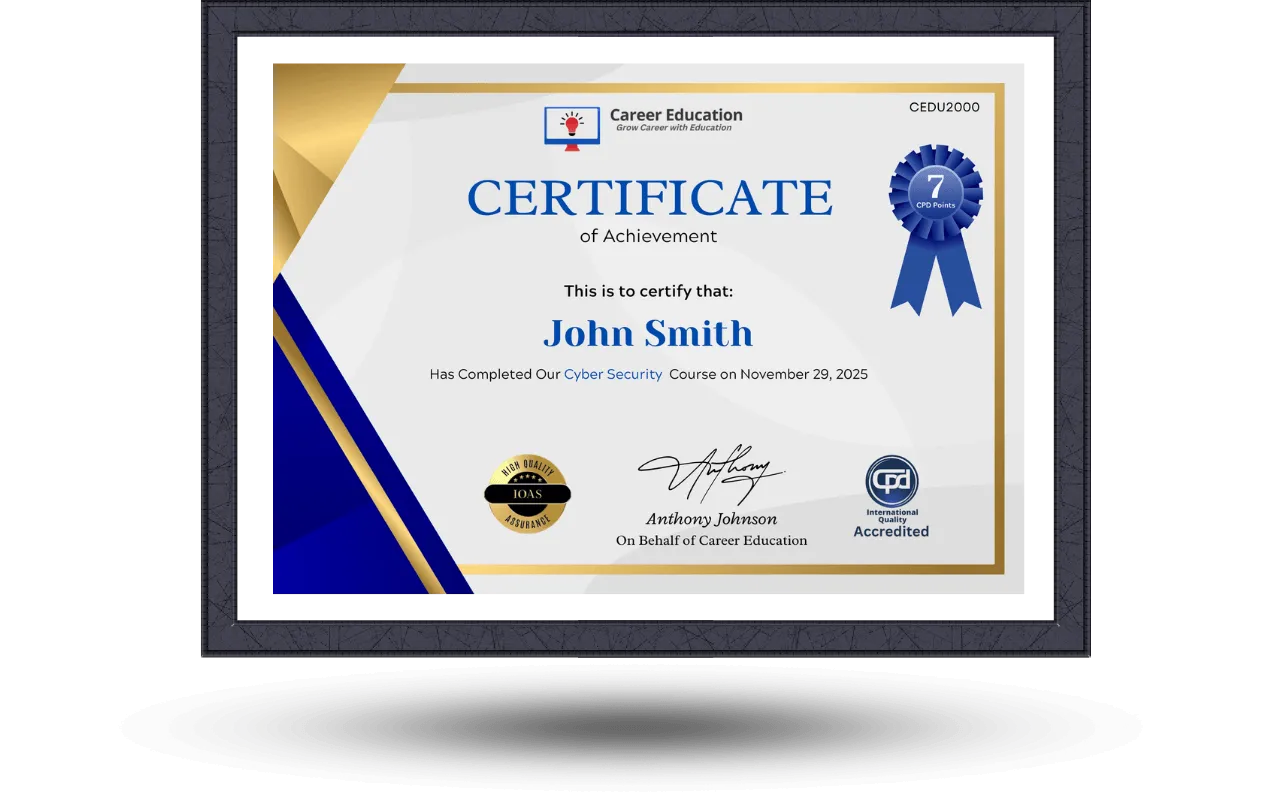
Upon completion of any course, all students are entitled to a CPD IQ Accredited e-certificate that will be issued by Career Education signifying the completion of your course.
After you complete the course and assignment, you will be eligible to order a free certificate accredited by CPD International Quality by completing the form below.
Hardcopy certificates and transcripts are also available for a small additional fee. More information is disclosed upon course completion.
Similar Courses




Frequently Asked Questions
The lifetime membership includes unlimited access to all courses, resources, and updates for a one-time fee.
You can purchase the membership directly from our website using a secure checkout process.
Yes, selected courses can be downloaded for offline access through our mobile app.
Yes, all future updates and new courses are included at no extra cost.
Yes, we offer a 30-day money-back guarantee if you are not satisfied with the membership.