
94%
OFF
OFF
Trailer Towing Safety Procedures
- Lifetime Access
- All Levels
- PDF Certificate
£296
£19
14-Day Money-Back Guarantee
Learn With Confidence








Trailer Towing Safety Procedures
Towing a trailer requires more than simply connecting it to a vehicle and driving. Safe towing depends on understanding hitch systems, trailer capacity, load distribution, vehicle handling, inspections, maintenance, reversing techniques, and the characteristics of different trailer types.
The Trailer Towing Safety Procedures course provides practical, outcome-focused knowledge for learners who want to understand the fundamentals of safe trailer towing and responsible trailer handling. The course is structured to help learners develop a systematic approach to preparing a vehicle and trailer, managing loads, driving safely, carrying out inspections, manoeuvring in confined areas, and understanding specialised trailer configurations.
Whether you are new to towing, responsible for vehicles and trailers at work, involved in logistics or transport, or simply looking to improve your towing knowledge, this course offers a useful foundation for developing safer towing practices.
Why Trailer Towing Safety Matters
Trailers can significantly change how a vehicle accelerates, brakes, turns, and responds to road conditions. Additional weight and length can affect vehicle stability, while an improperly distributed load can contribute to poor handling or trailer sway.
A trailer that is incorrectly connected, overloaded, poorly maintained, or improperly loaded can create hazards for the driver and other road users.
The Trailer Towing Safety Procedures course introduces learners to the major factors that influence safe towing. It encourages a proactive approach in which towing preparation begins before the vehicle moves.
Learners will explore how to select and use appropriate hitch systems, distribute loads correctly, conduct inspections, adapt driving techniques, reverse safely, and understand different trailer types.
Specific towing laws, licensing requirements, weight limits, equipment standards, and road regulations vary by location. Learners should always follow the applicable legal requirements, vehicle and trailer manufacturer’s instructions, and workplace procedures.
What You Will Learn
Throughout the Trailer Towing Safety Procedures course, learners will develop an understanding of:
-
The fundamentals of trailer towing
-
Key components of trailer hitch systems
-
Trailer loading principles
-
Weight distribution and towing capacity
-
Safe driving techniques when towing
-
Trailer inspection and maintenance
-
Safe reversing and parking procedures
-
Common towing challenges and how to manage them
-
Different specialised trailer types
-
The importance of pre-trip checks
-
Factors that can affect trailer stability and handling
-
How to prepare for safer towing operations
The course focuses on practical awareness and responsible towing rather than simply providing theoretical information.
Module 1: Introduction to Towing Trailers
The course begins with an introduction to trailer towing and the basic principles that every driver should understand before towing.
Learners will explore how towing a trailer affects vehicle performance and handling. The additional weight, length, and dimensions of a trailer can influence acceleration, braking, turning, manoeuvring, and visibility.
The introductory lesson also considers the importance of matching a trailer with a suitable towing vehicle. The vehicle, trailer, hitch, and load should be compatible and operated within their specified capacities.
Learners will gain an appreciation for the importance of preparation. Before setting off, the driver should understand the trailer’s characteristics, check the connection, consider the load, and ensure that required safety equipment is properly secured and functioning.
This module provides the foundation for the practical towing topics covered throughout the course.
Module 2: Trailer Hitch Systems
A secure connection between the towing vehicle and trailer is fundamental to safe towing.
This module introduces learners to trailer hitch systems and their main components.
Learners will explore the purpose of hitches, couplers, safety chains or equivalent secondary connections, electrical connections, and other relevant components depending on the towing configuration.
The course highlights the importance of selecting equipment that is compatible with the vehicle and trailer and rated appropriately for the intended load.
Learners will also examine the importance of checking the connection before every journey. A hitch may appear connected while still being improperly secured, making physical checks an essential part of pre-trip preparation.
The module reinforces the importance of following manufacturer instructions when connecting and disconnecting trailers.
By completing this module, learners will have a clearer understanding of how towing connections contribute to overall trailer safety.
Module 3: Trailer Loading and Weight Distribution
Loading a trailer correctly is one of the most important aspects of towing safety.
This module focuses on trailer loading, weight limits, and distribution of cargo.
Learners will explore why trailers should never be overloaded and why the position of cargo can be just as important as its total weight.
Improper weight distribution can affect trailer stability and steering behaviour. A load that is positioned incorrectly may increase the likelihood of sway or make the towing vehicle more difficult to control.
The course introduces the importance of understanding the vehicle’s towing capacity, trailer ratings, axle limitations, and applicable weight requirements.
Learners will also explore the importance of securing cargo so that it cannot shift during transportation.
Different loads may require different securing methods, and learners should always follow applicable regulations, manufacturer guidance, and workplace procedures.
By completing this module, learners will understand how thoughtful loading and weight management can contribute to safer towing.
Module 4: Driving Techniques and Safety
Towing changes the way a vehicle behaves on the road. Drivers therefore need to adapt their techniques accordingly.
This module explores safe driving practices when towing trailers.
Learners will examine the importance of allowing additional stopping distance, maintaining appropriate speeds, increasing following distances, and anticipating traffic conditions.
The course also addresses turning and cornering. A trailer can follow a different path from the towing vehicle, which means drivers need to consider its additional length and width when navigating corners and narrow areas.
Learners will also explore the potential effects of wind, uneven road surfaces, slopes, traffic, and other conditions on trailer handling.
The module introduces the concept of trailer sway and discusses the importance of maintaining calm, controlled responses rather than making sudden steering movements.
By developing appropriate driving habits, learners can improve their awareness and control when towing.
Module 5: Trailer Maintenance and Inspection
A trailer should be inspected regularly to help identify defects before they become operational problems.
This module focuses on trailer inspection and maintenance procedures.
Learners will explore the importance of checking key components such as tyres, wheels, lights, brakes where fitted, hitch connections, safety equipment, suspension components, doors, and other relevant parts.
The course emphasises the value of pre-trip inspections. A quick check before departure can help identify visible problems that might otherwise be overlooked.
Learners will also understand that maintenance requirements vary according to the trailer type, manufacturer, operating conditions, age, and usage.
Any defect that could affect safe operation should be addressed according to appropriate procedures before the trailer is used.
The module encourages learners to maintain accurate records where required and to ensure that maintenance is performed by appropriately qualified personnel when specialised work is necessary.
By completing this module, learners will have a stronger understanding of how inspection and maintenance support trailer reliability and safety.
Module 6: Backing Up and Parking with Trailers
Reversing a trailer can be one of the most challenging aspects of towing, particularly in confined spaces or busy environments.
This module focuses on backing up and parking techniques.
Learners will explore why trailers respond differently when reversing and why small steering inputs can produce significant changes in trailer direction.
The course introduces the importance of planning the manoeuvre before moving, checking the surrounding area, and using appropriate mirrors or assistance when necessary.
Learners will also consider the importance of watching for pedestrians, vehicles, structures, low obstacles, and other hazards.
When visibility is limited, having a trained person provide guidance can be helpful where appropriate. However, communication between the driver and guide should be clear and consistent.
The module also covers parking considerations, including selecting a suitable location, maintaining adequate clearance, and securing the vehicle and trailer when parked.
By completing this module, learners can develop greater awareness of the challenges associated with trailer manoeuvring.
Module 7: Specialized Trailer Types
Not all trailers behave or operate in the same way.
The final module introduces learners to specialised trailer types and the characteristics that may influence their operation.
Depending on their design and intended purpose, trailers may include enclosed trailers, flatbed trailers, utility trailers, refrigerated trailers, equipment trailers, livestock trailers, boat trailers, and other specialised configurations.
Each type may have different loading requirements, dimensions, centre-of-gravity characteristics, hitch arrangements, braking systems, or operating considerations.
Learners will explore why drivers need to understand the specific characteristics of the trailer they are towing rather than assuming that all trailers can be handled in exactly the same way.
The module reinforces the importance of consulting manufacturer instructions and following applicable requirements for specialised equipment.
By the end of this module, learners will understand why trailer-specific knowledge is an important part of responsible towing.
Practical Outcomes of the Course
The Trailer Towing Safety Procedures course is designed around practical outcomes that learners can apply to relevant towing situations.
After completing the course, learners should be able to:
-
Explain the fundamentals of safe trailer towing
-
Understand how towing affects vehicle handling
-
Recognise the major components of trailer hitch systems
-
Understand the importance of secure trailer connections
-
Apply basic principles of safe trailer loading
-
Understand weight distribution and towing capacity considerations
-
Recognise the importance of securing cargo
-
Adapt driving techniques when towing a trailer
-
Understand basic trailer sway considerations
-
Conduct appropriate pre-trip trailer checks
-
Recognise common maintenance and inspection requirements
-
Develop greater confidence when reversing and parking with a trailer
-
Understand how specialised trailers may require different operating considerations
-
Support safer and more responsible towing practices
These outcomes provide a useful foundation for anyone seeking to improve their trailer towing knowledge.
Who Should Take This Course?
The Trailer Towing Safety Procedures course can benefit a broad range of learners who operate or work around trailers.
It may be particularly suitable for:
-
Trailer drivers
-
Delivery drivers
-
Transport workers
-
Fleet personnel
-
Construction workers
-
Tradespeople
-
Logistics professionals
-
Equipment operators
-
Vehicle and fleet supervisors
-
Maintenance personnel
-
Small business owners who use trailers
-
Individuals who regularly tow recreational or utility trailers
It can also be useful for people who are preparing to begin towing and want to develop a stronger understanding of the fundamentals before undertaking practical training.
Develop Safer and More Confident Towing Practices
Safe trailer towing depends on preparation, equipment, load management, vehicle control, inspection, and awareness. A driver who understands these factors is better positioned to recognise potential problems before they develop into serious towing hazards.
The Trailer Towing Safety Procedures course provides a structured learning experience that covers the complete towing process—from connecting the trailer and loading cargo to driving, inspecting, reversing, parking, and understanding specialised trailer configurations.
The course encourages learners to develop a methodical approach to towing rather than relying on experience or assumptions. This can help promote better preparation and more consistent safety practices.
Whether you are new to towing or want to strengthen your existing knowledge, the course provides practical information that can support responsible trailer operation.
Remember that safe towing also requires compliance with applicable laws, licensing requirements, vehicle and trailer ratings, manufacturer instructions, and road safety regulations.
Enrol in Trailer Towing Safety Procedures today and build the practical knowledge needed to prepare, load, inspect, drive, manoeuvre, and manage trailers with greater awareness and confidence.
Course Modules
Course Content
Module 1_ Introduction to Towing Trailers.
-
Lesson 1_ Introduction to Towing Trailers.
Module 2_ Trailer Hitch Systems.
Module 3_ Trailer Loading and Weight Distribution.
Module 4_ Driving Techniques and Safety.
Module 5_ Trailer Maintenance and Inspection.
Module 6_ Backing Up and Parking with Trailers.
Module 7_ Specialized Trailer Types.
What our students say
Excellent
4.9 average
158 Reviews

Earn an Accredited Certificate
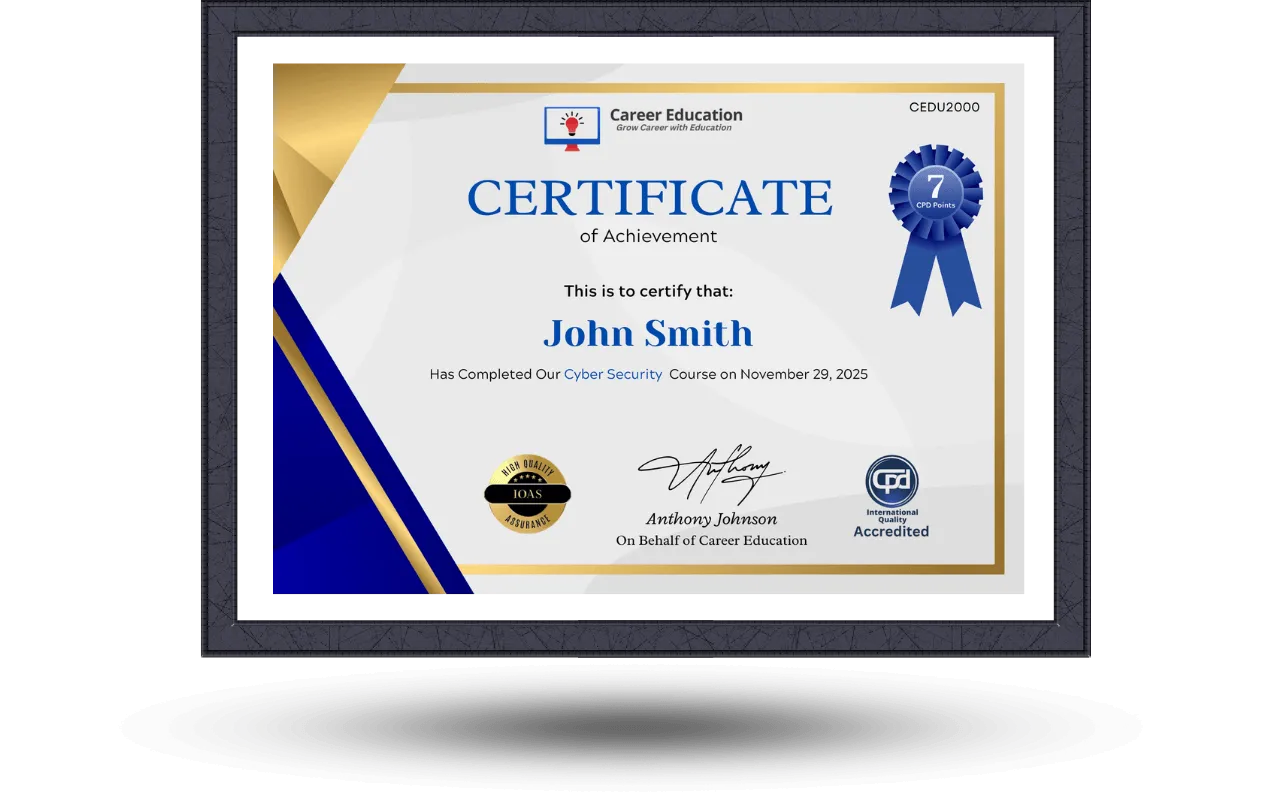
Upon completion of any course, all students are entitled to a CPD IQ Accredited e-certificate that will be issued by Career Education signifying the completion of your course.
After you complete the course and assignment, you will be eligible to order a free certificate accredited by CPD International Quality by completing the form below.
Hardcopy certificates and transcripts are also available for a small additional fee. More information is disclosed upon course completion.
Similar Courses




Frequently Asked Questions
The lifetime membership includes unlimited access to all courses, resources, and updates for a one-time fee.
You can purchase the membership directly from our website using a secure checkout process.
Yes, selected courses can be downloaded for offline access through our mobile app.
Yes, all future updates and new courses are included at no extra cost.
Yes, we offer a 30-day money-back guarantee if you are not satisfied with the membership.