
94%
OFF
OFF
Developing Confident and Assertive Communication Skills
- Lifetime Access
- All Levels
- PDF Certificate
£296
£19
14-Day Money-Back Guarantee
Learn With Confidence




Developing Confident and Assertive Communication Skills
Effective communication is more than simply expressing your thoughts. It is about communicating clearly, respecting other people’s perspectives, standing up for your needs, and handling challenging conversations with confidence. The Developing Confident and Assertive Communication Skills course is designed to help learners build practical communication skills that can be applied in professional, academic, social, and everyday situations.
Whether you find it difficult to speak up, struggle to say no, avoid difficult conversations, or sometimes find yourself becoming too passive or overly forceful, this course can help you develop a more balanced approach to communication. You will explore the principles of assertiveness, learn how to communicate your thoughts and needs clearly, establish healthy boundaries, and approach conflict more constructively.
Why Developing Confident and Assertive Communication Skills Matters
Communication plays an important role in relationships, teamwork, leadership, customer interactions, education, and professional development. When people cannot communicate their needs or opinions effectively, misunderstandings can arise and important concerns may remain unaddressed.
Assertive communication provides a practical middle ground. It allows you to express yourself honestly and confidently without unnecessarily dismissing, intimidating, or disrespecting others.
Developing confident and assertive communication skills can help you become more comfortable expressing your opinions, asking for what you need, responding to unreasonable requests, and participating in difficult discussions.
Rather than focusing only on what you say, effective assertiveness also involves how you say it. Your tone, choice of words, listening skills, body language, and ability to remain composed can all influence how your message is received.
This course focuses on developing practical skills that can support clearer and more respectful communication.
What You Will Learn
By completing the Developing Confident and Assertive Communication Skills course, you will develop an understanding of how assertiveness works and how it differs from passive, aggressive, and passive-aggressive communication.
You will learn how to:
-
Understand the key principles of assertive communication
-
Recognise different communication styles
-
Express thoughts, opinions, needs, and feelings more clearly
-
Communicate with greater confidence and self-awareness
-
Use assertive language in everyday conversations
-
Establish and communicate appropriate boundaries
-
Say no without unnecessary guilt or hesitation
-
Respond to difficult requests respectfully
-
Approach disagreements in a constructive way
-
Communicate more effectively during conflict
-
Maintain respect for yourself and others during challenging conversations
These skills can support communication across a wide range of situations, from workplace discussions and group projects to everyday interactions.
Course Curriculum
Module 1: Understanding Assertiveness
The first module introduces the foundations of assertiveness and helps you understand what confident communication looks like in practice.
You will explore the difference between being assertive, passive, aggressive, and passive-aggressive. Understanding these distinctions can help you recognise communication patterns that may prevent productive conversations.
Assertiveness is not about always getting your own way. Instead, it involves communicating your position openly while recognising that other people have their own perspectives, needs, and rights.
You will explore how confidence and self-awareness can influence communication and consider how beliefs, habits, and previous experiences can affect the way people express themselves.
By the end of this module, you will have a clearer understanding of:
-
What assertiveness means
-
The characteristics of confident communication
-
Differences between passive and assertive communication
-
Differences between aggressive and assertive behaviour
-
Why respectful communication matters
-
How self-awareness can influence communication
-
The value of expressing yourself clearly and appropriately
This foundation prepares you to apply assertive communication techniques throughout the rest of the course.
Module 2: Assertive Communication Skills
Knowing what assertiveness means is only the beginning. The second module focuses on practical communication skills that can help you express yourself more effectively.
You will explore ways to communicate your thoughts, opinions, needs, and concerns in a direct but respectful manner. The module also considers how verbal and non-verbal communication can influence your message.
You will learn how to structure your communication so that your message is easier for others to understand. You will also explore the importance of active listening and respectful responses.
Effective assertiveness involves both speaking and listening. Being confident does not mean dominating a conversation. Instead, successful communication involves expressing your perspective while remaining willing to hear another person’s point of view.
You will develop an understanding of how to:
-
Communicate your needs clearly
-
Express opinions respectfully
-
Use appropriate assertive language
-
Listen actively to others
-
Respond thoughtfully rather than reacting impulsively
-
Maintain a calm and professional communication style
-
Use appropriate verbal and non-verbal communication
-
Improve clarity during important conversations
These techniques can be valuable in workplace meetings, team discussions, customer interactions, educational settings, and everyday conversations.
Module 3: Setting Boundaries
Healthy boundaries are an important part of confident communication. Without clear boundaries, people may find themselves agreeing to requests they cannot reasonably accommodate or allowing situations to continue when they need to be addressed.
Module 3 explores how assertive communication can help you establish and communicate appropriate boundaries.
You will learn why boundaries matter and how to communicate them clearly without unnecessarily creating tension. You will also explore the importance of consistency and respectful language when communicating your limits.
Setting a boundary does not require hostility or confrontation. A clear and respectful explanation can often communicate your position effectively.
Through this module, you will learn how to:
-
Understand the purpose of healthy boundaries
-
Identify situations where boundaries may be needed
-
Communicate your limits clearly
-
Use respectful language when establishing boundaries
-
Remain consistent with your boundaries
-
Respond to challenges appropriately
-
Communicate your expectations more effectively
These skills can help you approach situations with greater clarity instead of relying on avoidance or frustration.
Module 4: Saying No with Confidence
Many people find saying no difficult. They may worry about disappointing others, appearing unhelpful, or creating conflict. As a result, they may accept requests even when doing so is inconvenient or unrealistic.
This module focuses on developing the ability to say no clearly and respectfully.
You will explore why people sometimes struggle to refuse requests and how assertive communication can make these situations easier to manage. You will learn approaches for declining requests without unnecessary explanations or hostility.
Saying no does not have to mean being disrespectful. A confident response can acknowledge another person’s request while clearly communicating your decision.
You will learn how to:
-
Understand why saying no can feel difficult
-
Communicate a clear refusal
-
Avoid unnecessarily apologetic communication
-
Respond to pressure respectfully
-
Maintain your boundaries when challenged
-
Give concise explanations when appropriate
-
Remain calm during uncomfortable conversations
These skills can be especially useful when managing competing responsibilities, responding to unreasonable requests, or protecting time and attention.
Module 5: Assertiveness in Conflict Resolution
Disagreements are a normal part of communication. The way you respond to them can determine whether a disagreement becomes more difficult or moves towards a constructive resolution.
The final module explores how assertiveness can support effective conflict resolution.
You will learn how to communicate during disagreements without unnecessarily escalating the situation. The module focuses on maintaining respect, expressing concerns clearly, listening to different perspectives, and working towards practical solutions.
You will explore how to approach challenging conversations with a more structured and constructive mindset.
By completing this module, you will develop skills to:
-
Communicate effectively during disagreements
-
Express concerns without unnecessary confrontation
-
Listen to opposing viewpoints
-
Keep conversations focused on the issue
-
Respond calmly to challenging communication
-
Reduce the risk of unnecessary escalation
-
Work towards mutually respectful solutions
-
Use assertiveness to support constructive conflict resolution
These skills can be useful in professional teams, group environments, customer-facing roles, educational settings, and everyday relationships.
Practical Benefits of the Course
The Developing Confident and Assertive Communication Skills course is designed around practical outcomes rather than simply theoretical knowledge.
After completing the course, you will have a stronger understanding of how to communicate your thoughts and needs with greater clarity. You will also have strategies for handling situations that may previously have felt uncomfortable or difficult.
Communicate More Clearly
You will learn how to express your thoughts, opinions, needs, and concerns in a direct and respectful way. Clear communication can reduce misunderstandings and make important conversations more productive.
Build Communication Confidence
Assertiveness can help you become more comfortable participating in discussions and expressing your perspective. With greater awareness of communication techniques, you can approach conversations with a more confident mindset.
Establish Healthy Boundaries
You will develop practical approaches for communicating your limits and expectations. This can help you manage requests and responsibilities more effectively.
Say No Respectfully
You will learn how to decline requests without unnecessary hesitation or confrontation. This can support more balanced and respectful communication.
Handle Conflict Constructively
Rather than avoiding every disagreement or responding aggressively, you will learn how assertive communication can help you approach conflict in a calm and solution-focused manner.
Strengthen Professional Communication
Assertive communication can be valuable in meetings, teamwork, customer service, leadership, interviews, presentations, and workplace discussions. The skills covered in this course can contribute to more effective professional interactions.
Who Can Benefit from This Course?
The Developing Confident and Assertive Communication Skills course can be useful for anyone who wants to improve the way they communicate.
It may be particularly suitable for:
-
Professionals who want stronger workplace communication skills
-
Team members who want to communicate more effectively
-
Students developing interpersonal skills
-
Individuals who find it difficult to speak up
-
People who want to establish clearer boundaries
-
Learners who want to become more confident during conversations
-
Individuals who want to handle disagreements constructively
-
Anyone interested in personal and professional development
No matter your current communication style, developing greater awareness of assertiveness can help you understand how you interact with others and identify areas for improvement.
Develop a More Confident Communication Approach
Strong communication is a skill that can be developed through knowledge, awareness, and practice. You do not need to completely change your personality to become more assertive. Instead, you can learn practical ways to communicate your thoughts and needs while continuing to respect other people.
The Developing Confident and Assertive Communication Skills course provides a structured introduction to assertiveness, communication techniques, boundary setting, confident refusal, and conflict resolution.
By working through the five modules, you can build a stronger foundation for handling everyday conversations and challenging situations with greater clarity and confidence.
Whether your goal is to improve workplace communication, become more comfortable setting boundaries, participate more confidently in discussions, or develop valuable interpersonal skills, this course offers practical knowledge that can support your personal and professional development.
Take the Next Step Towards More Assertive Communication
Your communication style can influence how effectively you express ideas, manage expectations, respond to challenges, and work with others. Developing confident and assertive communication skills can help you approach these situations with greater awareness and purpose.
Start building practical communication skills today and discover how assertiveness can support clearer conversations, stronger boundaries, more confident decisions, and more constructive conflict resolution.
Enrol in the Developing Confident and Assertive Communication Skills course and take a positive step towards becoming a clearer, more confident, and more effective communicator.
Course Modules
Course Content
Module 1_ Understanding Assertiveness
-
Lesson 1_ Understanding Assertiveness
Module 2_ Assertive Communication Skills
Module 3_ Setting Boundaries
Module 4_ Saying No with Confidence
Module 5_ Assertiveness in Conflict Resolution
What our students say
Excellent
4.9 average
158 Reviews

Earn an Accredited Certificate
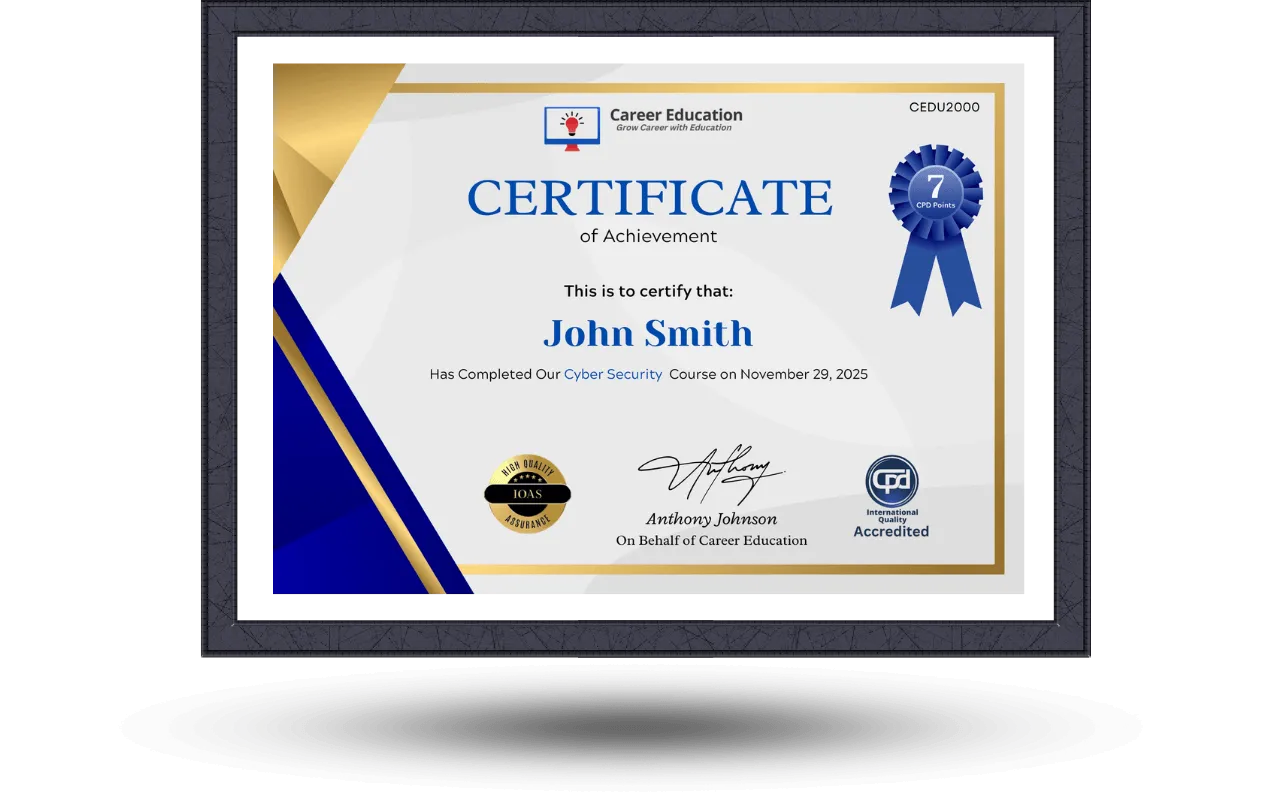
Upon completion of any course, all students are entitled to a CPD IQ Accredited e-certificate that will be issued by Career Education signifying the completion of your course.
After you complete the course and assignment, you will be eligible to order a free certificate accredited by CPD International Quality by completing the form below.
Hardcopy certificates and transcripts are also available for a small additional fee. More information is disclosed upon course completion.
Similar Courses




Frequently Asked Questions
The lifetime membership includes unlimited access to all courses, resources, and updates for a one-time fee.
You can purchase the membership directly from our website using a secure checkout process.
Yes, selected courses can be downloaded for offline access through our mobile app.
Yes, all future updates and new courses are included at no extra cost.
Yes, we offer a 30-day money-back guarantee if you are not satisfied with the membership.