
OFF
Private Investigation Skills Training
- Lifetime Access
- All Levels
- PDF Certificate
Learn With Confidence








Overview
Private Investigation Skills Training
In an increasingly complex world, professional investigation skills are valuable across security, compliance, corporate risk, fraud prevention, and private investigative environments. The Private Investigation Skills Training course is designed to help learners develop a structured understanding of investigation principles, surveillance, interviewing, evidence handling, background checks, undercover work, and cybercrime investigations.
Whether you are considering a career in private investigation, working in security or compliance, or simply want to strengthen your investigative knowledge, this course focuses on practical skills and professional approaches that can be applied to a range of investigative situations.
Rather than concentrating only on theory, the Private Investigation Skills Training course is designed around key outcomes. You will learn how investigations are structured, how information can be gathered and assessed, how evidence should be handled, and how investigators can approach different sources of information professionally and responsibly.
What Is Private Investigation Skills Training?
Private investigation involves much more than simply finding information. Effective investigators need to understand how to plan enquiries, gather reliable information, communicate with people, assess evidence, maintain accurate records, and operate within appropriate legal and ethical boundaries.
The Private Investigation Skills Training course introduces learners to these core areas through seven focused modules. It covers traditional investigative techniques alongside modern areas such as cybercrime investigations, giving you a broad foundation in contemporary investigative practice.
By completing the course, you can develop greater confidence in understanding investigative processes and recognising the different techniques that may be used during an investigation.
Why Study Private Investigation Skills Training?
Investigative work requires observation, patience, critical thinking, communication, organisation, and attention to detail. These skills can also be useful in related professional areas where identifying facts and evaluating information are important.
The Private Investigation Skills Training course can help you:
-
Understand the fundamental principles of private investigation
-
Develop awareness of professional investigative procedures
-
Explore effective surveillance techniques
-
Improve your understanding of investigative interviewing
-
Learn how evidence can be collected and preserved appropriately
-
Understand the purpose and process of background checks
-
Explore the role of undercover operations
-
Develop awareness of cybercrime investigation methods
-
Strengthen your analytical and information-gathering skills
-
Approach investigative tasks in a more structured and organised way
The course can therefore provide a useful learning foundation for anyone interested in investigation-related work or professional development.
What You Will Learn
Module 1: Introduction to Private Investigation
The first module establishes the foundation for your learning. You will explore what private investigation involves and develop an understanding of the role and responsibilities of an investigator.
Understanding the fundamentals is essential because investigations need to be planned and conducted systematically. This module helps you recognise the different stages and considerations involved in investigative work.
You will develop an awareness of:
-
The nature and purpose of private investigation
-
The role of a private investigator
-
Core investigative principles
-
Professional approaches to investigative work
-
The importance of accurate information
-
Planning and organising investigations
-
Professional and ethical considerations
By completing this module, you will have a stronger foundation from which to approach the more specialised investigative techniques covered later in the course.
Module 2: Surveillance Techniques
Surveillance is an important area of investigative practice. This module introduces techniques used to observe and gather information while maintaining a professional and systematic approach.
You will explore the principles behind surveillance and consider how investigators can plan observations effectively. The module also encourages awareness of documentation, situational awareness, and responsible investigative practice.
You will learn about:
-
The purpose of surveillance
-
Surveillance planning
-
Observation techniques
-
Recording relevant observations
-
Maintaining accurate investigative notes
-
Situational awareness
-
Professional considerations when conducting surveillance
The outcome is a better understanding of how surveillance can contribute to an investigation and how information gathered through observation can be organised for further assessment.
Module 3: Interviewing Techniques
Communication can be one of the most valuable tools available to an investigator. The interviewing module explores approaches for obtaining relevant information from people in a professional and structured manner.
You will learn why preparation is important and how questioning techniques can influence the quality of information obtained. The module also highlights the importance of listening carefully, remaining objective, and documenting relevant information accurately.
Topics covered include:
-
Preparing for investigative interviews
-
Effective questioning
-
Active listening
-
Building professional rapport
-
Assessing information provided during interviews
-
Maintaining objectivity
-
Recording interview information
These skills can be valuable beyond private investigation. Interviewing and communication abilities can also support roles in security, compliance, fraud prevention, workplace investigations, and other information-focused environments.
Module 4: Evidence Collection and Preservation
Information becomes much more useful when it is collected, documented, and preserved appropriately. Module 4 introduces learners to the principles of evidence collection and preservation.
You will explore why investigators need to maintain accurate records and protect the integrity of information gathered during an investigation.
This module covers areas such as:
-
Identifying potentially relevant evidence
-
Documenting collected information
-
Preserving evidence appropriately
-
Maintaining accurate records
-
Understanding evidence integrity
-
Organising investigative material
-
Recognising the importance of professional procedures
By the end of this module, you should have a clearer understanding of why evidence handling is such an important part of investigative work and why careless documentation can undermine an investigation.
Module 5: Background Checks
Background checks can help investigators establish relevant information about individuals or organisations. This module explores the purpose of background investigations and the importance of using information responsibly.
You will learn about approaches to gathering and reviewing background information while maintaining an objective and professional perspective.
Key areas include:
-
The purpose of background checks
-
Information-gathering methods
-
Reviewing available information
-
Assessing the reliability of information
-
Organising findings
-
Maintaining professional standards
-
Understanding responsible information handling
The skills developed in this module can be particularly relevant to investigative, security, compliance, and risk-related environments where accurate background information can support informed decision-making.
Module 6: Undercover Operations
Undercover operations represent a specialised area of investigative practice. This module introduces the concept and explores the considerations involved in undercover investigative work.
You will develop an understanding of how undercover approaches may be structured and why careful planning, professionalism, risk awareness, and appropriate boundaries are important.
The module covers:
-
The purpose of undercover investigations
-
Planning considerations
-
Professional responsibilities
-
Risk awareness
-
Maintaining appropriate boundaries
-
Recording and evaluating information
-
Ethical considerations surrounding investigative activity
This provides learners with a broader understanding of investigative methods and the complexities that can arise when information is gathered through less conventional approaches.
Module 7: Cybercrime Investigations
Modern investigations increasingly involve digital information. Cybercrime can affect individuals, businesses, and organisations, making awareness of digital investigative practices increasingly valuable.
The final module introduces learners to cybercrime investigations and the challenges associated with investigating activity in digital environments.
You will explore:
-
The nature of cybercrime
-
Common categories of cybercrime
-
Digital information relevant to investigations
-
Cybercrime investigation principles
-
The importance of documenting information
-
Digital evidence considerations
-
Challenges associated with online investigations
This module helps connect traditional investigative concepts with the modern digital environment, giving you a more comprehensive understanding of contemporary investigation.
Develop Practical Investigative Skills
A major benefit of Private Investigation Skills Training is the opportunity to build a broad range of transferable skills.
Investigation requires more than simply finding facts. You need to know how to assess information, recognise relevant details, communicate effectively, organise findings, and approach problems objectively.
Throughout the course, you can develop skills in:
Observation: Learn why careful observation and accurate documentation are important during investigative activities.
Communication: Explore interviewing and questioning approaches that can help investigators gather useful information.
Critical thinking: Develop greater awareness of how information can be reviewed and assessed rather than accepting every piece of information at face value.
Organisation: Understand why investigative records need to be structured, clear, and accurate.
Attention to detail: Recognise the importance of small but potentially significant pieces of information.
Problem-solving: Learn to approach investigative situations systematically and consider different sources of information.
These transferable abilities can support professional development in a variety of investigation-related and security-focused environments.
Who Can Benefit From This Course?
The Private Investigation Skills Training course can be suitable for a wide range of learners interested in investigative work.
It may be particularly useful for:
-
Aspiring private investigators
-
Security professionals
-
Security officers seeking additional knowledge
-
Fraud prevention professionals
-
Compliance personnel
-
Risk management professionals
-
Corporate security teams
-
Individuals interested in investigative careers
-
Professionals looking to broaden their knowledge
-
Learners interested in cybercrime investigations
You do not necessarily need extensive previous investigative experience to benefit from the course. The curriculum starts with fundamental concepts before progressing into specific investigative techniques.
Career Development Opportunities
Investigation skills can be relevant across several professional sectors. Private investigators may work on a variety of enquiries, while related skills can be useful in corporate security, fraud prevention, compliance, risk management, and other roles involving information gathering and assessment.
Completing Private Investigation Skills Training can help you demonstrate a proactive approach to developing your knowledge and understanding of investigative practices.
The course should be viewed as educational training rather than a guarantee of employment or professional licensing. Depending on where you intend to work, additional qualifications, experience, background checks, licensing, or other requirements may apply.
Learn at Your Own Pace
Online training can provide flexibility for learners balancing education with work, family responsibilities, or other commitments.
The Private Investigation Skills Training course allows you to explore the curriculum in a structured way and build your knowledge across seven key areas. You can focus on understanding the principles behind investigative work while developing knowledge that can support your longer-term career goals.
Whether you are starting to explore the field or looking to expand your existing professional knowledge, flexible learning can make it easier to fit professional development into your schedule.
Build Confidence in Investigation
Investigations can involve large amounts of information, different sources, complex circumstances, and the need for careful judgement. A structured understanding of investigative techniques can help you approach these situations with greater confidence.
From surveillance and interviewing to evidence preservation, background checks, undercover operations, and cybercrime investigations, this course provides a broad introduction to important areas of investigative practice.
Instead of focusing on one narrow aspect of investigation, the Private Investigation Skills Training curriculum gives you exposure to multiple techniques and investigative considerations.
Why Choose Private Investigation Skills Training?
Choosing the right training can help you build knowledge that is relevant to your professional goals. This course brings together several core areas of investigation into one comprehensive learning programme.
You will explore both traditional and modern investigative concepts, helping you understand how investigation has evolved alongside changes in technology and information.
By the end of the course, you can expect to have developed a stronger understanding of:
-
How private investigations are structured
-
How surveillance supports investigative enquiries
-
How interviews can be approached professionally
-
Why evidence collection and preservation matter
-
How background checks can contribute to investigations
-
The considerations involved in undercover operations
-
How cybercrime investigations differ from traditional enquiries
-
The importance of professional, ethical, and responsible investigative practice
Start Your Private Investigation Learning Journey
If you are interested in developing investigative knowledge and exploring a career connected to private investigation, security, compliance, fraud prevention, or cybercrime, the Private Investigation Skills Training course offers a comprehensive starting point.
With seven focused modules covering the fundamentals of investigation, surveillance techniques, interviewing, evidence handling, background checks, undercover operations, and cybercrime investigations, the course is designed to give you a well-rounded introduction to the field.
Invest in your professional development, expand your investigative knowledge, and build a stronger foundation for your future career.
Enrol in Private Investigation Skills Training today and take the next step towards developing valuable investigation skills for the modern professional environment.
Course Modules
Course Content
Module 1 Introduction to Private Investigation.
-
Lesson 1 Introduction to Private Investigation.
Module 2 Surveillance Techniques.
Module 3 Interviewing Techniques.
Module 4 Evidence Collection and Preservation.
Module 5 Background Checks.
Module 6 Undercover Operations.
Module 7 Cybercrime Investigations.
What our students say

Earn an Accredited Certificate
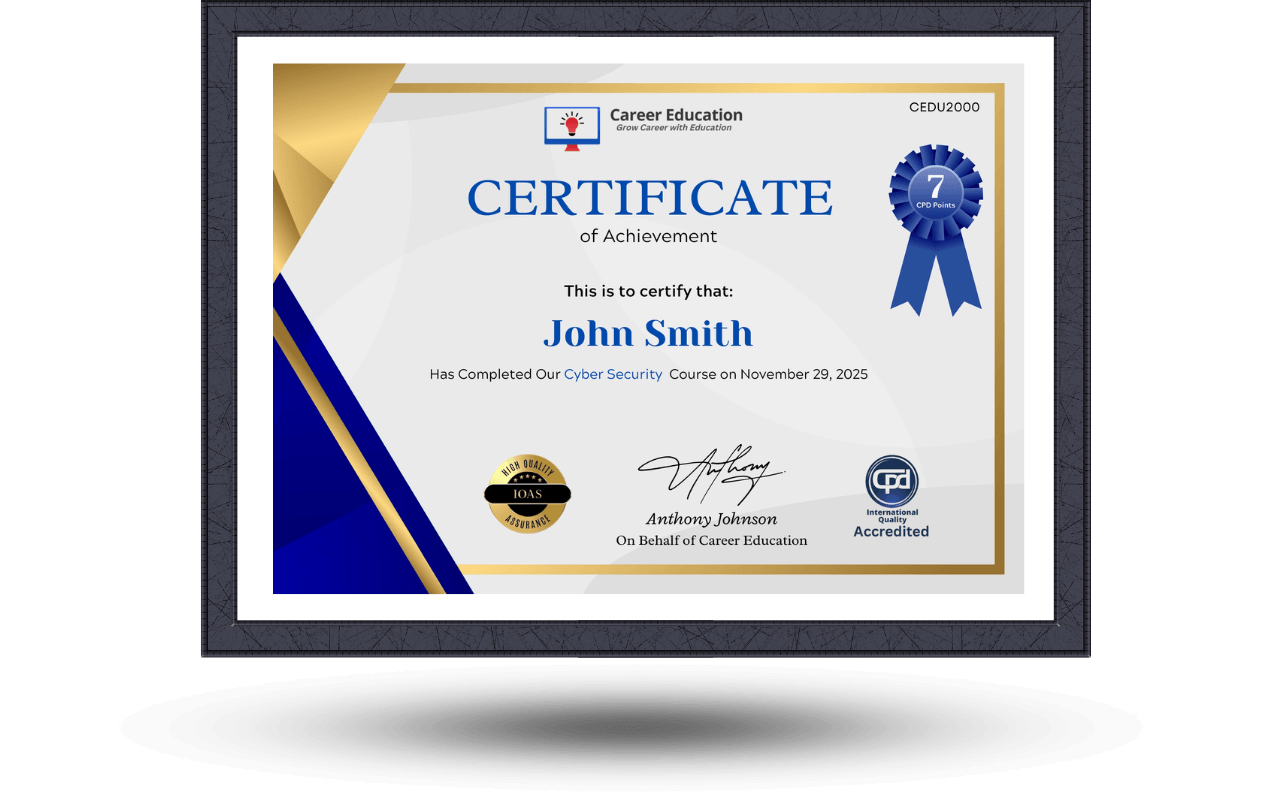
Upon completion of the course, an e-certificate will be downloadable from Khan Education signifying the completion of your course. But, the course is CPD Accredited and after you complete the assignment, you will be eligible to order a certificate accredited by CPD International Quality for £5.99 only. If you want a hardcopy certificate accredited by CPD IQ, you can get it for only £15.99.
Get your CertificateSimilar Courses