
94%
OFF
OFF
Theology Training
- Lifetime Access
- All Levels
- PDF Certificate
£296
£19
14-Day Money-Back Guarantee
Learn With Confidence








# Theology Training
Explore the foundations, history, interpretation and contemporary relevance of religious thought with **Theology Training**. This comprehensive course is designed for learners who want to develop a deeper understanding of theology, Christian thought, world religions, sacred texts, ethics, spirituality and the role of religion in contemporary society.
Theology is a broad and intellectually rich field that examines questions about God, faith, religious belief, human existence, morality, spirituality and the meaning people give to their lives. Studying theology encourages learners to engage with important questions from historical, philosophical, cultural and religious perspectives.
**Theology Training** provides a structured learning journey through eight carefully organised modules. You will begin with an introduction to theology and religious thought before progressing into Christian theology, comparative theology, sacred texts, moral theology, historical developments, contemporary issues and theological reflection.
Whether you are exploring theology for personal interest, preparing for further academic study, developing knowledge for community or educational work, or simply seeking a more informed understanding of religious ideas, this course provides a valuable foundation.
## Why Study Theology?
Religion has influenced human societies, cultures, philosophies, institutions and traditions for thousands of years.
Understanding theology can therefore provide insight into much more than religious doctrine. It can help learners explore how people have understood concepts such as God, morality, suffering, human purpose, community, justice and spirituality.
Theological study also encourages critical thinking.
Rather than simply accepting ideas at face value, learners can examine how beliefs developed, how texts have been interpreted and how different traditions have responded to important questions.
**Theology Training** provides an opportunity to approach these subjects in a structured and thoughtful way.
## Course Learning Outcomes
By completing **Theology Training**, you will develop the knowledge to:
* Explain the basic meaning and scope of theology.
* Understand key concepts within religious thought.
* Explore foundational themes in Christian theology.
* Compare beliefs and theological perspectives across different religious traditions.
* Develop greater awareness of world religions and their beliefs.
* Explore approaches to interpreting and analysing sacred texts.
* Understand fundamental concepts in ethics and moral theology.
* Examine the historical development of religious thought.
* Explore the relationship between theology and contemporary society.
* Develop greater awareness of spirituality and theological reflection.
* Approach religious ideas with greater critical awareness and intellectual openness.
* Build a foundation for further study in theology, religious studies or related fields.
—
## Module 1: Introduction to Theology and Religious Thought
The first module introduces the field of theology and establishes the foundation for the course.
You will explore what theology means and consider the different ways people have approached questions concerning God, faith, religion and human existence.
Theology can involve philosophical reflection, interpretation of religious traditions, historical study and examination of beliefs and practices.
You will develop an understanding of why theology is not limited to memorising religious teachings. It involves asking questions, examining ideas and considering how religious thought develops within particular historical and cultural contexts.
The module also introduces the broader concept of religious thought.
People and communities have developed different understandings of the divine, morality, humanity and the purpose of life. Exploring these ideas can provide a deeper appreciation of both similarities and differences between religious traditions.
By completing this module, you will have a stronger foundation for understanding the theological subjects explored throughout the rest of the course.
—
## Module 2: Foundations of Christian Theology
Module 2 focuses on the foundations of Christian theology.
You will explore key concepts that have shaped Christian theological thought and consider how these ideas have influenced Christian belief and practice.
Christian theology encompasses a wide range of traditions and perspectives. Understanding its foundations provides an important starting point for examining how Christians have thought about God, humanity, salvation, faith and other central theological questions.
The module encourages learners to explore Christian theology as a developing intellectual and religious tradition.
You will consider how theological ideas can be understood through different perspectives and how interpretations may vary between Christian traditions.
The aim is not simply to provide a list of doctrines, but to help you understand the concepts and questions that have contributed to Christian theological development.
This foundation can support further exploration of Christian history, biblical interpretation, ethics and spirituality.
—
## Module 3: Comparative Theology: World Religions and Beliefs
Religion is not a single tradition or system of thought.
Module 3 introduces comparative theology and explores world religions and their beliefs.
You will develop greater awareness of how different religious traditions approach important questions about God or ultimate reality, human existence, morality, spirituality and religious practice.
Comparative study can encourage learners to identify both similarities and differences between traditions while avoiding oversimplification.
Each religious tradition contains its own internal diversity, historical development and different schools of thought.
The module encourages an informed and respectful approach to comparative study.
Understanding different religious perspectives can be valuable in increasingly diverse communities and workplaces. It can also help learners communicate more effectively with people whose beliefs differ from their own.
Comparative theology can encourage intellectual curiosity while supporting a deeper understanding of religious diversity.
By completing this module, you will have a broader perspective on world religions and religious thought.
—
## Module 4: Sacred Texts: Interpretation and Analysis
Sacred texts are central to many religious traditions.
Module 4 explores approaches to interpreting and analysing sacred texts and considers why interpretation can be complex.
Texts are often read within particular historical, cultural and religious contexts. Understanding these contexts can help learners recognise why the same passage may be interpreted differently by different communities or scholars.
You will explore the importance of considering language, context, tradition and interpretation when studying sacred texts.
The module encourages learners to move beyond isolated quotations and consider the wider context in which texts were produced and interpreted.
You will also develop awareness of the distinction between personal interpretation and more structured approaches to textual analysis.
These skills can be useful for anyone interested in biblical studies, religious studies, theology, teaching or academic research.
The goal is to encourage careful, thoughtful engagement with sacred literature.
—
## Module 5: Ethics and Moral Theology
Questions about right and wrong have been central to religious thought throughout history.
Module 5 examines ethics and moral theology and explores how religious traditions have approached moral questions.
You will consider how beliefs about God, humanity, responsibility, justice and community can influence moral thinking.
Moral theology can address questions concerning how people should live and what constitutes a good or meaningful life.
The module encourages learners to think critically about the relationship between religious beliefs and ethical decision-making.
You will also consider how moral perspectives can develop in response to changing social circumstances.
Ethical questions are rarely simple, and different traditions or individuals may reach different conclusions.
Studying moral theology can therefore help learners understand the reasoning behind different ethical perspectives rather than simply focusing on conclusions.
This can support thoughtful discussion of moral issues in personal, social and professional contexts.
—
## Module 6: Historical Theology: Development of Religious Thought
Religious ideas develop within history.
Module 6 explores historical theology and examines how theological thought has changed and developed over time.
Historical events, intellectual movements, cultural changes, debates and influential thinkers can all contribute to the development of religious ideas.
You will explore why understanding historical context is important when studying theology.
Ideas that may appear familiar today can have complex histories, and theological concepts may have been interpreted differently across different periods and communities.
The module encourages learners to consider theology as a living intellectual tradition that has developed through centuries of discussion and debate.
By studying historical developments, you can gain a deeper appreciation of why different theological traditions exist and how religious thought responds to changing circumstances.
This historical perspective can also help you understand contemporary theological debates more effectively.
—
## Module 7: Theology in Contemporary Society
Theology does not exist only in historical or academic settings.
Module 7 explores the role of theology in contemporary society.
Religious beliefs continue to influence personal identities, communities, cultures and public discussions around the world.
You will consider how theological ideas interact with modern social issues and changing cultural environments.
Contemporary society presents new questions and challenges that religious thinkers and communities may respond to in different ways.
These may involve questions about social responsibility, identity, morality, community, technology, cultural change and the role of religion in public life.
The module encourages learners to consider how theology can remain relevant while also recognising that religious communities may respond differently to modern developments.
Developing this awareness can help learners understand the continuing relationship between religion and society.
—
## Module 8: Spirituality and Theological Reflection
The final module explores spirituality and theological reflection.
Spirituality can involve questions of meaning, purpose, connection, inner life and relationship with the sacred or transcendent.
Theological reflection provides an opportunity to consider experiences and beliefs through a theological lens.
You will explore how reflection can support deeper engagement with religious ideas and personal questions.
The module encourages learners to consider how theology can connect intellectual understanding with lived experience.
Reflection can help individuals examine their assumptions, explore questions of meaning and develop greater awareness of how beliefs influence perspectives and actions.
This final module brings together themes explored throughout the course and encourages a thoughtful approach to theology as both an academic subject and a field of personal and spiritual reflection.
—
# Develop a Broader Understanding of Religious Thought
One of the major benefits of **Theology Training** is the opportunity to explore religious thought from multiple perspectives.
You will examine Christian theology alongside comparative approaches to world religions, sacred texts, ethics, history, contemporary society and spirituality.
This broad approach can help you understand religion as a complex field rather than a collection of isolated beliefs.
## Strengthen Critical Thinking Skills
Theological study involves asking questions and examining ideas carefully.
You will encounter different interpretations, traditions and perspectives throughout the course.
This encourages learners to compare viewpoints, consider context and develop reasoned conclusions.
These critical thinking skills can be valuable beyond theological study and may support communication, research, education and professional development.
## Explore Christian Theology
Christian theology is an important component of the course.
You will explore foundational Christian theological concepts while also considering how religious thought has developed historically.
This can provide a useful starting point for learners interested in Christianity, Christian studies or broader religious scholarship.
## Understand Religious Diversity
Modern societies contain people from many religious, spiritual and non-religious backgrounds.
Understanding religious diversity can support respectful communication and reduce misconceptions.
The comparative theology module encourages learners to approach different traditions with curiosity and respect.
This knowledge can be particularly useful for people working in education, community services, social care, counselling, leadership or other people-focused environments.
## Develop Sacred Text Analysis Skills
Sacred texts have shaped religious beliefs and communities for centuries.
Learning how to approach these texts carefully can help you understand why interpretations differ and why context matters.
The course introduces learners to the importance of thoughtful analysis rather than relying on assumptions or isolated passages.
## Explore Ethical Questions
Ethics affects everyday life.
Questions about responsibility, justice, morality and how people should treat one another are relevant in families, communities, workplaces and wider society.
Studying moral theology can help you understand how religious traditions approach these questions.
## Understand Historical Development
Religious thought has changed and developed through centuries of debate and reflection.
Historical theology helps you see how theological concepts have been shaped by events, thinkers, communities and changing social circumstances.
This historical awareness can provide valuable context for understanding present-day religious discussions.
## Connect Theology With Modern Life
Theology continues to influence conversations about identity, values, community and social responsibility.
Studying theology in a contemporary context can help you understand how religious ideas interact with modern society.
This can be particularly valuable for anyone who works with diverse communities or wants to understand the role of religion in today’s world.
## Develop Reflective Awareness
Theology can also be a deeply reflective discipline.
Exploring spirituality and theological reflection provides opportunities to consider questions of meaning, purpose and belief.
The course encourages learners to engage with these questions thoughtfully while respecting different perspectives.
## Who Is This Course For?
**Theology Training** is suitable for:
* Beginners interested in theology.
* Religious studies students.
* Learners interested in Christian theology.
* People interested in world religions.
* Community and voluntary sector professionals.
* Educators and teaching professionals.
* Faith and community workers.
* Individuals interested in spirituality.
* Readers interested in sacred texts.
* People considering further academic study.
* Anyone seeking a broader understanding of religious thought.
The course is designed to be accessible to learners without extensive previous theological knowledge.
## Support Further Learning
**Theology Training** can provide a useful foundation for further study in areas such as:
* Theology.
* Religious studies.
* Biblical studies.
* Philosophy of religion.
* Ethics.
* History of religion.
* Comparative religion.
* Spirituality.
* Religious education.
It is an educational course and does not represent a formal academic degree or professional qualification unless explicitly stated by the course provider.
## Build Knowledge for a Diverse World
Religious literacy can be an increasingly valuable form of knowledge in diverse communities.
Understanding how people interpret faith, morality, spirituality and religious traditions can support more informed conversations and respectful relationships.
The course provides learners with a framework for exploring these subjects without reducing complex traditions to simplistic descriptions.
## Why Choose Theology Training?
**Theology Training** offers an eight-module learning journey covering:
1. Introduction to Theology and Religious Thought.
2. Foundations of Christian Theology.
3. Comparative Theology: World Religions and Beliefs.
4. Sacred Texts: Interpretation and Analysis.
5. Ethics and Moral Theology.
6. Historical Theology: Development of Religious Thought.
7. Theology in Contemporary Society.
8. Spirituality and Theological Reflection.
This broad curriculum allows you to explore theology from foundational, historical, comparative, ethical and contemporary perspectives.
You will develop knowledge that can support personal exploration, professional development and further academic learning.
## Start Your Theology Learning Journey Today
Theology invites us to explore some of life’s most enduring questions: What do people believe about God or ultimate reality? What gives life meaning? How should people live? How have religious traditions developed? Why do sacred texts receive different interpretations? How can spirituality influence everyday life?
**Theology Training** provides a structured opportunity to explore these questions while developing a broader understanding of Christian theology, world religions, sacred texts, ethics, history and contemporary religious thought.
Whether you are studying theology for personal enrichment, preparing for further education, working with diverse communities or simply curious about the ideas that have shaped societies for centuries, this course provides a valuable foundation.
By completing the course, you can develop greater confidence in discussing theological concepts, understanding religious diversity, examining sacred texts and reflecting on the relationship between faith, ethics, history and contemporary society.
**Enrol in Theology Training today and begin developing a deeper, broader and more informed understanding of theology, religious thought and spirituality.**
Course Modules
Course Content
Module 1_ Introduction to Theology and Religious Thought
-
Lesson 1_ Introduction to Theology and Religious Thought
Module 2_ Foundations of Christian Theology
Module 3_ Comparative Theology_ World Religions and Beliefs
Module 4_ Sacred Texts_ Interpretation and Analysis
Module 5_ Ethics and Moral Theology
Module 6_ Historical Theology_ Development of Religious Thought
Module 7_ Theology in Contemporary Society
Module 8_ Spirituality and Theological Reflection
What our students say
Excellent
4.9 average
158 Reviews

Earn an Accredited Certificate
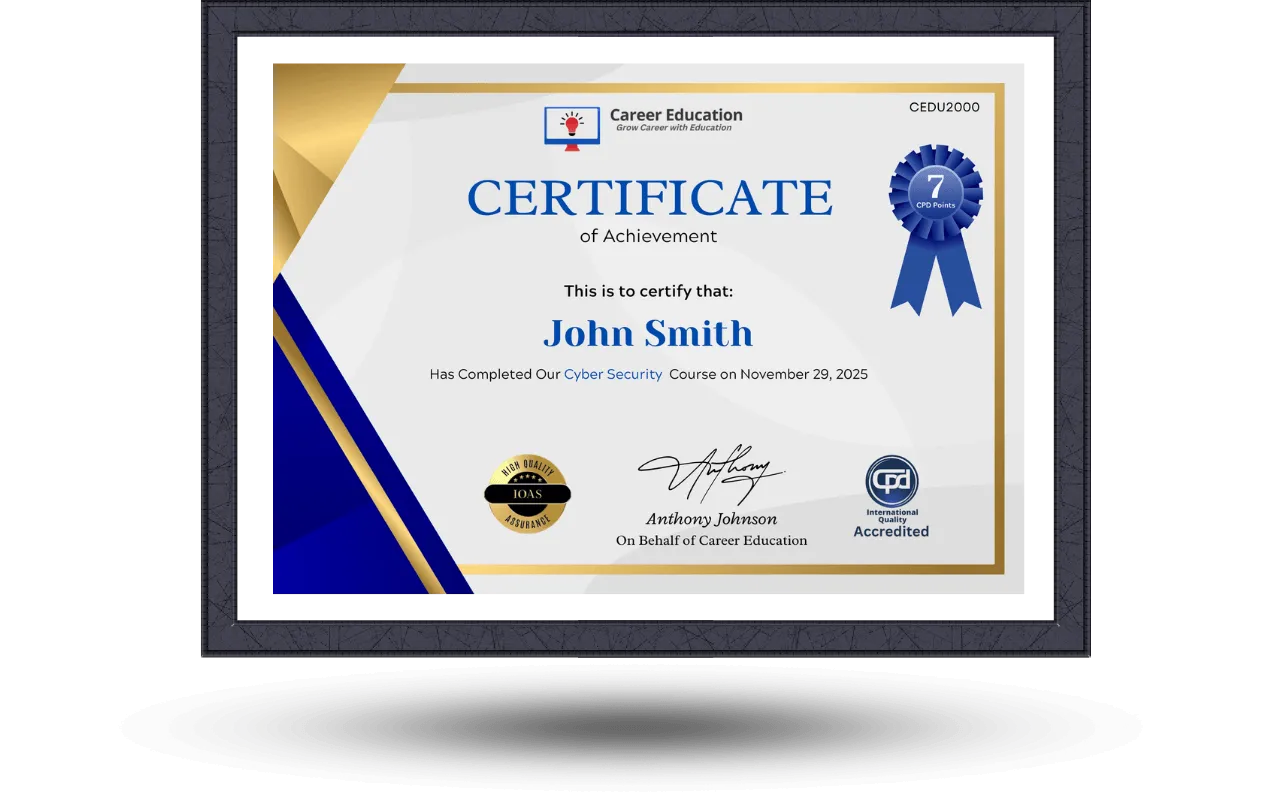
Upon completion of any course, all students are entitled to a CPD IQ Accredited e-certificate that will be issued by Career Education signifying the completion of your course.
After you complete the course and assignment, you will be eligible to order a free certificate accredited by CPD International Quality by completing the form below.
Hardcopy certificates and transcripts are also available for a small additional fee. More information is disclosed upon course completion.
Similar Courses



Frequently Asked Questions
The lifetime membership includes unlimited access to all courses, resources, and updates for a one-time fee.
You can purchase the membership directly from our website using a secure checkout process.
Yes, selected courses can be downloaded for offline access through our mobile app.
Yes, all future updates and new courses are included at no extra cost.
Yes, we offer a 30-day money-back guarantee if you are not satisfied with the membership.