OFF
Child Psychology Course
- Lifetime Access
- All Levels
- PDF Certificate
Learn With Confidence








Overview
Child Psychology Course
Understand How Children Develop, Learn, Sense and Respond
Children do not simply become miniature versions of adults. Their brains, nervous systems, motor abilities, sensory experiences and cognitive skills develop continuously throughout childhood, shaping how they interact with people, understand their environment and learn from experience.
Understanding these developmental processes can help parents, educators, childcare professionals, support workers and learners develop a deeper appreciation of children’s behaviour and learning needs.
The Child Psychology Course provides an accessible introduction to important concepts related to children’s neurological, sensory, motor and cognitive development. The course explores the brain and nervous system, the structure and development of the nervous system, motor development, sensory development and intelligence.
Rather than focusing on a single aspect of childhood, the course provides a broader perspective on how different developmental systems contribute to children’s growth and behaviour.
Through seven structured modules, learners will explore how the brain and nervous system support development, how motor abilities develop, how sensory information is processed and how intelligence can be understood within the context of child development.
Whether you work with children, are considering a career in childcare or education, are studying psychology or simply want to understand child development more effectively, this course provides valuable foundational knowledge.
Why Study Child Psychology?
Childhood is a period of significant physical, neurological, sensory and cognitive development.
Children learn to control their movements, interpret sensory information, communicate, solve problems and interact with their environment. These abilities do not develop independently. Different areas of development interact with one another as children grow.
Understanding child psychology can therefore provide useful insight into how children learn and develop.
The Child Psychology Course introduces learners to the biological and psychological foundations that influence childhood development.
You will explore:
-
The brain and nervous system
-
The structure of the nervous system
-
Motor development
-
Development and training of the nervous system
-
Sensation
-
Sensory development
-
Intelligence
By studying these areas together, you can develop a more comprehensive understanding of important developmental processes.
What You Will Learn
The course consists of seven modules:
-
The Brain and the Nervous System
-
Structure of the Nervous System
-
Motor Development
-
Training of the Nervous System
-
Sensation
-
Sensory Development
-
Intelligence
Each module explores a different aspect of development and contributes to a broader understanding of childhood psychology.
Module 1 – The Brain and the Nervous System
The first module explores The Brain and the Nervous System, providing a biological foundation for understanding child psychology.
The brain plays a central role in children’s development. It is involved in movement, sensation, learning, memory, communication, emotional responses and many other functions.
The nervous system provides the communication network through which information is transmitted throughout the body.
Understanding these systems can help learners appreciate the biological foundations of behaviour and development.
The introductory lesson provides an accessible starting point for exploring how the brain and nervous system relate to children’s development.
You will develop awareness of why neurological development is important when considering how children learn, respond to their environment and acquire new abilities.
This module establishes important foundations for the developmental topics explored throughout the rest of the course.
Module 2 – Structure of the Nervous System
Module 2 examines the Structure of the Nervous System in greater detail.
Developing an understanding of the nervous system’s organisation can help learners appreciate how different parts of the system contribute to human functioning.
Children’s development involves changes in neurological structures and functions over time. These changes support the acquisition of increasingly complex abilities.
This module helps you explore the structure of the nervous system and understand why it is important to child development.
You will build on the knowledge introduced in the first module and develop a more detailed foundation for understanding neurological development.
This knowledge can also provide useful context for later modules covering motor skills and sensory development.
Module 3 – Motor Development
Children’s physical abilities change significantly throughout childhood.
Module 3 focuses on Motor Development, exploring how children develop the ability to control and coordinate movement.
Motor development can include the progression of physical abilities that allow children to interact with people and objects around them.
Movement is an important part of childhood because children use motor skills to explore their environment, participate in activities and develop increasing independence.
Understanding motor development can help parents, educators and childcare professionals recognise the importance of age-appropriate opportunities for movement and physical activity.
This module helps learners develop greater awareness of how neurological development and physical movement are connected.
It also provides useful context for understanding why children may develop particular abilities at different stages and why individual developmental differences are important to consider.
Module 4 – Training of the Nervous System
Module 4 explores the Training of the Nervous System, continuing the course’s focus on neurological development.
Children’s nervous systems interact continuously with their environment. Learning and experience can contribute to the development of skills and abilities.
This module introduces the idea of developing and strengthening neurological functions through experience and activity.
You will explore the importance of understanding neurological development within the broader context of childhood learning and behaviour.
The module encourages learners to consider how children’s experiences can interact with their developing nervous systems.
This can provide a useful perspective for anyone involved in children’s education, care or development.
Module 5 – Sensation
Module 5 focuses on Sensation, introducing learners to the processes through which sensory information is received.
Children are constantly exposed to information from their surroundings.
They see, hear, touch, taste and smell, while also receiving information related to movement and body position.
Sensory information provides children with important information about the world around them.
Understanding sensation can therefore help learners appreciate how children interact with and respond to their environments.
This module introduces important concepts related to sensory processing and provides a foundation for the sensory development material that follows.
By studying sensation, you can develop a greater appreciation of the role sensory experiences play in children’s learning and development.
Module 6 – Sensory Development
Module 6 focuses specifically on Sensory Development.
Sensory development is an important component of childhood development because children rely on sensory information to explore their surroundings and learn about the world.
As children grow, their ability to process and respond to sensory information develops.
This module helps learners understand sensory development and its relationship with wider developmental processes.
You will explore the importance of sensory experiences in childhood and develop greater awareness of how sensory development can influence children’s interactions with their environment.
This knowledge can be particularly useful for people working in education, childcare and other environments where understanding children’s developmental needs is important.
Module 7 – Intelligence
The final module explores Intelligence, introducing learners to an important area of psychological development.
Intelligence is a complex concept that can be considered from different perspectives.
Children demonstrate their developing cognitive abilities in many ways, including learning, reasoning, problem-solving, understanding information and adapting to new situations.
This module provides an introduction to intelligence within the broader context of child development.
You will develop greater awareness of the importance of cognitive development and how children’s abilities can develop over time.
The module also helps place intelligence within the wider developmental picture introduced throughout the course.
Practical Learning Outcomes
By completing the Child Psychology Course, you can develop a strong foundation in key areas of child development.
You will be able to:
-
Explain the basic relationship between the brain, nervous system and child development.
-
Develop an understanding of the structure of the nervous system.
-
Recognise the importance of neurological development during childhood.
-
Understand the basic principles of motor development.
-
Recognise the relationship between neurological development and physical movement.
-
Understand the importance of sensory experiences during childhood.
-
Explain the basic concepts associated with sensation.
-
Develop awareness of sensory development.
-
Understand the importance of cognitive development.
-
Explore the concept of intelligence within child psychology.
-
Recognise that children develop at individual rates.
-
Develop relevant terminology for further study in psychology and child development.
-
Apply foundational knowledge to educational and childcare contexts.
-
Build a foundation for further learning in child psychology and development.
Understand the Biological Foundations of Child Development
Child psychology cannot be fully understood without considering the brain and nervous system.
The brain influences many aspects of children’s development, while the nervous system allows the body to receive information, respond to stimuli and coordinate activities.
The first two modules of the Child Psychology Course provide learners with the foundation needed to understand these biological systems.
This knowledge can help you appreciate why neurological development is so important during childhood.
It also provides useful context for understanding movement, sensation, learning and cognitive development.
Understand Motor Development
Motor skills allow children to interact with the physical world.
Young children gradually develop greater control over their movements, coordination and physical abilities.
Motor development is connected to neurological maturation, experience and opportunities for movement.
Understanding this process can help professionals and parents appreciate the importance of providing children with appropriate opportunities to develop physical skills.
The motor development module introduces these principles and helps learners understand the role movement plays in childhood development.
Explore the Role of Sensory Development
Children learn about their surroundings partly through their senses.
Sensory experiences allow children to receive information about their environment and respond to what they encounter.
The Child Psychology Course includes dedicated modules on sensation and sensory development to help learners understand this important area.
This can be particularly useful for anyone working with young children because sensory experiences are a regular part of children’s daily lives.
Understanding sensory development can also help learners develop a broader view of how children experience their surroundings.
Develop a Broader View of Child Development
Child development involves multiple interconnected systems.
Physical development, neurological development, sensory development and cognitive development all contribute to the child’s overall development.
The course encourages learners to consider these areas together rather than treating them as completely separate processes.
For example, motor development is connected to the nervous system, while sensory information can contribute to learning and interaction with the environment.
Developing this broader perspective can help you understand childhood development more holistically.
Understand Intelligence and Cognitive Development
Children develop cognitive abilities as they grow.
They learn to understand concepts, solve problems, remember information and adapt to new situations.
The intelligence module introduces learners to this important area and helps them understand why cognitive development is an essential part of child psychology.
Rather than viewing intelligence as a single fixed characteristic, learners can develop an appreciation for the complexity of children’s cognitive development.
This can support a more thoughtful approach to children’s learning and educational experiences.
Who Is This Child Psychology Course For?
The Child Psychology Course is suitable for a broad range of learners.
Parents and Carers
Parents and carers can develop a deeper understanding of children’s neurological, sensory, motor and cognitive development.
Teachers and Teaching Assistants
Education professionals can use foundational child psychology knowledge to better understand the developmental processes that influence children’s learning.
Childcare Professionals
Those working in nurseries, childcare settings or children’s services can benefit from developing broader knowledge of child development.
Support Workers
Professionals who support children can use this knowledge to strengthen their understanding of developmental processes.
Psychology Students
Students interested in psychology can use the course as an introduction to important areas of child development.
Aspiring Child Development Professionals
If you are considering a career involving children, the course can help you explore the subject and establish a foundation for further learning.
Lifelong Learners
Anyone interested in understanding how children develop can benefit from this accessible introduction to child psychology.
Support Your Professional Development
Knowledge of child psychology can complement many careers involving children and young people.
Education, childcare, social support, children’s services and related fields all require an understanding of developmental processes.
The Child Psychology Course can help you develop foundational knowledge that complements practical experience and further professional training.
The course is educational in nature and should not be regarded as a replacement for accredited psychology qualifications, clinical training, professional registration or specialist developmental assessment training.
If your career requires formal qualifications or regulated professional competence, appropriate recognised training should be pursued separately.
Learn at Your Own Pace
Online learning provides flexibility for people with different schedules and backgrounds.
You can study the Child Psychology Course around your existing commitments and work progressively through the seven modules.
Whether you are a parent, educator, childcare professional, student or someone simply interested in psychology, the course provides a structured opportunity to develop your knowledge.
You can revisit key concepts as needed and use the course as a foundation for further learning.
Build Your Understanding of Children’s Development
Understanding children requires more than observing their behaviour.
To develop a deeper perspective, it is useful to consider what is happening within the developing brain and nervous system, how motor abilities emerge, how sensory information is experienced and how cognitive abilities develop.
The Child Psychology Course brings these areas together in a structured learning programme.
You will explore the brain and nervous system, the structure of the nervous system, motor development, nervous system development, sensation, sensory development and intelligence.
Together, these topics provide a broad introduction to important biological and psychological aspects of childhood development.
Take the Next Step in Your Child Psychology Learning
Every child develops through a unique combination of biological development, experience and interaction with their environment.
Developing an understanding of the processes behind childhood development can help you approach children’s learning and behaviour with greater knowledge and awareness.
The Child Psychology Course provides an accessible starting point for exploring these important subjects.
Whether you want to strengthen your professional knowledge, support your work with children, explore psychology as a field of study or simply understand child development better, this course can help you build a valuable foundation.
Enrol in the Child Psychology Course today and begin developing a deeper understanding of the brain, nervous system, motor development, sensory development and intelligence that shape children’s growth and learning.
Course Modules
Course Content
Module 1_ The Brain and The Nervous System
-
Lesson 1_ The Brain and The Nervous System
Module 2_ Structure of The Nervous System
Module 3_ Motor Development
Module 4_ Training Of The Nervous System
Module 5_ Sensation
Module 6_ Sensory Development
Module 7_ Intelligence
What our students say

Earn an Accredited Certificate
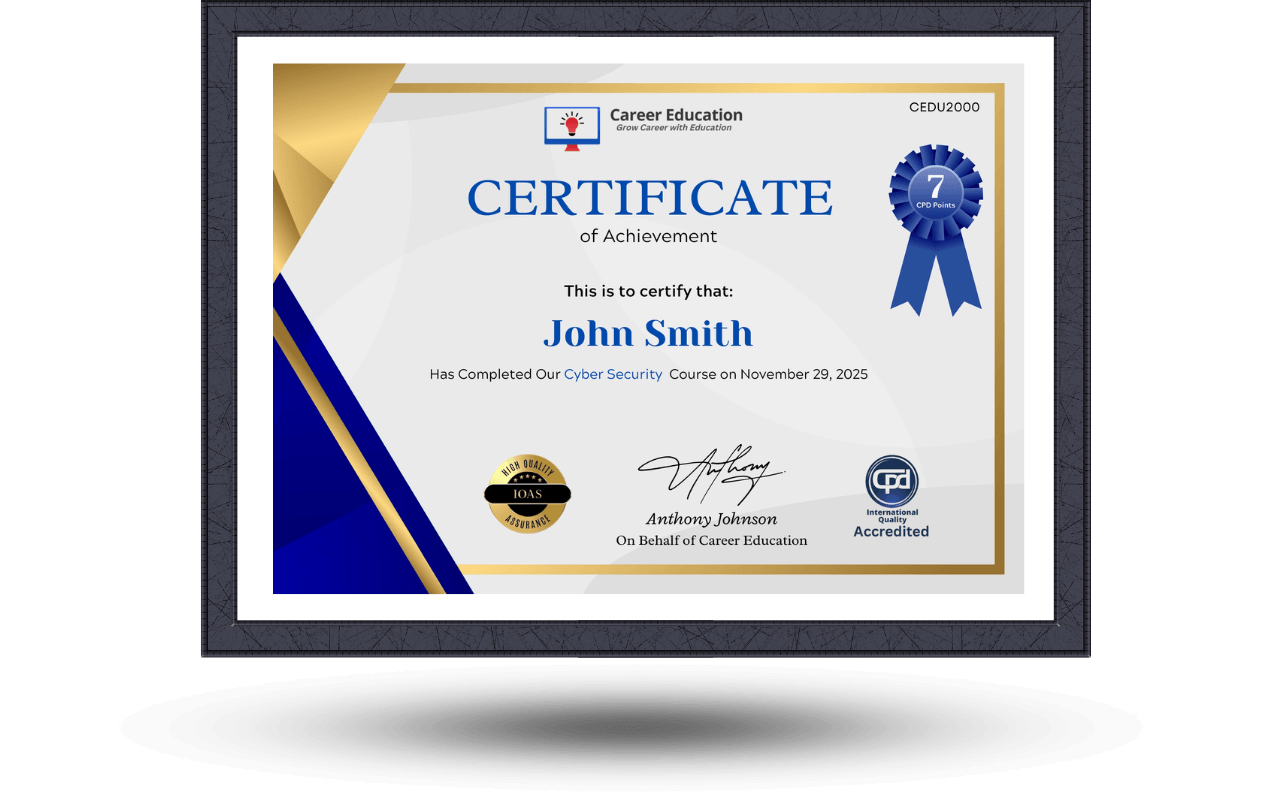
Upon completion of the course, an e-certificate will be downloadable from Khan Education signifying the completion of your course. But, the course is CPD Accredited and after you complete the assignment, you will be eligible to order a certificate accredited by CPD International Quality for £5.99 only. If you want a hardcopy certificate accredited by CPD IQ, you can get it for only £15.99.
Get your CertificateSimilar Courses