
94%
OFF
OFF
Six Sigma Course
- Lifetime Access
- All Levels
- PDF Certificate
£296
£19
14-Day Money-Back Guarantee
Learn With Confidence



Six Sigma Course
Develop Practical Skills in Lean Six Sigma, Process Improvement, Quality Management and Project Delivery
Organisations are constantly looking for ways to improve efficiency, reduce waste, control variation, improve quality and deliver better results. Whether you work in manufacturing, healthcare, finance, logistics, construction, technology or another industry, the ability to identify problems and improve processes can be a valuable professional skill.
The Six Sigma Course is designed to provide learners with a structured introduction to Lean Six Sigma principles, process improvement methods, quality-focused thinking and practical improvement tools.
The course takes you through key stages of the Lean Six Sigma approach, including the Define, Improve and Control phases. You will also explore Lean tools and techniques, Six Sigma tools and techniques, and project management within Lean Six Sigma.
The curriculum also includes modules covering Gas Appliances and Systems and Hydropower. These topics are retained as part of the supplied curriculum and provide additional subject-specific content alongside the core Lean Six Sigma material.
Whether you are looking to develop process improvement knowledge, strengthen your business skills, support professional development or explore Lean Six Sigma as a career direction, this course provides a useful foundation.
Why Study Six Sigma?
Businesses need processes that are efficient, consistent and capable of delivering reliable results.
Inefficient processes can lead to wasted time, unnecessary costs, defects, delays, customer complaints and poor resource utilisation. Simply working harder does not necessarily solve these problems. Organisations need structured methods for identifying the causes of problems and developing sustainable improvements.
This is where Six Sigma and Lean Six Sigma principles can provide value.
Six Sigma focuses strongly on reducing variation and improving process quality, while Lean principles emphasise creating customer value and reducing activities that do not add value.
The combination provides a structured way of thinking about process improvement.
The Six Sigma Course introduces learners to these concepts and provides a foundation for understanding how improvement projects can be approached systematically.
You will explore how to:
-
Define improvement opportunities.
-
Understand process problems.
-
Identify areas for improvement.
-
Apply Lean tools and techniques.
-
Use Six Sigma tools and techniques.
-
Develop improvement strategies.
-
Establish controls to sustain improvements.
-
Approach improvement projects systematically.
-
Understand the role of project management in Lean Six Sigma.
What You Will Learn
The course consists of nine modules:
-
Introduction to Lean Six Sigma
-
Define Phase
-
Gas Appliances and Systems
-
Hydropower
-
Improve Phase
-
Control Phase
-
Lean Tools and Techniques
-
Six Sigma Tools and Techniques
-
Project Management in Lean Six Sigma
These modules provide a combination of core Lean Six Sigma knowledge and the additional technical subjects included in the supplied curriculum.
Module 1 – Introduction to Lean Six Sigma
The first module provides an Introduction to Lean Six Sigma and establishes the foundation for the course.
The introductory lesson introduces the principles behind Lean Six Sigma and explains why structured process improvement approaches are important to organisations.
You will explore the relationship between Lean thinking and Six Sigma and develop an understanding of how these approaches can be used to improve processes and organisational performance.
Lean Six Sigma is fundamentally about improving the way work is performed.
Instead of accepting inefficient processes as unavoidable, organisations can examine how work is carried out, identify sources of waste or variation and develop ways to improve outcomes.
This module gives you the conceptual foundation needed to understand the improvement phases and tools covered later in the course.
By completing this module, you should have a clearer understanding of what Lean Six Sigma is and how it can support continuous improvement.
Module 2 – Define Phase
The Define Phase is an important starting point for a Lean Six Sigma improvement project.
Before attempting to solve a problem, it is important to understand what the problem actually is, why it matters and what the project is intended to achieve.
This module introduces the Define Phase and helps learners understand the importance of establishing a clear improvement focus.
You will explore the role of defining problems, objectives and project boundaries.
A well-defined project can provide direction and help prevent improvement teams from attempting to solve problems that are too broad or poorly understood.
The Define Phase provides the foundation for the improvement activities that follow.
By developing an understanding of this phase, you can begin approaching process improvement projects in a more structured and focused way.
Module 3 – Gas Appliances and Systems
Module 3 covers Gas Appliances and Systems.
This subject introduces a technical area involving gas-related appliances and systems.
When viewed alongside the wider course curriculum, the module provides an example of a technical environment in which process quality, safety, consistency and effective procedures can be important considerations.
Understanding technical systems can also help learners appreciate the importance of structured processes and controls in safety-critical environments.
This module should be considered educational and foundational. Gas-related installation, inspection, servicing or repair work may be subject to specific legal, regulatory, qualification and competency requirements. Completion of this online course does not itself authorise a learner to perform regulated gas work.
Module 4 – Hydropower
Module 4 focuses on Hydropower.
Hydropower involves generating energy from the movement or elevation of water and is an important area within the broader energy sector.
This module introduces learners to hydropower as a technical subject and provides additional context alongside the process improvement concepts covered elsewhere in the course.
From a professional development perspective, exposure to technical industries can help learners appreciate the importance of process management, consistency, quality and controlled operations.
The module therefore adds industry-specific context to the broader learning experience.
Module 5 – Improve Phase
The Improve Phase focuses on developing and implementing solutions to identified process problems.
Once a problem has been defined and analysed, the next objective is to identify ways of improving the process.
This module introduces the principles of the Improve Phase and helps learners understand how improvement ideas can be developed and evaluated.
You will explore the importance of selecting appropriate improvement actions rather than simply making changes without understanding their likely effect.
Effective improvement should be based on evidence and linked to the problem being addressed.
The Improve Phase therefore provides an important connection between identifying a problem and achieving measurable process improvement.
By completing this module, you will have a clearer understanding of how improvement initiatives can move from problem identification towards practical solutions.
Module 6 – Control Phase
Improvement is only valuable if the gains can be maintained.
The Control Phase focuses on sustaining improvements and preventing processes from returning to previous levels of performance.
This module introduces the importance of monitoring processes after improvements have been implemented.
You will develop awareness of why controls, measurement and ongoing monitoring are important components of continuous improvement.
Without effective controls, a process may gradually return to its previous state.
The Control Phase therefore helps complete the improvement cycle by focusing on maintaining the results achieved through improvement activities.
By studying this phase, you will understand why Lean Six Sigma is not simply about making one-off changes. Sustainable improvement requires ongoing attention and control.
Module 7 – Lean Tools and Techniques
Lean provides a range of approaches for identifying waste, improving flow and increasing value.
Module 7 explores Lean Tools and Techniques, giving learners an introduction to the practical methods associated with Lean thinking.
You will develop awareness of how Lean tools can be used to examine processes and identify opportunities for improvement.
Lean thinking encourages organisations to consider what creates value for customers and which activities may consume resources without adding sufficient value.
This perspective can help organisations improve efficiency while maintaining attention to customer requirements.
The module provides a foundation for understanding how Lean techniques can complement the broader Six Sigma approach.
Module 8 – Six Sigma Tools and Techniques
Module 8 focuses on Six Sigma Tools and Techniques.
Six Sigma provides a structured, data-focused approach to process improvement.
This module introduces learners to the role of Six Sigma tools and techniques and helps develop awareness of how these methods can support problem-solving and quality improvement.
You will explore how structured analysis can help organisations move beyond assumptions and focus on evidence when addressing process problems.
The tools associated with Six Sigma can support different stages of an improvement project, from understanding a problem to developing solutions and maintaining results.
By completing this module, you will have a stronger foundation for understanding the practical side of Six Sigma.
Module 9 – Project Management in Lean Six Sigma
The final module focuses on Project Management in Lean Six Sigma.
Process improvement projects require more than technical tools. They also need effective planning, coordination and management.
This module explores the relationship between project management and Lean Six Sigma.
You will develop an understanding of why improvement projects need clear objectives, defined responsibilities, structured activities and appropriate monitoring.
Project management principles can help teams maintain focus and coordinate improvement activities effectively.
By combining project management knowledge with Lean Six Sigma concepts, you can develop a more complete understanding of how improvement initiatives can be organised and delivered.
Practical Learning Outcomes
By completing the Six Sigma Course, you can develop a strong foundation in Lean Six Sigma and process improvement.
You will be able to:
-
Explain the fundamental principles of Lean Six Sigma.
-
Understand the purpose of structured process improvement.
-
Explain the importance of the Define Phase.
-
Recognise how improvement projects can be structured.
-
Develop awareness of the Improve Phase.
-
Understand the importance of sustaining process improvements.
-
Explain the purpose of the Control Phase.
-
Recognise the role of Lean tools and techniques.
-
Understand the purpose of Six Sigma tools and techniques.
-
Develop awareness of data-driven process improvement.
-
Understand the relationship between Lean Six Sigma and project management.
-
Recognise the importance of defining clear improvement objectives.
-
Understand why process controls are important for maintaining improvements.
-
Apply foundational Lean Six Sigma concepts to further learning.
-
Develop a professional vocabulary for discussing process improvement and quality management.
Develop a Problem-Solving Mindset
One of the most valuable outcomes of studying Six Sigma is learning to approach problems systematically.
In many workplaces, problems are solved by making assumptions, implementing quick fixes or addressing symptoms rather than underlying causes.
Lean Six Sigma encourages a different mindset.
Instead of immediately changing a process, improvement teams can first define the problem, understand the current situation, examine relevant information and then develop appropriate improvements.
The Six Sigma Course introduces this structured way of thinking.
This can help you approach workplace problems with greater discipline and focus.
Understand Continuous Improvement
Continuous improvement is about making processes better over time.
A process that works today may not necessarily remain optimal tomorrow. Customer expectations, technologies, resources, regulations and business priorities can change.
Lean Six Sigma provides a framework for identifying improvement opportunities and responding to them systematically.
Through the Define, Improve and Control phases, you will gain a clearer understanding of how improvement projects can be structured from beginning to end.
You will also recognise why improvement should not stop once a change has been implemented.
The Control Phase reinforces the importance of sustaining successful results.
Understand Lean Thinking
Lean thinking encourages organisations to focus on value and reduce unnecessary activities.
This can involve examining processes from the customer’s perspective and asking whether each activity contributes meaningfully to the desired outcome.
The Lean tools and techniques module introduces this way of thinking and helps you understand how Lean principles can contribute to operational efficiency.
This knowledge can be useful across many industries because waste and inefficiency can occur in almost any type of process.
Develop Quality-Focused Thinking
Quality is not simply about inspecting a finished product.
Effective quality management also involves designing and managing processes so that they are capable of producing reliable results.
Six Sigma encourages attention to variation and process performance.
By studying Six Sigma tools and techniques, you can develop a stronger appreciation of how organisations can use structured approaches to understand process performance and identify opportunities for improvement.
Connect Improvement with Project Management
Improvement initiatives are often treated as projects because they involve objectives, resources, timelines and teams.
The final module helps you understand how project management principles can support Lean Six Sigma initiatives.
This can help you recognise the importance of planning, coordination and accountability when implementing process improvements.
Combining process improvement knowledge with project management awareness can give you a broader professional perspective.
Who Is This Six Sigma Course For?
The Six Sigma Course can be suitable for a wide range of learners.
Aspiring Quality Professionals
If you are considering a career in quality management or process improvement, this course can provide a foundation in Lean Six Sigma principles.
Business Professionals
Managers and employees can benefit from understanding structured approaches to improving processes and reducing inefficiency.
Operations Professionals
Those working in operations can apply process improvement thinking to workflows, service delivery and operational performance.
Project Managers
Project professionals can benefit from understanding how Lean Six Sigma concepts can support improvement initiatives.
Manufacturing Professionals
Manufacturing environments often rely heavily on quality, efficiency and process consistency, making Six Sigma knowledge particularly relevant.
Supply Chain and Logistics Professionals
Logistics and supply chain processes can involve multiple opportunities for reducing waste and improving efficiency.
Career Changers
If you are exploring quality, operations or process improvement as a career direction, this course provides an accessible introduction to the subject.
Students and Lifelong Learners
The course can also benefit learners who want to understand modern approaches to quality and process improvement.
Support Your Professional Development
Lean Six Sigma knowledge can complement skills across numerous industries.
Manufacturing, healthcare, finance, logistics, technology, retail, construction and professional services all involve processes that can potentially be improved.
Developing an understanding of Six Sigma can therefore broaden your professional knowledge and give you a framework for thinking about operational performance.
The Six Sigma Course is educational and foundational. It should not be interpreted as automatically providing a professional Six Sigma belt certification or accreditation unless explicitly stated by the course provider. Learners seeking formal professional certification should pursue the appropriate recognised certification route for their career objectives.
Learn at Your Own Pace
Online learning provides flexibility for professionals, students and career changers.
You can work through the Six Sigma Course alongside your existing responsibilities and build your understanding progressively.
Whether you are completely new to Lean Six Sigma or simply want to strengthen your existing knowledge, the course provides a structured introduction to the subject.
You can use the knowledge gained as a foundation for further study, workplace development or exploration of more advanced Lean Six Sigma training.
Build a Foundation for Process Improvement
Effective organisations continually look for ways to improve.
They want to reduce waste, improve quality, increase efficiency, control variation and deliver better outcomes for customers.
Lean Six Sigma provides a structured way to approach these objectives.
The Six Sigma Course introduces the principles, phases, tools and project management concepts that underpin this approach.
You will explore the Define, Improve and Control phases, examine Lean and Six Sigma tools and techniques, and develop awareness of how project management supports improvement initiatives.
You will also encounter technical subject areas covering gas appliances and systems and hydropower as included in the supplied curriculum.
Take the Next Step Towards Better Processes
Learning Six Sigma is about more than learning terminology. It is about developing a structured approach to understanding and improving processes.
The Six Sigma Course gives you the opportunity to build that foundation.
You will develop knowledge of Lean Six Sigma principles, explore the stages of an improvement project and understand why measurement, structured problem-solving and process controls are important.
Whether you want to strengthen your current professional skills, explore a career in quality and operations, support workplace improvement initiatives or prepare for further study, this course can help you take the next step.
Enrol in the Six Sigma Course today and start developing the knowledge and structured problem-solving mindset needed to contribute to more efficient, consistent and effective processes.
Course Modules
Course Content
Module 1_ Introduction to Lean Six Sigma
-
Lesson 1_ Introduction to Lean Six Sigma
Module 2_ Define Phase
Module 3_ Gas Appliances and Systems
Module 4_ Hydropower
Module 5_ Improve Phase
Module 6_ Control Phase
Module 7_ Lean Tools and Techniques
Module 8_ Six Sigma Tools and Techniques
Module 9_ Project Management in Lean Six Sigma
What our students say
Excellent
4.9 average
158 Reviews

Earn an Accredited Certificate
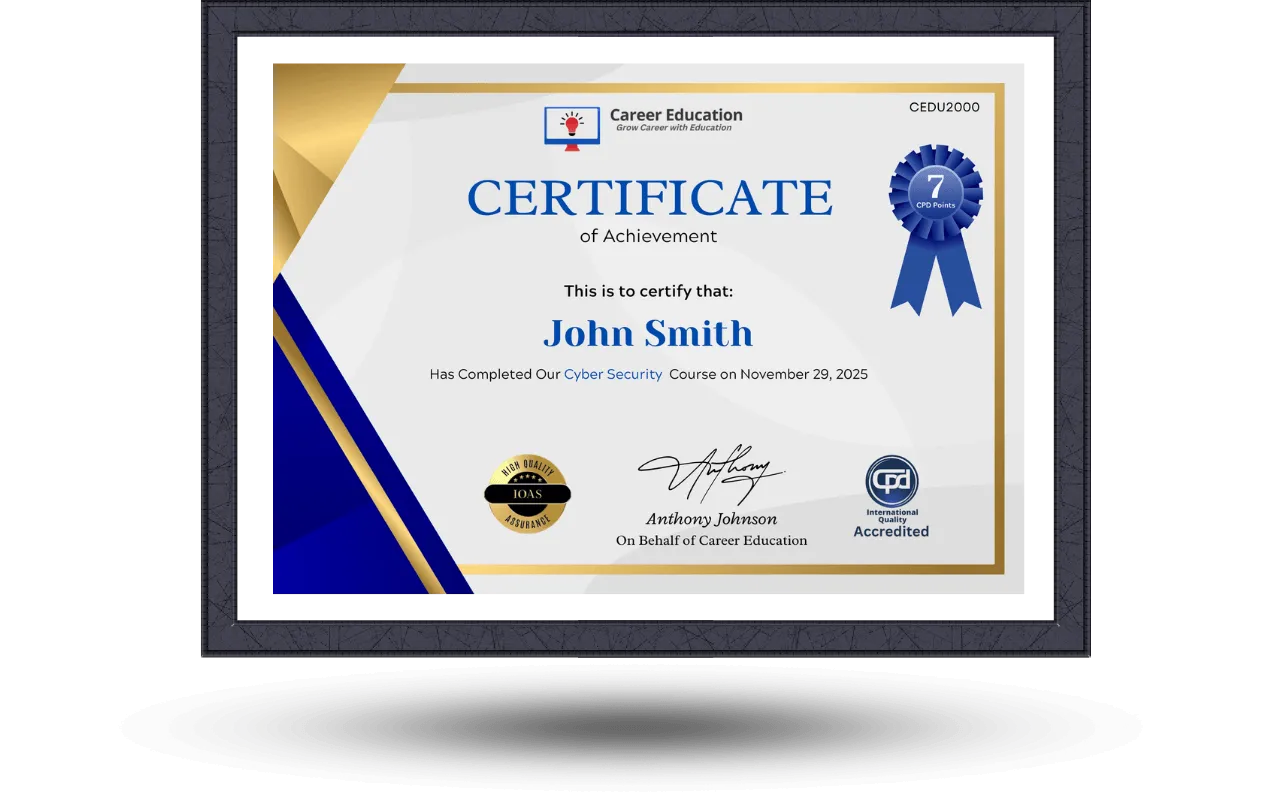
Upon completion of any course, all students are entitled to a CPD IQ Accredited e-certificate that will be issued by Career Education signifying the completion of your course.
After you complete the course and assignment, you will be eligible to order a free certificate accredited by CPD International Quality by completing the form below.
Hardcopy certificates and transcripts are also available for a small additional fee. More information is disclosed upon course completion.
Similar Courses



Frequently Asked Questions
The lifetime membership includes unlimited access to all courses, resources, and updates for a one-time fee.
You can purchase the membership directly from our website using a secure checkout process.
Yes, selected courses can be downloaded for offline access through our mobile app.
Yes, all future updates and new courses are included at no extra cost.
Yes, we offer a 30-day money-back guarantee if you are not satisfied with the membership.