
94%
OFF
OFF
Scissor Lift Safety in Industrial and Construction Environments
- Lifetime Access
- All Levels
- PDF Certificate
£296
£19
14-Day Money-Back Guarantee
Learn With Confidence








Scissor Lift Safety in Industrial and Construction Environments
Scissor lifts are widely used to provide elevated access for construction, maintenance, installation, warehousing, manufacturing, and industrial tasks. They can make difficult work more efficient, but their safe use requires appropriate knowledge, careful preparation, equipment awareness, and consistent adherence to workplace procedures.
Scissor Lift Safety in Industrial and Construction Environments is a practical training course designed to introduce the essential principles of safe scissor lift use. It covers equipment fundamentals, operating principles, safety procedures, site preparation, operating techniques, inspection and maintenance, and specialised applications.
The course is designed to help learners develop a stronger safety mindset and understand the responsibilities involved in working with powered access equipment. Whether you operate scissor lifts, supervise workers, work around mobile elevated platforms, or have workplace safety responsibilities, this course provides valuable foundational knowledge.
From understanding how scissor lifts work to recognising hazards before operation, the course focuses on practical outcomes that can support safer decision-making in real workplace environments.
Why Scissor Lift Safety Matters
Scissor lifts can provide efficient access to elevated work areas, but working at height and operating powered equipment can introduce significant hazards.
Potential risks may include falls, tip-overs, collisions, entrapment, contact with overhead structures or electrical hazards, unstable ground conditions, incorrect loading, equipment defects, and unsuitable environmental conditions.
Many of these risks can be reduced through appropriate planning, training, inspection, communication, and responsible operation.
The Scissor Lift Safety in Industrial and Construction Environments course helps learners understand why safety must be considered before, during, and after every equipment operation.
Rather than treating safety as a single checklist item, the course encourages a continuous approach to hazard awareness and risk management.
What Will You Learn?
By completing this course, you will develop knowledge and practical awareness to help you:
-
Understand the purpose and applications of scissor lifts.
-
Identify basic scissor lift components and operating systems.
-
Understand fundamental operating principles.
-
Recognise common hazards associated with scissor lift use.
-
Understand the importance of applicable safety procedures and regulations.
-
Prepare a worksite before equipment operation.
-
Identify ground, overhead, environmental, and surrounding hazards.
-
Apply appropriate operating techniques.
-
Understand equipment capacity and operating limitations.
-
Recognise the importance of pre-use inspections.
-
Identify potential equipment defects and maintenance concerns.
-
Understand appropriate reporting procedures for unsafe equipment.
-
Apply safety principles to specialised workplace applications.
-
Contribute to a stronger workplace safety culture.
Course Curriculum
Module 1: Introduction to Scissor Lifts
The course begins with an introduction to scissor lifts and their role in industrial and construction environments.
Lesson 1: Introduction to Scissor Lifts
In this lesson, you will explore what scissor lifts are, why they are used, and the types of tasks for which they may be appropriate.
You will develop an understanding of how scissor lifts provide vertical access to elevated work areas and why they can be useful for construction, maintenance, installation, inspection, and other workplace activities.
The lesson also introduces fundamental safety considerations that should be understood before using or working around this equipment.
You will consider:
-
Common scissor lift applications.
-
Basic equipment characteristics.
-
Operator responsibilities.
-
Equipment limitations.
-
Work-at-height considerations.
-
Workplace hazards.
-
Manufacturer instructions.
-
Employer procedures.
Understanding what a scissor lift is—and what it is not designed to do—is an important first step towards safe operation.
By the end of this module, you will have a clear foundation for understanding scissor lifts and their role in industrial and construction workplaces.
Module 2: Mechanics and Operation of Scissor Lifts
Understanding the basic mechanics of a scissor lift can help operators recognise equipment limitations and operate more responsibly.
This module explores the fundamental components and operating principles of scissor lifts.
You will become familiar with components such as the platform, lifting mechanism, controls, drive system, wheels or tyres, guardrails, access points, and relevant safety features.
You will explore how the lifting system raises and lowers the work platform and how factors such as load distribution, ground conditions, platform height, and environmental conditions can influence stability and safe operation.
The module also introduces basic control functions and the importance of understanding the specific machine being used.
You will learn why operators should:
-
Read and follow manufacturer instructions.
-
Understand control functions before use.
-
Respect equipment capacity.
-
Understand operating limitations.
-
Use safety systems correctly.
-
Maintain awareness of the surrounding environment.
-
Stop operation when conditions become unsafe.
Different scissor lifts may have different specifications, controls, and limitations. For this reason, equipment-specific instruction is essential.
By completing this module, you will have a stronger understanding of how scissor lifts operate and why their limitations must always be respected.
Module 3: Safety Procedures and Regulations
Safety procedures and regulatory requirements provide an essential framework for responsible scissor lift operation.
This module explores important safety principles and introduces the role of workplace rules, applicable regulations, manufacturer requirements, and organisational procedures.
You will examine common hazards associated with scissor lift operations, including:
-
Falls from elevated platforms.
-
Tip-over and instability.
-
Collision with vehicles or structures.
-
Overhead obstructions.
-
Entrapment and crushing hazards.
-
Electrical hazards.
-
Unsafe ground conditions.
-
Incorrect loading.
-
Unauthorised operation.
-
Unsuitable weather or environmental conditions.
You will also explore the importance of appropriate personal protective equipment where required by the task and workplace risk assessment.
The module emphasises that legal and operational requirements can vary by location, industry, equipment type, and task. Learners should therefore always follow the current requirements applicable to their workplace and jurisdiction.
By the end of this module, you will have a better understanding of the safety principles that should guide scissor lift operations.
Module 4: Site Planning and Preparation
Safe scissor lift operation starts before the equipment begins moving.
This module focuses on planning and preparing the work area so that potential hazards can be identified and addressed before work begins.
You will explore how to assess the environment and consider factors that may affect equipment stability, movement, visibility, and safe access.
Important considerations include:
-
Ground conditions.
-
Surface stability.
-
Uneven or sloped areas.
-
Holes, edges, and drop-offs.
-
Overhead structures.
-
Electrical hazards.
-
Nearby vehicles and equipment.
-
Pedestrian traffic.
-
Restricted areas.
-
Weather conditions.
-
Lighting and visibility.
-
Access and emergency considerations.
You will learn why site conditions should be monitored continuously. A work area that is safe at the beginning of a shift may change later because of weather, construction activity, vehicle movement, materials, or other workplace activities.
The module also highlights the importance of establishing appropriate work zones and maintaining communication with people working nearby.
By completing this module, you will be better prepared to identify and address potential hazards before operating a scissor lift.
Module 5: Operating Techniques and Best Practices
This module focuses on responsible operating practices and techniques that can support safer scissor lift use.
You will explore how operators can maintain awareness of the equipment, work area, surrounding personnel, and changing conditions throughout an operation.
Key areas include:
-
Pre-operation preparation.
-
Safe equipment movement.
-
Positioning the machine appropriately.
-
Maintaining suitable clearances.
-
Monitoring the work environment.
-
Understanding platform limitations.
-
Managing loads appropriately.
-
Maintaining awareness of pedestrians.
-
Responding to changing conditions.
-
Following workplace operating procedures.
The module also reinforces the importance of avoiding shortcuts and unsafe practices.
Operators should not exceed rated capacities, bypass safety features, modify equipment without appropriate authorisation, or use the machine in ways that conflict with manufacturer instructions or workplace procedures.
You will develop a stronger appreciation for the importance of controlled, deliberate operation and continuous hazard awareness.
The outcome is greater confidence in understanding the behaviours and practices that contribute to responsible scissor lift operation.
Module 6: Maintenance and Inspection
Equipment condition is a critical part of workplace safety.
This module focuses on inspection and maintenance principles and explains why equipment should be checked before use and maintained according to appropriate requirements.
You will explore the importance of identifying defects, unusual conditions, damage, or malfunctioning safety features before equipment is operated.
Potential inspection areas may include:
-
Operating controls.
-
Emergency controls and systems.
-
Guardrails.
-
Access points.
-
Platform condition.
-
Wheels and tyres.
-
Lifting components.
-
Hydraulic systems.
-
Warning devices.
-
Structural components.
-
Visible signs of damage or abnormal wear.
The exact inspection requirements will depend on the particular equipment and manufacturer instructions, so learners should always use the appropriate inspection checklist and follow workplace procedures.
You will also learn why defects should be reported promptly and why suspected unsafe equipment should not simply be returned to service.
The course encourages a proactive approach to equipment condition. Identifying a problem before operation can help prevent a minor defect from becoming a more serious safety issue.
By completing this module, you will understand the importance of inspection, maintenance, defect reporting, and responsible equipment management.
Module 7: Specialized Applications
The final module explores specialised applications of scissor lifts and the importance of adapting safety practices to different work environments.
Construction sites, industrial facilities, warehouses, maintenance areas, manufacturing environments, and other workplaces can present different hazards.
A task that is appropriate in one environment may require additional planning or controls in another.
You will explore how to consider:
-
Task-specific hazards.
-
Equipment suitability.
-
Worksite conditions.
-
Environmental factors.
-
Communication requirements.
-
Access and positioning.
-
Nearby equipment and personnel.
-
Emergency procedures.
-
Manufacturer requirements.
-
Workplace policies.
The module reinforces the principle that operators should assess the specific task and environment rather than assuming that one set of practices applies to every situation.
By bringing together the concepts from earlier modules, you will develop a more comprehensive approach to scissor lift safety.
Develop a Stronger Safety Mindset
The Scissor Lift Safety in Industrial and Construction Environments course is designed to help learners think proactively about workplace safety.
Safe equipment use does not begin when the operator enters the platform. It begins with understanding the task, selecting suitable equipment, assessing the environment, reviewing procedures, and conducting appropriate inspections.
Throughout the course, you will learn how these activities connect to one another.
Understanding the equipment helps you recognise limitations. Site preparation helps identify hazards. Inspection helps identify equipment defects. Safe operating practices help reduce unnecessary risks. Maintenance helps keep equipment in appropriate working condition.
Together, these elements support a more comprehensive approach to workplace safety.
Practical Knowledge for Construction and Industry
The course is structured around practical workplace considerations rather than focusing exclusively on theoretical concepts.
You will explore the questions that should be considered before and during scissor lift operations:
-
Is the equipment appropriate for the task?
-
Is the work area suitable?
-
Are there hazards that could affect stability?
-
Are overhead or electrical hazards present?
-
Is the equipment in suitable condition?
-
Are workers and pedestrians adequately protected?
-
Are environmental conditions appropriate?
-
Are workplace procedures being followed?
-
What should happen if an unsafe condition develops?
Developing the habit of asking these questions can help support better safety decisions.
Who Is This Course For?
Scissor Lift Safety in Industrial and Construction Environments is suitable for:
-
Construction workers.
-
Industrial workers.
-
Maintenance personnel.
-
Warehouse employees.
-
Facilities and operations teams.
-
Equipment operators.
-
Site supervisors.
-
Team leaders.
-
Safety professionals.
-
Workplace managers.
-
Employers responsible for equipment safety.
-
Workers who operate or work around scissor lifts.
It can also serve as an introductory learning resource for individuals who want to understand the principles of scissor lift safety before undertaking equipment-specific practical training.
Important: This course is intended as educational safety training and should not be treated as a substitute for any legally required operator qualification, hands-on training, practical assessment, employer-specific instruction, or equipment-specific certification. Always follow applicable regulations, manufacturer instructions, workplace procedures, and competent-person requirements.
Build Safer Working Practices
The Scissor Lift Safety in Industrial and Construction Environments course provides a structured pathway through the major areas of safe scissor lift use.
From basic equipment knowledge to site preparation, operating practices, inspections, maintenance, and specialised applications, the course helps you understand the factors that can influence safe working conditions.
The knowledge gained can help operators and workplace teams approach scissor lift activities with greater awareness and preparation.
Improve Your Workplace Safety Knowledge
Scissor lifts can be highly effective tools when they are selected, inspected, operated, and maintained appropriately.
However, safe operation requires more than simply knowing how to move the equipment. It requires awareness of the work environment, understanding of equipment limitations, adherence to procedures, and the willingness to stop when conditions are unsuitable.
By completing Scissor Lift Safety in Industrial and Construction Environments, you can build a stronger foundation in these essential principles.
Whether you are involved in construction, industrial operations, maintenance, warehousing, or workplace safety, the course can help you develop greater awareness of the responsibilities associated with scissor lift use.
Enrol in Scissor Lift Safety in Industrial and Construction Environments and build the knowledge needed to recognise hazards, prepare work areas, follow safer operating practices, understand inspection requirements, and contribute to a stronger workplace safety culture.
Course Modules
Course Content
Module 1_ Introduction to Scissor Lifts
-
Lesson 1_ Introduction to Scissor Lifts
Module 2_ Mechanics and Operation of Scissor Lifts
Module 3_ Safety Procedures and Regulations
Module 4_ Site Planning and Preparation
Module 5_ Operating Techniques and Best Practices
Module 6_ Maintenance and Inspection
Module 7_ Specialized Applications
What our students say
Excellent
4.9 average
158 Reviews

Earn an Accredited Certificate
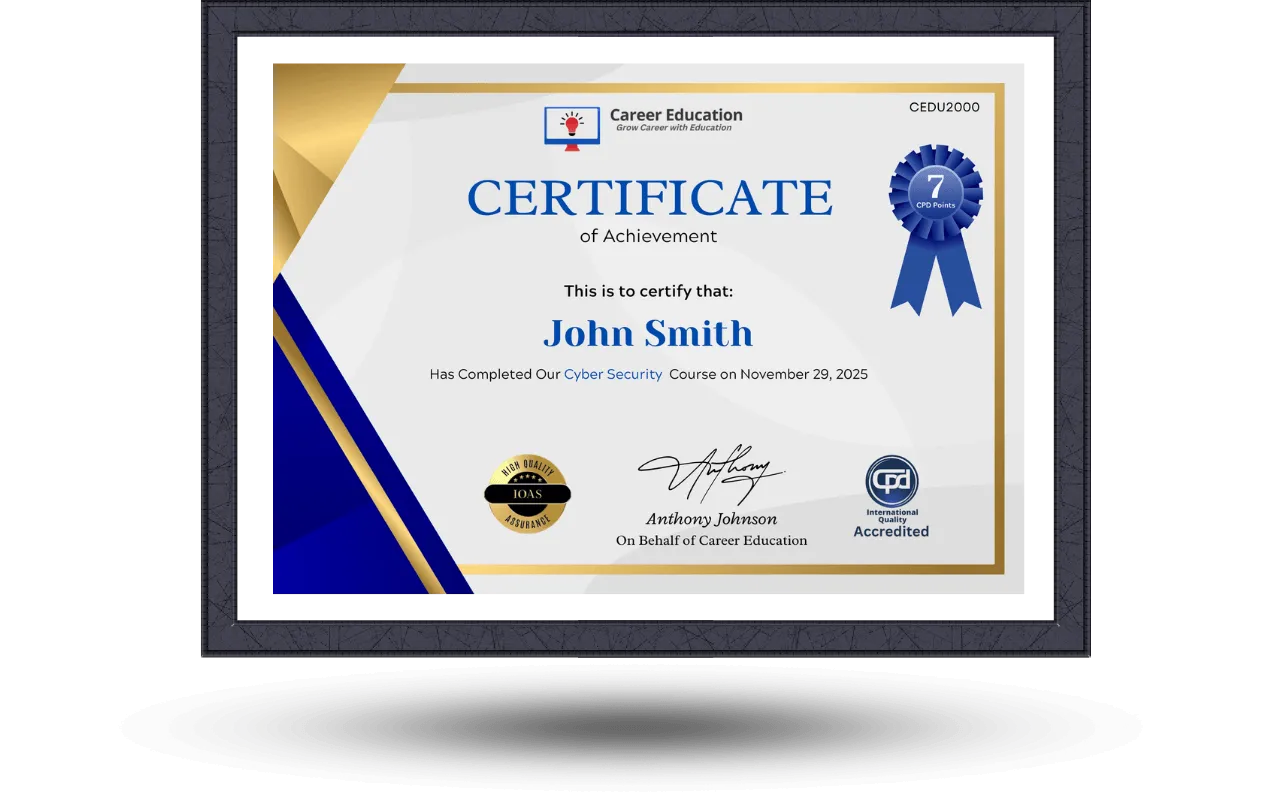
Upon completion of any course, all students are entitled to a CPD IQ Accredited e-certificate that will be issued by Career Education signifying the completion of your course.
After you complete the course and assignment, you will be eligible to order a free certificate accredited by CPD International Quality by completing the form below.
Hardcopy certificates and transcripts are also available for a small additional fee. More information is disclosed upon course completion.
Similar Courses




Frequently Asked Questions
The lifetime membership includes unlimited access to all courses, resources, and updates for a one-time fee.
You can purchase the membership directly from our website using a secure checkout process.
Yes, selected courses can be downloaded for offline access through our mobile app.
Yes, all future updates and new courses are included at no extra cost.
Yes, we offer a 30-day money-back guarantee if you are not satisfied with the membership.