
94%
OFF
OFF
Leadership in Crisis Management
- Lifetime Access
- All Levels
- PDF Certificate
£296
£19
14-Day Money-Back Guarantee
Learn With Confidence









Leadership in Crisis Management
In today’s rapidly changing professional environment, organisations can face unexpected challenges that test their people, processes, communication, and decision-making capabilities. Whether the crisis involves operational disruption, reputational concerns, organisational change, external threats, or uncertainty, effective leadership can make a significant difference to how successfully an organisation responds.
Leadership in Crisis Management is designed to help learners develop the knowledge, confidence, and practical leadership skills needed to guide teams and organisations through challenging situations. Rather than focusing only on crisis response, this course takes a complete approach covering preparation, decision-making, communication, teamwork, stakeholder management, and adaptive leadership.
Strong crisis leadership is not simply about reacting quickly. It is about staying composed, assessing available information, making responsible decisions, communicating clearly, and helping people work together when normal processes may no longer be sufficient. This course provides a structured learning experience to help learners understand these essential principles and apply them in demanding professional situations.
Why Study Leadership in Crisis Management?
A crisis can develop quickly, and leaders may have limited time to understand what is happening and determine an appropriate response. Under pressure, uncertainty can affect judgement, communication, morale, and coordination. Leaders therefore need more than technical knowledge; they need the ability to remain adaptable and provide direction when circumstances are changing.
Leadership in Crisis Management explores the capabilities required to lead effectively before, during, and after a crisis. Learners will examine how preparation can strengthen organisational resilience, how structured decision-making can support better outcomes, and how communication can maintain trust during uncertain periods.
The course is also valuable for understanding the human side of crisis management. Teams may experience stress, confusion, competing priorities, or rapidly changing responsibilities. Effective leaders must be able to coordinate people, maintain focus, support collaboration, and manage relationships with important stakeholders.
By completing this course, learners can develop a stronger foundation for responding to complex situations with greater clarity, confidence, and adaptability.
What Will You Learn?
The course curriculum consists of seven focused modules covering key areas of crisis leadership.
Module 1: Understanding Crisis Leadership
The course begins by establishing a strong foundation in crisis leadership. Learners will explore what effective leadership means when an organisation is facing disruption, uncertainty, or significant challenges.
This module helps learners understand how crisis situations differ from routine management and why leadership approaches may need to change when circumstances become unpredictable. It also introduces the qualities and behaviours that can help leaders provide stability and direction during difficult situations.
By the end of this module, learners will have a clearer understanding of the role of leadership in crisis environments and the importance of maintaining focus, responsibility, and adaptability.
Module 2: Crisis Preparation and Planning
Effective crisis management begins before a crisis occurs. Preparation can help organisations identify potential challenges, establish response processes, and reduce confusion when unexpected events arise.
In this module, learners will explore the importance of crisis preparation and planning. They will develop an understanding of how leaders can anticipate risks, establish suitable response strategies, and prepare teams for potential disruptions.
The module focuses on the value of proactive leadership. Instead of waiting for a crisis to develop fully, effective leaders can encourage preparedness and help create an organisational culture that is better equipped to respond to uncertainty.
Learners will gain insights that can help them approach crisis planning in a more structured and organised way.
Module 3: Decision Making Under Pressure
One of the most demanding responsibilities of crisis leadership is making decisions when information may be incomplete, circumstances may be changing, and time may be limited.
Leadership in Crisis Management examines the importance of effective decision-making under pressure. Learners will explore how leaders can assess situations, consider available information, prioritise important issues, and make informed decisions despite uncertainty.
The module encourages learners to understand the difference between impulsive reactions and structured decision-making. It highlights the importance of maintaining clarity and evaluating potential consequences while recognising that perfect information may not always be available during a crisis.
These skills can help learners approach challenging decisions with greater confidence and discipline.
Module 4: Communication Strategies in Crises
Communication becomes particularly important when people are uncertain about what is happening or what they should do next. Poor communication can increase confusion, while clear and timely communication can help teams and stakeholders remain informed and coordinated.
This module explores effective communication strategies for crisis situations. Learners will examine how leaders can communicate clearly, manage information, provide appropriate updates, and maintain trust during periods of uncertainty.
The module also highlights the importance of adapting communication to different audiences. Employees, customers, partners, senior leaders, and other stakeholders may have different concerns and information needs.
By developing stronger crisis communication skills, learners can become better prepared to deliver clear messages and support effective organisational coordination.
Module 5: Team Dynamics and Coordination
A crisis is rarely managed successfully by one person alone. Effective response often depends on people working together, understanding their responsibilities, sharing information, and coordinating their actions.
In this module, learners will explore team dynamics and coordination during challenging situations. They will consider how leaders can establish direction, encourage collaboration, manage changing responsibilities, and help teams remain focused on shared objectives.
The module also examines the importance of maintaining team effectiveness when normal working conditions are disrupted. Strong coordination can reduce duplication, improve communication, and help teams respond more efficiently.
Learners will gain a greater appreciation of the leadership behaviours that support teamwork and collective performance during a crisis.
Module 6: Managing Stakeholder Relationships
Crises can affect a wide range of stakeholders, and maintaining constructive relationships can be essential to effective crisis management.
This module focuses on stakeholder relationships and the role leaders play in managing expectations, communicating responsibly, and maintaining confidence during challenging circumstances.
Learners will explore why different stakeholders may have different priorities and how leaders can approach these relationships thoughtfully. Effective stakeholder management requires awareness, communication, consistency, and the ability to respond appropriately as circumstances evolve.
This knowledge can help learners understand how leadership extends beyond internal teams and includes maintaining positive, professional relationships with those affected by organisational decisions and events.
Module 7: Adaptive Leadership in Uncertainty
The final module focuses on adaptive leadership, an essential capability when situations cannot be predicted with certainty.
Crisis environments can change quickly. Strategies that appear appropriate at one point may need to be reconsidered as new information becomes available. Leaders therefore need to remain flexible while continuing to provide direction.
This module explores how leaders can adapt their approach, respond to changing circumstances, and support their teams through uncertainty. Learners will develop a stronger understanding of why flexibility, learning, and continuous reassessment are important components of effective crisis leadership.
By completing this module, learners can build a more adaptable approach to leadership and become better prepared to navigate complex and evolving situations.
Key Outcomes of the Course
Completing Leadership in Crisis Management can help learners develop a broad range of practical leadership capabilities.
You will gain the knowledge to:
-
Understand the principles and responsibilities of effective crisis leadership.
-
Recognise the difference between routine management and crisis leadership.
-
Develop a more proactive approach to crisis preparation and planning.
-
Understand structured decision-making when working under pressure.
-
Improve communication during uncertain and challenging situations.
-
Support stronger teamwork, coordination, and collaboration.
-
Develop greater awareness of stakeholder needs and expectations.
-
Adapt leadership approaches when circumstances change.
-
Approach uncertainty with greater confidence and flexibility.
-
Strengthen your overall understanding of organisational resilience and crisis response.
These outcomes can support learners who want to become more capable and confident when dealing with complex professional situations.
Who Can Benefit from Leadership in Crisis Management?
Leadership in Crisis Management can be valuable for professionals and learners interested in leadership, management, organisational resilience, and effective responses to challenging situations.
It may be particularly relevant to:
-
Current and aspiring managers
-
Team leaders and supervisors
-
Business professionals
-
Project and operations professionals
-
Individuals involved in organisational planning
-
Professionals responsible for coordinating teams
-
People interested in leadership development
-
Learners seeking to strengthen their crisis-management knowledge
-
Professionals who want to improve their decision-making and communication skills
You do not need to be facing a current crisis to benefit from learning about crisis leadership. Developing these capabilities in advance can help you become more prepared when unexpected situations arise.
Build Confidence for Challenging Situations
Leadership is often most visible when circumstances become difficult. During a crisis, people look to leaders for direction, communication, and reassurance. The ability to remain focused while adapting to changing conditions can help leaders support their teams and make more effective decisions.
This course provides an opportunity to develop that capability through a structured exploration of crisis leadership principles. From preparation and planning to adaptive leadership, each module contributes to a broader understanding of how leaders can respond effectively when faced with uncertainty.
Rather than treating crisis management as a single event, Leadership in Crisis Management encourages learners to think about the complete leadership journey: preparing for potential challenges, responding effectively when they occur, communicating with those affected, coordinating people, managing relationships, and adapting as circumstances develop.
Strengthen Your Professional Leadership Skills
Strong leadership skills can be valuable across many industries and professional environments. Even when a crisis does not occur, the abilities developed through crisis leadership training—such as communication, decision-making, planning, coordination, and adaptability—can contribute to effective everyday management.
Leadership in Crisis Management gives learners the opportunity to develop these transferable capabilities while gaining a clearer understanding of how leadership works in high-pressure and uncertain environments.
If you want to improve your ability to prepare for challenges, make informed decisions, communicate effectively, coordinate teams, and adapt to changing circumstances, this course provides a focused learning pathway.
Enrol in Leadership in Crisis Management today and develop the knowledge and leadership capabilities needed to approach challenging situations with greater preparation, clarity, confidence, and adaptability.
Course Modules
Course Content
Module 1_ Understanding Crisis Leadership
-
Lesson 1_ Understanding Crisis Leadership
Module 2_ Crisis Preparation and Planning
Module 3_ Decision Making Under Pressure
Module 4_ Communication Strategies in Crises
Module 5_ Team Dynamics and Coordination
Module 6_ Managing Stakeholder Relationships
Module 7_ Adaptive Leadership in Uncertainty
What our students say
Excellent
4.9 average
158 Reviews

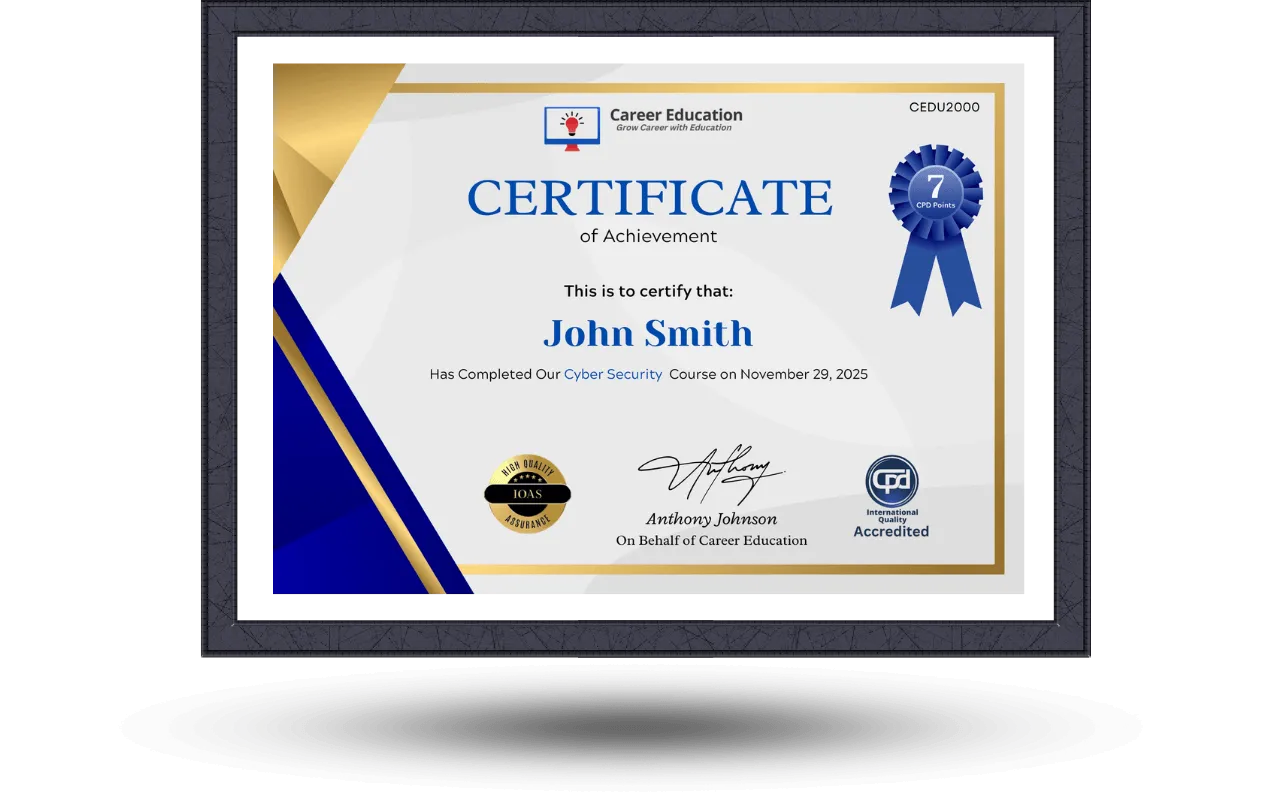
Earn an Accredited Certificate
Upon completion of any course, all students are entitled to a CPD IQ Accredited e-certificate that will be issued by Career Education signifying the completion of your course.
After you complete the course and assignment, you will be eligible to order a free certificate accredited by CPD International Quality by completing the form below.
Hardcopy certificates and transcripts are also available for a small additional fee. More information is disclosed upon course completion.
Similar Courses


Frequently Asked Questions
The lifetime membership includes unlimited access to all courses, resources, and updates for a one-time fee.
You can purchase the membership directly from our website using a secure checkout process.
Yes, selected courses can be downloaded for offline access through our mobile app.
Yes, all future updates and new courses are included at no extra cost.
Yes, we offer a 30-day money-back guarantee if you are not satisfied with the membership.