OFF
Rigging and Lifting Safety
- Lifetime Access
- All Levels
- PDF Certificate
Learn With Confidence






Overview
Rigging and Lifting Safety
In workplaces where heavy loads need to be moved, raised, lowered, or positioned, safety must always come first. Rigging and Lifting Safety provides essential knowledge for understanding how lifting operations work, how rigging equipment is used, and how to identify and control risks before they lead to accidents.
Rigging and lifting activities can involve significant hazards, particularly when equipment is selected incorrectly, loads are not properly secured, or lifting procedures are not followed. A strong understanding of safe practices can help workers make better decisions, reduce avoidable risks, and contribute to a safer working environment.
This course is designed to build practical awareness of the principles behind rigging and lifting operations. It covers the fundamentals of rigging, common types of rigging equipment, appropriate rigging techniques, lifting operations, and key safety considerations. By progressing through each module, learners can develop a clearer understanding of what is required to approach lifting tasks responsibly and systematically.
Whether you are new to rigging and lifting or want to strengthen your existing knowledge, Rigging and Lifting Safety offers a structured learning experience focused on safety, awareness, and practical outcomes.
Why Study Rigging and Lifting Safety?
Lifting operations are often carried out in demanding environments such as construction sites, warehouses, manufacturing facilities, engineering operations, logistics settings, and industrial workplaces. The consequences of poor planning or unsafe practices can be serious.
Learning about Rigging and Lifting Safety can help you understand the importance of preparation, equipment awareness, communication, and risk control. Rather than approaching lifting activities as routine tasks, learners can develop a safety-focused mindset that considers the load, equipment, working environment, and people involved.
The course can help you:
-
Understand the fundamentals of rigging and lifting operations
-
Recognise different types of rigging equipment
-
Develop awareness of appropriate rigging techniques
-
Understand the stages involved in lifting operations
-
Identify common hazards associated with lifting activities
-
Appreciate the importance of safe working practices
-
Improve your ability to prepare for lifting tasks
-
Understand why equipment condition and suitability matter
-
Support better communication during lifting activities
-
Build a stronger foundation in workplace lifting safety
What Will You Learn?
The Rigging and Lifting Safety course is divided into five focused modules. Each module introduces an important aspect of safe lifting operations, allowing learners to build their understanding progressively.
Module 1: Introduction to Rigging and Lifting
The first module introduces the core concepts of rigging and lifting. Learners explore what rigging involves and why it is an important part of lifting operations.
Understanding the fundamentals provides a foundation for recognising how loads are prepared, supported, moved, and positioned. Learners can also develop awareness of the responsibilities involved in lifting activities and the importance of planning before work begins.
By completing this module, you can develop a clearer understanding of:
-
The basic principles of rigging and lifting
-
The purpose of rigging in lifting operations
-
The importance of preparation and planning
-
The people and equipment involved in lifting activities
-
Why safe working practices are essential
-
The potential risks associated with poorly managed lifting tasks
A strong foundation is essential because safe lifting is not simply about moving a load from one location to another. It requires consideration of the load, equipment, environment, procedures, and people involved.
Module 2: Types of Rigging Equipment
Selecting suitable equipment is an important element of safe rigging. The second module introduces different types of rigging equipment and helps learners understand their roles within lifting operations.
Different loads and lifting situations can require different equipment. Understanding the characteristics and applications of commonly used rigging equipment can help learners appreciate why equipment selection should be based on the requirements of the task rather than convenience.
This module helps you build awareness of:
-
Common types of rigging equipment
-
The purposes of different rigging components
-
Equipment suitability
-
The importance of inspecting equipment before use
-
The role of equipment condition in lifting safety
-
Why damaged or unsuitable equipment can create additional risks
The outcome is greater equipment awareness. Learners can approach lifting activities with a better understanding of why the right equipment must be chosen, checked, and used appropriately.
Module 3: Rigging Techniques
Once learners understand the basic equipment, the course moves into rigging techniques. This module focuses on the principles involved in preparing and securing loads for lifting.
Effective rigging requires attention to factors such as load stability, equipment arrangement, and the conditions surrounding the lifting operation. Incorrect rigging can affect the stability of a load and increase the potential for unexpected movement.
Through this module, learners can develop knowledge of:
-
Fundamental rigging techniques
-
Preparing loads for lifting
-
The importance of secure load attachment
-
Factors that can affect load stability
-
Safe positioning of rigging equipment
-
The importance of following established procedures
-
Why careful preparation is essential before a lift
The goal is to help learners understand that a lifting operation begins well before the load leaves the ground. Proper preparation and appropriate rigging are key parts of creating a controlled lifting process.
Module 4: Lifting Operations
The fourth module focuses on lifting operations and the factors that need to be considered when carrying out lifting activities.
A lifting operation involves more than the lifting equipment itself. The surrounding environment, load characteristics, communication, positioning, and working procedures can all affect safety.
This module helps learners understand the importance of approaching lifting operations in a planned and controlled manner. You will develop awareness of key considerations that can influence the safety of a lifting task.
By completing this module, learners can better understand:
-
The importance of planning lifting operations
-
Preparing the work area
-
Coordinating people involved in lifting activities
-
Maintaining clear communication
-
Considering environmental and workplace conditions
-
The importance of controlled lifting and positioning
-
Why procedures should be followed throughout an operation
These principles can help learners recognise potential problems before a lift begins and contribute to safer working practices.
Module 5: Rigging and Lifting Safety
The final module brings together the key safety principles covered throughout the course.
Rigging and Lifting Safety is ultimately about recognising hazards, controlling risks, and ensuring that lifting activities are approached responsibly. This module reinforces the importance of safe procedures, equipment awareness, preparation, and communication.
Learners can develop a stronger understanding of:
-
Common rigging and lifting hazards
-
The importance of risk awareness
-
Safe working procedures
-
Equipment checks and maintenance awareness
-
Load security and stability
-
Communication during lifting activities
-
The importance of following workplace requirements
-
How good preparation can help reduce avoidable risks
By the end of the course, learners should have a more complete picture of how safe rigging and lifting practices fit together.
Practical Outcomes of the Course
The value of Rigging and Lifting Safety goes beyond learning terminology. The course is designed to help learners develop knowledge that can support safer decision-making in environments where lifting activities take place.
After completing the course, you can expect to have a stronger understanding of the principles behind safe rigging and lifting operations. You will be better positioned to recognise why equipment needs to be suitable and properly maintained, why loads need to be prepared correctly, and why lifting operations require careful planning.
You can also develop greater awareness of the importance of communication and coordination. Lifting activities may involve several people, making clear communication an essential part of maintaining control and reducing confusion.
The course can therefore help you build a more safety-conscious approach to lifting tasks.
Who Can Benefit from Rigging and Lifting Safety?
This course can be useful for anyone who wants to develop their understanding of rigging and lifting safety, particularly learners interested in workplace environments where lifting operations are relevant.
It may be suitable for:
-
Construction workers
-
Engineering personnel
-
Warehouse and logistics workers
-
Manufacturing employees
-
Industrial workers
-
Maintenance personnel
-
Site-based employees
-
Supervisors and team leaders seeking greater safety awareness
-
Individuals considering careers involving lifting operations
-
Learners wanting to expand their workplace safety knowledge
The course can also be useful as part of broader professional development for individuals who want to demonstrate their commitment to workplace safety and continuous learning.
Build Confidence Through Knowledge
Working around lifting operations requires awareness. Even when specialised lifting equipment and experienced personnel are involved, everyone in the surrounding work environment can benefit from understanding basic safety principles.
Rigging and Lifting Safety helps learners develop that awareness by explaining the key areas involved in rigging and lifting operations in a structured format.
Instead of treating safety as an afterthought, learners can develop an approach that places preparation, equipment awareness, communication, and hazard recognition at the centre of lifting activities.
This knowledge can help support safer workplace behaviour and encourage learners to think carefully about potential risks before and during lifting operations.
Why Choose This Course?
The course offers a focused way to develop essential knowledge without requiring learners to work through unrelated topics. Its five-module structure takes you from the fundamentals of rigging and lifting through equipment, techniques, operations, and safety.
You will explore:
Fundamentals – Build an understanding of rigging and lifting.
Equipment – Learn about different types of rigging equipment and their purposes.
Techniques – Develop awareness of the principles involved in preparing and securing loads.
Operations – Understand important considerations when carrying out lifting activities.
Safety – Bring your knowledge together with a focus on hazard awareness and safe working practices.
This progressive structure makes the course suitable for learners who want to establish or strengthen their understanding of the subject.
Develop Essential Workplace Safety Knowledge
Safe lifting depends on knowledge, preparation, suitable equipment, appropriate techniques, and effective communication. When these elements are properly understood, workers can make more informed decisions and contribute to safer working environments.
By completing Rigging and Lifting Safety, you can develop knowledge that supports a responsible approach to lifting activities. You will gain insight into the equipment and techniques used in rigging, understand important considerations surrounding lifting operations, and strengthen your awareness of the risks that need to be managed.
Whether you are developing your career, expanding your workplace knowledge, or looking to strengthen your professional skill set, this course provides a valuable opportunity to learn about an important area of occupational safety.
Start your Rigging and Lifting Safety training today and build the knowledge you need to approach lifting activities with greater awareness, preparation, and confidence.
Course Modules
Course Content
Module 1_ Introduction to Rigging and Lifting
-
Lesson 1_ Introduction to Rigging and Lifting
Module 2_ Types of Rigging Equipment
Module 3_ Rigging Techniques
Module 4_ Lifting Operations
Module 5_ Rigging and Lifting Safety
What our students say

Earn an Accredited Certificate
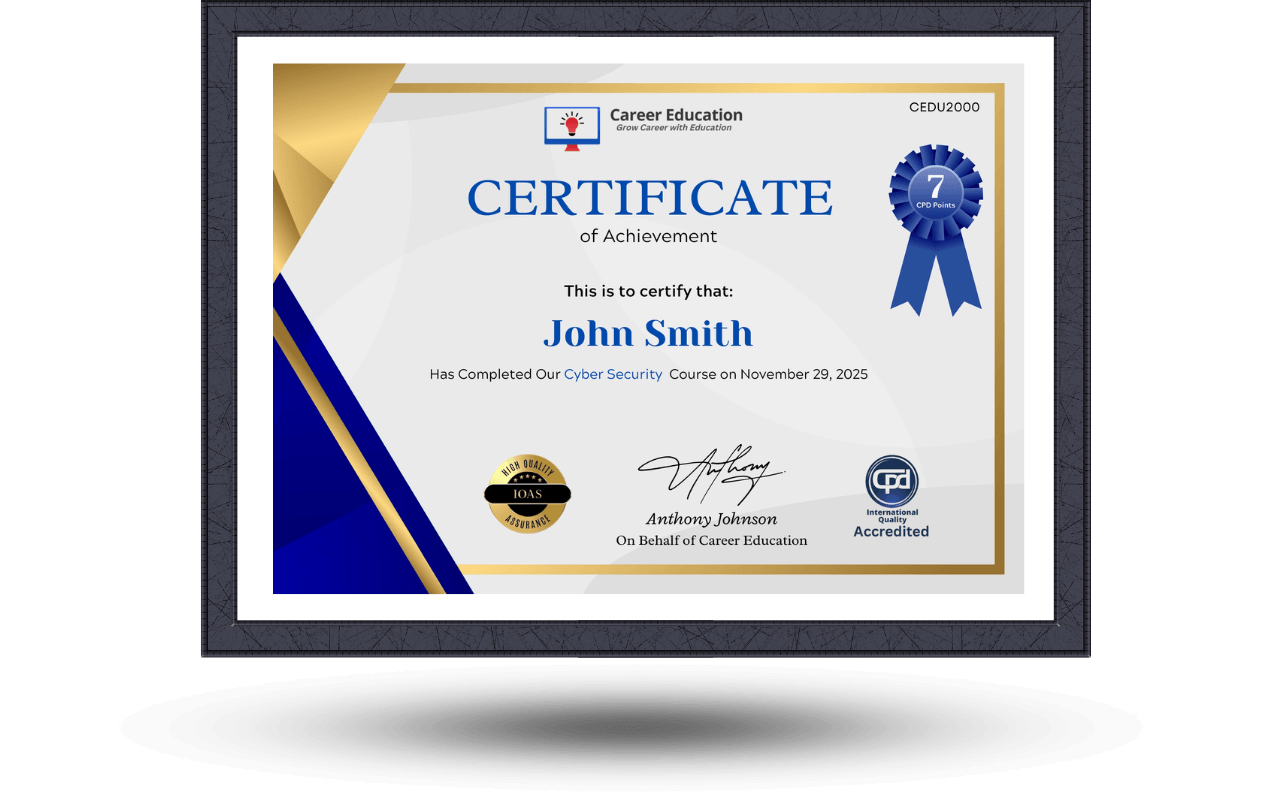
Upon completion of the course, an e-certificate will be downloadable from Khan Education signifying the completion of your course. But, the course is CPD Accredited and after you complete the assignment, you will be eligible to order a certificate accredited by CPD International Quality for £5.99 only. If you want a hardcopy certificate accredited by CPD IQ, you can get it for only £15.99.
Get your CertificateSimilar Courses