
94%
OFF
OFF
Reasonable Suspicion Training for Alcohol and Substance Abuse
- Lifetime Access
- All Levels
- PDF Certificate
£296
£19
14-Day Money-Back Guarantee
Learn With Confidence







Reasonable Suspicion Training for Alcohol and Substance Abuse
Workplace safety and employee wellbeing depend on having clear, fair, and responsible procedures for identifying situations that may require further attention. Reasonable Suspicion Training for Alcohol and Substance Abuse is designed to help managers, supervisors, team leaders, and workplace professionals develop the knowledge and confidence needed to recognise potential signs of alcohol or substance abuse and respond appropriately.
Rather than relying on assumptions or personal opinions, this course focuses on objective observations, consistent procedures, ethical decision-making, legal awareness, and supportive intervention. Learners will explore how reasonable suspicion assessments work, what indicators may warrant concern, and how to handle sensitive situations professionally.
Why Take Reasonable Suspicion Training for Alcohol and Substance Abuse?
Alcohol and substance abuse can create significant challenges within workplace environments. Potential concerns may include reduced concentration, impaired judgement, unsafe behaviour, attendance problems, performance changes, or increased workplace risks. However, recognising a possible concern is only the first step. Responding incorrectly can create additional problems for employees, managers, and organisations.
Reasonable Suspicion Training for Alcohol and Substance Abuse provides a structured learning experience that helps participants understand the difference between objective observations and assumptions. The course explores appropriate assessment procedures and highlights the importance of treating employees respectfully and consistently.
By completing the training, learners can develop a stronger understanding of how to approach suspected alcohol or substance-related concerns while considering workplace policies, ethical responsibilities, privacy, and applicable legal requirements.
What Will You Learn?
This course takes learners through seven focused modules covering the essential principles of reasonable suspicion training.
Module 1: Introduction to Reasonable Suspicion Training
The course begins by establishing a clear foundation in reasonable suspicion. Learners will explore what reasonable suspicion means within a workplace context and why structured procedures are important when concerns about alcohol or substance use arise.
You will develop an understanding of the role supervisors and responsible workplace personnel can play in recognising potential concerns. The module also introduces the importance of objective observations, appropriate documentation, consistency, and professional communication.
By the end of this module, learners will have a solid foundation for understanding the purpose and responsibilities associated with reasonable suspicion assessments.
Module 2: Understanding Alcohol Abuse
Alcohol-related concerns can sometimes present themselves through changes in workplace behaviour, performance, communication, attendance, or safety. This module introduces learners to the broader concept of alcohol abuse and explores indicators that may require attention.
The emphasis is on recognising observable workplace-related signs rather than making unsupported conclusions. Learners will consider how different indicators may appear and why a single observation should not automatically be treated as proof of alcohol misuse.
You will gain a more informed approach to identifying potential concerns while maintaining professionalism and avoiding assumptions or inappropriate judgement.
Module 3: Recognizing Substance Abuse
The course then examines potential indicators associated with substance abuse. Learners will explore how possible substance-related concerns can affect workplace conduct, performance, safety, and interactions.
This module helps participants understand why recognising patterns of observable behaviour can be important when assessing whether a situation requires further action. It also reinforces the importance of distinguishing genuine workplace concerns from unrelated personal, medical, or performance issues.
Through this learning, participants can become better prepared to identify situations that may require a structured response while maintaining fairness and respect.
Module 4: Conducting Reasonable Suspicion Assessments
Recognising a potential concern is not enough; workplace personnel also need to understand how to conduct an assessment appropriately. This module focuses on the process of carrying out reasonable suspicion assessments.
Learners will explore the importance of objective observations, careful documentation, appropriate communication, and following established workplace procedures. The course encourages a consistent approach that avoids relying on stereotypes, rumours, personal bias, or unsupported assumptions.
By completing this module, learners will be better prepared to approach potentially sensitive situations in a calm, organised, and professional manner.
Module 5: Ethical Considerations in Substance Abuse Detection
Substance-related concerns can involve highly sensitive personal information. For this reason, ethical decision-making is an important part of reasonable suspicion training.
This module explores key ethical considerations when identifying and responding to possible alcohol or substance abuse. Learners will consider issues such as dignity, confidentiality, fairness, privacy, professional boundaries, and the responsible handling of sensitive information.
You will develop a stronger awareness of how to balance workplace safety responsibilities with respectful treatment of individuals. This can help organisations create processes that are consistent, responsible, and less vulnerable to unfair or discriminatory practices.
Module 6: Legal Aspects of Reasonable Suspicion Testing
Legal requirements can vary depending on the country, industry, organisation, employment arrangement, and applicable regulations. Understanding the legal context is therefore essential when dealing with reasonable suspicion and workplace testing.
This module introduces learners to important legal considerations surrounding reasonable suspicion testing and workplace procedures. It highlights the importance of understanding relevant laws, organisational policies, employee rights, documentation requirements, and appropriate processes.
The course is designed to improve legal awareness rather than replace professional legal advice. Learners will understand why organisations should ensure their procedures are aligned with applicable legislation and current workplace requirements.
Module 7: Intervention and Support Strategies
The final module focuses on what can happen after a potential concern has been identified. Effective workplace responses should not focus solely on detection or disciplinary action. Appropriate support and intervention can also play an important role.
Learners will explore strategies for communicating concerns professionally and responding in ways that support workplace safety and employee wellbeing. The module considers the importance of established organisational procedures, appropriate referrals, supportive communication, and knowing when specialist assistance may be required.
By completing this module, participants will have a broader understanding of how reasonable suspicion processes can fit within a responsible workplace support framework.
Key Outcomes of the Course
After completing Reasonable Suspicion Training for Alcohol and Substance Abuse, learners can expect to develop knowledge and practical awareness in several important areas.
You will be able to:
-
Understand the purpose and principles of reasonable suspicion training.
-
Recognise potential workplace indicators associated with alcohol abuse.
-
Identify possible signs and patterns that may indicate substance-related concerns.
-
Distinguish objective observations from assumptions and speculation.
-
Understand the basic process involved in reasonable suspicion assessments.
-
Appreciate the importance of accurate and appropriate documentation.
-
Apply greater awareness of ethical responsibilities when handling sensitive situations.
-
Understand why privacy, dignity, fairness, and confidentiality matter.
-
Develop awareness of legal considerations surrounding reasonable suspicion testing.
-
Understand the importance of following organisational policies and procedures.
-
Communicate concerns in a professional and respectful manner.
-
Explore appropriate intervention and support strategies.
-
Recognise when additional professional or specialist support may be appropriate.
Who Is This Course For?
Reasonable Suspicion Training for Alcohol and Substance Abuse can be valuable for professionals who may have responsibilities relating to workplace safety, employee supervision, compliance, or organisational procedures.
It may be particularly suitable for:
-
Managers and supervisors
-
Team leaders
-
HR professionals
-
Workplace safety personnel
-
Compliance professionals
-
Occupational health and safety staff
-
Employee assistance and support teams
-
Business owners
-
Workplace administrators
-
Professionals responsible for implementing relevant workplace policies
The course can also provide useful foundational knowledge for anyone who wants to understand how organisations can approach potential alcohol and substance-related workplace concerns responsibly.
Build Confidence in Workplace Decision-Making
Sensitive workplace situations can be difficult to manage without appropriate knowledge and preparation. A supervisor may notice changes in an employee’s behaviour or performance but may not know how to respond appropriately. Acting too quickly can lead to unfair conclusions, while ignoring genuine safety concerns can create risks for the individual and others.
This course helps learners understand the importance of a measured and structured approach. Instead of making immediate conclusions, participants learn why observations should be considered carefully, procedures should be followed, and decisions should be based on appropriate evidence and organisational standards.
This approach can contribute to better workplace decision-making and more consistent handling of sensitive situations.
Promote a Safer and More Responsible Workplace
Workplace safety is not only about physical hazards. Employee behaviour, impairment concerns, and substance-related risks can also affect the wider working environment. Organisations need responsible systems for recognising and addressing potential risks while ensuring employees are treated fairly.
Reasonable Suspicion Training for Alcohol and Substance Abuse helps learners understand how awareness, communication, ethical conduct, and established procedures can work together to support workplace safety.
Rather than encouraging judgement or stigma, the course promotes a professional approach based on observation, policy, appropriate assessment, and support.
Strengthen Professional Knowledge
Professional development is an ongoing process. Building knowledge in workplace safety and responsible employee management can help professionals feel better prepared for situations that require careful judgement.
This course provides a focused learning opportunity covering alcohol abuse, substance abuse recognition, assessment procedures, ethics, legal considerations, and intervention strategies. The result is a broader understanding of the responsibilities that may arise when potential substance-related workplace concerns are identified.
Learners can use this knowledge to strengthen their professional awareness and contribute more effectively to appropriate workplace processes.
A Practical Foundation for Responsible Action
One of the key benefits of Reasonable Suspicion Training for Alcohol and Substance Abuse is its focus on responsible action. The course does not simply discuss what alcohol or substance abuse is; it explores how workplace professionals can respond to potential concerns in an informed and appropriate way.
From understanding reasonable suspicion to exploring intervention and support strategies, each module contributes to a complete learning journey. Participants finish with a stronger awareness of how observations, procedures, ethics, legal considerations, and support can connect within a workplace setting.
Start Your Learning Journey Today
Understanding how to respond to potential alcohol and substance-related workplace concerns is an important professional skill for anyone involved in supervision, safety, HR, or workplace management.
Reasonable Suspicion Training for Alcohol and Substance Abuse provides comprehensive foundational knowledge across recognition, assessment, ethical considerations, legal awareness, and intervention. Whether you are looking to strengthen your existing professional knowledge or develop greater confidence in workplace safety responsibilities, this course can help you build a more informed and responsible approach.
Enrol today and develop the knowledge needed to recognise potential concerns, understand appropriate assessment principles, support fair workplace practices, and contribute to a safer and more responsible working environment.
Course Modules
Course Content
Module 1_ Introduction to Reasonable Suspicion Training
-
Lesson 1_ Introduction to Reasonable Suspicion Training
Module 2_ Understanding Alcohol Abuse
Module 3_ Recognizing Substance Abuse
Module 4_ Conducting Reasonable Suspicion Assessments
Module 5_ Ethical Considerations in Substance Abuse Detection
Module 6_ Legal Aspects of Reasonable Suspicion Testing
Module 7_ Intervention and Support Strategies
What our students say
Excellent
4.9 average
158 Reviews

Earn an Accredited Certificate
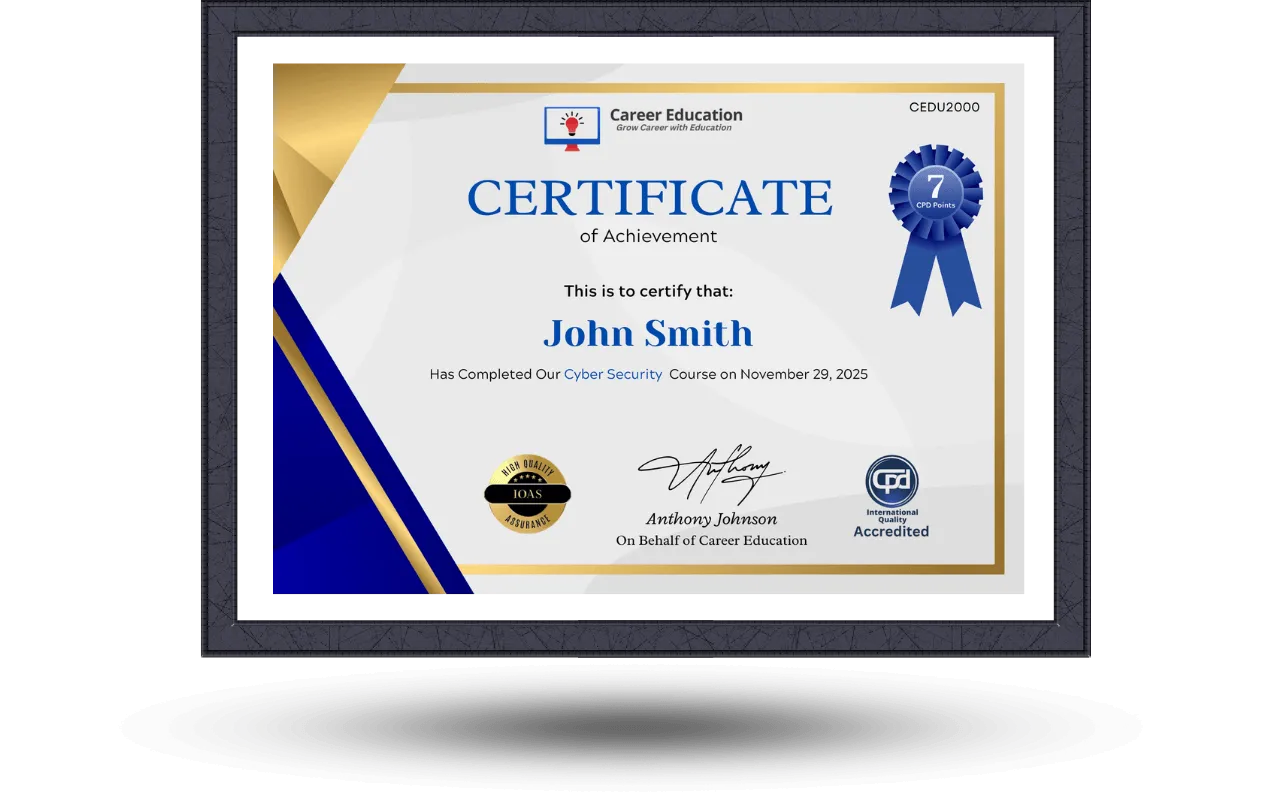
Upon completion of any course, all students are entitled to a CPD IQ Accredited e-certificate that will be issued by Career Education signifying the completion of your course.
After you complete the course and assignment, you will be eligible to order a free certificate accredited by CPD International Quality by completing the form below.
Hardcopy certificates and transcripts are also available for a small additional fee. More information is disclosed upon course completion.
Similar Courses




Frequently Asked Questions
The lifetime membership includes unlimited access to all courses, resources, and updates for a one-time fee.
You can purchase the membership directly from our website using a secure checkout process.
Yes, selected courses can be downloaded for offline access through our mobile app.
Yes, all future updates and new courses are included at no extra cost.
Yes, we offer a 30-day money-back guarantee if you are not satisfied with the membership.