
94%
OFF
OFF
Professional Occupational Therapy Support Training
- Lifetime Access
- All Levels
- PDF Certificate
£296
£19
14-Day Money-Back Guarantee
Learn With Confidence








# Professional Occupational Therapy Support Training
**Professional Occupational Therapy Support Training** is a comprehensive, outcome-focused course designed to introduce learners to the principles, practices and applications of occupational therapy support. Occupational therapy plays an important role in helping people participate in meaningful everyday activities, develop independence, manage challenges and work towards improved wellbeing and quality of life.
Support workers can contribute significantly to occupational therapy services by assisting with activities, communicating effectively with individuals and multidisciplinary teams, supporting rehabilitation programmes and helping create environments that encourage participation and independence. To perform these responsibilities effectively, it is important to understand the principles behind occupational therapy and how support can vary according to an individual’s needs.
This course provides a structured introduction to occupational therapy, assessment, developmental disabilities, mental health, rehabilitation and paediatric practice. **Professional Occupational Therapy Support Training** is designed to help learners build foundational knowledge that can support further study, workplace development and supervised support roles.
Whether you are considering a career in health and social care, already work in a support environment, want to expand your knowledge of rehabilitation or have an interest in occupational therapy, this course provides a useful foundation.
> **Important:** This course provides educational knowledge and does not qualify learners to practise as registered occupational therapists or independently undertake regulated clinical assessments or interventions. Occupational therapy practice and support work should always be carried out within appropriate professional, organisational and legal requirements and under suitable supervision where required.
## Understand the Foundations of Occupational Therapy
To provide effective support, it is important to understand what occupational therapy is and how it can improve participation in everyday life.
Module 1, **Introduction to Occupational Therapy**, provides the foundation for the course. You will explore the purpose of occupational therapy and develop an understanding of how occupational therapists support people with different needs.
Occupational therapy is concerned with helping people participate in activities that are meaningful and important to them. These activities may include personal care, education, employment, leisure, social participation and everyday household tasks.
By studying this module, you can develop the ability to:
* Understand the fundamental principles of occupational therapy.
* Recognise the role of occupational therapy in health and social care.
* Understand the importance of meaningful occupation.
* Appreciate the relationship between independence and wellbeing.
* Recognise the role of occupational therapy support workers.
* Develop awareness of person-centred approaches.
* Understand the importance of multidisciplinary working.
This foundation helps you understand why occupational therapy focuses on the individual rather than simply the condition or disability.
## Develop Knowledge of Occupational Therapy Assessment
Assessment is an important part of understanding an individual’s abilities, needs, challenges and goals. Occupational therapists use assessment processes to understand how health, physical ability, cognition, environment and other factors may affect a person’s participation in daily activities.
Module 2, **Occupational Therapy Assessment**, introduces learners to the principles behind occupational therapy assessment.
You will develop an understanding of why assessment needs to consider the individual as a whole and how information can help inform appropriate goals and support strategies.
The module can help you understand:
* The purpose of occupational therapy assessment.
* Why individual needs should be considered.
* The importance of identifying strengths and challenges.
* The role of observation and communication.
* How assessment can contribute to care planning.
* The importance of person-centred goals.
* The role of support workers in assisting with assessment-related processes.
You will also develop an appreciation of the importance of accurate communication and documentation when supporting occupational therapy services.
## Understand Developmental Disabilities and Occupational Therapy
People with developmental disabilities may experience challenges that affect communication, learning, physical abilities, independence and participation in everyday activities. Occupational therapy can play an important role in helping individuals develop skills and adapt activities or environments to support participation.
Module 3, **Developmental Disabilities and Occupational Therapy**, explores the relationship between developmental disabilities and occupational therapy support.
You will develop awareness of how occupational therapy may contribute to supporting individuals with different developmental needs and how interventions can be adapted to the person’s abilities, preferences and goals.
This module can help you understand:
* The concept of developmental disabilities.
* How developmental differences may affect daily activities.
* The importance of individualised support.
* The role of occupational therapy in promoting participation.
* How activities can support skill development.
* The importance of adapting environments and activities.
* The value of communication and collaboration with families and professionals.
This knowledge can be particularly valuable for people interested in working with children, young people or adults who require additional support with everyday activities.
## Explore Occupational Therapy for Mental Health
Occupational therapy is also relevant to mental health. Meaningful activities, routines, social participation and environmental factors can all influence wellbeing and an individual’s ability to engage with everyday life.
Module 4, **Occupational Therapy for Mental Health**, introduces the role occupational therapy can play in supporting people experiencing mental health challenges.
You will explore how meaningful occupation and structured activity can contribute to wellbeing and participation.
The module can help you develop awareness of:
* The relationship between occupation and mental wellbeing.
* The importance of meaningful daily activities.
* How routines can support participation.
* The role of occupational therapy in mental health settings.
* The importance of person-centred support.
* Communication considerations when supporting individuals.
* The value of collaborative approaches.
This knowledge can help learners understand that occupational therapy support is not limited to physical rehabilitation. It can also address psychological, social and environmental factors affecting everyday participation.
## Develop an Understanding of Rehabilitation
Rehabilitation aims to help people maximise their abilities and participate in everyday activities following illness, injury, disability or other changes in circumstances.
Module 5, **Rehabilitation and Occupational Therapy**, focuses on the relationship between rehabilitation and occupational therapy.
You will explore how occupational therapy can contribute to rehabilitation by focusing on activities that are meaningful to the individual and by helping people develop or regain functional abilities.
You can develop knowledge of:
* The principles of rehabilitation.
* The role of occupational therapy within rehabilitation.
* The importance of functional independence.
* Activity-based approaches to rehabilitation.
* Goal-setting and person-centred support.
* Adaptation of activities and environments.
* The importance of monitoring progress within appropriate professional frameworks.
This module can help you understand how support workers may contribute to rehabilitation programmes under the direction and supervision of appropriate professionals.
## Explore Occupational Therapy in Paediatrics
Children have unique developmental, educational and social needs. Occupational therapy in paediatric settings can help children participate in activities associated with learning, play, self-care and social interaction.
Module 6, **Occupational Therapy in Pediatrics**, introduces learners to the application of occupational therapy principles when supporting children.
You will explore how occupational therapy may support children’s participation and development while considering individual abilities and family circumstances.
The module can help you understand:
* The role of occupational therapy in paediatric settings.
* The importance of play in childhood development.
* How occupational therapy can support everyday activities.
* The relationship between development and participation.
* The importance of child-centred approaches.
* The role of families and carers.
* The importance of working collaboratively with education, health and care professionals.
This provides a useful introduction for learners interested in paediatric occupational therapy support.
## Develop a Person-Centred Approach
One of the most important themes throughout **Professional Occupational Therapy Support Training** is person-centred practice.
Every individual has different abilities, preferences, goals, circumstances and priorities. Effective support therefore requires more than applying the same approach to everyone.
A person-centred approach involves understanding what matters to the individual and supporting them to participate as independently as possible.
Through this course, you can develop greater awareness of:
* Individual preferences.
* Personal goals.
* Strengths and abilities.
* Barriers to participation.
* Environmental considerations.
* Communication needs.
* Independence and choice.
* Respect and dignity.
This approach can help support workers contribute more effectively to occupational therapy programmes and wider health and social care services.
## Understand the Importance of Meaningful Activities
Occupational therapy places considerable importance on meaningful occupation. Everyday activities can contribute to a person’s identity, independence, wellbeing and sense of purpose.
For one person, meaningful occupation may involve preparing a meal. For another, it could involve returning to work, attending school, participating in a hobby, caring for family members or managing personal care independently.
**Professional Occupational Therapy Support Training** helps learners understand why activities should be considered in the context of the individual rather than simply as exercises.
This perspective can help you recognise the importance of:
* Functional activities.
* Personal interests.
* Daily routines.
* Social participation.
* Education and employment.
* Leisure and recreation.
* Independence and confidence.
## Develop Communication and Support Skills
Occupational therapy support often involves regular interaction with individuals, families, carers and professionals. Effective communication can therefore contribute significantly to quality support.
The course can help you appreciate the importance of:
* Active listening.
* Respectful communication.
* Clear information sharing.
* Appropriate professional boundaries.
* Accurate reporting.
* Confidentiality.
* Collaborative working.
* Respecting individual preferences.
These skills are transferable across many health, care, rehabilitation and support environments.
## Who Is This Course For?
**Professional Occupational Therapy Support Training** is suitable for learners who want to develop foundational knowledge of occupational therapy and support practices.
It may be particularly useful for:
* Aspiring occupational therapy support workers.
* Health and social care professionals.
* Rehabilitation support workers.
* Care workers.
* Healthcare assistants.
* Support workers.
* Individuals interested in occupational therapy.
* Professionals working with people with disabilities.
* Individuals supporting children with additional needs.
* Learners interested in mental health support.
* People considering further study in health and social care.
The course can also be useful for those who want to broaden their understanding of person-centred care and rehabilitation.
## Develop Transferable Professional Skills
The knowledge covered throughout **Professional Occupational Therapy Support Training** can contribute to a wider range of professional skills.
These include:
* Person-centred support.
* Communication.
* Observation.
* Teamwork.
* Goal awareness.
* Problem-solving.
* Rehabilitation awareness.
* Activity planning.
* Professional responsibility.
* Respectful and inclusive practice.
These skills can be relevant across health, social care, rehabilitation, disability support and community-based services.
## Course Curriculum at a Glance
**Module 1 – Introduction to Occupational Therapy**
Build a foundation in occupational therapy principles, meaningful occupation and the role of occupational therapy in supporting independence and wellbeing.
**Module 2 – Occupational Therapy Assessment**
Understand the purpose of assessment and how information about an individual’s abilities, needs and goals can inform appropriate support.
**Module 3 – Developmental Disabilities and Occupational Therapy**
Explore how occupational therapy can support people with developmental disabilities and promote participation in everyday activities.
**Module 4 – Occupational Therapy for Mental Health**
Develop awareness of how meaningful activities, routines and person-centred approaches can contribute to mental health support.
**Module 5 – Rehabilitation and Occupational Therapy**
Understand the role of occupational therapy within rehabilitation and the importance of functional independence and meaningful activity.
**Module 6 – Occupational Therapy in Pediatrics**
Explore the application of occupational therapy principles in paediatric settings, including development, play, daily activities and family involvement.
## What You Can Gain from Professional Occupational Therapy Support Training
By completing **Professional Occupational Therapy Support Training**, you can work towards developing a broad understanding of occupational therapy and the role of support within different practice areas.
Your learning outcomes can include the ability to:
* Explain the basic principles of occupational therapy.
* Understand the purpose of occupational therapy assessment.
* Recognise the importance of meaningful occupation.
* Understand person-centred approaches.
* Develop awareness of developmental disabilities.
* Explore occupational therapy in mental health.
* Understand the role of occupational therapy in rehabilitation.
* Explore paediatric occupational therapy.
* Appreciate the importance of independence and participation.
* Develop stronger communication and teamwork awareness.
* Understand the importance of professional boundaries and appropriate supervision.
* Build a foundation for further occupational therapy or health and social care learning.
## Why Choose Professional Occupational Therapy Support Training?
Occupational therapy is a diverse field that can support people across different ages, conditions, environments and stages of life. Understanding its principles can provide valuable insight for anyone working in health, care, rehabilitation, disability or community support.
**Professional Occupational Therapy Support Training** brings together key areas of occupational therapy in a structured curriculum. Instead of focusing exclusively on one population or setting, the course introduces assessment, developmental disabilities, mental health, rehabilitation and paediatrics.
This broad approach can help learners develop a more complete understanding of how occupational therapy support can be applied in different contexts.
The course is also outcome-focused, helping learners develop knowledge they can use as a foundation for further education, workplace development and supervised support roles.
## Take the Next Step in Your Professional Development
Supporting people to participate in meaningful everyday activities can make an important contribution to their independence and quality of life. Occupational therapy provides a person-centred approach that considers the individual, their environment, their abilities and the activities that matter to them.
**Professional Occupational Therapy Support Training** gives you the opportunity to explore these principles and develop foundational knowledge across occupational therapy assessment, developmental disabilities, mental health, rehabilitation and paediatric practice.
Whether you are considering a career as an occupational therapy support worker, already work in health and social care, support people with disabilities or simply want to expand your professional knowledge, this course can provide a valuable starting point.
**Enrol in Professional Occupational Therapy Support Training today and develop a stronger understanding of occupational therapy principles, assessment, rehabilitation, mental health, developmental support and paediatric practice while building a foundation for your continued professional development.**
Course Modules
Course Content
Module 1_ Introduction to Occupational Therapy.
-
Lesson 1_ Introduction to Occupational Therapy.
Module 2_ Occupational Therapy Assessment.
Module 3_ Developmental Disabilities and Occupational Therapy.
Module 4_ Occupational Therapy for Mental Health.
Module 5_ Rehabilitation and Occupational Therapy.
Module 6_ Occupational Therapy in Pediatrics.
What our students say
Excellent
4.9 average
158 Reviews

Earn an Accredited Certificate
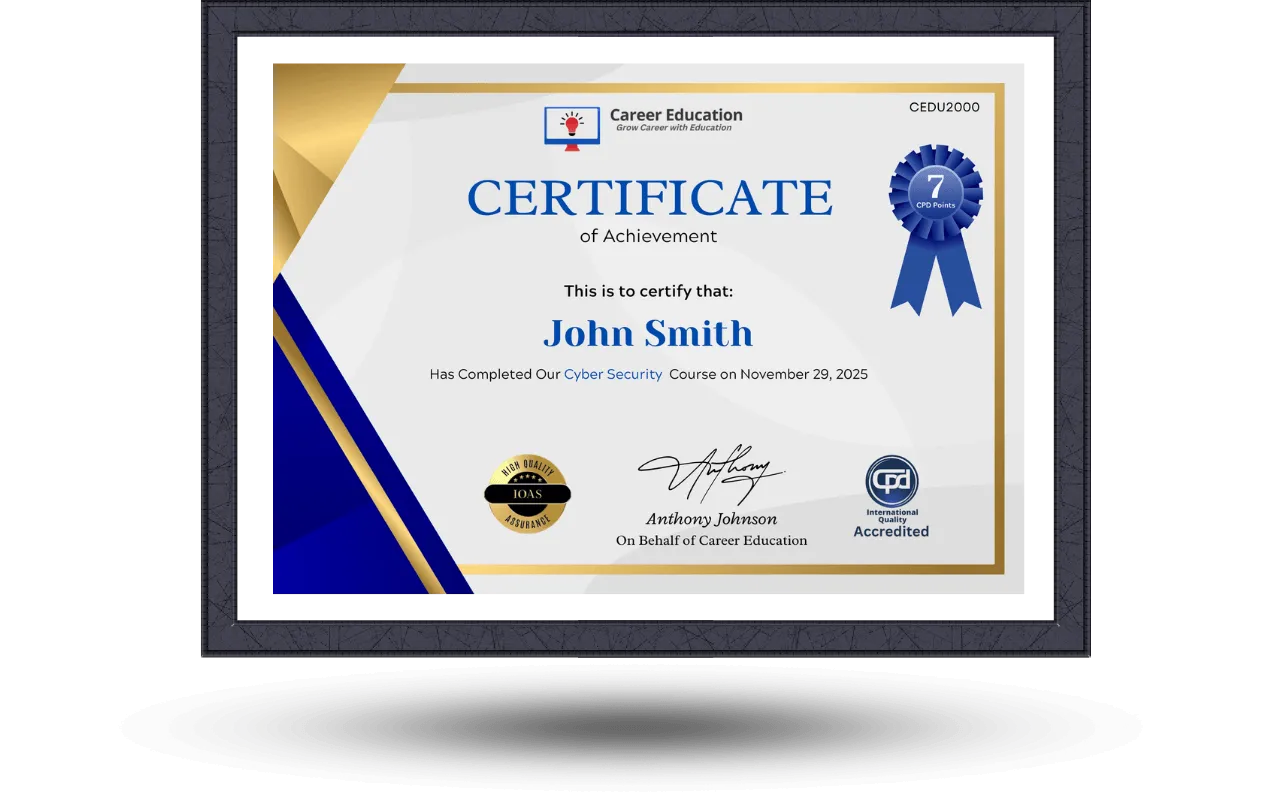
Upon completion of any course, all students are entitled to a CPD IQ Accredited e-certificate that will be issued by Career Education signifying the completion of your course.
After you complete the course and assignment, you will be eligible to order a free certificate accredited by CPD International Quality by completing the form below.
Hardcopy certificates and transcripts are also available for a small additional fee. More information is disclosed upon course completion.
Similar Courses



Frequently Asked Questions
The lifetime membership includes unlimited access to all courses, resources, and updates for a one-time fee.
You can purchase the membership directly from our website using a secure checkout process.
Yes, selected courses can be downloaded for offline access through our mobile app.
Yes, all future updates and new courses are included at no extra cost.
Yes, we offer a 30-day money-back guarantee if you are not satisfied with the membership.