
94%
OFF
OFF
Pre-Task Safety Briefings
- Lifetime Access
- All Levels
- PDF Certificate
£296
£19
14-Day Money-Back Guarantee
Learn With Confidence








Pre-Task Safety Briefings
Effective workplace safety begins before the work starts. A well-conducted briefing gives employees an opportunity to understand the task, identify potential hazards, clarify responsibilities and agree on appropriate control measures before work begins. When teams understand what they are expected to do and how risks will be managed, they are better positioned to work safely, communicate effectively and respond to changing conditions.
Pre-Task Safety Briefings is designed to help employees, supervisors, team leaders and safety professionals understand how to plan, prepare and conduct effective pre-task briefings. The course focuses on practical communication, hazard identification, risk assessment, documentation, supervision and ongoing monitoring.
A pre-task briefing is more than a routine meeting. It is an opportunity to create a shared understanding of the work before employees are exposed to workplace hazards. When done effectively, it can help prevent misunderstandings, encourage employee participation and ensure that important safety information is communicated clearly.
This course provides learners with practical knowledge and techniques for making pre-task briefings more structured, focused and useful.
Why Take Pre-Task Safety Briefings?
Workplace tasks can involve changing conditions, multiple hazards, specialised equipment, different roles and unexpected challenges. Employees may understand their individual responsibilities, but safety can suffer when the wider team does not share the same understanding of the task.
A structured pre-task safety briefing can help close this communication gap.
Pre-Task Safety Briefings helps learners understand how to:
-
Prepare effectively before a task begins.
-
Identify relevant hazards and potential risks.
-
Communicate safety information clearly.
-
Clarify individual roles and responsibilities.
-
Discuss appropriate control measures.
-
Encourage employee participation.
-
Document important briefing information.
-
Conduct focused and productive safety discussions.
-
Monitor work activities after the briefing.
-
Respond appropriately when conditions change.
-
Strengthen communication between supervisors and workers.
-
Support a proactive workplace safety culture.
The course focuses on practical outcomes, helping participants turn briefing principles into consistent workplace practices.
What You Will Learn
By completing Pre-Task Safety Briefings, learners will develop the knowledge and skills needed to prepare and deliver effective safety briefings before work begins.
Participants will learn how to structure a briefing around the actual task rather than relying on generic safety information. They will explore how to identify relevant hazards, discuss controls, communicate responsibilities and confirm that team members understand the information presented.
The course also covers documentation and follow-up. A briefing should not be treated as the end of the safety process. Supervisors and managers need to monitor work activities and remain alert to changes in conditions that may require the team to stop, reassess and communicate again.
The overall outcome is a more organised, participatory and proactive approach to pre-task safety communication.
Module 1: Introduction to Pre-Job Briefings
The course begins by introducing the purpose and importance of pre-job briefings.
Learners explore why safety discussions should take place before work begins and how they can help teams prepare for potential hazards.
A pre-task briefing provides an opportunity to review the planned activity, identify important risks and ensure everyone understands the expected working arrangements.
Participants will consider how effective briefings can help:
-
Improve team awareness.
-
Clarify task requirements.
-
Identify hazards before work begins.
-
Reinforce safety procedures.
-
Assign responsibilities.
-
Encourage questions and feedback.
-
Reduce misunderstandings.
-
Promote proactive risk management.
The module also examines the characteristics of an effective briefing. A useful briefing should be relevant to the task, understandable to the participants and focused on the hazards and controls that actually matter.
By completing this module, learners will understand the purpose of pre-task briefings and their role in supporting safer work.
Module 2: Planning and Preparation
A successful briefing begins with good preparation.
This module focuses on the steps that should be taken before gathering the team. Learners explore how supervisors and team leaders can prepare relevant information and ensure that the briefing addresses the actual work planned.
Preparation may involve reviewing:
-
The scope of the task.
-
Work procedures.
-
Potential hazards.
-
Required control measures.
-
Equipment and tools.
-
Personal protective equipment.
-
Environmental conditions.
-
Personnel and responsibilities.
-
Emergency arrangements.
-
Changes from previous work activities.
Participants will learn why preparation helps prevent briefings from becoming vague or repetitive.
The goal is to ensure that the discussion is specific enough to be useful. A construction task, maintenance activity, laboratory procedure or industrial operation may have very different hazards, so the briefing should reflect the specific conditions of the job.
By preparing effectively, leaders can communicate important information efficiently and give workers a clearer understanding of what to expect.
Module 3: Communication Strategies
A safety briefing is only effective if people understand the information being communicated.
This module explores communication strategies that can make pre-task briefings clearer, more engaging and more effective.
Learners will examine the importance of using straightforward language, avoiding unnecessary jargon and communicating information in a way that is appropriate for the team.
The module covers practical communication principles such as:
-
Speaking clearly and confidently.
-
Keeping the discussion focused.
-
Explaining hazards in practical terms.
-
Confirming understanding.
-
Encouraging questions.
-
Listening to worker concerns.
-
Avoiding assumptions.
-
Adapting communication to the audience.
-
Addressing language or communication barriers where relevant.
-
Reinforcing critical safety information.
Participants will also learn that effective communication should be two-way.
Workers often have direct experience with the task and may notice hazards that supervisors have overlooked. Encouraging participation can therefore improve the quality of the briefing and strengthen team engagement.
By the end of this module, learners will understand how communication can turn a routine safety meeting into a meaningful risk-prevention discussion.
Module 4: Risk Assessment and Management
Identifying hazards before work begins is one of the most important purposes of a pre-task briefing.
This module introduces practical risk assessment and management principles that can be incorporated into safety discussions.
Learners will explore how to consider the relationship between hazards, potential consequences and existing control measures.
Participants will consider questions such as:
-
What could go wrong during this task?
-
Who could be affected?
-
What hazards are present?
-
What controls are already in place?
-
Are additional controls required?
-
Have conditions changed?
-
Are workers adequately prepared?
-
What should happen if an unexpected hazard appears?
The module encourages learners to think proactively.
Rather than waiting for an incident or near miss, teams can use the briefing to identify potential problems and agree on appropriate precautions before beginning the task.
Participants will also learn the importance of reassessing risks when conditions change. A briefing conducted at the start of a shift may not remain sufficient if weather, equipment, personnel, work sequence or site conditions change significantly.
Module 5: Documentation and Record-Keeping
Good documentation can support accountability, communication and organisational learning.
This module explores the role of documentation and record-keeping in pre-task safety briefings.
Learners will consider what information may need to be recorded according to workplace procedures, such as the date, task, participants, key topics discussed, identified hazards, controls and any relevant follow-up actions.
The course emphasises that documentation should support the safety process rather than become a purely administrative exercise.
Effective records can help organisations:
-
Demonstrate that safety discussions took place.
-
Track important issues.
-
Confirm participation.
-
Identify recurring hazards.
-
Follow up on outstanding actions.
-
Support communication between shifts or teams.
-
Improve future planning.
Participants will learn the importance of accurate, clear and timely records while recognising that documentation requirements may vary between workplaces and industries.
Module 6: Conducting the Briefing
This module brings preparation and communication principles together by focusing on how to conduct an effective pre-task briefing.
Learners will explore how to organise the discussion and keep the team focused on the work ahead.
An effective briefing may include:
-
Explaining the task and expected work sequence.
-
Identifying key hazards.
-
Discussing relevant control measures.
-
Reviewing required PPE and equipment.
-
Clarifying roles and responsibilities.
-
Discussing communication arrangements.
-
Reviewing emergency procedures where appropriate.
-
Encouraging questions and worker feedback.
-
Confirming understanding.
-
Recording relevant information.
The module encourages leaders to avoid turning every briefing into a long presentation. The most effective discussions are often concise, task-specific and interactive.
Participants will learn how to create opportunities for workers to raise concerns before work begins.
The briefing should conclude only when the team has a clear understanding of the task, hazards, controls and responsibilities.
Module 7: Monitoring and Supervision
A briefing is not a substitute for active supervision.
The final module focuses on monitoring work activities after the briefing has taken place.
Learners explore how supervisors can verify that agreed safety measures are being followed and remain appropriate as work progresses.
Monitoring may involve observing work practices, checking equipment, communicating with workers and identifying changes in conditions.
Participants will learn why supervisors should remain alert to:
-
New or unexpected hazards.
-
Changes in work conditions.
-
Deviations from agreed procedures.
-
Equipment problems.
-
Worker concerns.
-
Changes in personnel.
-
Environmental changes.
-
Inadequate control measures.
When significant changes occur, the team may need to pause the work, reassess the situation and conduct another briefing.
This module reinforces the idea that safety communication is an ongoing process rather than a one-time event.
Practical Benefits of Pre-Task Safety Briefings
Pre-Task Safety Briefings is designed to deliver practical workplace outcomes.
After completing the course, learners should be better able to:
Prepare More Effectively
Gather relevant task information and identify the key issues that need to be discussed before work starts.
Communicate Safety Expectations
Explain hazards, controls and responsibilities in a clear and understandable way.
Identify Risks Early
Use pre-task discussions to identify potential hazards before employees begin the activity.
Encourage Worker Participation
Create opportunities for employees to ask questions, share observations and raise safety concerns.
Strengthen Accountability
Clarify responsibilities and document relevant safety discussions and agreed actions.
Improve Supervision
Monitor work activities and identify when conditions require additional communication or risk assessment.
Respond to Change
Recognise when changes in the work environment require the team to stop, reassess and communicate again.
Support Safety Culture
Make proactive safety communication a normal part of workplace planning.
Who Is This Course For?
Pre-Task Safety Briefings is suitable for professionals who are responsible for planning, supervising or participating in workplace tasks where effective safety communication is important.
The course may be particularly useful for:
-
Supervisors.
-
Team leaders.
-
Managers.
-
Safety officers.
-
Site supervisors.
-
Construction professionals.
-
Maintenance teams.
-
Manufacturing personnel.
-
Operations staff.
-
Engineering professionals.
-
Project coordinators.
-
Workplace safety representatives.
-
Employees involved in higher-risk work activities.
It can also be valuable for organisations seeking to improve the consistency and quality of their pre-task safety communication.
Build a More Proactive Safety Culture
Strong safety performance does not begin when a worker picks up a tool or starts a machine. It begins with preparation.
A team that understands the task, recognises the hazards and knows how risks will be controlled is better positioned to work safely.
Pre-Task Safety Briefings helps organisations make this preparation more systematic.
The course encourages leaders to move beyond generic safety reminders and focus on the specific conditions, hazards and controls associated with each task. It also highlights the importance of listening to employees and recognising that frontline workers can provide valuable information about real-world risks.
When briefings are consistent, relevant and interactive, they can become an important part of everyday workplace safety.
Improve Safety Before Work Begins
Prevention is often more effective when hazards are identified before people are exposed to them.
A well-planned pre-task briefing creates a valuable opportunity to identify hazards, clarify expectations and establish a shared understanding of safe working practices.
Pre-Task Safety Briefings provides learners with practical knowledge covering preparation, communication, risk assessment, documentation, briefing delivery and supervision.
By applying these principles, participants can help improve team communication, strengthen risk awareness and support safer workplace operations.
Take the Next Step Towards Better Safety Communication
Effective safety briefings do more than communicate information—they help teams prepare, participate and make better decisions.
Pre-Task Safety Briefings gives managers, supervisors, team leaders and workers practical tools for making pre-task discussions more focused, relevant and effective.
From planning the briefing to monitoring work after it concludes, learners will develop a complete understanding of how safety communication can support risk prevention.
Build stronger preparation habits, improve workplace communication and help your teams identify and manage risks before work begins with Pre-Task Safety Briefings.
Course Modules
Course Content
Module 1_ Introduction to Pre-Job Briefings
-
Lesson 1_ Introduction to Pre-Job Briefings
Module 2_ Planning and Preparation
Module 3_ Communication Strategies
Module 4_ Risk Assessment and Management
Module 5_ Documentation and Record-Keeping
Module 6_ Conducting the Briefing
Module 7_ Monitoring and Supervision
What our students say
Excellent
4.9 average
158 Reviews

Earn an Accredited Certificate
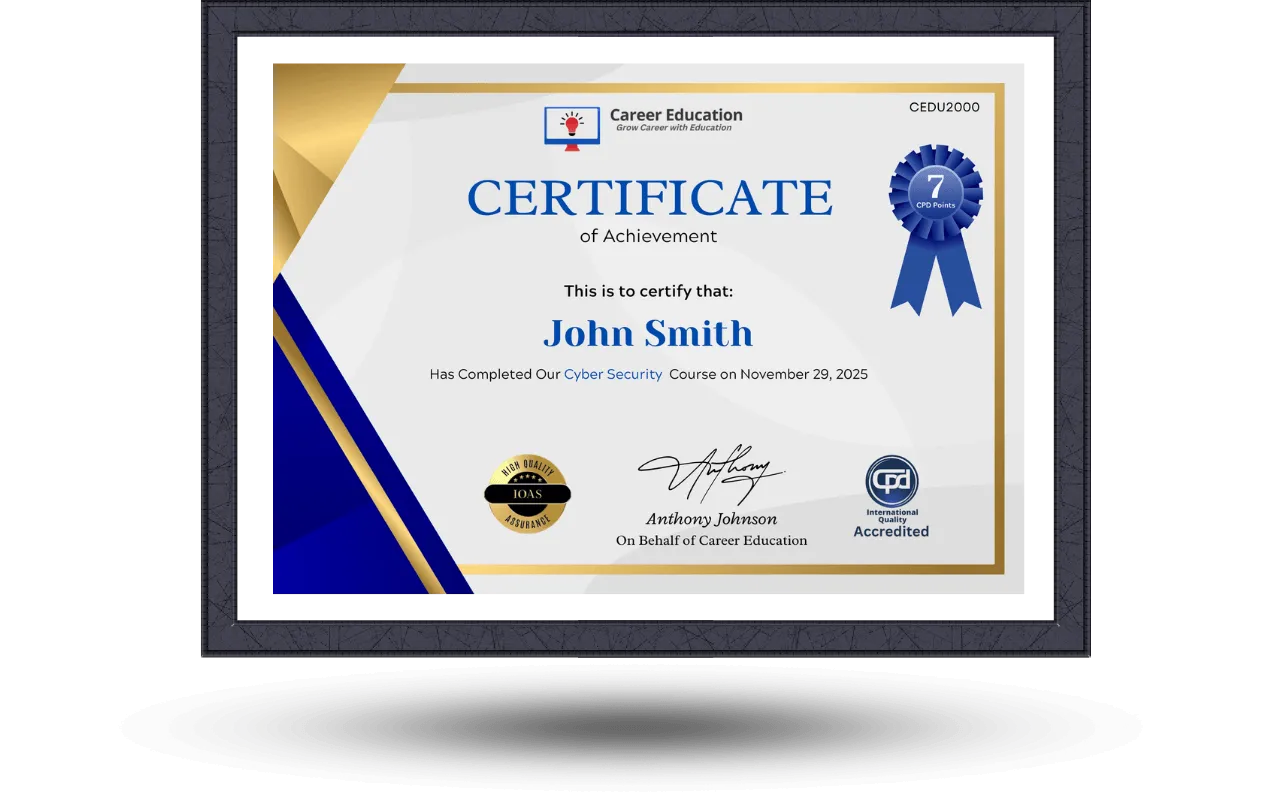
Upon completion of any course, all students are entitled to a CPD IQ Accredited e-certificate that will be issued by Career Education signifying the completion of your course.
After you complete the course and assignment, you will be eligible to order a free certificate accredited by CPD International Quality by completing the form below.
Hardcopy certificates and transcripts are also available for a small additional fee. More information is disclosed upon course completion.
Similar Courses




Frequently Asked Questions
The lifetime membership includes unlimited access to all courses, resources, and updates for a one-time fee.
You can purchase the membership directly from our website using a secure checkout process.
Yes, selected courses can be downloaded for offline access through our mobile app.
Yes, all future updates and new courses are included at no extra cost.
Yes, we offer a 30-day money-back guarantee if you are not satisfied with the membership.