
94%
OFF
OFF
People Management Essentials
- Lifetime Access
- All Levels
- PDF Certificate
£296
£19
14-Day Money-Back Guarantee
Learn With Confidence





# People Management Essentials
Managing people effectively is one of the most important responsibilities of any manager, supervisor, team leader, or business professional. Strong people management is not simply about assigning tasks and monitoring results. It involves understanding human behaviour, communicating clearly, building productive teams, supporting employee performance, attracting suitable talent, and creating opportunities for continuous development.
**People Management Essentials** is an outcome-focused course designed to help professionals develop the practical knowledge and interpersonal skills needed to manage employees effectively and contribute to a positive workplace environment.
The course takes a practical approach to the key areas of people management, including human behaviour, managerial communication, team leadership, performance management, talent acquisition, onboarding, employee development, and training.
Whether you are a new manager taking responsibility for a team for the first time or an experienced leader looking to strengthen your approach to managing people, **People Management Essentials** provides a structured foundation for becoming a more capable, supportive, and effective people manager.
—
## Why People Management Matters
Organisations depend on people to achieve their goals.
Technology, processes, strategies, and resources are important, but employees ultimately influence how effectively those resources are used. Managers therefore have an important responsibility to create conditions where people can understand expectations, contribute their skills, communicate effectively, and develop professionally.
Effective people management can help organisations:
* Improve employee engagement.
* Strengthen teamwork.
* Clarify expectations.
* Support better performance.
* Develop employee capabilities.
* Improve workplace communication.
* Encourage collaboration.
* Support employee retention.
* Build stronger teams.
* Create a positive workplace culture.
Poor people management, on the other hand, can contribute to confusion, conflict, low morale, disengagement, and inconsistent performance.
**People Management Essentials** helps learners understand the core practices required to manage people more effectively.
—
# What You Will Learn
By completing **People Management Essentials**, learners will be able to:
* Explain the fundamental principles of people management.
* Understand factors that influence workplace behaviour.
* Communicate more effectively with employees.
* Build stronger and more collaborative teams.
* Set expectations and support employee performance.
* Understand the fundamentals of talent acquisition.
* Support effective employee onboarding.
* Identify employee development needs.
* Encourage continuous learning and professional growth.
* Provide constructive feedback.
* Support employee engagement and collaboration.
* Develop a more structured approach to managing people.
—
# Course Curriculum
## Module 1: Introduction to People Management
### Lesson 1: Introduction to People Management
The course begins with the foundations of people management.
Learners will explore what effective people management involves and why managing employees requires more than simply supervising tasks.
Key areas include:
* The role of a people manager.
* Employee expectations.
* Managerial responsibilities.
* Workplace relationships.
* Employee engagement.
* Trust.
* Accountability.
* Workplace culture.
Participants will examine how managers influence the employee experience through everyday decisions and interactions.
A manager may influence how employees understand their roles, communicate with colleagues, respond to challenges, receive feedback, and approach professional development.
The module also explores the difference between managing tasks and managing people.
While managers need to achieve organisational objectives, they must also understand the people responsible for achieving those objectives.
By completing this module, learners will develop a clear understanding of the role and responsibilities of effective people management.
—
# Module 2: Understanding Human Behavior
Every employee brings different experiences, motivations, expectations, communication styles, and working preferences to the workplace.
This module introduces learners to the fundamentals of human behaviour in organisational settings.
Participants will explore factors such as:
* Motivation.
* Attitudes.
* Personality.
* Perception.
* Workplace relationships.
* Individual differences.
* Emotional responses.
* Behavioural patterns.
Learners will consider why employees may respond differently to the same situation.
For example, one employee may view a challenging assignment as an exciting opportunity, while another may perceive it as stressful or overwhelming.
Understanding these differences can help managers communicate more effectively and respond to employees with greater awareness.
The module also encourages learners to avoid making assumptions about employee behaviour.
Instead, managers can use observation, communication, questions, and active listening to better understand what may be influencing a person’s behaviour or performance.
By completing this module, learners will have a stronger foundation for understanding employee behaviour and workplace interactions.
—
# Module 3: Communication Skills for Managers
Communication is one of the most important skills in people management.
Managers communicate expectations, provide feedback, explain changes, resolve misunderstandings, conduct meetings, and support employees through challenging situations.
This module focuses on practical communication skills for managers.
Learners will explore:
* Active listening.
* Clear communication.
* Questioning.
* Feedback.
* Non-verbal communication.
* Empathy.
* Difficult conversations.
* Communication barriers.
* Two-way communication.
Participants will learn why effective communication is more than simply delivering information.
Good managers also listen.
Active listening can help managers understand employee concerns, clarify misunderstandings, and identify potential problems before they become more serious.
The module also introduces principles of constructive feedback.
Effective feedback should focus on relevant behaviours, expectations, and outcomes rather than personal criticism.
Learners will explore how managers can communicate clearly while maintaining professionalism and respect.
By completing this module, participants will have practical communication strategies that can be applied to everyday management situations.
—
# Module 4: Building and Leading Teams
Strong teams do not happen automatically.
Managers need to establish expectations, encourage collaboration, manage differences, and create an environment where team members can contribute effectively.
This module focuses on building and leading productive teams.
Learners will explore:
* Team formation.
* Team roles.
* Collaboration.
* Trust.
* Shared objectives.
* Team communication.
* Conflict management.
* Accountability.
* Team motivation.
Participants will consider how managers can help team members understand their responsibilities while also recognising how individual contributions support broader objectives.
The module also examines the importance of creating clear expectations.
When employees understand what is expected, how success will be measured, and how their work connects with others, teams can operate more effectively.
Learners will also explore how managers can respond to disagreements and differences within teams.
Conflict is not always negative. Constructive differences can encourage discussion and new ideas, while poorly managed conflict can damage relationships and performance.
By completing this module, learners will be better prepared to build collaborative teams and provide effective team leadership.
—
# Module 5: Performance Management
Performance management is an ongoing process rather than a single annual conversation.
Managers need to establish expectations, monitor progress, provide feedback, recognise achievements, and address performance concerns appropriately.
This module explores the fundamentals of effective performance management.
Learners will examine:
* Performance expectations.
* Goal setting.
* Performance monitoring.
* Feedback.
* Coaching.
* Recognition.
* Performance reviews.
* Improvement planning.
* Accountability.
Participants will explore how clear objectives can help employees understand what successful performance looks like.
The module also highlights the importance of regular communication.
Employees should not have to wait until a formal performance review to discover that their work is not meeting expectations.
Managers can provide timely feedback and support throughout the year.
Learners will also explore how to address performance concerns professionally.
Effective performance management should focus on understanding the issue, clarifying expectations, identifying appropriate support, and following relevant organisational procedures.
By completing this module, participants will develop a stronger foundation for supporting employee performance.
—
# Module 6: Talent Acquisition and Onboarding
Effective people management begins before an employee’s first day.
Recruiting suitable people and helping new employees transition into the organisation are important components of workforce management.
This module introduces the fundamentals of talent acquisition and onboarding.
Learners will explore:
* Workforce needs.
* Job requirements.
* Candidate selection.
* Recruitment considerations.
* Interviewing.
* Onboarding.
* Role clarity.
* Organisational integration.
* Early employee support.
Participants will consider why selecting candidates should involve more than simply reviewing qualifications.
Managers may also need to consider skills, experience, role requirements, behavioural expectations, organisational fit, and relevant recruitment processes.
The module then explores onboarding.
A new employee may have the technical skills required for the job but still need guidance regarding workplace processes, team relationships, expectations, systems, and organisational culture.
Effective onboarding can help new employees understand their role and become productive more confidently.
By completing this module, learners will understand how managers can contribute to effective talent acquisition and onboarding.
—
# Module 7: Employee Development and Training
Successful people management includes helping employees grow.
This module focuses on employee development and workplace training.
Learners will explore:
* Development needs.
* Skills gaps.
* Learning objectives.
* Training opportunities.
* Coaching.
* Mentoring.
* Career development.
* Knowledge sharing.
* Continuous improvement.
Participants will consider how managers can identify opportunities for employee development.
Development does not always require formal classroom training. It can include coaching, mentoring, job assignments, project involvement, peer learning, cross-functional experiences, and access to relevant resources.
The module also highlights the importance of connecting development with both employee aspirations and organisational needs.
When employees can see opportunities to develop their capabilities, they may become more engaged with their work and more prepared for future responsibilities.
By completing this module, learners will be better equipped to support continuous learning and professional development within their teams.
—
# Who Is This Course For?
**People Management Essentials** is suitable for professionals who manage, supervise, support, or lead employees.
It can benefit:
* New managers.
* Experienced managers.
* Supervisors.
* Team leaders.
* Department heads.
* HR professionals.
* Project managers.
* Business owners.
* Entrepreneurs.
* Operations managers.
* Emerging leaders.
* Professionals preparing for management responsibilities.
The course can also be useful for organisations seeking to strengthen general people management capabilities across their management teams.
—
# Practical Learning Outcomes
The course focuses on skills that learners can apply in real workplace situations.
After completing **People Management Essentials**, learners will be better prepared to:
### Understand Employees
Recognise the different factors that can influence workplace behaviour, motivation, communication, and performance.
### Communicate Effectively
Use active listening, clear communication, questioning, and constructive feedback to strengthen employee relationships.
### Lead Teams
Build collaborative teams by establishing clear expectations, encouraging participation, and supporting accountability.
### Manage Performance
Set expectations, provide feedback, recognise achievements, and address performance concerns constructively.
### Support Recruitment
Understand the manager’s role in identifying workforce needs and contributing to appropriate talent acquisition processes.
### Improve Onboarding
Help new employees understand their roles, responsibilities, workplace expectations, and team environment.
### Develop Employees
Identify development opportunities and support employees through coaching, training, mentoring, and practical learning experiences.
—
# Build Stronger Manager-Employee Relationships
Effective people management depends heavily on relationships.
Employees need to know what is expected of them, but they also need to feel that their manager is approachable, fair, consistent, and willing to listen.
Strong relationships can make it easier to discuss challenges, provide feedback, resolve misunderstandings, and identify development opportunities.
**People Management Essentials** helps learners understand how everyday managerial interactions can influence trust, engagement, and performance.
—
# Support Better Team Performance
A manager’s role is not simply to make individual employees perform well.
Managers also need to understand how people work together.
Clear communication, shared objectives, defined responsibilities, mutual respect, and appropriate accountability can help teams operate more effectively.
Through the course, learners will explore how people management and team leadership connect.
—
# Develop Employees for Long-Term Success
Employee development is an important part of sustainable people management.
Organisations need employees who can adapt to changing responsibilities, develop new capabilities, and contribute to future objectives.
Managers can play a significant role by identifying development needs, providing feedback, encouraging learning, and supporting employees as they take on new challenges.
**People Management Essentials** provides learners with a foundation for making employee development part of everyday management rather than treating it as a separate activity.
—
# Create a Positive Workplace Environment
People management also influences workplace culture.
Managers who communicate respectfully, recognise contributions, address problems consistently, encourage learning, and support collaboration can contribute to a more positive working environment.
The course helps learners understand how these practices can be integrated into everyday management.
—
# Enrol in People Management Essentials Today
Effective people management is a core leadership capability.
**People Management Essentials** provides a structured seven-module learning experience covering people management fundamentals, human behaviour, managerial communication, team leadership, performance management, talent acquisition and onboarding, and employee development and training.
The course is intended for general professional development and does not replace organisation-specific HR policies, employment law guidance, professional HR advice, or formal performance-management procedures.
Whether you are managing your first team, developing your leadership career, running a business, or looking to strengthen your existing management skills, **People Management Essentials** can provide a practical foundation for becoming a more confident and effective people manager.
**Enrol today and develop the knowledge to understand employees, communicate more effectively, build stronger teams, manage performance, support successful onboarding, and help people develop their skills for long-term workplace success.**
Course Modules
Course Content
Module 1_ Introduction to People Management
-
Lesson 1_ Introduction to People Management
Module 2_ Understanding Human Behavior
Module 3_ Communication Skills for Managers
Module 4_ Building and Leading Teams
Module 5_ Performance Management
Module 6_ Talent Acquisition and Onboarding
Module 7_ Employee Development and Training
What our students say
Excellent
4.9 average
158 Reviews

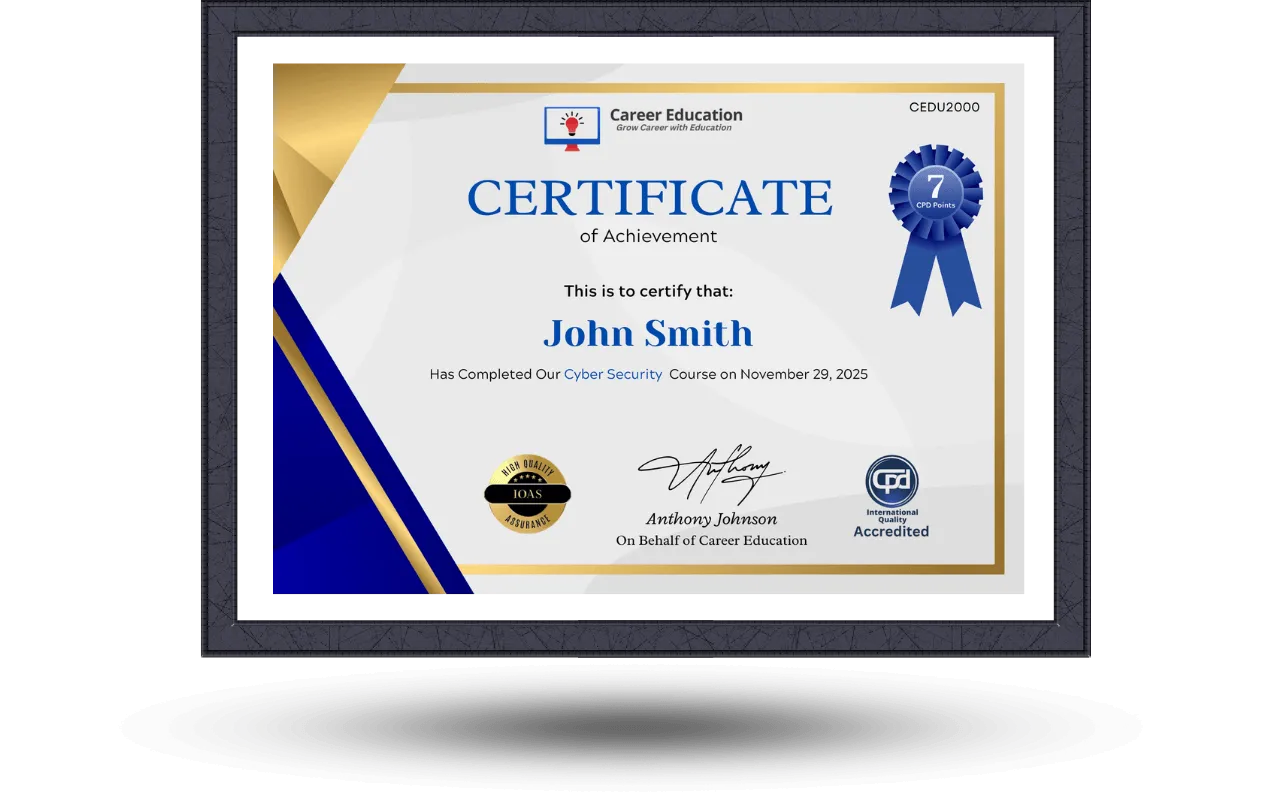
Earn an Accredited Certificate
Upon completion of any course, all students are entitled to a CPD IQ Accredited e-certificate that will be issued by Career Education signifying the completion of your course.
After you complete the course and assignment, you will be eligible to order a free certificate accredited by CPD International Quality by completing the form below.
Hardcopy certificates and transcripts are also available for a small additional fee. More information is disclosed upon course completion.
Similar Courses


Frequently Asked Questions
The lifetime membership includes unlimited access to all courses, resources, and updates for a one-time fee.
You can purchase the membership directly from our website using a secure checkout process.
Yes, selected courses can be downloaded for offline access through our mobile app.
Yes, all future updates and new courses are included at no extra cost.
Yes, we offer a 30-day money-back guarantee if you are not satisfied with the membership.