
94%
OFF
OFF
Laboratory Compressed Gas Cylinder Safety Essentials
- Lifetime Access
- All Levels
- PDF Certificate
£296
£19
14-Day Money-Back Guarantee
Learn With Confidence








# Laboratory Compressed Gas Cylinder Safety Essentials
Compressed gases are essential to many laboratory operations. They may be used for analytical instruments, experiments, calibration, inert atmospheres, chromatography, specialised equipment, research processes, and a wide range of scientific applications. However, compressed gas cylinders can present significant physical and chemical hazards when they are incorrectly identified, transported, connected, stored, or handled.
A cylinder may contain gas under very high pressure, while some gases may also be flammable, oxidising, toxic, corrosive, inert, or otherwise hazardous. Safe laboratory operations therefore require workers to understand both the cylinder itself and the properties of the gas it contains.
**Laboratory Compressed Gas Cylinder Safety Essentials** is a practical, outcome-focused course designed to help learners develop a strong foundation in compressed gas cylinder safety. The course covers cylinder identification and labelling, safe handling and transportation, connection and disconnection procedures, storage, leak detection, emergency response, and regulator selection and use.
The course is designed for laboratory environments where compressed gases are routinely used or stored. It helps learners understand the importance of following established procedures, consulting gas-specific safety information, using suitable equipment, and recognising when specialist assistance is required.
Whether you work in a research laboratory, educational laboratory, testing facility, healthcare laboratory, industrial laboratory, or another scientific environment, **Laboratory Compressed Gas Cylinder Safety Essentials** can help strengthen your awareness of the risks associated with compressed gases and support safer working practices.
—
## Why Laboratory Compressed Gas Cylinder Safety Essentials Matters
Compressed gas cylinders combine several potential hazards.
The pressure inside a cylinder can be extremely high. If a cylinder is damaged, improperly secured, or subjected to unsuitable conditions, the stored energy can create serious risks.
The gas itself may also introduce additional hazards.
Depending on the substance, compressed gases may be:
* Flammable
* Oxidising
* Toxic
* Corrosive
* Asphyxiating
* Reactive
* Inert
* Environmentally hazardous
A release can therefore create risks ranging from fire and explosion to toxic exposure or oxygen deficiency.
The **Laboratory Compressed Gas Cylinder Safety Essentials** course helps learners understand these hazards and develop safer habits when working with compressed gas cylinders.
—
# What You Will Learn
By completing the **Laboratory Compressed Gas Cylinder Safety Essentials** course, learners will be able to:
* Explain the fundamental hazards associated with compressed gas cylinders.
* Understand why cylinder identification and labelling are important.
* Recognise basic cylinder markings and safety information.
* Apply safer principles when moving and transporting cylinders.
* Understand safe connection and disconnection procedures.
* Recognise appropriate storage considerations.
* Identify potential gas leaks.
* Understand basic emergency response principles.
* Recognise when an area should be isolated and specialist assistance requested.
* Understand the purpose of gas regulators.
* Appreciate the importance of selecting equipment compatible with the gas.
* Follow laboratory procedures more confidently.
* Support a stronger compressed gas safety culture.
—
# Course Curriculum
## Module 1: Introduction to Compressed Gas Cylinders
### Lesson 1: Introduction to Compressed Gas Cylinders
The course begins with the fundamentals of compressed gas cylinders.
Learners will explore how compressed gas cylinders are used in laboratories and why they require specific safety precautions.
The module introduces the primary hazards associated with cylinders, including:
* High pressure
* Cylinder instability
* Physical damage
* Gas release
* Fire
* Explosion
* Toxic exposure
* Oxygen displacement
* Reactive gas hazards
Participants will learn that the cylinder and its contents must both be considered when assessing risk.
For example, an inert gas may not be toxic in the same way as a poisonous gas, but a significant release can displace oxygen in a poorly ventilated area.
Similarly, a flammable gas can create a fire or explosion hazard if released near an ignition source.
The module also introduces the importance of following manufacturer instructions, laboratory procedures, relevant safety information, and applicable requirements.
By completing this module, learners will understand the basic hazards associated with compressed gas cylinders and why careful handling is essential.
—
# Module 2: Cylinder Identification and Labelling
Correct identification is one of the first steps in compressed gas safety.
A cylinder should never be used simply because it looks familiar or resembles another cylinder.
This module focuses on cylinder identification and labelling.
Learners will explore the importance of checking information such as:
* Gas name
* Hazard information
* Cylinder markings
* Labels
* Identification codes
* Valve information
* Inspection or test information where applicable
The course emphasises the importance of verifying cylinder identity before connection or use.
Learners will also consider the dangers associated with:
* Missing labels
* Damaged labels
* Illegible markings
* Unidentified cylinders
* Incorrectly identified gases
Using an unidentified cylinder can create serious risks, particularly when incompatible equipment or incorrect procedures are used.
Participants will learn why cylinders should be treated according to the gas they contain and the information provided by the supplier or manufacturer.
The module also reinforces the importance of consulting the relevant Safety Data Sheet when appropriate.
By completing this module, learners will understand why accurate cylinder identification is essential for safe laboratory operations.
—
# Module 3: Handling and Transporting Cylinders Safely
Moving compressed gas cylinders requires careful planning.
A cylinder can be heavy and difficult to control, and dropping or damaging one can create significant hazards.
This module focuses on safer cylinder handling and transportation.
Learners will explore general principles such as:
* Planning the movement
* Using suitable cylinder-handling equipment
* Securing cylinders appropriately
* Protecting cylinder valves
* Avoiding unnecessary impacts
* Maintaining control during movement
* Using designated routes where appropriate
The course explains why cylinders should not be handled casually or moved using unsuitable methods.
Learners will also explore the importance of preventing cylinders from falling, rolling, or striking objects.
Where appropriate, suitable cylinder carts or other approved handling equipment should be used.
Participants will learn that cylinders should not be dragged, rolled unnecessarily, or lifted using inappropriate methods.
The module also discusses the importance of considering the environment through which a cylinder is being moved.
Potential obstacles, stairs, doorways, laboratory equipment, traffic, and other hazards should be considered before moving a cylinder.
By completing this module, learners will understand the principles of safe compressed gas cylinder transportation within laboratory environments.
—
# Module 4: Connecting and Disconnecting Gas Cylinders
Connecting a cylinder to laboratory equipment is a critical step that requires attention to compatibility and procedure.
This module explores the principles of safely connecting and disconnecting gas cylinders.
Learners will consider factors such as:
* Correct gas identification
* Compatible connections
* Appropriate regulators
* Valve condition
* Connection integrity
* Equipment compatibility
* Manufacturer instructions
* Leak checking
The course emphasises that connections should never be improvised.
Using incorrect fittings, adapters, or regulators can create serious risks.
Participants will explore the importance of following established procedures for opening and closing valves and connecting equipment.
They will also learn why cylinders should not be connected simply because a fitting appears to fit.
Different gases and systems may require specific connection types to help prevent incorrect connections.
The module also introduces safe disconnection principles, including appropriate isolation and depressurisation procedures according to the equipment manufacturer’s instructions and workplace procedures.
By completing this module, learners will understand why careful connection and disconnection practices are essential for preventing leaks, equipment damage, and unsafe releases.
—
# Module 5: Gas Cylinder Storage and Handling
Appropriate storage helps prevent cylinder damage, instability, exposure to unsuitable conditions, and accidental releases.
This module focuses on safe storage and handling principles.
Learners will explore considerations such as:
* Cylinder security
* Suitable storage areas
* Ventilation
* Protection from physical damage
* Separation of incompatible gases
* Temperature
* Ignition sources
* Access control
* Cylinder condition
Cylinders should be secured in a manner appropriate to the workplace and applicable requirements to prevent them from falling.
Learners will also explore why gas properties matter when determining storage arrangements.
For example, flammable gases may require specific controls relating to ignition sources and ventilation, while oxidising gases require careful separation from combustible materials.
The course also highlights the importance of keeping cylinder valves and protective components appropriately managed according to supplier and workplace procedures.
Participants will consider the difference between cylinders that are ready for use, in use, empty, or awaiting return, and why appropriate identification and management are important.
By completing this module, learners will understand the principles of safer compressed gas cylinder storage.
—
# Module 6: Leak Detection and Emergency Procedures
Gas leaks can develop from damaged components, loose connections, faulty equipment, or other causes.
A small release can become a serious incident depending on the properties of the gas, the quantity released, ventilation, and surrounding conditions.
This module introduces basic leak detection and emergency response principles.
Learners will explore warning signs that may indicate a potential release, such as:
* Unexpected odours where an odourant is present
* Hissing sounds
* Unexpected pressure changes
* Frosting around certain components
* Instrument readings
* Other abnormal equipment behaviour
However, not all hazardous gases can be detected by smell or sight, so workers should not rely solely on their senses.
The course emphasises the importance of appropriate detection equipment and established laboratory procedures.
Learners will explore general emergency considerations, including:
* Raising the alarm
* Avoiding unnecessary exposure
* Isolating the area where appropriate
* Removing ignition sources when safe to do so
* Following emergency procedures
* Contacting trained emergency personnel
* Evacuating when required
Participants will also understand that they should not attempt to stop a leak or enter a hazardous atmosphere unless they are specifically trained, equipped, and authorised to do so.
Emergency response priorities should always follow the laboratory’s established emergency plan.
By completing this module, learners will develop greater awareness of potential gas leaks and appropriate initial responses.
—
# Module 7: Regulator Selection and Use
Regulators are critical components of many compressed gas systems because they help control gas pressure for downstream applications.
Using the wrong regulator can create significant hazards.
This module introduces the fundamental principles of regulator selection and use.
Learners will explore why regulator selection should consider:
* Gas type
* Required pressure
* Required flow
* Connection compatibility
* Equipment requirements
* Manufacturer specifications
* Material compatibility
The course reinforces that regulators should be appropriate for the specific gas and application.
A regulator intended for one gas should not automatically be assumed to be suitable for another.
Learners will also explore the importance of inspecting regulators and associated components for signs of damage, contamination, or wear.
Participants will learn why modifications and improvised connections should be avoided.
The module also highlights the importance of following manufacturer instructions when installing, operating, inspecting, and maintaining regulators.
By completing this module, learners will understand the basic considerations involved in selecting and using regulators safely.
—
# Who Is This Course For?
The **Laboratory Compressed Gas Cylinder Safety Essentials** course is suitable for a broad range of laboratory personnel.
It may be particularly useful for:
* Laboratory technicians
* Research scientists
* Laboratory assistants
* Students working in laboratories
* Chemical analysts
* Quality-control personnel
* Biomedical laboratory staff
* Research and development teams
* Laboratory supervisors
* Facilities personnel
* Maintenance teams
* Safety professionals
* Laboratory managers
The course can also be useful for organisations seeking to reinforce basic compressed gas safety awareness among laboratory personnel.
—
# Practical Learning Outcomes
The course is designed to help learners apply safety concepts to real laboratory situations.
After completing **Laboratory Compressed Gas Cylinder Safety Essentials**, participants should be better prepared to consider important questions before handling a cylinder:
**What gas does the cylinder contain?**
**Is the cylinder correctly identified?**
**What hazards are associated with the gas?**
**Is the cylinder secured?**
**Is the regulator appropriate?**
**Are the connections compatible?**
**How should the cylinder be transported?**
**Where should it be stored?**
**What should I do if I suspect a leak?**
These questions encourage a deliberate approach to compressed gas safety.
—
# Reduce Cylinder Handling Risks
Compressed gas cylinders should be treated as potentially hazardous equipment.
Developing good handling habits can help reduce the likelihood of:
* Drops
* Falls
* Valve damage
* Uncontrolled movement
* Connection failures
* Unintended releases
Planning before moving or connecting a cylinder is an important part of safe laboratory work.
—
# Improve Gas Identification
Using the correct gas is fundamental to laboratory safety.
Clear identification and careful verification can help prevent the use of the wrong gas or incompatible equipment.
Workers should never rely solely on cylinder appearance or assumptions.
—
# Strengthen Storage Practices
Good storage arrangements can reduce the likelihood of cylinders falling, being damaged, or becoming involved in other incidents.
Storage should account for the properties of the gas, cylinder condition, ventilation, security, compatibility, and applicable workplace requirements.
—
# Improve Leak Awareness
Recognising potential leaks and understanding the limitations of human senses can help workers respond more appropriately.
Not every hazardous gas has a detectable odour, and some gases can create serious hazards without obvious warning.
Appropriate monitoring and emergency procedures are therefore important.
—
# Support Safer Laboratory Operations
Compressed gases are often essential to laboratory work.
The objective is not to avoid their use but to ensure they are used with appropriate awareness, equipment, procedures, and controls.
The **Laboratory Compressed Gas Cylinder Safety Essentials** course helps establish that foundation.
—
# Build a Stronger Laboratory Safety Culture
Effective compressed gas safety involves more than individual behaviour.
Laboratories can strengthen safety by maintaining:
* Clear operating procedures
* Appropriate training
* Accurate cylinder identification
* Suitable storage arrangements
* Compatible regulators and fittings
* Regular equipment inspections
* Leak detection arrangements
* Emergency procedures
* Good housekeeping
* Appropriate PPE
* Incident reporting
* Periodic risk assessments
The course can form part of a broader laboratory safety training programme.
—
# Enrol in Laboratory Compressed Gas Cylinder Safety Essentials Today
Compressed gas cylinders are valuable tools in laboratories, but their high-pressure contents and potentially hazardous gases require careful management.
**Laboratory Compressed Gas Cylinder Safety Essentials** provides a practical introduction to the key principles needed to work more safely with compressed gas cylinders. Learners explore cylinder identification, labelling, transportation, connection and disconnection, storage, leak detection, emergency procedures, and regulator selection.
By completing the course, participants can develop greater awareness of the risks associated with compressed gases and become better prepared to follow established procedures when handling, storing, connecting, or transporting cylinders.
Whether you are a laboratory technician, researcher, student, supervisor, facilities professional, or safety specialist, this course provides useful foundational knowledge for supporting safer laboratory operations.
The course provides general educational information and should always be used alongside current applicable legislation, laboratory-specific procedures, supplier instructions, Safety Data Sheets, equipment manufacturer guidance, and role-specific training. Gas-specific hazards and emergency procedures should always take priority.
**Enrol in the Laboratory Compressed Gas Cylinder Safety Essentials course today and develop the practical knowledge needed to identify, handle, transport, store, connect, and manage compressed gas cylinders more safely in laboratory environments.**
Course Modules
Course Content
Module 1_ Introduction to Compressed Gas Cylinders
-
Lesson 1_ Introduction to Compressed Gas Cylinders
Module 2_ Cylinder Identification and Labeling
Module 3_ Handling and Transporting Cylinders Safely
Module 4_ Connecting and Disconnecting Gas Cylinders
Module 5_ Gas Cylinder Storage and Handling
Module 6_ Leak Detection and Emergency Procedures
Module 7_ Regulator Selection and Use
What our students say
Excellent
4.9 average
158 Reviews

Earn an Accredited Certificate
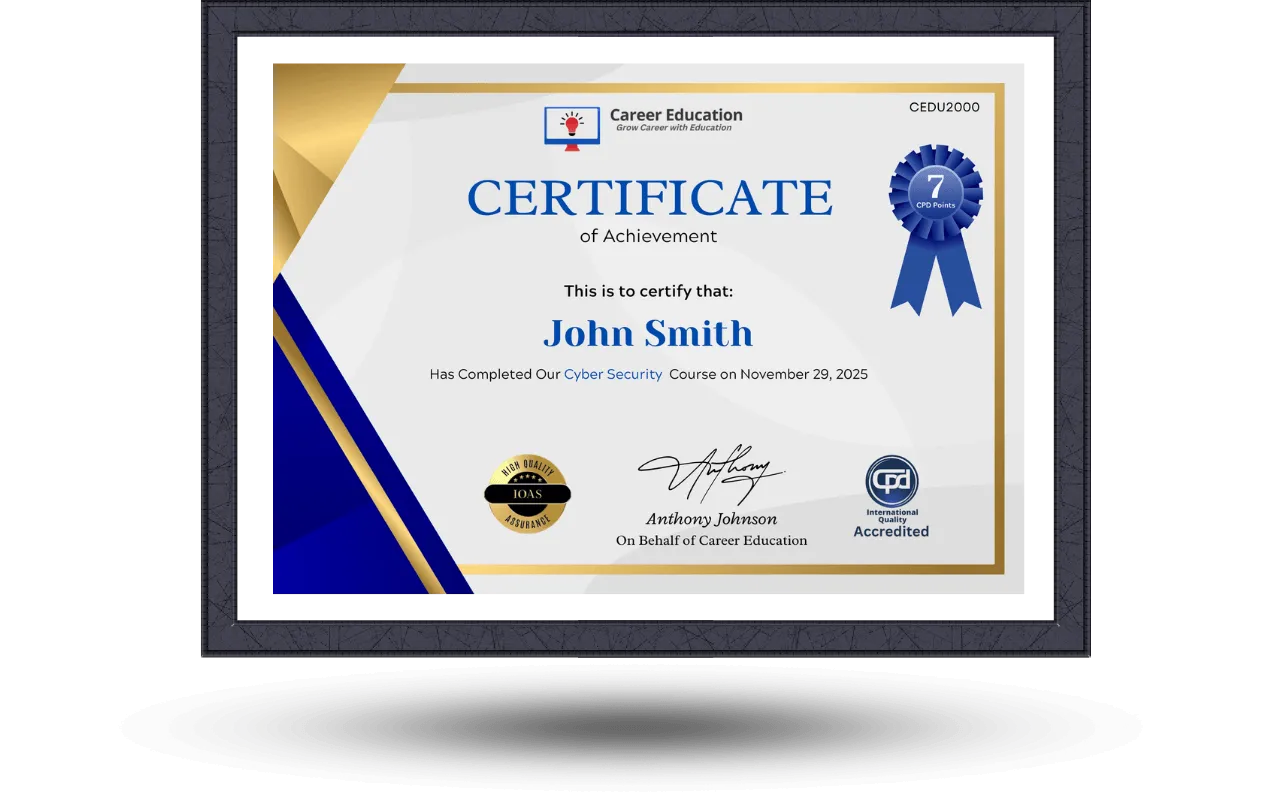
Upon completion of any course, all students are entitled to a CPD IQ Accredited e-certificate that will be issued by Career Education signifying the completion of your course.
After you complete the course and assignment, you will be eligible to order a free certificate accredited by CPD International Quality by completing the form below.
Hardcopy certificates and transcripts are also available for a small additional fee. More information is disclosed upon course completion.
Similar Courses


Frequently Asked Questions
The lifetime membership includes unlimited access to all courses, resources, and updates for a one-time fee.
You can purchase the membership directly from our website using a secure checkout process.
Yes, selected courses can be downloaded for offline access through our mobile app.
Yes, all future updates and new courses are included at no extra cost.
Yes, we offer a 30-day money-back guarantee if you are not satisfied with the membership.