
94%
OFF
OFF
HR Management Training
- Lifetime Access
- All Levels
- PDF Certificate
£296
£19
14-Day Money-Back Guarantee
Learn With Confidence






HR Management Training
Develop the knowledge and practical skills needed to support people, improve workplace practices and contribute to organisational success with HR Management Training.
People are one of the most important resources within any organisation. Recruiting the right employees, supporting their development, managing performance, maintaining positive employee relationships and creating an inclusive workplace all contribute to long-term organisational effectiveness.
Human resources has therefore evolved far beyond administrative record keeping. Modern HR professionals can contribute to recruitment strategy, employee engagement, learning and development, performance management, compensation, workplace wellbeing, diversity and inclusion, and the effective use of technology.
Our HR Management Training course provides a structured introduction to these essential areas of human resource management.
Across nine comprehensive modules, you will explore the fundamentals of human resources, recruitment and selection, employee relations, learning and development, performance management, compensation and benefits, diversity and inclusion, health and safety, and HR technology and information systems.
The course is designed to help learners develop a broad understanding of the employee lifecycle and the role HR plays throughout an organisation.
Whether you are beginning a career in HR, supporting employees as part of another role, managing a team or looking to strengthen your professional knowledge, HR Management Training can provide a valuable foundation.
Why Study HR Management Training?
Every organisation needs effective people management.
Employees need to be recruited, onboarded, supported, developed and managed appropriately. At the same time, organisations need to establish fair workplace practices, comply with relevant requirements and create an environment where people can contribute effectively.
HR professionals can play a central role in balancing organisational needs with employee needs.
The HR Management Training course introduces the key functions involved in this process.
You will explore how HR contributes to:
-
Recruiting suitable employees.
-
Supporting positive employee relationships.
-
Developing workforce skills.
-
Managing employee performance.
-
Understanding compensation and benefits.
-
Promoting diversity and inclusion.
-
Supporting workplace health and safety.
-
Using HR technology and information systems.
-
Contributing to organisational effectiveness.
The course takes a broad approach, allowing you to see how different HR functions connect rather than studying each activity in isolation.
Course Learning Outcomes
By completing HR Management Training, you will develop the knowledge to:
-
Understand the role and purpose of human resource management.
-
Explore the main functions of an HR department.
-
Understand the recruitment and selection process.
-
Develop awareness of effective employee relations.
-
Explore learning and development within organisations.
-
Understand the principles of performance management.
-
Explore compensation and employee benefits.
-
Recognise the importance of diversity and inclusion.
-
Understand the role of health and safety within HR.
-
Explore the use of HR technology and information systems.
-
Understand how HR activities support organisational objectives.
-
Develop awareness of the employee lifecycle.
-
Improve your understanding of workplace people management.
-
Build a foundation for further HR study and professional development.
Module 1: Introduction to Human Resources
The first module introduces the foundations of human resource management.
You will explore what HR is and why it matters to organisations.
Human resources involves managing many aspects of the relationship between an organisation and its employees. This can include recruitment, employee development, performance, workplace policies, compensation and employee relations.
You will explore how the role of HR has developed and why modern organisations increasingly view people management as a strategic function.
Effective HR can contribute to attracting capable employees, developing workforce skills and supporting a positive workplace environment.
You will also explore the importance of aligning HR activities with organisational objectives.
An organisation may have ambitious growth plans, but achieving those goals requires people with appropriate skills, motivation and support.
By completing this module, you will have a stronger understanding of the role HR plays within modern organisations.
Module 2: Recruitment and Selection
Recruiting the right people is one of the most important responsibilities within HR.
Module 2 explores recruitment and selection.
Recruitment involves attracting potential candidates, while selection involves assessing candidates and identifying the most appropriate person for a role.
You will explore the importance of clearly understanding job requirements before beginning recruitment.
Effective recruitment can help organisations reach suitable candidates while reducing the risk of poor hiring decisions.
The module also considers the importance of structured selection processes.
Organisations need fair and appropriate ways of assessing candidates against relevant criteria.
You will develop awareness of different stages of recruitment and selection and the importance of communication throughout the process.
You will also consider how a positive candidate experience can influence an organisation’s reputation.
By completing this module, you will develop a stronger understanding of how organisations can approach recruitment and selection more systematically.
Module 3: Employee Relations
Positive employee relationships can contribute significantly to workplace effectiveness.
Module 3 focuses on employee relations.
Employee relations concerns the relationship between employees, managers and the wider organisation.
Effective communication, trust and fair treatment can contribute to healthier working relationships.
You will explore why organisations need appropriate approaches for addressing workplace concerns, disagreements and employee issues.
The module also introduces the importance of listening to employees and maintaining constructive communication.
Strong employee relations can help organisations create workplaces where concerns can be raised appropriately and addressed professionally.
You will develop awareness of the role HR can play in supporting managers and employees when workplace issues arise.
By completing this module, you will have a stronger understanding of the principles that support positive employee relations.
Module 4: Learning and Development
Employees need opportunities to develop their knowledge and skills.
Module 4 explores learning and development.
Learning and development can benefit both employees and organisations.
Employees can gain new skills, improve existing capabilities and prepare for future responsibilities. Organisations can develop a workforce that is better equipped to meet changing business requirements.
You will explore why organisations assess learning needs and how development activities can be connected to organisational objectives.
The module also highlights the importance of continuous learning.
Workplaces change constantly due to technology, customer expectations, regulations and market conditions.
Employees may therefore need opportunities to develop throughout their careers.
You will explore how learning and development can contribute to employee engagement, career progression and organisational capability.
By completing this module, you will understand why employee development is an important component of effective HR management.
Module 5: Performance Management
Performance management helps organisations establish expectations, monitor progress and support employees in achieving their objectives.
Module 5 focuses on performance management.
You will explore why clear expectations are important and how organisations can support employees in improving their performance.
Performance management should not simply be viewed as an annual review.
It can involve ongoing communication, feedback, goal setting and development.
The module explores the importance of constructive feedback and appropriate performance discussions.
Employees need to understand what is expected of them and how their work contributes to wider organisational objectives.
Managers also need appropriate approaches for addressing performance challenges.
By completing this module, you will develop greater awareness of how performance management can support employee development and organisational performance.
Module 6: Compensation and Benefits
Compensation and benefits are important components of the employment relationship.
Module 6 explores these areas and their role within HR management.
Compensation can include salary or wages, while benefits may include a range of additional rewards provided by an organisation.
You will explore why organisations need structured approaches to compensation and benefits.
Reward strategies can influence recruitment, retention, motivation and employee perceptions of fairness.
The module also encourages awareness of the importance of consistency and appropriate workplace policies.
Employees want to understand how they are rewarded and what benefits may be available to them.
Organisations need to manage these areas carefully while considering their business objectives and applicable requirements.
By completing this module, you will develop a stronger understanding of the role compensation and benefits play in human resource management.
Module 7: Diversity and Inclusion
Modern workplaces bring together people with different backgrounds, experiences, perspectives and abilities.
Module 7 explores diversity and inclusion.
Diversity concerns representation and differences among people, while inclusion focuses on creating an environment where individuals can participate, contribute and feel respected.
You will explore why inclusive workplaces can benefit organisations and employees.
Different perspectives can contribute to creativity, problem-solving and decision-making.
However, diversity alone does not automatically create inclusion.
Organisations need workplace practices and cultures that support fairness, respect and participation.
You will develop awareness of how HR can contribute to inclusive recruitment, workplace practices and employee development.
The module also highlights the importance of recognising and addressing inappropriate workplace behaviour and barriers to participation.
By completing this module, you will understand why diversity and inclusion are important components of modern HR management.
Module 8: Health and Safety
Employee wellbeing and workplace safety are important HR considerations.
Module 8 explores health and safety within the workplace.
Organisations have responsibilities for providing appropriate working environments, and HR can contribute to policies, communication, training and employee support.
You will explore why health and safety should be integrated into workplace management rather than treated as a separate issue.
Employees need to understand workplace procedures and their responsibilities.
Managers also need to understand how safety expectations apply to their teams.
The module introduces the importance of awareness, prevention and appropriate workplace practices.
Health and safety requirements can vary depending on the country, industry and workplace, so learners should always consult relevant legislation and organisational policies for specific requirements.
By completing this module, you will have greater awareness of the role HR can play in supporting workplace health and safety.
Module 9: HR Technology and Information Systems
Technology has transformed the way HR departments operate.
Module 9 focuses on HR technology and information systems.
Organisations increasingly use digital systems to manage employee information, recruitment, payroll, performance, learning and other HR activities.
You will explore how HR technology can improve organisation and efficiency.
Digital systems can help HR teams manage information more systematically and reduce the administrative burden associated with repetitive tasks.
However, HR technology also creates responsibilities around data accuracy, security, privacy and appropriate access.
You will develop awareness of why HR professionals need to understand both the opportunities and responsibilities associated with digital HR systems.
The module also introduces the changing role of technology in human resource management.
As organisations continue to adopt new tools, HR professionals need to remain adaptable and willing to develop their digital skills.
By completing this module, you will understand the growing importance of technology in modern HR operations.
Develop Essential HR Management Skills
The HR Management Training course provides broad coverage of the major functions involved in people management.
Understand the Employee Lifecycle
Explore how HR supports employees from recruitment and selection through development, performance management and ongoing employment.
Improve Recruitment Knowledge
Understand the fundamental stages involved in attracting and selecting suitable candidates.
Strengthen Employee Relations
Develop awareness of the importance of communication, trust and constructive workplace relationships.
Support Employee Development
Understand how learning and development can strengthen workforce capabilities.
Understand Performance Management
Explore how goal setting, feedback and performance discussions can support employees and organisations.
Explore Compensation and Benefits
Develop awareness of how reward can influence recruitment, retention and employee engagement.
Promote Inclusion
Understand the principles of diversity and inclusion and their relevance to modern workplaces.
Support Workplace Safety
Explore the role HR can play in promoting health and safety awareness and appropriate workplace practices.
Develop Digital HR Awareness
Understand how technology and information systems are transforming HR administration and management.
Who Is HR Management Training For?
HR Management Training can be suitable for:
-
Aspiring HR professionals.
-
HR assistants.
-
HR administrators.
-
People managers.
-
Team leaders.
-
Business owners.
-
Entrepreneurs.
-
Recruitment professionals.
-
Learning and development professionals.
-
Office managers.
-
Operations managers.
-
Supervisors.
-
Business professionals with people-management responsibilities.
-
Students interested in human resources.
-
Professionals seeking to broaden their management skills.
The course can also be useful for individuals who regularly work with employees but do not have a formal HR background.
Build a Foundation for an HR Career
If you are considering a career in human resources, understanding the major HR functions can provide a valuable starting point.
HR is a broad profession with opportunities across recruitment, employee relations, learning and development, compensation, HR operations, talent management and people strategy.
The HR Management Training course introduces these areas so that you can develop a broader understanding of the profession.
Support Better Recruitment Decisions
Recruitment decisions can have a significant impact on organisations.
Hiring the right person can strengthen a team, while a poor recruitment decision can create additional costs and management challenges.
Understanding recruitment and selection principles can help you approach hiring activities more systematically.
Improve Workplace Relationships
Employees are more likely to contribute effectively when workplace relationships are managed professionally.
HR plays an important role in supporting communication between employees and management.
The course introduces employee relations principles that can help you understand how organisations approach workplace concerns and employee interactions.
Encourage Continuous Employee Development
Organisations need employees who can adapt to changing requirements.
Learning and development can help employees build new capabilities while supporting wider organisational goals.
The course introduces the principles behind effective workforce development.
Connect People Management With Business Objectives
HR does not operate separately from the rest of the organisation.
Recruitment, training, performance, compensation and employee relations can all influence organisational outcomes.
The HR Management Training course helps you understand these connections and appreciate how people management can contribute to wider business objectives.
Understand the Role of Technology in Modern HR
Technology is increasingly embedded in HR operations.
Digital recruitment platforms, HR information systems, employee databases and learning technologies are changing how organisations manage people.
Understanding these developments can help you remain prepared for increasingly technology-enabled workplaces.
Why Choose HR Management Training?
The HR Management Training course provides a structured nine-module learning journey covering:
-
Introduction to Human Resources.
-
Recruitment and Selection.
-
Employee Relations.
-
Learning and Development.
-
Performance Management.
-
Compensation and Benefits.
-
Diversity and Inclusion.
-
Health and Safety.
-
HR Technology and Information Systems.
This comprehensive curriculum covers the employee lifecycle while introducing the core functions of modern HR management.
You will develop a broad foundation that can be applied to professional development, people management and further HR study.
Develop the Skills to Support People and Organisations
Effective HR management is about more than policies and paperwork.
It involves understanding people, supporting organisational objectives, developing talent, encouraging positive workplace relationships and helping create an environment where employees can perform effectively.
The HR Management Training course provides an accessible introduction to these essential areas.
Whether you are starting your HR journey, managing employees or looking to expand your professional knowledge, the course can help you develop a stronger understanding of modern human resource management.
Enrol in HR Management Training today and build the knowledge to support recruitment, employee relations, learning and development, performance, reward, inclusion, workplace safety and technology-driven HR practices.
Course Modules
Course Content
Module 1_ Introduction to Human Resources
-
Lesson 1_ Introduction to Human Resources
Module 2_ Recruitment and Selection
Module 3_ Employee Relations
Module 4_ Learning and Development
Module 5_ Performance Management
Module 6_ Compensation and Benefits
Module 7_ Diversity and Inclusion
Module 8_ Health and Safety
Module 9_ HR Technology and Information Systems
What our students say
Excellent
4.9 average
158 Reviews

Earn an Accredited Certificate
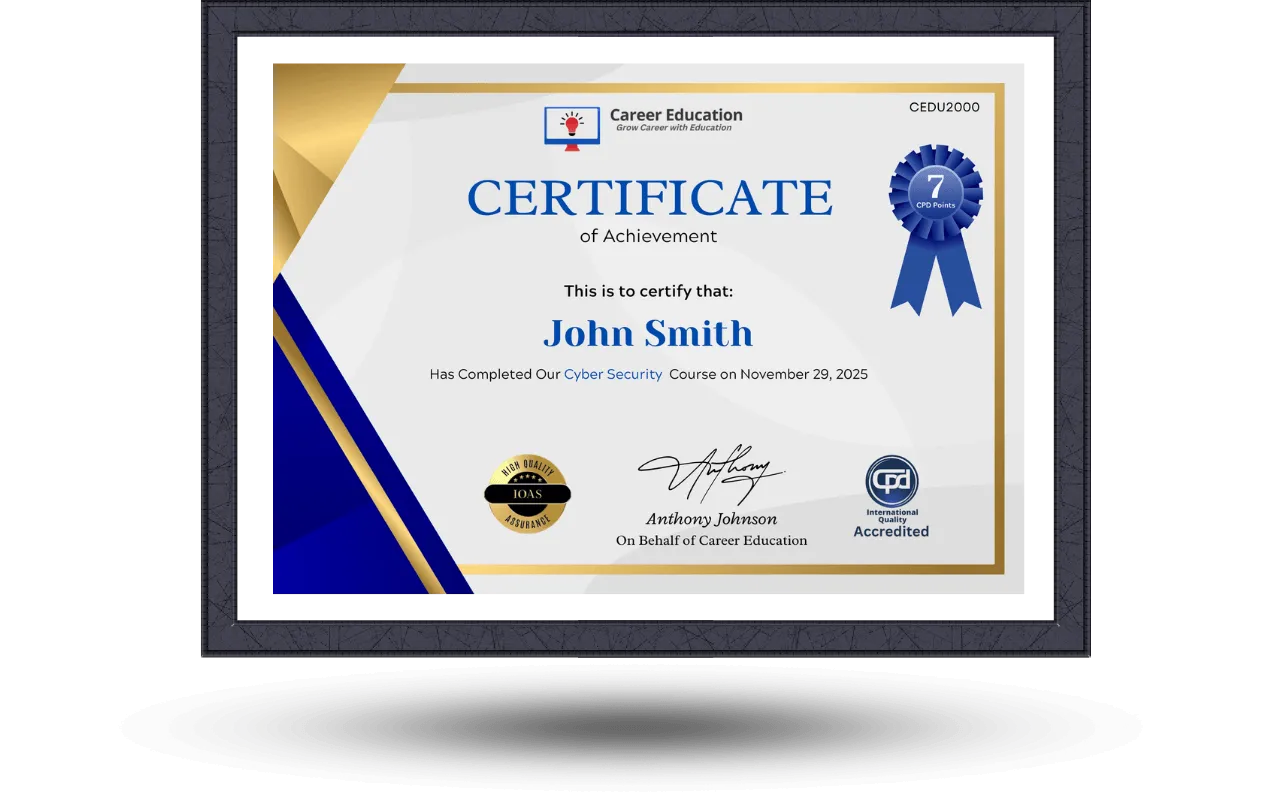
Upon completion of any course, all students are entitled to a CPD IQ Accredited e-certificate that will be issued by Career Education signifying the completion of your course.
After you complete the course and assignment, you will be eligible to order a free certificate accredited by CPD International Quality by completing the form below.
Hardcopy certificates and transcripts are also available for a small additional fee. More information is disclosed upon course completion.
Similar Courses




Frequently Asked Questions
The lifetime membership includes unlimited access to all courses, resources, and updates for a one-time fee.
You can purchase the membership directly from our website using a secure checkout process.
Yes, selected courses can be downloaded for offline access through our mobile app.
Yes, all future updates and new courses are included at no extra cost.
Yes, we offer a 30-day money-back guarantee if you are not satisfied with the membership.