
94%
OFF
OFF
Hazmat Packaging Essentials
- Lifetime Access
- All Levels
- PDF Certificate
£296
£19
14-Day Money-Back Guarantee
Learn With Confidence








Hazmat Packaging Essentials
The safe transportation and handling of hazardous materials begins with appropriate packaging. A properly selected, designed, tested, labelled, marked, and maintained package can help prevent leaks, spills, contamination, exposure, and other incidents throughout the supply chain.
The Hazmat Packaging Essentials course provides practical foundational knowledge for understanding how hazardous materials should be packaged and prepared for transportation and handling. It covers hazardous material classification, packaging design and selection, testing and evaluation, labelling and marking, documentation, record keeping, emergency response, and spill control.
This outcome-focused course is designed to help learners understand the relationship between the properties of hazardous materials and the packaging used to contain them. It also highlights the importance of following applicable regulations, manufacturer instructions, employer procedures, and approved packaging specifications.
Whether you work in shipping, receiving, warehousing, logistics, manufacturing, transportation, environmental services, or hazardous materials management, understanding packaging fundamentals can help you contribute to safer operations.
Why Hazmat Packaging Essentials Matters
Hazardous materials can present serious risks when they are improperly packaged.
A damaged or unsuitable package may result in:
-
Chemical spills
-
Vapour releases
-
Worker exposure
-
Environmental contamination
-
Fire
-
Chemical reactions
-
Product damage
-
Transportation incidents
-
Regulatory violations
Packaging serves as a critical barrier between hazardous materials and people or the surrounding environment.
However, no single package is suitable for every hazardous material.
Packaging requirements can depend on factors such as:
-
Material classification
-
Physical state
-
Chemical properties
-
Quantity
-
Compatibility
-
Transportation mode
-
Packaging type
-
Regulatory requirements
-
Handling conditions
The Hazmat Packaging Essentials course helps learners understand these considerations and appreciate why packaging decisions should be based on reliable information rather than convenience.
What You Will Learn
By completing the Hazmat Packaging Essentials course, learners will be able to:
-
Explain the purpose of hazardous materials packaging.
-
Understand fundamental hazardous material classifications.
-
Recognise factors that influence packaging selection.
-
Understand basic packaging design principles.
-
Appreciate the purpose of packaging testing and evaluation.
-
Recognise important labelling and marking requirements.
-
Understand the role of documentation and record keeping.
-
Recognise basic emergency response and spill control principles.
-
Identify common packaging-related hazards.
-
Support safer packaging and handling practices.
-
Understand the importance of following applicable regulatory requirements.
-
Recognise when specialist guidance is necessary.
Course Curriculum
Module 1: Introduction to Hazmat Packaging
Lesson 1: Introduction to Hazmat Packaging
The course begins with an introduction to hazardous materials packaging and its role in preventing incidents.
Learners will explore why hazardous materials require specialised packaging and how packaging helps contain substances during storage, handling, loading, unloading, and transportation.
The module introduces common packaging types, including:
-
Drums
-
Boxes
-
Containers
-
Bags
-
Cylinders
-
Intermediate bulk containers
-
Specialised hazardous material packaging
Participants will explore the importance of selecting packaging that is suitable for the material being contained.
A package must be capable of performing under the conditions it is expected to encounter.
This may include:
-
Movement
-
Vibration
-
Pressure changes
-
Temperature variations
-
Stacking
-
Handling
-
Loading and unloading
The course also introduces the concept of packaging integrity.
A package may appear acceptable externally while still having internal damage or deterioration.
Learners will understand why packages should be inspected according to established procedures and why damaged packaging should not automatically be placed into service.
By completing this module, participants will develop a strong foundation in hazardous materials packaging principles.
Module 2: Hazardous Material Classification
Correct classification is an essential part of packaging selection.
This module examines how hazardous materials are classified and why classification influences packaging requirements.
Learners will explore common hazard classes, including:
-
Explosives
-
Gases
-
Flammable liquids
-
Flammable solids
-
Oxidising substances
-
Toxic substances
-
Radioactive materials
-
Corrosive substances
-
Miscellaneous hazardous materials
The course explains how different hazards can affect packaging decisions.
For example, a corrosive material may require packaging that can resist chemical attack, while a flammable material may require packaging designed to reduce the risk of leakage and ignition.
Learners will also explore physical and chemical characteristics that may influence packaging, including:
-
Vapour pressure
-
Reactivity
-
Corrosivity
-
Flammability
-
Toxicity
-
Temperature sensitivity
-
Chemical compatibility
The module highlights the importance of using accurate material identification information when selecting packaging.
By completing this module, learners will understand why classification is closely connected to safe packaging.
Module 3: Packaging Design and Selection
Choosing suitable packaging requires more than selecting a container that appears strong enough.
This module explores fundamental principles of packaging design and selection.
Learners will examine factors such as:
-
Material compatibility
-
Package strength
-
Closure systems
-
Capacity
-
Internal pressure
-
Temperature
-
Handling conditions
-
Transportation requirements
-
Chemical characteristics
The course explains why packaging materials must be compatible with the hazardous substance they contain.
A chemical may react with certain plastics, metals, coatings, seals, or other materials.
Learners will also explore the importance of closures.
A suitable container may still become hazardous if the closure is improperly fitted, damaged, or incompatible.
The module introduces the importance of following approved packaging specifications and manufacturer instructions.
Participants will understand why improvised packaging should not be used simply because it appears convenient.
The course also reinforces the importance of considering the entire transportation and handling process when selecting packaging.
By completing this module, learners will develop greater awareness of the factors involved in appropriate hazmat packaging selection.
Module 4: Packaging Testing and Evaluation
Packaging must be capable of performing its intended function under expected conditions.
This module introduces learners to the purpose of packaging testing and evaluation.
Participants will explore why packaging may need to be evaluated for characteristics such as:
-
Strength
-
Leakage resistance
-
Impact resistance
-
Pressure performance
-
Stacking capability
-
Closure integrity
-
Chemical compatibility
The course explains that testing requirements may vary depending on the type of packaging and hazardous material involved.
Learners will also explore the importance of maintaining packaging integrity throughout its service life.
Factors such as repeated handling, exposure to chemicals, temperature, sunlight, moisture, and physical impact may contribute to deterioration.
The module emphasises that only packaging meeting applicable requirements should be used for regulated hazardous materials.
Learners will understand why packaging testing is not simply a one-time quality check.
Regular inspection and proper maintenance may also be necessary depending on the type of packaging and its intended use.
By completing this module, participants will understand the importance of testing, inspection, and evaluation in hazardous materials packaging.
Module 5: Packaging Labelling and Marking
Correct labelling and marking help communicate the hazards associated with packaged materials.
This module examines the role of labels and markings in hazardous materials transportation and handling.
Learners will explore information that may be associated with packages, including:
-
Hazard labels
-
Identification numbers
-
Proper shipping names
-
Handling information
-
Package markings
-
Regulatory symbols
-
Other required information
The course explains the difference between packaging, labelling, and marking.
Packaging physically contains the material, while labels and markings communicate important information about what is inside and the hazards it may present.
Learners will understand why labels and markings should be:
-
Correct
-
Legible
-
Durable
-
Visible
-
Appropriate for the material
-
Consistent with shipping documentation
The module also highlights the importance of checking labels and markings before a package enters transportation.
Incorrect or missing hazard identification can create problems for workers and emergency responders.
By completing this module, learners will better understand the importance of effective package hazard communication.
Module 6: Documentation and Record Keeping
Hazardous materials packaging is closely connected to documentation.
This module explores the importance of maintaining accurate records associated with hazardous materials packaging.
Documentation may include:
-
Shipping papers
-
Packaging specifications
-
Inspection records
-
Testing records
-
Training records
-
Inventory information
-
Safety Data Sheets
-
Manufacturer information
-
Incident records
The course explains why accurate documentation can support compliance, traceability, safety, and emergency response.
Records can help organisations demonstrate that appropriate packaging procedures were followed and may provide useful information during investigations.
Learners will also explore the importance of keeping documentation current and accessible to authorised personnel.
The module reinforces that regulatory record-keeping requirements may vary depending on the material, operation, jurisdiction, and transportation circumstances.
By completing this module, participants will understand how documentation supports safe hazardous materials packaging operations.
Module 7: Emergency Response and Spill Control
Even with appropriate packaging and careful handling, incidents can still occur.
This module introduces basic emergency response and spill control principles.
Learners will explore what to consider when a package is:
-
Leaking
-
Damaged
-
Dropped
-
Punctured
-
Overturned
-
Exposed to fire
-
Showing signs of chemical reaction
The course emphasises that workers should not attempt to control hazardous material spills beyond their training, equipment, or assigned responsibilities.
Initial actions may include:
-
Raising the alarm
-
Isolating the affected area
-
Keeping unauthorised people away
-
Notifying appropriate personnel
-
Identifying the material if it can be done safely
-
Following the emergency response plan
-
Using appropriate PPE
-
Contacting emergency responders when required
Learners will also explore the importance of preventing spilled materials from spreading into drains, waterways, soil, or other areas where contamination could increase.
Decontamination, waste management, and cleanup should follow appropriate procedures for the material involved.
By completing this module, participants will develop greater awareness of how packaging failures can create emergencies and how appropriate response procedures can help control the situation.
Who Is This Course For?
The Hazmat Packaging Essentials course may be suitable for individuals involved in hazardous materials packaging, transportation, storage, and handling.
It can benefit:
-
Hazmat employees
-
Warehouse workers
-
Shipping personnel
-
Receiving personnel
-
Logistics professionals
-
Transportation workers
-
Packaging personnel
-
Manufacturing staff
-
Environmental workers
-
Safety professionals
-
Facility managers
-
Supervisors
-
Contractors
-
Emergency response personnel
-
Workplace safety representatives
It may also be useful for organisations that want to reinforce foundational knowledge about hazardous materials packaging and safe handling.
Practical Learning Outcomes
The Hazmat Packaging Essentials course is designed around practical workplace knowledge.
After completing the training, learners should have a stronger understanding of why hazardous materials require appropriate packaging and how material characteristics influence packaging decisions.
Participants will be better prepared to recognise the importance of package compatibility, closures, strength, testing, labelling, marking, and documentation.
They will also understand basic considerations for responding to damaged packages and spills.
Understand Packaging Compatibility
Compatibility is one of the most important considerations in hazardous materials packaging.
A container that safely holds one chemical may be unsuitable for another.
Chemical compatibility can depend on:
-
Material composition
-
Concentration
-
Temperature
-
Exposure time
-
Chemical reactivity
-
Container construction
-
Seals and closures
Using inappropriate packaging can result in deterioration, leakage, or chemical reactions.
The course reinforces the importance of checking appropriate compatibility information before packaging hazardous materials.
Improve Packaging Selection
Good packaging selection considers the entire journey of the hazardous material.
A package may be exposed to:
-
Handling
-
Vibration
-
Stacking
-
Temperature changes
-
Transportation
-
Loading and unloading
-
Storage
Learners will understand why packaging should be selected according to the material, quantity, intended use, and applicable requirements.
Strengthen Packaging Inspection
Regular inspection can help identify problems before they result in an incident.
Workers should understand how to recognise signs of potential packaging failure, such as:
-
Cracks
-
Dents
-
Corrosion
-
Bulging
-
Damaged closures
-
Leaks
-
Deterioration
-
Missing markings
Damaged packages should be managed according to established procedures.
The course encourages a proactive approach to packaging safety.
Improve Hazard Communication
A package is not properly prepared simply because the hazardous material is safely contained.
Relevant hazard information must also be communicated appropriately.
Correct labels and markings can help workers understand the risks associated with a package and can provide valuable information to emergency responders.
The Hazmat Packaging Essentials course reinforces the importance of keeping packaging, labels, markings, and documentation consistent.
Support Better Documentation
Accurate records can improve traceability and support regulatory compliance.
Documentation can help organisations determine:
-
What material was packaged
-
Which packaging was used
-
When it was inspected
-
Whether testing requirements were met
-
What transportation requirements applied
-
Whether an incident occurred
Good record-keeping can also support audits, investigations, and continuous improvement.
Prepare for Packaging Emergencies
A damaged hazardous material package can quickly become a safety concern.
Workers should know how to respond according to their training and emergency plans.
The course reinforces the importance of avoiding unnecessary exposure and escalating incidents when they exceed an individual’s capabilities.
Emergency responders should receive accurate information about the substance and circumstances whenever possible.
Promote Safer Hazmat Operations
Hazardous materials safety depends on multiple layers of protection.
These may include:
-
Appropriate classification
-
Suitable packaging
-
Correct closures
-
Proper testing
-
Accurate labelling
-
Appropriate markings
-
Reliable documentation
-
Safe handling
-
Emergency preparedness
The Hazmat Packaging Essentials course helps learners understand how these elements work together.
Enrol in Hazmat Packaging Essentials Today
Proper packaging is one of the most important safeguards in hazardous materials transportation and handling.
The Hazmat Packaging Essentials course provides a structured introduction to hazardous material classification, packaging design and selection, testing and evaluation, labelling and marking, documentation, record keeping, emergency response, and spill control.
Whether you work in shipping, logistics, warehousing, manufacturing, transportation, environmental services, or hazardous materials management, this course can help strengthen your understanding of essential packaging principles.
The course provides foundational knowledge and should be used alongside current applicable regulations, employer procedures, manufacturer instructions, and task-specific training when making operational decisions.
Enrol in the Hazmat Packaging Essentials course today and develop the knowledge needed to understand safer hazardous materials packaging, improve hazard communication, support accurate documentation, and respond appropriately when packaging problems occur.
Course Modules
Course Content
Module 1_ Introduction to Hazmat Packaging
-
Lesson 1_ Introduction to Hazmat Packaging
Module 2_ Hazardous Material Classification
Module 3_ Packaging Design and Selection
Module 4_ Packaging Testing and Evaluation
Module 5_ Packaging Labeling and Marking
Module 6_ Documentation and Record Keeping
Module 7_ Emergency Response and Spill Control
What our students say
Excellent
4.9 average
158 Reviews

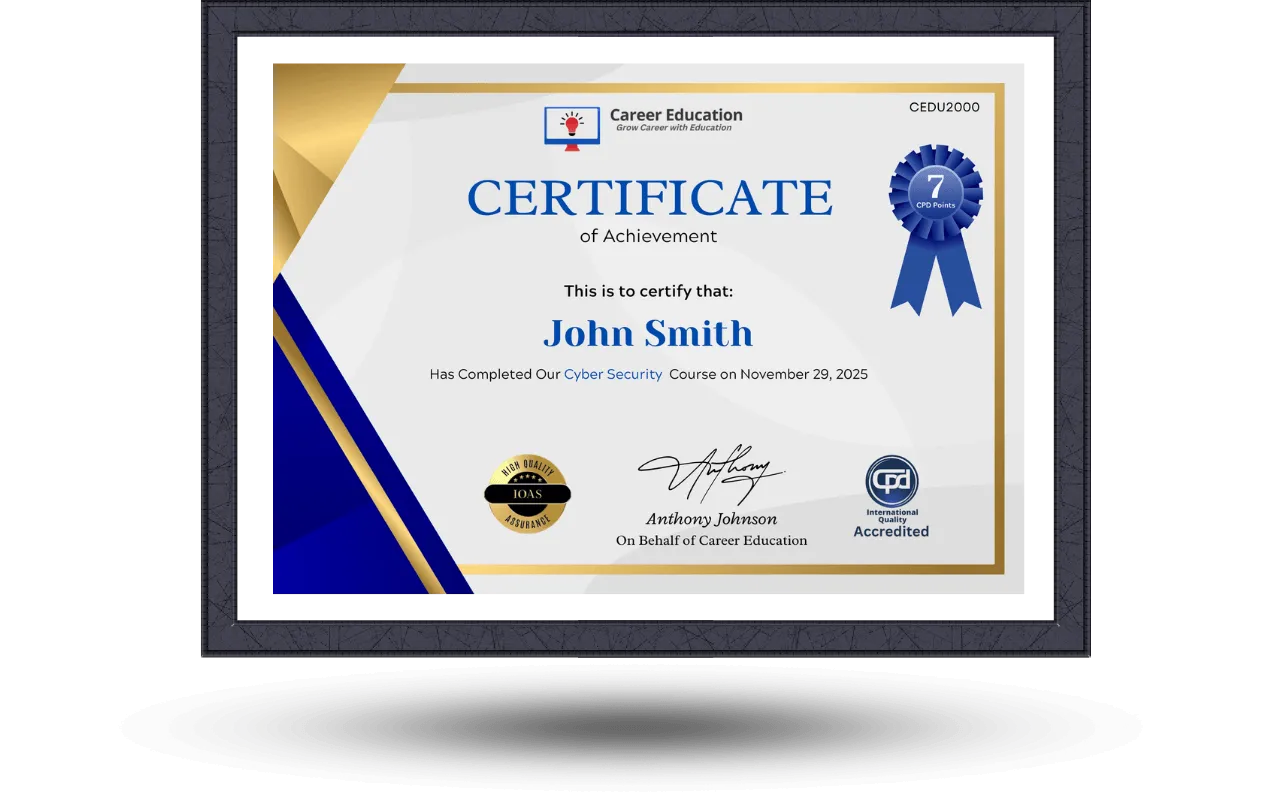
Earn an Accredited Certificate
Upon completion of any course, all students are entitled to a CPD IQ Accredited e-certificate that will be issued by Career Education signifying the completion of your course.
After you complete the course and assignment, you will be eligible to order a free certificate accredited by CPD International Quality by completing the form below.
Hardcopy certificates and transcripts are also available for a small additional fee. More information is disclosed upon course completion.
Similar Courses




Frequently Asked Questions
The lifetime membership includes unlimited access to all courses, resources, and updates for a one-time fee.
You can purchase the membership directly from our website using a secure checkout process.
Yes, selected courses can be downloaded for offline access through our mobile app.
Yes, all future updates and new courses are included at no extra cost.
Yes, we offer a 30-day money-back guarantee if you are not satisfied with the membership.